
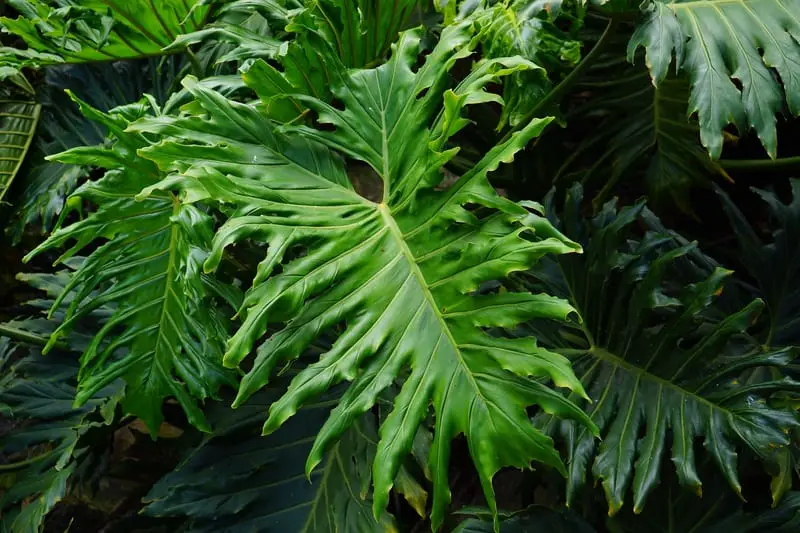
Indoor plants that get huge can completely change the look of a room. Some grow tall enough to approach the ceiling, others spread several feet across, and a few develop individual leaves that can make an ordinary houseplant look tiny by comparison.
I’ve found that the size of a mature plant can sometimes sneak up on you. A young Monstera, palm, or White Bird of Paradise may seem easy to fit beside a window when you first bring it home. Give it good growing conditions and a few years, though, and suddenly you’re rearranging furniture to make room for it.
Huge doesn’t always mean tall, either. Boston Ferns can become incredibly wide and full, while plants such as Colocasia and Philodendron Selloum make their presence known with enormous leaves. That’s part of what makes growing these plants indoors so much fun.
Here are 15 indoor plants that can get seriously big, along with the type of space they need and what you should consider before a small nursery plant turns into a major part of your indoor garden.
What You’ll Learn
- Which indoor plants can become surprisingly large
- Which plants grow tall and which need more horizontal space
- Which houseplants develop especially large leaves
- How much room mature plants may need indoors
- What to consider before choosing a potentially huge houseplant
Quick Answer
Some of the best indoor plants that get huge include Monstera, White Bird of Paradise, Philodendron Selloum, Boston Fern, Areca Palm, Bamboo Palm, Rubber Plant, Fiddle Leaf Fig, Umbrella Plant, Ponytail Palm, Colocasia, Bird’s Nest Fern, Dracaena, Norfolk Island Pine, and Kentia Palm. Some become tall indoor trees, while others get huge by developing wide canopies, arching fronds, or enormous individual leaves.
Indoor Plants That Get Huge at a Glance
| Plant | How It Gets Big | Indoor Presence | Space to Watch |
|---|---|---|---|
| Monstera | Huge leaves and spreading growth | Very large | Height and width |
| White Bird of Paradise | Tall stalks and enormous leaves | Very large | Ceiling height |
| Philodendron Selloum | Large deeply lobed leaves | Very large | Width |
| Boston Fern | Long arching fronds | Large and full | Width |
| Areca Palm | Tall stems and arching fronds | Large | Height and width |
| Bamboo Palm | Multiple tall canes and fronds | Large | Height |
| Rubber Plant | Tree-like vertical growth | Large | Ceiling height |
| Fiddle Leaf Fig | Tall growth and oversized leaves | Large | Height |
| Umbrella Plant | Tall branching canopy | Medium to large | Height and width |
| Ponytail Palm | Thick trunk and long cascading leaves | Medium to large | Height |
| Colocasia | Enormous Elephant Ear leaves | Large | Leaf spread |
| Bird’s Nest Fern | Long, broad spreading fronds | Medium to large | Width |
| Dracaena | Tall cane-like growth | Large | Height |
| Norfolk Island Pine | Tall central trunk and layered branches | Large | Ceiling height |
| Kentia Palm | Tall stems and long arching fronds | Very large | Height and width |
Indoor size can vary considerably depending on the plant’s age, variety, container size, light, pruning, and overall growing conditions. Some of these plants can eventually outgrow ordinary indoor spaces, while others can be kept smaller with pruning and container management.
What Does “Huge” Really Mean for an Indoor Plant?
When we talk about huge houseplants, height is only part of the story. A plant doesn’t have to touch the ceiling to take over a significant amount of room.
Plants That Get Tall
White Bird of Paradise, Rubber Plant, Fiddle Leaf Fig, Dracaena, Norfolk Island Pine, Bamboo Palm, and Kentia Palm can all develop considerable height indoors. These are the plants where ceiling height eventually becomes part of the conversation.
Plants That Get Wide
Monstera and Philodendron Selloum can spread outward as their foliage becomes larger. Areca Palm develops arching fronds that occupy space around the pot, while a mature Boston Fern can become surprisingly wide even though it isn’t growing toward the ceiling.
Plants With Huge Leaves
Colocasia, White Bird of Paradise, Monstera, Philodendron Selloum, and Fiddle Leaf Fig make their biggest impression through leaf size. A mature specimen doesn’t need dozens of stems when a few enormous leaves can dominate the space around it.
That’s why I wouldn’t choose one of these plants based only on the size it is at the garden center. It’s worth thinking about where the plant will go after several years of good growth. A four-foot plant becoming six or eight feet tall is one thing. A plant that also spreads several feet into the room can require an entirely different setup.
Before You Bring Home a Houseplant That Gets Huge
Large houseplants can be some of the most impressive plants you grow, but I like to think beyond the empty corner I’m trying to fill today.
First, look at the available light. A huge plant sitting in a dark corner isn’t necessarily going to stay healthy just because it physically fits there. Large tropical plants still need the conditions required by the species.
Next, think about both height and width. Monstera, Selloum, Boston Fern, and palms can occupy considerably more horizontal space than their pots suggest.
Finally, remember that the plant may become harder to move. A large plant combined with a large container and wet potting mix can get heavy quickly. If you know you’re growing something that may eventually become enormous, choosing its long-term location early can save a lot of wrestling with a heavy pot later.
1. Monstera
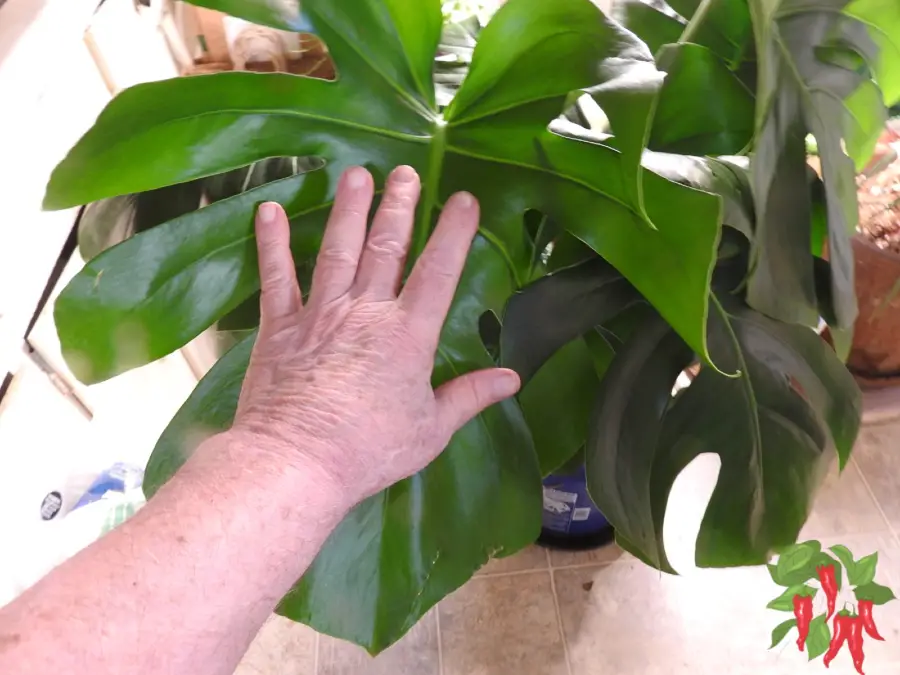
Monstera is one of the first plants I’d put on any list of indoor plants that get huge. A young plant can look fairly manageable, but a mature Monstera given good light and something to climb can become an entirely different plant.
The leaves get much larger as the plant matures, and they can develop the dramatic splits and openings that make Monstera so recognizable. The plant itself can also spread several feet across if you let it grow without much training.
I’ve found that giving Monstera vertical support is one of the best ways to manage that growth indoors. Training it upward lets you enjoy those increasingly large leaves without allowing the plant to spread quite as far into the room.
How it gets huge: Increasingly large fenestrated leaves combined with climbing and spreading growth.
Space to plan for: Give it vertical support and leave enough room around the plant for mature leaves to spread.
Learn more in my Swiss Cheese Plant Care Guide.
2. White Bird of Paradise
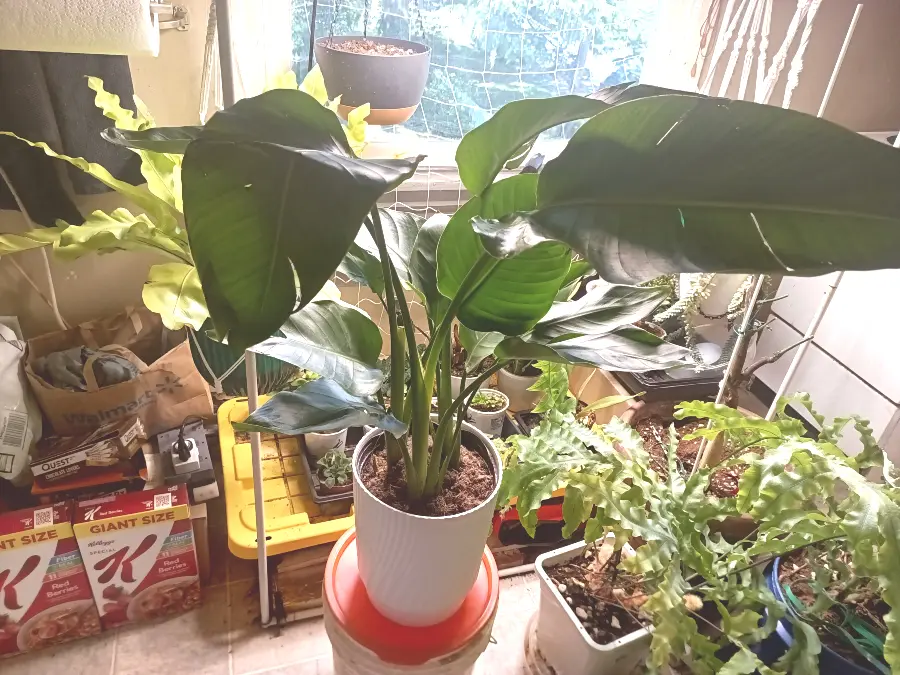
White Bird of Paradise is one of the most impressive plants you can grow when you have the ceiling height and bright light to support it. Even relatively young plants have large paddle-shaped leaves, but mature specimens can become enormous indoors.
Unlike Monstera, which can become very wide, White Bird of Paradise has a more upright growth habit. Long leaf stalks rise from the base and hold the foliage high above the container, eventually creating the look of a small tropical tree.
This is one plant where I’d think seriously about its long-term location before bringing home a large specimen. Moving a mature Bird of Paradise around an apartment or through a doorway isn’t nearly as easy as moving the smaller plant you started with.
How it gets huge: Tall upright growth combined with enormous paddle-shaped leaves.
Space to plan for: Ceiling height is the biggest consideration, along with enough width for the mature leaves.
Learn more in my Bird of Paradise Plant Care Indoors Guide.
You can also see my White Bird of Paradise Unboxing for a closer look at this plant.
3. Philodendron Selloum
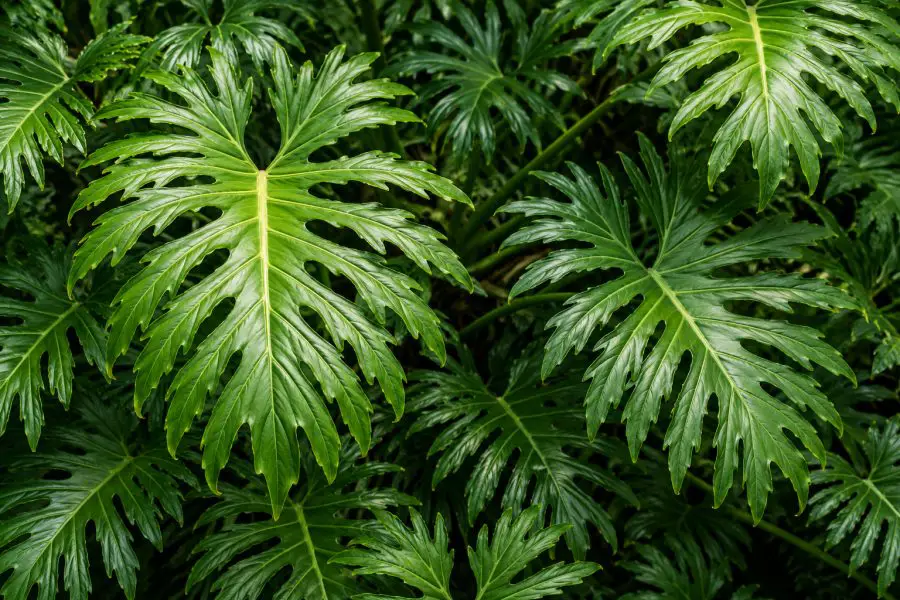
Philodendron Selloum can become a surprisingly substantial houseplant. Its deeply lobed leaves get much larger as the plant matures, and the foliage spreads outward rather than staying confined to a narrow vertical column.
That’s what makes Selloum different from many other large indoor plants. You aren’t only planning for height. A mature plant needs enough open floor space for those long petioles and deeply divided leaves to extend in several directions.
The foliage alone makes it worth growing if you have the room. Mature leaves have a sculptural appearance that can turn the plant into a focal point even before it reaches its maximum indoor size.
How it gets huge: Large deeply lobed leaves carried on long petioles create a broad tropical canopy.
Space to plan for: Width matters as much as height, so give it room around the entire pot.
Learn more in my Philodendron Care Indoors Guide, which includes a section specifically on Philodendron Selloum.
4. Boston Fern
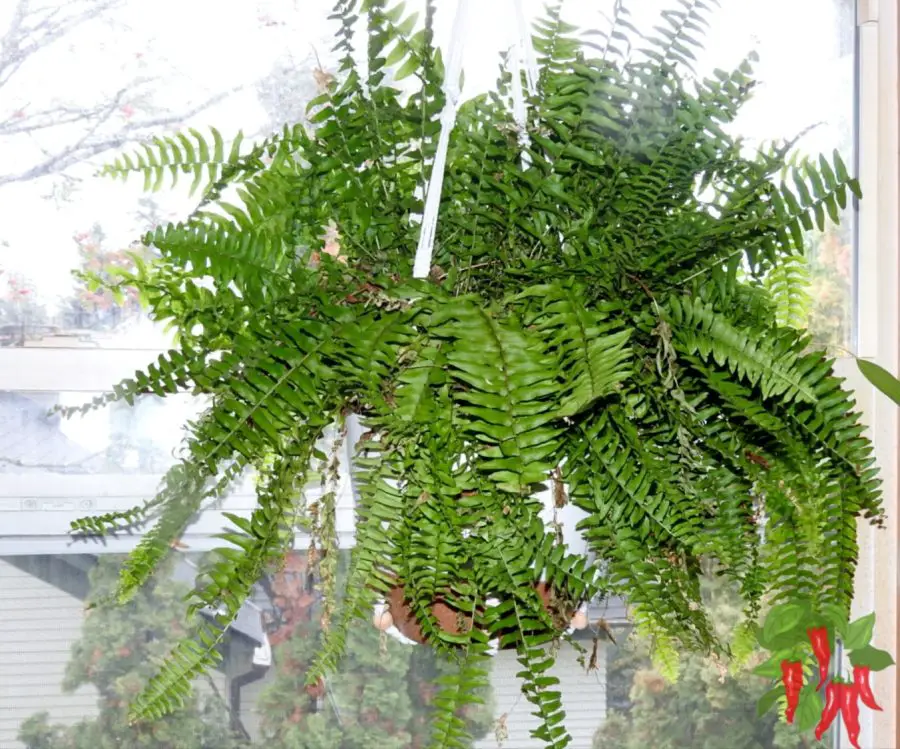
Boston Fern is a great reminder that a houseplant doesn’t have to grow eight feet tall to become huge. A healthy mature fern can develop an enormous mass of arching fronds and take up a surprising amount of horizontal space.
I’ve experienced this one firsthand. My Boston Fern eventually became so large that it completely covered a four-foot window. That’s a lot of plant from something that doesn’t look particularly intimidating when you first bring home a smaller specimen.
A mature Boston Fern can work beautifully in a hanging basket or on an elevated plant stand, but make sure the fronds have room to cascade outward. Cramming a large fern between furniture defeats much of what makes it impressive.
How it gets huge: Hundreds of long arching fronds create a dense, wide mass of foliage.
Space to plan for: Horizontal spread is much more important than ceiling height.
Learn more in my Boston Fern Care Indoors Guide.
5. Areca Palm
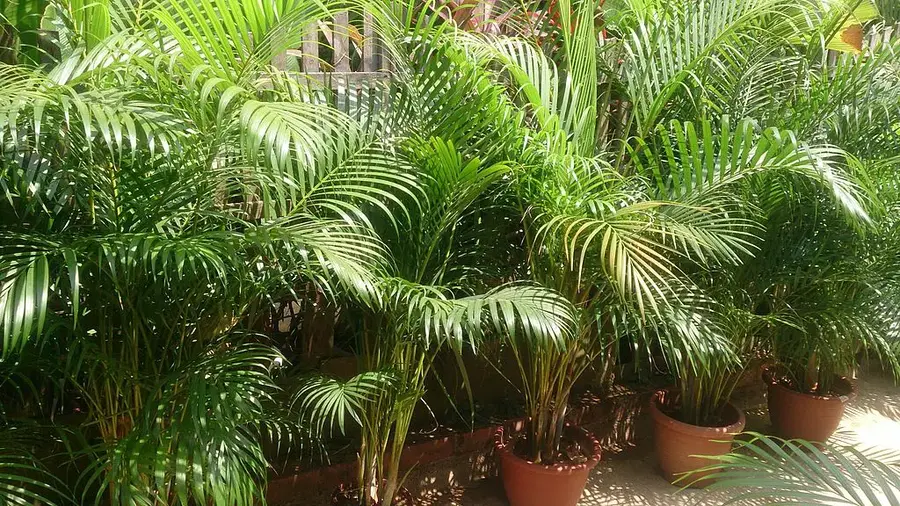
Areca Palm can transform from a manageable nursery plant into a substantial indoor palm. Multiple stems rise from the pot and produce long, feathery fronds that arch outward as the plant matures.
That combination of height and width is what you need to plan for. The pot itself may not occupy much floor space, but mature fronds can extend well beyond it and make the plant feel considerably larger.
Areca Palm is especially useful when you want a large plant with a softer appearance. Instead of one solid mass of giant leaves, you get layers of narrow leaflets that create a lighter, more airy tropical canopy.
How it gets huge: Multiple tall stems topped with long, arching, feathery fronds.
Space to plan for: Allow room above and around the plant for the fronds to arch naturally.
Learn more in my Areca Palm Care Indoors Guide.
6. Bamboo Palm
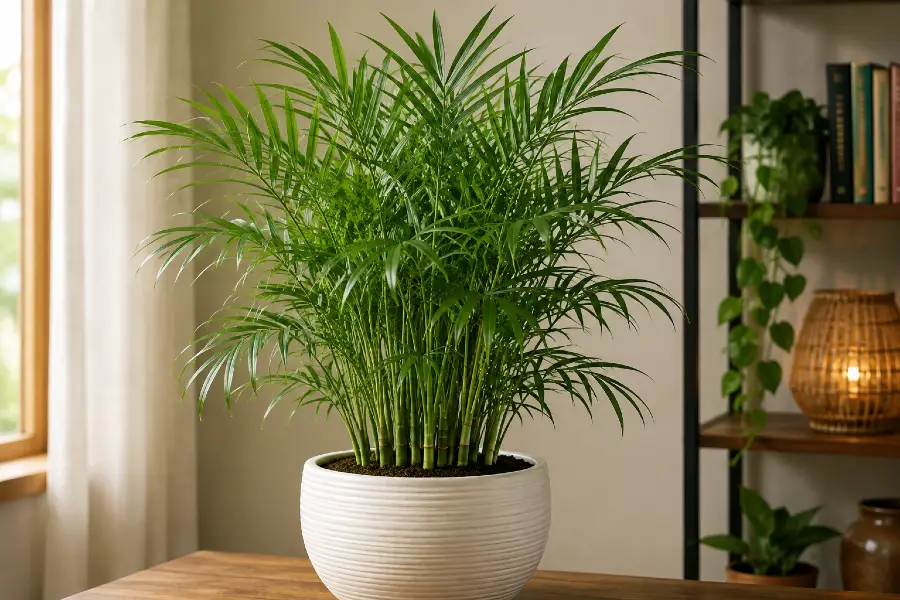
Bamboo Palm is another palm that can become much larger indoors than its original nursery size suggests. It grows as a clump of slender, cane-like stems topped with feathery green fronds.
As more canes develop and existing stems become taller, the plant fills out from the base upward. That gives a mature Bamboo Palm a dense, almost screen-like appearance that can work especially well when you want greenery with height.
The multiple stems also make it look substantial without the heavy visual weight of a plant with enormous solid leaves.
How it gets huge: Clusters of increasingly tall bamboo-like canes topped with spreading palm fronds.
Space to plan for: Give it vertical room plus enough space around the upper canopy for the fronds.
Learn more in my Bamboo Palm Care Indoors Guide.
7. Rubber Plant
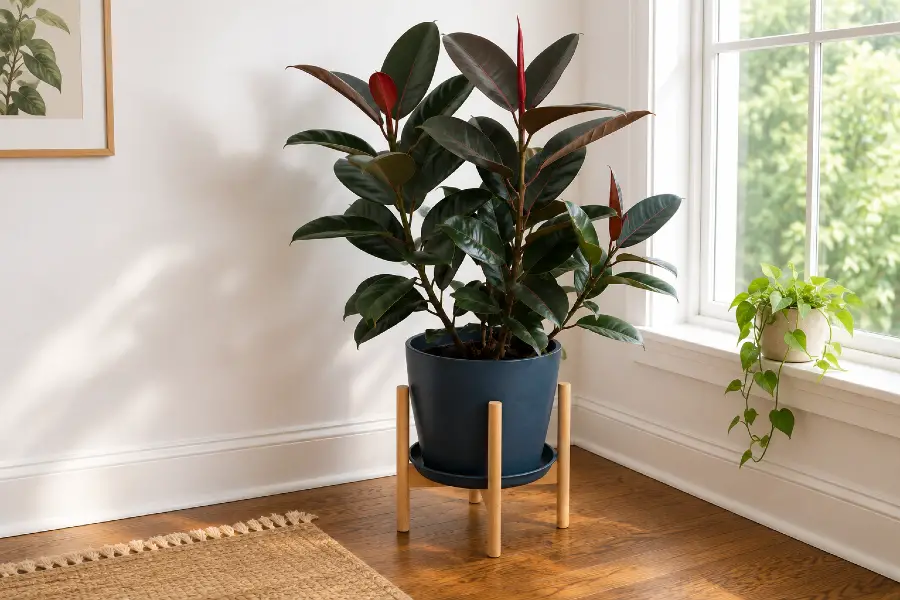
Rubber Plant can eventually develop into an indoor tree rather than simply looking like another potted foliage plant. Its thick stems support large, glossy leaves, and a healthy plant can continue growing upward until ceiling height becomes the limiting factor.
You have some control over that size. Pruning can limit height and encourage branching, which produces a fuller plant. If you let a strong central stem continue growing, however, Rubber Plant can become impressively tall.
The large leaves also give the plant plenty of visual weight without requiring the enormous horizontal footprint of a mature Monstera or Selloum.
How it gets huge: Tree-like vertical growth with large, thick leaves and increasingly substantial stems.
Space to plan for: Watch ceiling height and leave some room for branching as the plant matures.
Learn more in my Rubber Plant Care Indoors Guide.
8. Fiddle Leaf Fig
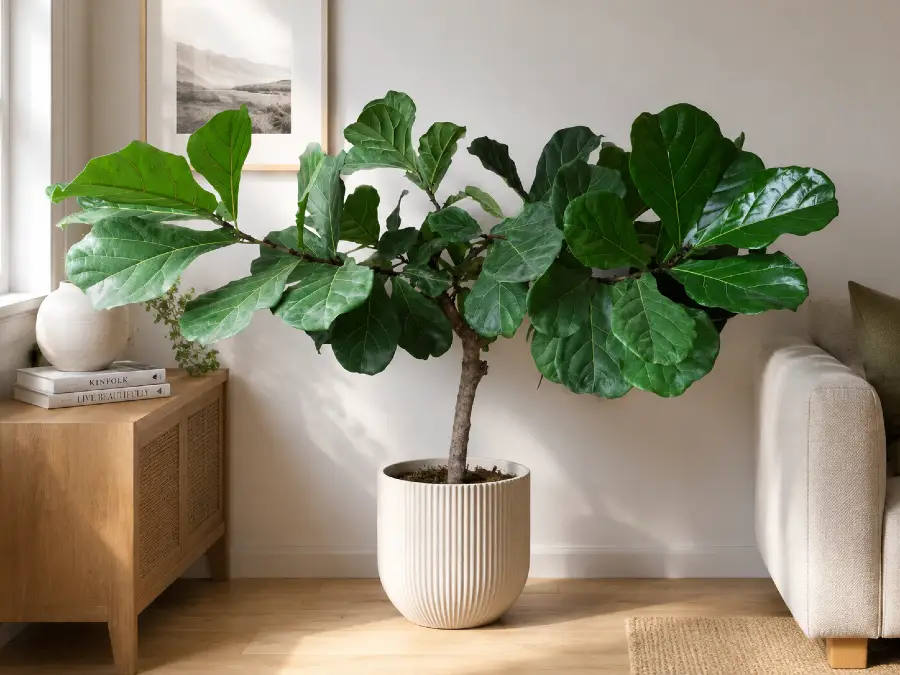
Fiddle Leaf Fig combines two characteristics that make a houseplant look huge: substantial height and oversized leaves. The broad fiddle-shaped foliage creates an impressive canopy as the plant develops into a taller indoor specimen.
A single-stem plant can grow upward like a small tree, while pruning can encourage branching and produce a wider canopy. Either way, this isn’t a plant I’d plan to keep on a tabletop for long.
Good placement becomes increasingly important as the plant grows because moving a tall Fiddle Leaf Fig isn’t particularly convenient. Give it a bright location where it has enough vertical room to develop and you won’t have to keep relocating it as it gets larger.
How it gets huge: Tall woody growth topped with oversized fiddle-shaped leaves.
Space to plan for: Primarily height, with additional width if you encourage the plant to branch.
Learn more in my Fiddle Leaf Fig Indoor Care Guide.
9. Umbrella Plant
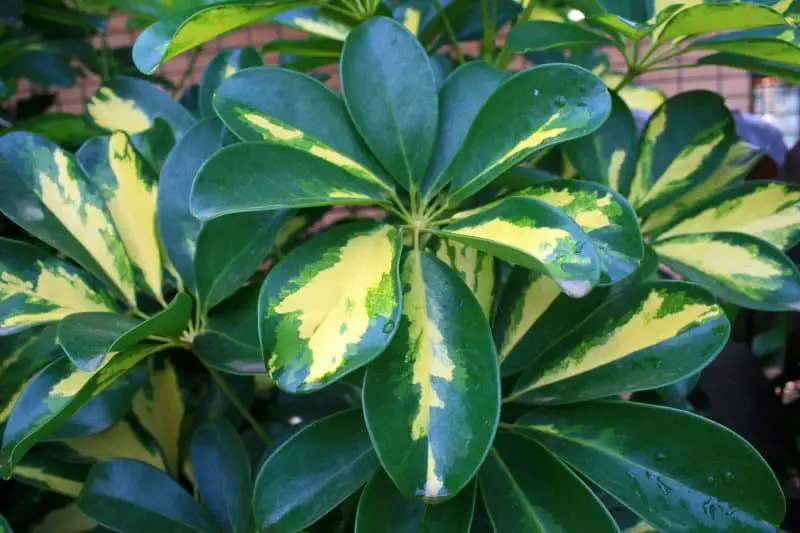
Umbrella Plant, or Schefflera arboricola, is often sold as a fairly compact houseplant, but it can become a substantial floor plant with time. The stems grow taller and branch while clusters of leaflets spread outward to form a dense canopy.
One advantage of Schefflera is that you have quite a bit of control over its final shape. Regular pruning can keep it bushier and more compact, while allowing the stems to grow gives you a taller, more tree-like plant.
That makes it a good choice if you want a potentially large houseplant but still want some ability to manage its size as your available space changes.
How it gets huge: Tall branching stems develop a broad canopy filled with umbrella-like clusters of leaflets.
Space to plan for: Both height and width, although pruning can help control either one.
Learn more in my Umbrella Plant Care Indoors Guide.
10. Ponytail Palm
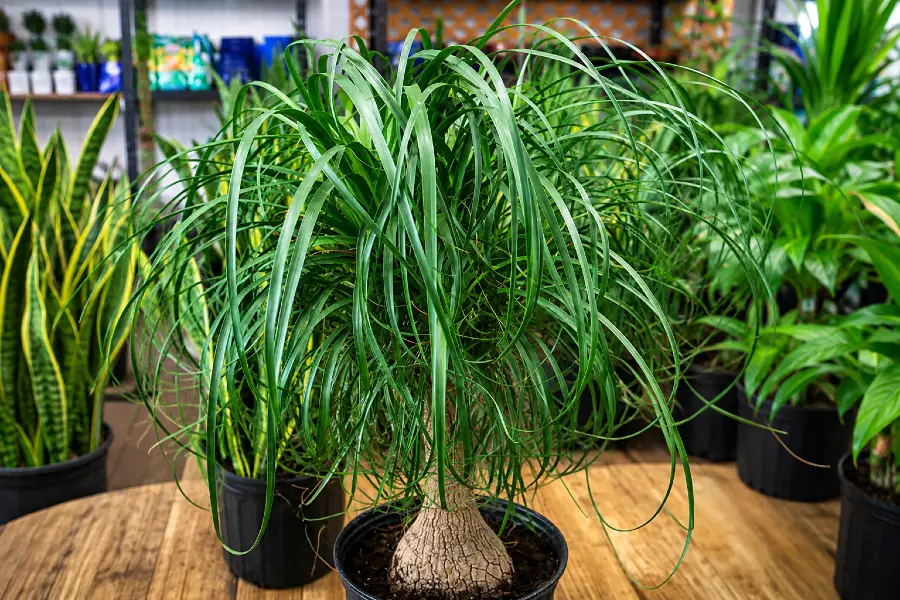
Ponytail Palm is a much slower route to a big houseplant, but older specimens can become impressive. Despite its common name, it isn’t a true palm. It develops a thick, swollen base with a trunk topped by long, narrow leaves that cascade downward.
Young Ponytail Palms are easy to fit on tables and plant stands, which can make their eventual size easy to underestimate. Given enough time, a mature specimen can become a substantial floor plant with a thick trunk and a large fountain of foliage.
The slow growth can actually be an advantage indoors. You get an unusual plant that has the potential to become large without having to worry about it suddenly taking over the room.
How it gets huge: A gradually enlarging trunk and swollen base support increasingly long, cascading foliage.
Space to plan for: Primarily vertical room, plus enough clearance for the long leaves to arch outward.
Learn more in my Ponytail Palm Care Indoors Guide.
11. Colocasia (Elephant Ear)
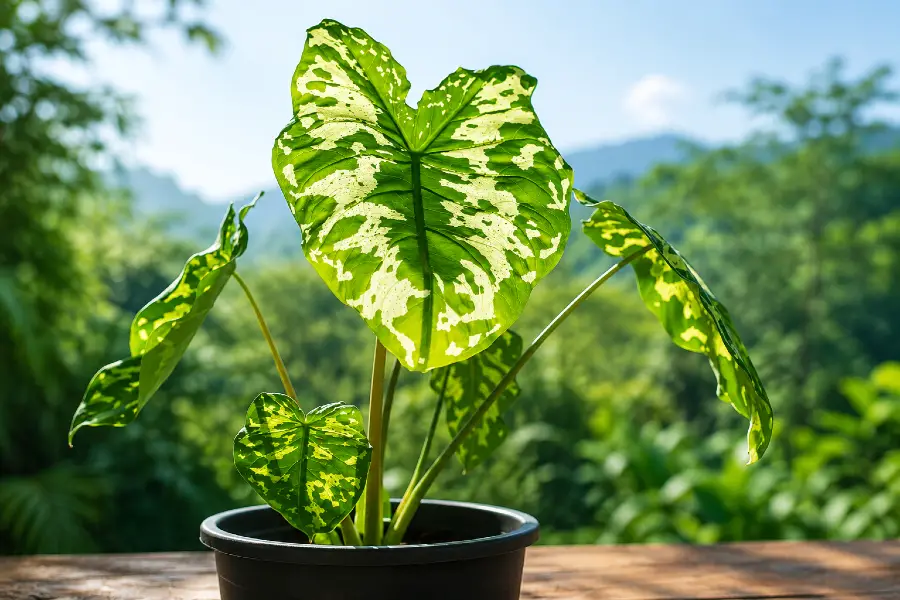
Colocasia doesn’t have to grow into an indoor tree to look enormous. Its individual leaves can become the main attraction, producing the huge heart- to shield-shaped foliage behind the Elephant Ear name.
This is a good example of a plant where leaf size matters as much as overall height. Several large leaves extending from the container can quickly occupy a surprising amount of space.
Colocasia also brings a different look to a collection of large plants. Instead of woody trunks or feathery palm fronds, you get oversized tropical leaves that can immediately become a focal point.
How it gets huge: Enormous individual leaves held on long stalks create a broad tropical display.
Space to plan for: Leaf spread is the big consideration. Leave room around the plant instead of judging its needs by pot size alone.
Learn more in my Colocasia Indoor Care Guide.
12. Bird’s Nest Fern
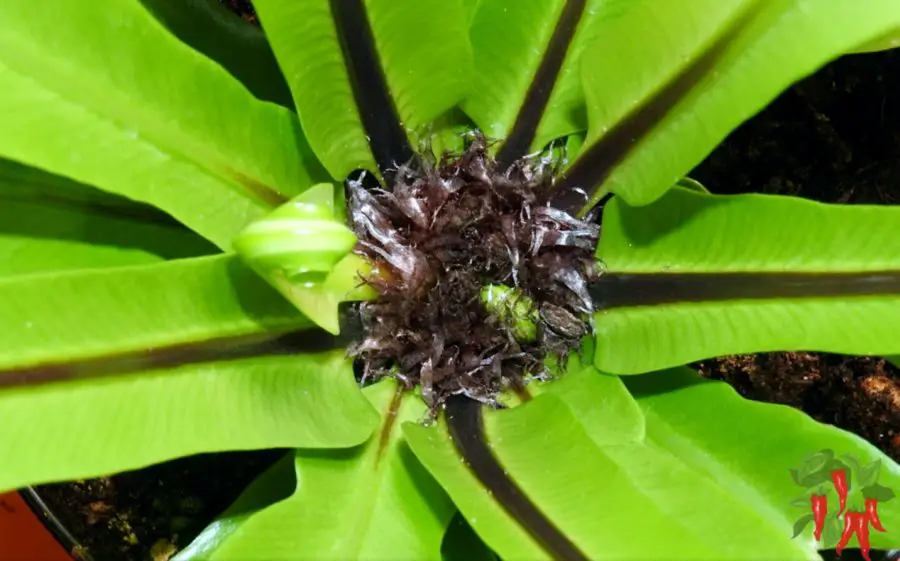
Bird’s Nest Fern is another plant that gets big by spreading rather than racing toward the ceiling. Its broad fronds emerge from a central rosette and extend outward as the plant matures.
A young Bird’s Nest Fern can fit easily on a table or plant stand, but mature plants can develop long, wide fronds that require considerably more room. The broad foliage also makes the plant look much more substantial than ferns with finely divided fronds.
If you give one good humidity, appropriate moisture, and enough room to develop, it can eventually become a very impressive tropical specimen.
How it gets huge: Increasingly long and broad fronds spread outward from the central rosette.
Space to plan for: Horizontal room around the plant so mature fronds aren’t constantly pressed against walls or furniture.
Learn more in my Bird’s Nest Fern Indoor Care Guide.
13. Dracaena
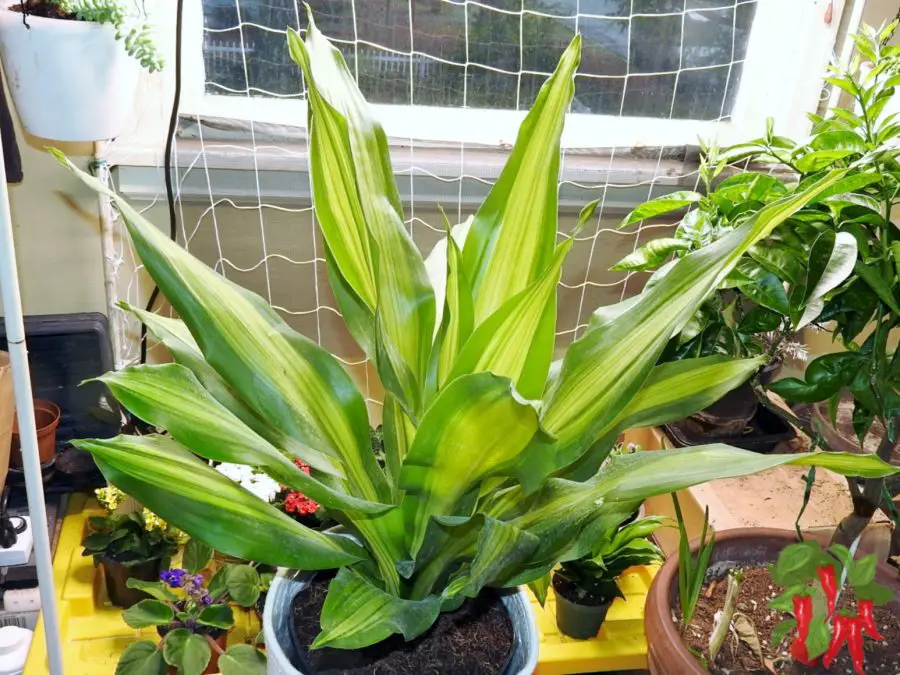
Some Dracaena varieties can develop into tall, narrow floor plants that work particularly well when you want height without giving up as much floor space. Their cane-like stems gradually elongate while clusters of foliage develop toward the top.
That upright growth makes Dracaena different from a sprawling Monstera or Philodendron Selloum. A mature plant can have plenty of presence without extending several feet into the room.
You can also prune many Dracaenas when they become taller than you want. New growth can develop below the cut, giving you some control over both height and branching.
How it gets huge: Tall cane-like stems gradually create an upright, tree-like houseplant.
Space to plan for: Mostly vertical space, making it useful where floor space is more limited.
Learn more in my Dracaena Care Indoors Guide.
14. Norfolk Island Pine
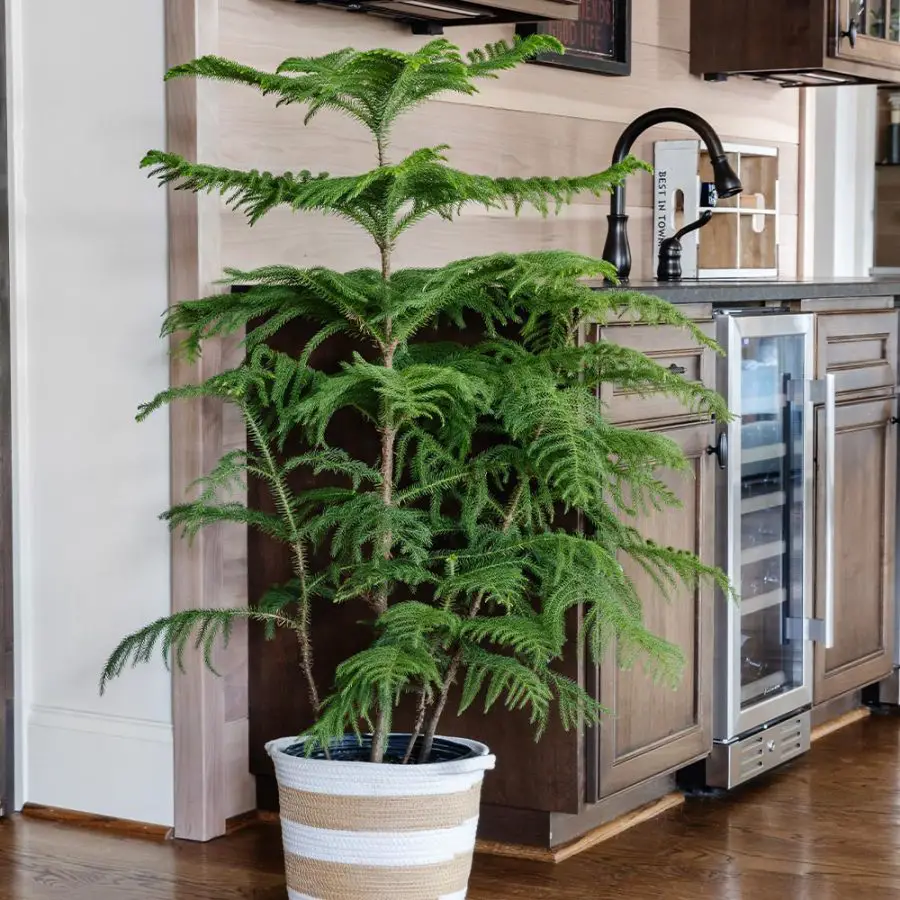
Norfolk Island Pine often enters the home as a small tabletop plant, especially around the holidays, but that’s a very misleading picture of what the plant can eventually become.
Given suitable conditions and enough time, it develops a taller central trunk surrounded by tiers of horizontal branches. As those branches become longer, you have to account for width as well as height.
Indoors, available light, container size, and ceiling height usually limit the plant long before it approaches anything resembling its outdoor potential. Even so, an established Norfolk Island Pine can become a substantial indoor specimen.
How it gets huge: A steadily elongating central trunk develops increasingly broad tiers of branches.
Space to plan for: Ceiling height plus clearance around the plant for its horizontal branches.
Learn more in my Norfolk Island Pine Care Indoors Guide.
15. Kentia Palm
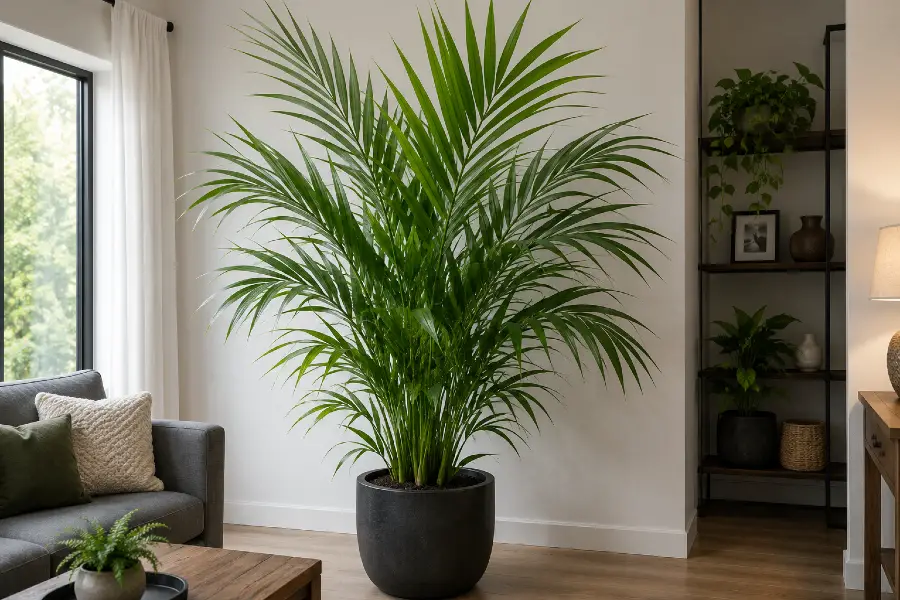
Kentia Palm is a classic large indoor palm. Its long, graceful fronds arch outward from tall stems, giving the plant plenty of height while also creating a broad tropical canopy.
Unlike a plant with one heavy central trunk and huge solid leaves, a Kentia Palm has a softer appearance. That doesn’t mean it stays small. Mature plants need real room for their fronds to extend naturally.
It’s the kind of plant that can eventually turn an empty corner into a major part of the room rather than simply filling the space beside a piece of furniture.
How it gets huge: Tall stems combined with long, arching palm fronds create both height and width.
Space to plan for: Plenty of vertical space and an open area around the canopy.
Learn more in my Kentia Palm Care Indoors Guide.
Which Huge Indoor Plant Fits Your Space?
The biggest plant isn’t automatically the best choice. I would start by looking at the type of space you actually have available.
| Your Space | Plants to Consider |
|---|---|
| High ceiling, limited floor width | White Bird of Paradise, Rubber Plant, Dracaena, Fiddle Leaf Fig |
| Wide open area | Monstera, Philodendron Selloum, Areca Palm, Kentia Palm |
| Want enormous leaves | Colocasia, White Bird of Paradise, Monstera, Philodendron Selloum, Fiddle Leaf Fig |
| Want a huge fern | Boston Fern, Bird’s Nest Fern |
| Want a palm | Areca Palm, Bamboo Palm, Kentia Palm |
| Need more control over size | Umbrella Plant, Rubber Plant, Dracaena |
| Don’t mind waiting | Ponytail Palm, Norfolk Island Pine |
Can You Keep a Huge Houseplant Smaller?
In many cases, yes. You don’t necessarily have to let a plant reach the largest size it’s capable of reaching indoors.
Pruning works particularly well with plants such as Rubber Plant, Umbrella Plant, Dracaena, and Fiddle Leaf Fig. You can control height, encourage branching, or reshape the plant when it begins outgrowing its location.
Container size also affects how quickly some plants grow, although keeping a plant severely root-bound isn’t a good long-term size-control strategy. The goal is to manage growth without compromising the health of the plant.
For climbing plants such as Monstera, support can actually make a large plant easier to accommodate. Encouraging upward growth on a sturdy support is usually more manageable than allowing long stems and giant leaves to spread in every direction.
Other plants are harder to squeeze into a small footprint. A mature Boston Fern naturally wants to spread, while White Bird of Paradise eventually needs substantial vertical room. With those plants, choosing the right location from the beginning is often easier than continually trying to make the plant fit a space that’s simply too small.
Common Mistakes When Growing Huge Indoor Plants
Choosing a plant based only on its nursery size.
A two-foot plant can look perfect in an empty corner today and become a completely different proposition after several years of healthy growth. Look at the mature growth habit before deciding where it belongs.
Planning for height but forgetting width.
This is particularly important with Monstera, Philodendron Selloum, Boston Fern, Areca Palm, and Kentia Palm. The ceiling may be high enough, but the foliage can still extend several feet into the room.
Putting a large plant in a dark corner just because it fits.
Floor space and growing conditions are two different things. A plant still needs appropriate light even when you’ve found the perfect empty corner for it.
Waiting until the plant is enormous to think about moving it.
Large containers filled with potting mix become heavy, especially immediately after watering. If you know a plant has the potential to get huge, think about its long-term placement while it’s still relatively easy to move.
Assuming every large plant needs an enormous pot.
Pot size should match the root system rather than the size you hope the foliage will eventually reach. Moving a plant into a container that’s much too large can leave excess potting mix wet for too long.
Frequently Asked Questions
What indoor plants get really big?
Monstera, White Bird of Paradise, Philodendron Selloum, Rubber Plant, Fiddle Leaf Fig, Areca Palm, Bamboo Palm, Kentia Palm, and Norfolk Island Pine can all become substantial indoor plants. Boston Fern and Bird’s Nest Fern can also become surprisingly large through their overall spread rather than height.
What indoor plant has the biggest leaves?
Colocasia, White Bird of Paradise, Monstera, and Philodendron Selloum are among the strongest choices when your goal is enormous foliage. Fiddle Leaf Fig also produces impressively large leaves on a tall indoor plant.
What is a good huge plant for a living room?
Monstera is a great option when you have both height and width available. White Bird of Paradise works particularly well when you have a high ceiling, while Rubber Plant or Fiddle Leaf Fig can provide a more upright, tree-like appearance.
Which large indoor plants don’t take up as much floor space?
Dracaena and Rubber Plant can be good choices because their growth is generally more vertical than a sprawling Monstera or Philodendron Selloum. Umbrella Plant can also be pruned to maintain a narrower shape.
Can I grow huge houseplants in an apartment?
Yes, as long as you have suitable light and choose the plant for the space you actually have. I grow larger plants a few feet back from bright windows when their size makes keeping them directly at the window impractical. Vertical growers can also be easier to accommodate than plants that spread several feet across.
Do huge indoor plants need huge pots?
Not automatically. The container should be sized for the root system. As the roots fill the pot, you can gradually move the plant into a larger container rather than jumping immediately to an oversized pot.
Final Thoughts
There’s something especially satisfying about watching a houseplant become much larger than the plant you originally brought home. Monstera leaves get bigger and more dramatic, palms develop long arching fronds, and a White Bird of Paradise can eventually become part of the architecture of the room.
Boston Fern has been one of the best reminders for me that huge doesn’t necessarily mean tall. When mine became large enough to cover a four-foot window, width suddenly mattered a lot more than height.
That’s the main thing I’d consider before choosing any of these plants. Don’t just ask how tall it gets. Think about how it grows, how wide the foliage becomes, how much light it needs, and whether you’ll still have a practical place for it several years from now.
If you have the room, though, large houseplants can be some of the most impressive plants you grow indoors. One healthy mature specimen can completely change the feel of a room.
Continue Exploring Large Indoor Plants
If you’re looking for more ways to choose larger plants or create more impact with your indoor garden, continue with these guides:
- The Best Floor Plants for Indoors — Compare plants that work particularly well when you want greenery at floor level.
- Statement Plants for Indoors — Find dramatic plants that can become a focal point in a room.
- Indoor Plants With Interesting Leaves — Explore unusual leaf shapes and textures, including several of the big tropical plants featured here.
- Indoor Plants That Love East-Facing Windows — See which tropical plants can take advantage of bright morning light.