
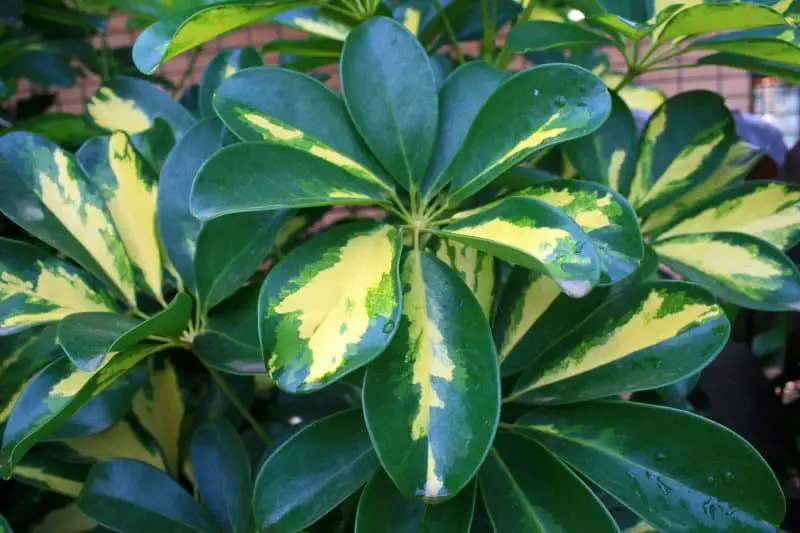
Schefflera Care Indoors is relatively simple, which is one reason these attractive umbrella plants remain popular houseplants. Their glossy foliage, upright growth habit, and adaptability make them excellent choices for homes, apartments, and offices.
Whether you’re growing a dwarf umbrella tree (Schefflera arboricola) or another variety, providing the right balance of light, watering, humidity, and proper potting conditions will help your plant thrive.
This guide covers everything you need to know about Schefflera Care Indoors, including lighting, watering, soil selection, pruning, repotting, propagation, and troubleshooting common problems.
What You’ll Learn
- How much light Schefflera plants need indoors
- When and how often to water
- The best potting mix and container choices
- How to prune and repot successfully
- How to propagate new plants
- Common Schefflera problems and solutions
Quick Answer: Schefflera Care Indoors
Schefflera Care Indoors requires bright indirect light, watering when the top inch of the growing medium becomes dry, moderate humidity, and a well-draining coco coir and perlite growing mix. Proper drainage, occasional pruning, and regular fertilizing during active growth will help maintain a healthy umbrella plant.
What Are Schefflera plants?
 Variegated Schefflera Arboricola Plant, Umbrella Plant

Most Schefflera plants being sold are Schefflera arboricola because the umbrella tree (Schefflera actinophylla) is much larger often growing 50 feet tall.
However, when grown indoors they are typically much smaller.
Schefflera plants can grow to be quite large, but Schefflera arboricola or dwarf umbrella plant can be kept 4-8 feet tall and does well indoors.
Schefflera are characterized by their glossy green leaves, which are divided into seven to nine leaflets.
Schefflera plants can be found in a variety of colors, including green and variegated colors of green with a splash of yellow.
Schefflera Care Indoors
 Schefflera Arboricola ‘Gold Capella’ – 4”
Schefflera care indoors is relatively easy as long as you provide the plant with the proper conditions.
Schefflera Light Requirements
Schefflera plants grow best in bright indirect light. In their natural habitat, these tropical plants grow beneath taller trees where they receive filtered sunlight throughout the day.
An east-facing window is often an ideal location because it provides gentle morning sun followed by bright indirect light for the rest of the day. Bright south-facing rooms also work well when direct afternoon sunlight is filtered through a sheer curtain.
Schefflera plants can tolerate moderate light conditions, but growth may become slower and less compact. Variegated varieties typically need brighter light than solid green varieties to maintain their colorful foliage.
Too little light can cause leggy growth, larger gaps between leaves, leaf drop, and a thin, stretched appearance. If your Schefflera begins leaning toward a window or loses lower leaves, it may need more light.
While Schefflera enjoys bright conditions, prolonged exposure to intense afternoon sun can scorch the leaves, especially during summer. If you notice faded foliage or brown patches on leaves, move the plant slightly farther from the window.
If natural light is limited, Schefflera can also be grown successfully under LED grow lights for 12 to 14 hours per day.
Best Indoor Locations for Schefflera Plants
Choosing the right location can significantly improve the health, appearance, and growth rate of your Schefflera. These tropical plants perform best in bright areas where they receive plenty of indirect light throughout the day.
- East-Facing Windows: One of the best locations for Schefflera. Morning sun is gentle and provides excellent growing conditions.
- Bright South-Facing Rooms: Ideal when the plant is positioned a few feet back from the window or protected by a sheer curtain.
- Bright Living Rooms: Larger Schefflera plants make excellent floor plants and focal points in well-lit spaces.
- Home Offices: Schefflera adapts well to bright office environments and adds attractive greenery without demanding constant attention.
- Sunrooms: Often provide near-ideal conditions with bright light and stable temperatures.
- Grow Light Setups: A good option for apartments or darker homes where natural light is limited.
Avoid placing Schefflera plants directly beside heating vents, air conditioners, fireplaces, or drafty exterior doors. Sudden temperature changes can cause leaf drop and stress the plant.
If your Schefflera begins leaning heavily toward a window, rotate the container every few weeks to encourage balanced growth and maintain an attractive shape.
Schefflera Watering Requirements
Proper watering is one of the most important parts of Schefflera Care Indoors. These plants prefer evenly moist growing conditions but do not tolerate constantly wet soil.
Allow the top inch of the growing medium to dry before watering again. When it is time to water, thoroughly soak the growing medium until water flows from the drainage holes at the bottom of the container.
Always discard excess water from saucers or decorative cachepots. Allowing roots to sit in standing water can quickly lead to root rot and other moisture-related problems.
Schefflera plants generally need more frequent watering during spring and summer when actively growing. During fall and winter, growth slows and watering requirements decrease.
A fast-draining growing mix made from approximately 70% coco coir and 30% perlite helps maintain the balance between moisture retention and drainage that Schefflera roots prefer.
Yellow leaves, leaf drop, and soft stems often indicate overwatering, while drooping leaves and dry, crispy foliage may signal that the plant is staying too dry for too long.
If your tap water contains high levels of fluoride or chlorine, consider using filtered, distilled, or rainwater. Schefflera plants can be sensitive to mineral buildup, which may contribute to brown leaf tips over time.
Schefflera Soil, Pots, and Drainage
Schefflera plants grow best in a loose, well-draining growing medium that provides both moisture retention and excellent root-zone aeration. A coco coir-based mix works exceptionally well because it holds moisture evenly without becoming compacted over time.
For indoor Schefflera plants, a simple blend of approximately 70% coco coir and 30% perlite creates an ideal balance of water retention and drainage. The coco coir helps maintain consistent moisture levels, while the perlite improves airflow around the roots and helps excess water drain away quickly.
Avoid heavy potting mixes that stay wet for long periods, as constantly saturated soil can increase the risk of root rot and other moisture-related problems.
Container selection is just as important as the growing medium. Always choose a pot with drainage holes to allow excess water to escape after watering. Even the best soil mix can become problematic if water is trapped at the bottom of the container.
When selecting a new container, choose one that is only 1 to 2 inches wider than the current root ball. Oversized pots tend to hold excess moisture and can slow root development.
Terracotta pots dry more quickly and can help reduce overwatering issues, while plastic and glazed ceramic containers retain moisture longer. Any of these materials can work successfully when paired with a fast-draining coco coir and perlite mix and proper drainage holes.
Fertilizing Schefflera Plants
Schefflera plants benefit from regular feeding during their active growing season. While they are not particularly heavy feeders, occasional fertilization can encourage fuller growth, healthier foliage, and stronger stems.
Apply a balanced liquid houseplant fertilizer once a month during spring and summer when the plant is actively producing new growth. Follow the label directions and avoid overfertilizing, as excessive fertilizer can damage roots and cause brown leaf tips.
Reduce or stop fertilizing during fall and winter when growth naturally slows. Feeding during periods of slow growth often provides little benefit and may contribute to salt buildup in the growing medium.
If you notice a white crust forming on the surface of the growing medium or around the rim of the pot, fertilizer salts may be accumulating. Flushing the container thoroughly with water can help remove excess salts.
Plants growing in a coco coir and perlite mix may benefit from occasional feeding because coco coir contains very few nutrients on its own. Regular but moderate fertilization helps replace nutrients used by the plant throughout the growing season.
Schefflera Pruning
Pruning Schefflera plants is a necessary part of their care. Regular pruning helps to encourage new growth, and it also keeps the plant looking its best.
When pruning, always use sharp, clean shears. Make sure to remove any dead or damaged leaves, as well as any suckers that may be growing from the base of the plant.
It’s important to prune Schefflera back to a healthy bud, as this will help promote new growth.
In general, it’s best to prune Schefflera in the early spring, before new growth begins.
However, if your plant is overgrown or damaged, you may need to prune it more frequently.
Repotting Schefflera
Schefflera plants typically need repotting every two to three years, although growth rate and container size can affect timing. Rather than repotting on a strict schedule, watch for signs that the plant has become root-bound.
Common signs include roots growing through drainage holes, water running straight through the pot, slowed growth, or roots circling heavily around the root ball.
The best time to repot is during spring or early summer when the plant is actively growing. Choose a container that is only 1 to 2 inches wider than the existing pot. Moving to an oversized container can cause the growing medium to stay wet too long.
A coco coir and perlite growing mix works exceptionally well when repotting because it provides excellent drainage while maintaining consistent moisture around the roots.
Always use a container with drainage holes and water thoroughly after repotting to help settle the growing medium around the root system.
Schefflera Propagation
There are a few different ways to propagate Schefflera plants
Stem Cuttings
One method is to take stem cuttings from an existing plant. Cut a 2-3 inch piece of stem from the tips of new growth, and remove the bottom leaves.
Place the cutting in a glass of water, and wait for it to develop roots. Once the roots are several inches long, you can pot up the cutting in a well-draining potting mix.
You can also root your cuttings in soil but I like using water because you can see if new roots are developing.
Propagating Schefflera By Division
Some plants have multiple stems but if your Schefflera grows as a single stem plant propagating Schefflera by division is not possible.
But you can propagate Schefflera by division if you have a multi-stem plant.
Carefully dig up an existing plant, and gently pull it apart into 2-3 sections. You may need a sharp knife to do this.
Replant each section in its own pot, and water it well.
Propagating Schefflera From Seed
Another option is to grow Schefflera from seed. Fill a seed tray with moistened potting mix, and scatter the seeds on top.
Gently press the seeds into the soil, and mist lightly with water.
Cover the tray with plastic wrap or a glass lid, and place it in a warm, bright spot. Remove the cover once the seeds have germinated.
Schefflera Common Problems And Solutions
Why Are My Schefflera Leaves Turning Yellow?
Yellow leaves are one of the most common Schefflera problems. In most cases, overwatering is the cause. When roots remain constantly wet, they struggle to absorb oxygen, which can lead to yellowing foliage and eventual leaf drop.
Allow the top inch of the growing medium to dry before watering again and always use a container with drainage holes. Poor drainage and oversized pots can also contribute to yellow leaves.
Why Is My Schefflera Dropping Leaves?
Leaf drop is often triggered by environmental changes. Moving the plant, sudden temperature fluctuations, drafts, underwatering, overwatering, or insufficient light can all cause leaves to fall.
Check your watering routine and ensure the plant is receiving bright indirect light. Once conditions stabilize, new growth usually follows.
Why Is My Schefflera Getting Leggy?
Long stems with large spaces between leaves are usually a sign that your Schefflera needs more light. Plants naturally stretch toward available light sources when growing conditions are too dim.
Move the plant closer to a bright window or supplement with a grow light. Regular pruning can also encourage a fuller, bushier growth habit.
Why Does My Schefflera Have Brown Leaf Tips?
Brown leaf tips can have several causes, including low humidity, inconsistent watering, fertilizer salt buildup, and minerals commonly found in tap water.
If brown tips become a recurring issue, consider using filtered, distilled, or rainwater. Flushing the growing medium occasionally can also help remove accumulated fertilizer salts.
Root Rot and Overwatering Problems
Root rot is one of the few problems that can quickly kill a Schefflera plant. Symptoms often include yellow leaves, wilting despite moist soil, leaf drop, soft stems, and a foul odor coming from the growing medium.
If root rot is suspected, remove the plant from its container and inspect the roots. Healthy roots are firm and light colored. Dark, mushy roots should be trimmed away before repotting the plant into a fresh coco coir and perlite mix.
Spider Mites, Mealybugs, and Scale
Schefflera plants are generally resilient, but they can occasionally attract common houseplant pests such as spider mites, mealybugs, and scale insects.
Inspect leaves regularly, especially the undersides. Early infestations are much easier to control than severe outbreaks. Insecticidal soap or neem oil treatments are often effective when applied according to label directions.
Is Schefflera Poisonous
Yes, Schefflera is poisonous to cats, dogs, and humans.
The dwarf schefflera produces poisonous oxalates in its leaves and stems. These sharp, tiny calcium oxalate crystals produce results on the skin and mouth, when ingested, similar to the irritation ground glass would produce. https://homeguides.sfgate.com/arboricola-poisonous-81607.html
Many popular houseplants are toxic if eaten. Care should be taken to keep young children and pets away from them.
Schefflera Care Indoors FAQs
How often should I water a Schefflera plant?
Water when the top inch of the growing medium feels dry. Allow excess water to drain completely.
What is the best soil for Schefflera plants?
A coco coir and perlite mix provides excellent moisture retention, drainage, and root-zone aeration.
Can Schefflera grow in low light?
Schefflera can tolerate lower light conditions, but growth is usually stronger and fuller in bright indirect light.
Why are my Schefflera leaves turning yellow?
Yellow leaves are often caused by overwatering, poor drainage, or insufficient light.
Are Schefflera plants toxic to pets?
Yes. Schefflera contains calcium oxalate crystals and is considered toxic to cats and dogs if ingested.
Schefflera Care Indoors Final Thoughts
Schefflera plants remain popular because they combine attractive foliage with relatively simple care requirements. Their adaptability makes them excellent choices for both beginner and experienced houseplant growers.
Providing bright indirect light, proper watering, a fast-draining coco coir and perlite mix, and occasional pruning will help keep your umbrella plant healthy for many years.
With proper Schefflera Care Indoors, these versatile plants can become attractive focal points in almost any indoor space.
Want to transform your indoor space into a lush, thriving haven? These guides will help you master houseplant care with ease.
🌿 Indoor Houseplant Care Guides
- ♻️ Composting Indoors
- 🌳 Rubber Plant Care Indoors
- 🌸 Peace Lily Care Indoors
- 🧀 Swiss Cheese Plant Care
- 🎋 Indoor Bamboo Guide
- 🌱 Vertical Gardening Indoors
- 🌺 Bromeliad Care
- 🥢 Bamboo Plant Indoor Care
- ❤️ Anthurium Care Indoors
- 🌵 How to Grow Succulent Plants
- 🌿 Maidenhair Fern Indoor Care
- See all articles in our Houseplants category