

Rubber plant care indoors is pretty simple once you understand light, watering, soil, and pruning.
These bold, glossy houseplants can grow into beautiful indoor trees, but they do best when you give them steady conditions and avoid overwatering.
If your rubber plant is dropping leaves, stretching toward the window, or sitting in wet soil too long, don’t panic. Most problems are easy to fix once you know what the plant is trying to tell you.
What You’ll Learn
- Best lighting for healthy rubber plant growth
- How often to water rubber plants indoors
- Simple soil and repotting tips
- How to make a rubber plant bushier
- Common problems like leaf drop and curling leaves
- How to propagate rubber plants successfully
Rubber Plant Care Indoors: The Basics
 Burgundy Rubber Plant, Live Indoor Ficus Elastica Tree, 2-3 Feet Tall
Rubber plants, also called rubber trees, are popular indoor plants because they have large glossy leaves, upright growth, and a clean tropical look. They can work as a tabletop plant when young or grow into a floor plant over time.
The rubber plant’s botanical name is Ficus elastica. These plants are native to tropical forests of Southeast Asia, where they grow much larger than they usually do indoors.
Inside the home, rubber plants usually stay much more manageable. With good light, a well-draining mix, and careful watering, they can become long-lasting houseplants without needing constant attention.
Rubber Plant Care Reference Guide
| Characteristic | Details |
|---|---|
| Common Name | Rubber Plant |
| Botanical Name | Ficus elastica |
| Native Habitat | Tropical forests of Southeast Asia |
| Plant Type | Evergreen tree/houseplant |
| Growth Pattern | Upright with large, glossy leaves |
| Mature Size | 6–10 ft indoors, up to 50–100 ft outdoors |
| Watering | Allow top 1–2 inches of soil to dry before watering |
| Light/Sun Exposure | Bright, indirect light; tolerates some gentle direct light |
| Soil Type | Loose, well-draining potting mix |
| Soil pH | Slightly acidic to neutral (6.0–7.5) |
| Temperature | 60–75°F (16–24°C) |
| Humidity | Moderate to high |
| Bloom Time & Flower Color | Rarely flowers indoors; flowers are not the main attraction |
| Potential Problems | Leaf drop, root rot, spider mites, scale, mealybugs |
| Repotting | Every 2–3 years or when root-bound |
| Hardiness Zones (USDA) | 10–12 outdoors |
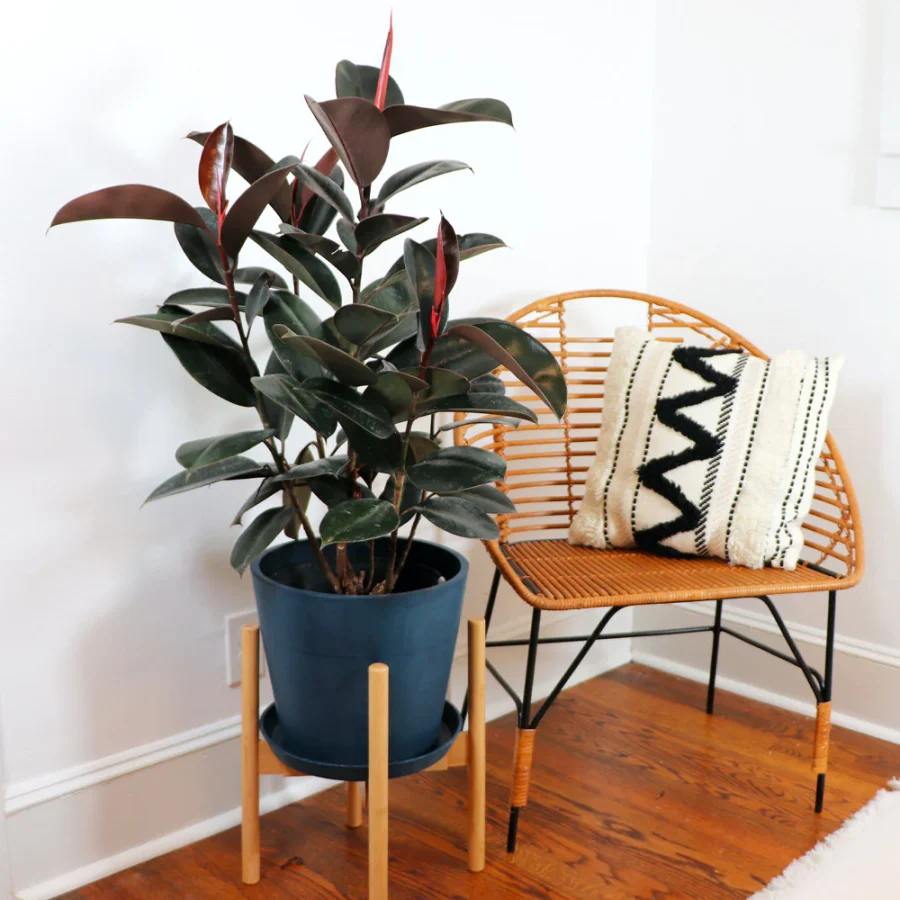
Burgundy Bush, the Rubber Plant, Ficus elastica
| Mature Height: | 7-8 ft. |
| Mature Width: | 2-3 ft. |
| Sunlight: | Indirect Light |
| Growth Rate: | Moderate |
| Botanical Name: | Ficus elastica |
| Grows Well In Zones: | Indoors |

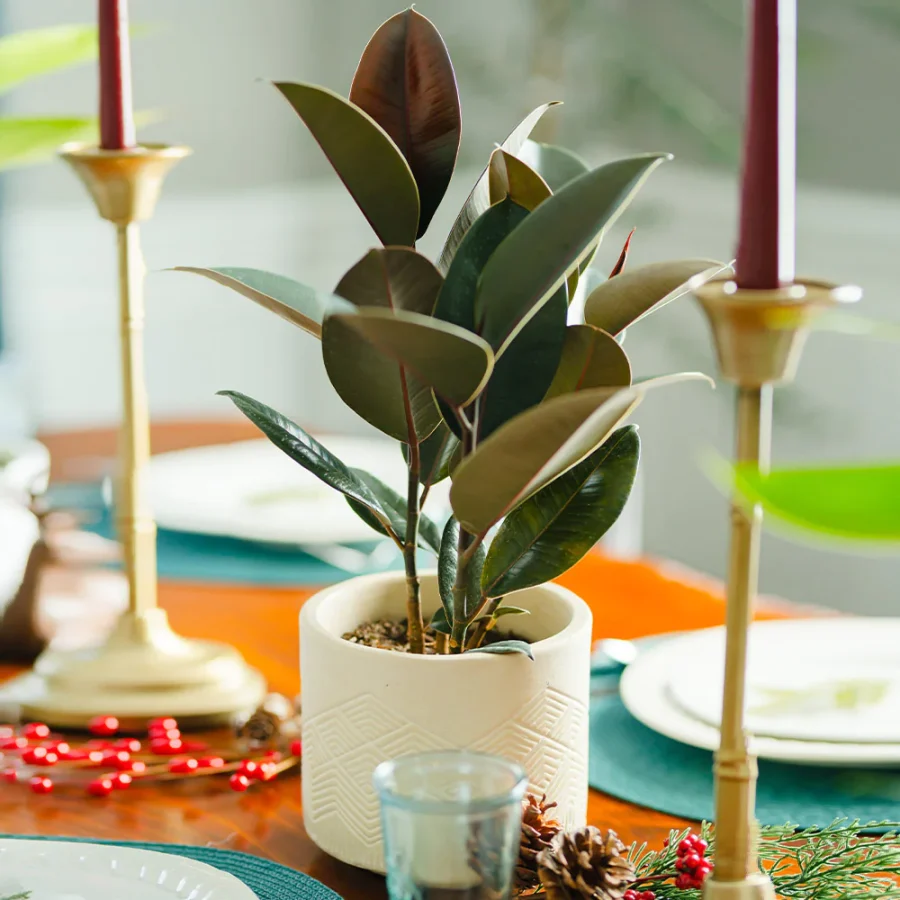
The Burgundy Bush rubber plant is one of the most dramatic indoor ficus varieties. Its deep burgundy leaves can look almost chocolate or purple in the right light, especially with the red midrib running through the foliage.
This variety works well as a statement plant because the leaves are large, glossy, and upright. A young plant can sit on a table or plant stand, while a larger one can become a bold floor plant near a bright window.
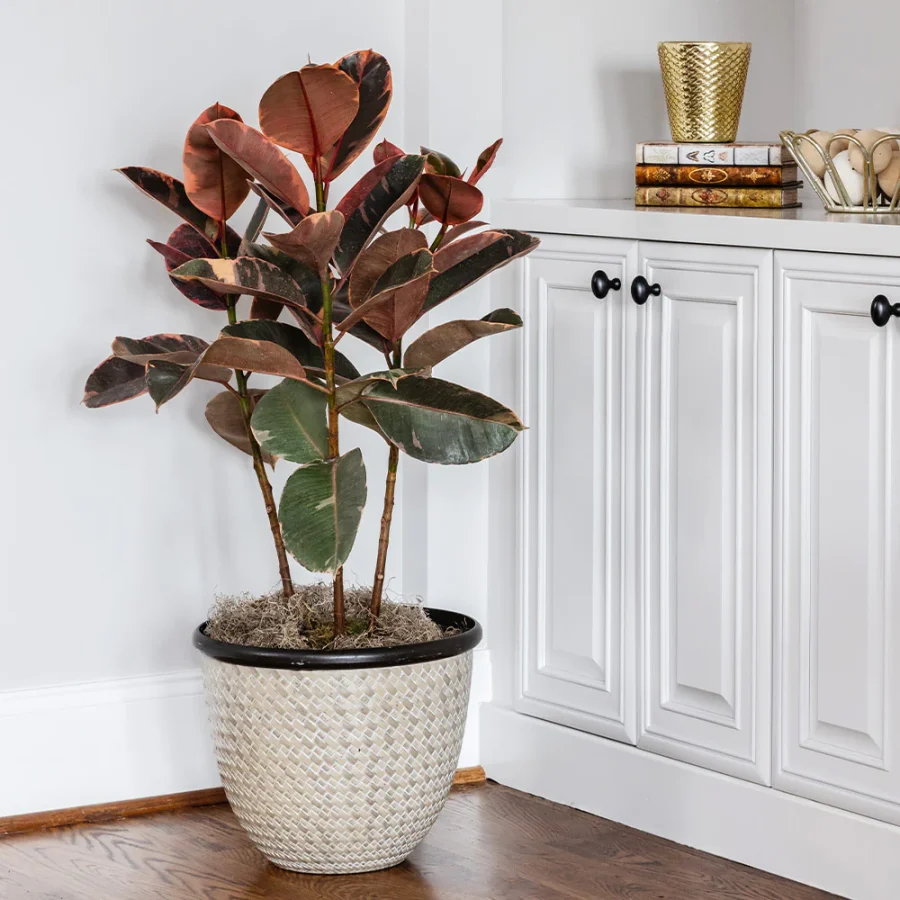
Ficus Ruby (Variegated Rubber Plant) Ficus elastica ‘Ruby’
| Mature Height: | 7-8 ft. |
| Mature Width: | 2-3 ft. |
| Sunlight: | Indirect Light |
| Growth Rate: | Moderate |
| Botanical Name: | Ficus elastica ‘Ruby’ |
| Grows Well In Zones: | Indoors |
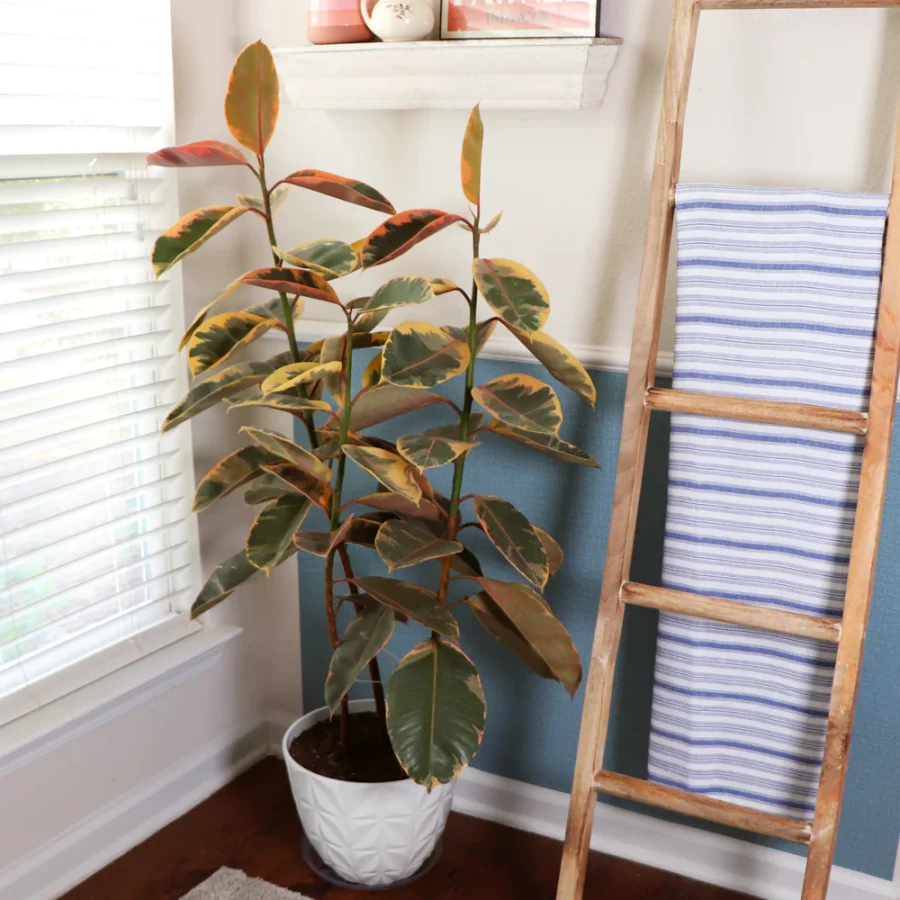
Ficus Ruby is the variegated rubber plant, and it has a much brighter look than the burgundy type. The leaves are usually green with cream, white, and pink variegation, while the newest growth often comes in with a rosy or ruby tone.
This variety is beautiful, but it usually needs brighter light than a plain green or burgundy rubber plant. Variegated leaves have less green surface area, so they need good indirect light to keep their color and grow well indoors.
Rubber Tree Light Requirements

Rubber plants grow best in bright, indirect light. An east-facing window is often a good spot because it gives gentle morning sun without the harsh afternoon heat.
A west or south-facing window can also work, but you may need a sheer curtain or a little distance from the glass to prevent leaf scorch. Direct hot sun can burn the leaves, especially on variegated varieties like Ficus Ruby.
Rubber plants can tolerate lower light, but they usually grow slower and may become leggy. Burgundy and variegated rubber plants often show their best color when they receive brighter indirect light.
Why Rubber Plants Get Leggy Indoors
Leggy growth usually means your rubber plant is not getting enough light. The stems stretch toward the nearest window, and the leaves become spaced farther apart.
Move the plant closer to bright indirect light and rotate the pot every few weeks so all sides grow more evenly. If the plant is already tall and sparse, pruning can help encourage fuller growth over time.
Rubber Plant Soil

Rubber plants need a soil mix that holds some moisture but still drains well. The big mistake is using a dense mix that stays wet for too long.
A good indoor potting mix with added perlite, pumice, orchid bark, or coarse material can work well. The goal is simple: water should move through the pot instead of sitting around the roots.
A Simple Rubber Plant Soil Mix
For a simple mix, you can use a good-quality potting soil and add extra perlite for drainage. If you prefer coco coir, a coco coir and perlite blend can also work because it holds moisture while staying light and airy.
Avoid heavy garden soil indoors. It can compact in containers, drain poorly, and make root rot more likely.
Rubber Tree Pot Sizes and Repotting

Rubber plants do not need huge pots. In fact, putting a small rubber plant into an oversized container can keep the soil wet too long and increase the chance of root rot.
Choose a pot with drainage holes and go only 1–2 inches larger than the current root ball when repotting. A slightly snug pot is usually better than one with too much empty soil around the roots.
When to Repot a Rubber Plant
Rubber plants usually need repotting every 2–3 years, but the plant will tell you when it is ready. Look for roots circling the pot, roots coming out of the drainage holes, slowed growth, or soil drying out much faster than usual.
Spring and summer are the best times to repot because the plant is actively growing and can recover more quickly.
How to Repot a Rubber Tree

Repotting a rubber plant is not complicated. Use fresh, well-draining soil, keep the plant at the same soil level, and avoid burying the stem too deeply.
- Choose a pot with drainage holes.
- Add a small layer of fresh potting mix to the bottom.
- Gently remove the rubber plant from its old pot.
- Loosen circling roots only if needed.
- Place the plant in the new pot and fill around the root ball.
- Water thoroughly and let the excess drain away.
Rubber Plant Watering
Watering is where many rubber plant problems begin. These plants like consistent moisture, but they do not like soggy soil.
A good rule is to water when the top 1–2 inches of soil feel dry. Then water deeply until water drains from the bottom of the pot. Empty any saucer so the plant is not sitting in standing water.
Rubber plants usually need more water during spring and summer when they are actively growing. In fall and winter, growth slows and the soil may stay wet longer, so you can usually water less often.
Signs of Overwatering
Overwatering can cause yellow leaves, leaf drop, mushy stems, fungus gnats, and root rot. If the soil smells sour or stays wet for many days, the mix may be too heavy or the pot may not drain well.
If this happens, let the soil dry more between waterings and check that the pot has drainage. If the plant continues to decline, you may need to inspect the roots and repot into a better-draining mix.
Why Rubber Plant Leaves Curl
Curling leaves are often caused by underwatering, dry indoor air, temperature stress, or inconsistent watering. Rubber plants prefer stable indoor conditions, so sudden changes can show up quickly in the leaves.
Check the soil before guessing. If the soil is bone dry, water deeply. If it is still wet, wait and make sure the plant is not sitting in a cold draft or near a heating vent.
Rubber Plant Humidity and Temperature
Rubber plants appreciate moderate humidity, but they usually do not need a greenhouse-like setup. Normal household humidity is often enough, although dry winter air can cause leaf edges to look tired or stressed.
If your home is very dry, you can group plants together, use a pebble tray, or run a small humidifier nearby. Misting can temporarily raise moisture around the leaves, but it is not a complete fix for very dry air.
Keep rubber plants away from cold drafts, heaters, and air conditioners. They prefer steady temperatures and can drop leaves when conditions change too quickly.
Rubber Plant Propagation

Rubber plants can be propagated by stem cuttings or air layering. Stem cuttings are usually the easier method for beginners, while air layering is useful if you want to root a larger section of the plant.
How to Propagate Rubber Plants with Stem Cuttings
Take a healthy cutting with at least two or three leaves. Use clean, sharp pruners and cut just below a leaf node.
- Remove the lower leaf if needed so you have a bare node to plant.
- Dip the cut end in rooting hormone if you have it.
- Place the cutting in moist, well-draining soil.
- Keep it warm and in bright indirect light.
- Keep the mix lightly moist, not soggy.
Roots can take several weeks to form, so be patient. A clear plastic bag over the pot can help hold humidity, but make sure there is some airflow so mold does not become a problem.
Propagating Rubber Plants with Air Layering
Air layering is a good option for tall rubber plants because you can root part of the stem before cutting it away from the parent plant.
- Choose a healthy stem.
- Make a small upward cut into the stem.
- Hold the cut open with a toothpick if needed.
- Wrap the area with moist sphagnum moss or coco coir.
- Cover the moss with plastic wrap and secure it.
- Once roots form, cut below the rooted section and pot it up.
How to Make a Rubber Plant Bushy

Rubber plants naturally grow upright, so they can become tall and tree-like. If you want a bushier plant, pruning is usually the answer.
Cutting back the main stem can encourage new branches to form below the cut. This is best done during spring or summer when the plant is actively growing.
How to Prune a Rubber Plant
- Use clean, sharp pruning shears.
- Prune during the active growing season when possible.
- Cut just above a leaf node or growth point.
- Remove weak, damaged, or leggy stems.
- Rotate the plant regularly so new growth develops evenly.
White Sap
Rubber plants release white sap when cut or pruned. This sap contains latex and can irritate skin. It is also not safe for pets or children to chew.
I would wear gloves when pruning and wipe up any dripping sap. Keep cuttings and trimmed leaves away from pets.
Pinching for a Fuller Rubber Plant
Pinching is a smaller version of pruning. Instead of cutting back a large stem, you remove the growing tip to encourage side growth.
This works best on healthy plants that are already getting enough light. If the plant is leggy because it is too dark, fix the lighting first or the new growth may stretch again.
Rubber Plant Leaves Falling Off
Rubber plant leaves falling off can be frustrating, but it usually points to a care issue you can correct. The most common causes are watering problems, low light, sudden temperature changes, and stress after moving the plant.
Common Reasons Rubber Plants Drop Leaves
- Natural shedding: Older lower leaves may drop as the plant grows.
- Overwatering: Wet soil can damage roots and cause yellowing leaves to fall.
- Underwatering: Very dry soil can cause drooping, curling, and leaf drop.
- Temperature stress: Cold drafts, heaters, and air conditioners can shock the plant.
- Poor light: Too little light can weaken the plant over time.
How to Stop Rubber Plant Leaf Drop
Start by checking the soil. If it is wet and heavy, let it dry more between waterings and make sure the pot drains well. If it is completely dry, water thoroughly and adjust your routine.
Next, check the plant’s location. Rubber plants prefer bright indirect light and steady temperatures. Keep them away from drafty doors, cold windows, heating vents, and air conditioners.
Rubber Plant Pests, Diseases, and Treatment

Rubber plants are fairly tough, but they can still get pests. The main ones to watch for are spider mites, mealybugs, scale, and aphids.
Common Rubber Plant Pests
- Spider mites: Tiny pests that may leave fine webbing and speckled leaves.
- Mealybugs: White, cottony insects that hide around leaf joints and stems.
- Scale insects: Small bumps on stems or leaves that suck sap from the plant.
- Aphids: Small insects that gather on tender growth and can cause curling or distorted leaves.
Common Rubber Plant Diseases
- Root rot: Usually caused by overwatering, poor drainage, or soil that stays wet too long.
- Leaf spot: Dark spots on leaves that may be linked to fungal or bacterial issues, especially when leaves stay wet or airflow is poor.
How to Treat Rubber Plant Pests
- Inspect the plant: Check leaves, stems, and undersides regularly.
- Isolate the plant: Move an infested rubber plant away from your other houseplants.
- Remove visible pests: Wipe leaves and stems with a damp cloth or remove pests by hand.
- Use insecticidal soap or neem oil: Follow the label directions and repeat treatments as needed.
- Improve care: A stressed plant is more likely to struggle, so check light, watering, airflow, and soil drainage.
Rubber Plant Indoor Benefits
Rubber plants are mostly grown for their bold leaves and easygoing nature. They make a room feel greener without needing the constant attention some fussier houseplants demand.
You may also see rubber plants mentioned as air-purifying houseplants. While no single plant is going to replace good ventilation or an air purifier, adding healthy plants indoors can still make a space feel more comfortable and alive.
You can read more about indoor air-purifying plants here: best air-purifying indoor plants.
Burgundy Rubber Plant
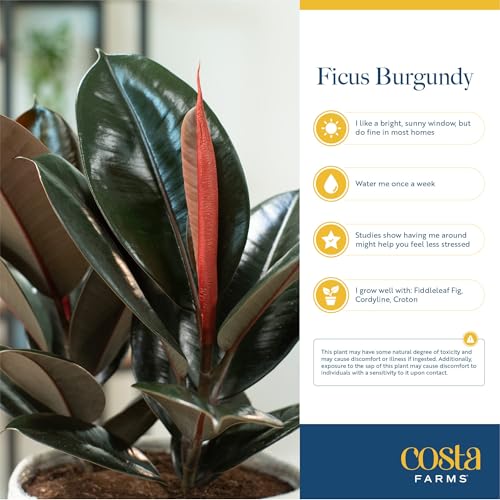
The burgundy rubber plant is one of the best choices if you want a darker, more dramatic indoor plant. Its rich foliage gives you that deep tropical look without needing flowers.
For best color, give it bright indirect light. If the plant is too far from a window, the growth may slow and the leaves may not look as rich.
Rubber Plant FAQs
Where should I place a rubber plant indoors?
Place a rubber plant in bright, indirect light near an east, west, or filtered south-facing window. Avoid harsh direct sun that can scorch the leaves.
How often should I water a rubber plant?
Water a rubber plant when the top 1–2 inches of soil feel dry. Water deeply, let the extra water drain out, and avoid letting the pot sit in standing water.
Why are my rubber plant leaves falling off?
Rubber plant leaves may fall off because of overwatering, underwatering, low light, cold drafts, sudden temperature changes, or stress after moving the plant.
Do rubber plants need direct sunlight?
Rubber plants do not need harsh direct sunlight. They grow best in bright indirect light, although they can handle some gentle morning sun.
Do rubber plants like to be misted?
Rubber plants do not require misting, but they appreciate moderate humidity. A humidifier, pebble tray, or grouping plants together is usually more helpful than occasional misting.
How do I make a rubber plant bushier?
Prune the main stem or pinch growing tips during the active growing season. Good light is also important because a rubber plant in low light may keep stretching instead of filling out.
When should I repot a rubber plant?
Repot a rubber plant every 2–3 years or when roots circle the pot, grow through drainage holes, or the soil dries out much faster than usual.
Are rubber plants toxic to pets?
Yes. Rubber plants contain irritating white sap that can bother skin and is not safe for pets or children to chew.
Rubber Plant Care Indoors Final Thoughts
Rubber plant care indoors comes down to steady conditions. Give your plant bright indirect light, water only when the top of the soil dries, and use a loose potting mix that drains well.
Rubber Plant Care Indoors
- Place your rubber plant in bright, indirect light for strong growth.
- Water when the top 1–2 inches of soil feel dry.
- Use a loose, well-draining potting mix to help prevent root rot.
- Prune or pinch growth tips if you want a fuller, bushier plant.
- Watch for leaf drop, curling leaves, pests, and signs of watering stress.
- Keep rubber plants away from pets and children because the sap can irritate skin and is not safe to chew.
If your rubber plant starts dropping leaves, curling, or looking stretched, check the basics first: light, watering, temperature, and pot size. Most rubber plant problems are easier to fix when you catch them early.
With a little pruning and patience, a rubber plant can become a bold, long-lasting houseplant that adds structure and greenery to your indoor space.
Read more about the benefits of keeping houseplants.
Want to transform your indoor space into a lush, thriving haven? These guides will help you master houseplant care with ease.
🌿 Indoor Houseplant Care Guides
- ♻️ Composting Indoors
- 🌳 Rubber Plant Care Indoors
- 🌸 Peace Lily Care Indoors
- 🧀 Swiss Cheese Plant Care
- 🎋 Indoor Bamboo Guide
- 🌱 Vertical Gardening Indoors
- 🌺 Bromeliad Care
- 🥢 Bamboo Plant Indoor Care
- ❤️ Anthurium Care Indoors
- 🌵 How to Grow Succulent Plants
- 🌿 Maidenhair Fern Indoor Care
- See all articles in our Houseplants category