
Learning how to care for a Swiss Cheese Plant is easier than most people think. Known as Monstera deliciosa, this tropical houseplant is loved for its large split leaves, climbing growth, and bold jungle-like appearance.
With the right light, watering routine, and a little support as it grows, a Swiss Cheese Plant can become one of the most impressive houseplants in your collection. It grows fast, adapts well indoors, and becomes even more striking as the leaves mature.
In this guide, you’ll learn how to keep your Monstera healthy, encourage bigger fenestrated leaves, and fix common problems before they slow growth.
What You’ll Learn
- How much light Swiss Cheese Plants need indoors
- How to water without overdoing it
- The best soil mix for strong roots and healthy growth
- How to prune, propagate, and support climbing stems
- How to fix yellow leaves, drooping, and slow growth
Quick Answer
Swiss Cheese Plants grow best in bright indirect light, rich well-draining soil, and steady moisture. Water when the top inch or two of soil dries, give them something to climb, and keep humidity moderate to high for the best leaf growth.
What Is A Swiss Cheese Plant?
The Swiss Cheese Plant, known as Monstera deliciosa, is a tropical climbing plant native to the rainforests of Central America. It gets its common name from the natural holes and splits that develop in its large leaves as it matures.
In the wild, Monstera grows by climbing trees with aerial roots, using the canopy for support while reaching for filtered light. Indoors, this same climbing habit makes it an excellent choice for moss poles, trellises, or other supports.
Its bold foliage, fast growth, and easygoing nature have made it one of the most popular tropical houseplants for creating a lush indoor jungle look.
Why Grow A Swiss Cheese Plant?
Swiss Cheese Plants are popular for good reason. Their large split leaves create a bold tropical look that can quickly transform an ordinary room into a lush indoor space.
They are also fast growers compared to many houseplants, especially when given bright light and something to climb. As they mature, the leaves become larger and develop more dramatic fenestrations, making the plant even more striking over time.
Beyond looks, Monstera plants are easy to care for and forgiving once you understand their basic needs. That makes them a great choice for both beginners and experienced indoor growers who want a statement plant without high maintenance.
What Kind Of Swiss Cheese Plant Do I Have?
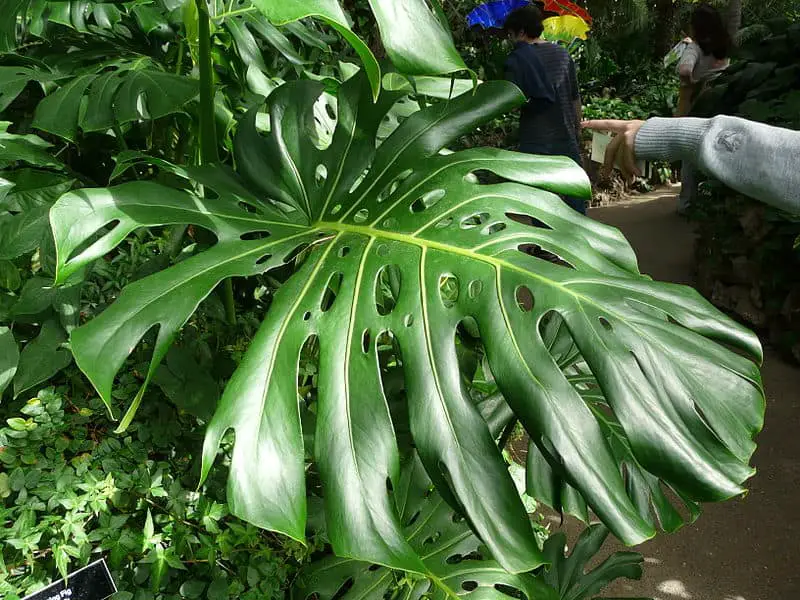
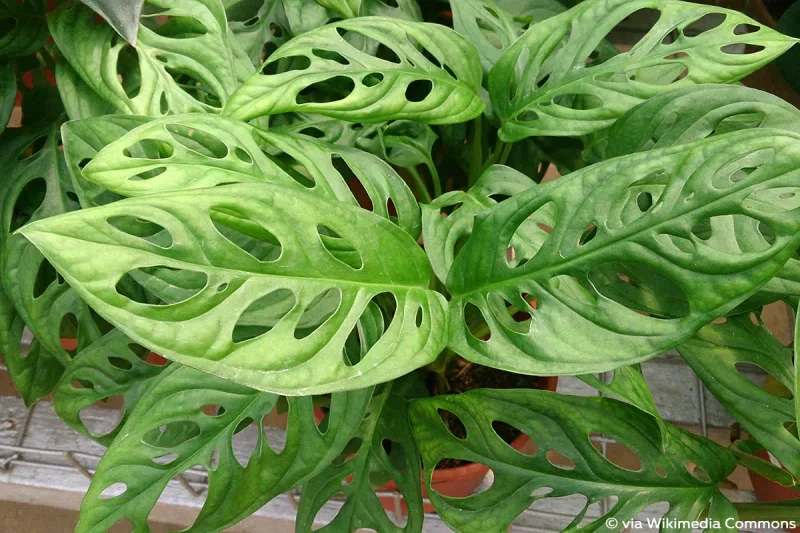
The picture above is Monstera Deliciosa while the one below is Monstera Adonsii.
There is a plant called Rhaphidophora tetrasperma that is sold as a mini Monstera that looks similar but is a different plant entirely.
As you can see below although this Monstera Adonsii has similarities the leaves are very different.
They are closely related but different plants. The Monstera Adonsii is a smaller plant and more vinelike.
The leaves have more holes and the margins are smooth and not lobed like Monstera Deliciosa.


They recently became popularized on Instagram too. Generally speaking, you will pay more for the Deliciosa than the Adonsonii or the mini Monstera.
How To Care For A Swiss Cheese Plant In A Nutshell
The Swiss cheese plant (Monstera deliciosa) is a tropical evergreen that gets its common name from its large, perforated leaves.
It’s native to the rainforests of Central and South America, where it grows as an understory plant.
In its natural habitat, the Swiss cheese plant can reach heights of up to 30 feet, but it is often much smaller when grown in pots.
Swiss cheese plants are relatively easy to care for, and they make an excellent addition to any indoor jungle.
Lighting Requirements
Swiss cheese plants do best in bright, indirect light. They can tolerate some direct sun, but too much sun will scorch their leaves.
Best Indoor Locations for a Swiss Cheese Plant
Monstera grows best in bright spaces with steady warmth and room to spread.
- East-facing windows: Excellent for soft morning light
- South-facing rooms: Great if filtered from harsh afternoon sun
- Bright living rooms: Ideal for mature plants with larger leaves
- Sunrooms: Excellent for fast growth and strong fenestrations
Avoid dark corners, which can slow growth and reduce leaf splits.
Watering
Water your Swiss cheese plant when the top inch or two of the soil is dry. Allow the water to run through the pot and drain out the bottom. Avoid letting the plant sit in water, as this can lead to root rot.
Best Soil for a Swiss Cheese Plant
Swiss Cheese Plants prefer rich, airy soil that holds some moisture while draining well. A mix using coco coir, perlite, and orchid bark works very well.
This gives the roots both moisture retention and airflow, which helps prevent compaction and root rot.
- Coco coir: Holds moisture without becoming heavy
- Perlite: Improves drainage and oxygen flow
- Orchid bark: Creates structure and mimics its natural growing environment
Fertilizer
Feed your Swiss cheese plant once a month during the growing season with a half-strength fertilizer solution. Be sure to flush the pot with clean water after applying fertilizer to prevent root burn.
Humidity
Swiss cheese plants prefer high humidity, so mist them regularly or set them on a pebble tray.
Temperature
These tropical plants like it warm, so aim for temperatures between 65 and 80 degrees Fahrenheit.
Pruning
Prune your Swiss cheese plant to shape it or remove damaged leaves. Use sharp, clean shears and make cuts just above a leaf node.
Now that you know how to care for your Swiss cheese plant, there’s nothing stopping you from enjoying this beautiful indoor jungle plant in your home.
Just be sure to give it the proper care and attention, and it will thrive for years to come.
Monstera deliciosa Plant Care Reference Guide
| Characteristic | Details |
|---|---|
| Common Name | Swiss Cheese Plant |
| Botanical Name | Monstera deliciosa |
| Native Habitat | Tropical rainforests of Central and South America |
| Plant Type | Evergreen tropical vine/houseplant |
| Growth Pattern | Climbing with aerial roots |
| Mature Size | Up to 8 feet indoors; leaves 1–2 feet wide |
| Watering | Water when top 1–2 inches of soil are dry; avoid soggy soil |
| Light/Sun Exposure | Bright, indirect light; tolerates some low light |
| Soil Type | Well-draining potting mix with peat, perlite, and bark |
| Soil pH | Slightly acidic to neutral (5.5–7.0) |
| Temperature | 65–80°F (18–27°C) |
| Humidity | High humidity preferred; mist or use humidifier |
| Bloom Time & Flower Color | Rare indoors; cream-colored spathe and spadix in mature plants |
| Potential Problems | Root rot, yellow leaves from overwatering, pests (spider mites, scale, mealybugs) |
| Repotting | Every 12–18 months or when rootbound |
| Hardiness Zones (USDA) | 10–12 (grown outdoors); typically as a houseplant elsewhere |
Propagating The Swiss Cheese Plant
The Swiss cheese plant, also known as the Monstera deliciosa, is a popular houseplant that is easy to care for and propagates easily from stem cuttings.
To take a stem cutting, simply cut a portion of the stem that includes at least two leaves.
Place the cutting in a glass of water and allow it to root for several weeks.
Once the roots are well-established, you can pot the plant in soil.
The Swiss cheese plant does best in bright, indirect light and prefers to be on the moist side.
Even so, it’s a good idea to let the soil dry out between waterings to avoid overwatering.
With a little care, your stem cutting will quickly grow into a healthy new Swiss cheese plant.
How To Prune Your Swiss Cheese Plant
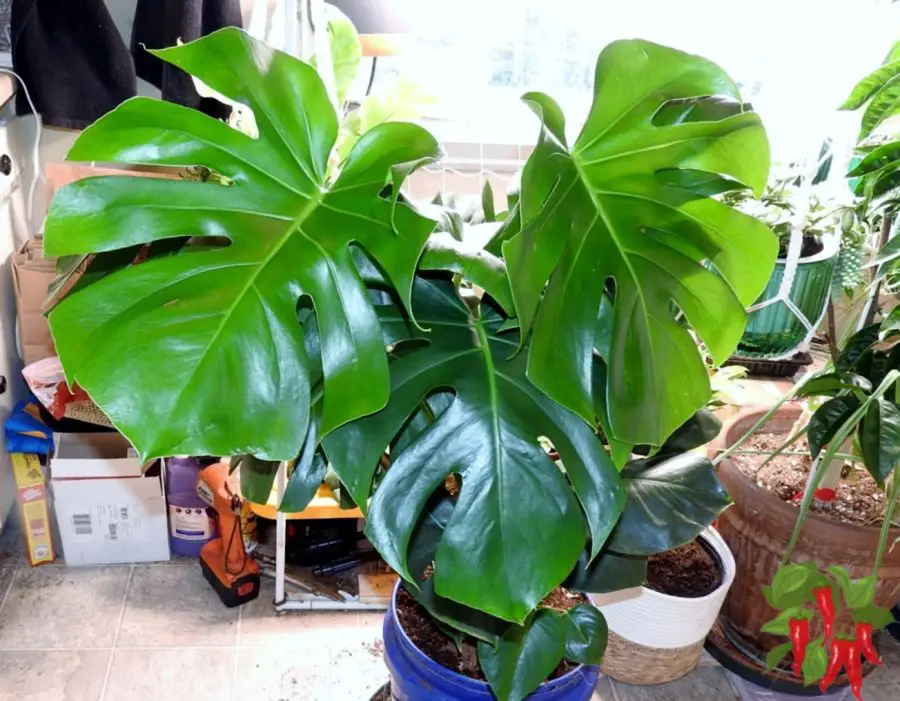
The Swiss cheese plant, also known as the Monstera deliciosa, is a beloved houseplant for its large, glossy leaves.
However, over time, these leaves can start to lose their luster and develop brown spots.
One way to help keep your Swiss cheese plant looking its best is to prune it regularly.
Pruning helps to encourage new growth and removes any dead or damaged leaves.
It’s best to prune in the spring or summer when the plant is actively growing.
To prune your Swiss cheese plant, simply cut off any yellowed or brown leaves at the base of the plant.
You can also trim back any long vines to tidy up the plant’s shape.
This plant can get quite large even indoors in a pot so pruning may be needed just to keep its size in check.
With a little bit of care, you can keep your Swiss cheese plant looking healthy and beautiful for years to come.
Swiss Cheese Plant Aerial Roots
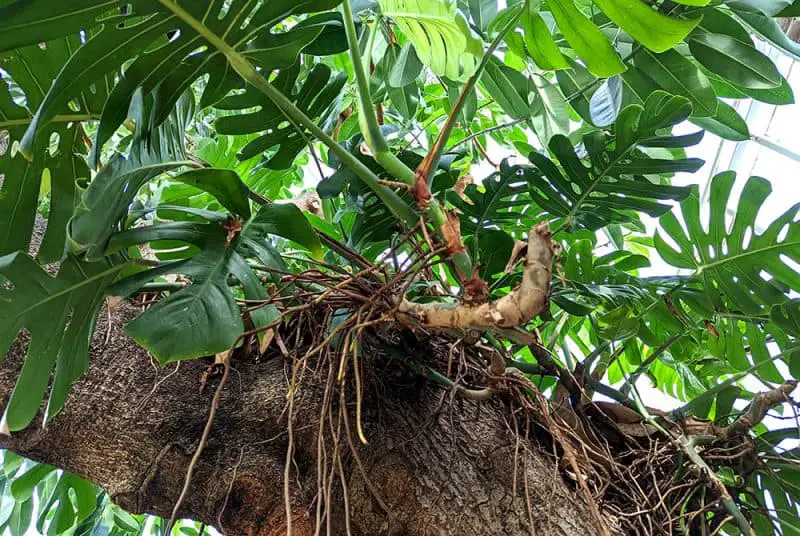
The Swiss Cheese Plant can make aerial roots. It uses these to climb. You can attach a pole to your plant and it will climb up it.
The Monstera Adonsonii is more vinelike than the Deliciosa and is a climber but both types will try to climb eventually.
The Swiss cheese plant (Monstera deliciosa) is a popular houseplant known for its large, glossy leaves.
However, the plant is also notable for its aerial roots, which help it to climb and cling to surfaces.
These roots are thinner and more flexible than the plant’s regular roots, and they help them to grip surfaces.
The Swiss cheese plant typically only produces aerial roots when it is growing in an environment that doesn’t provide enough support, such as a pot.
However, in many cases, the plant may produce aerial roots even when it is adequately supported.
If you notice your Swiss cheese plant producing aerial roots, simply allow them to grow freely or gently guide them into a pot or support structure.
If you really don’t like the look of them you can prune them off your plant.
Should You Use a Moss Pole?
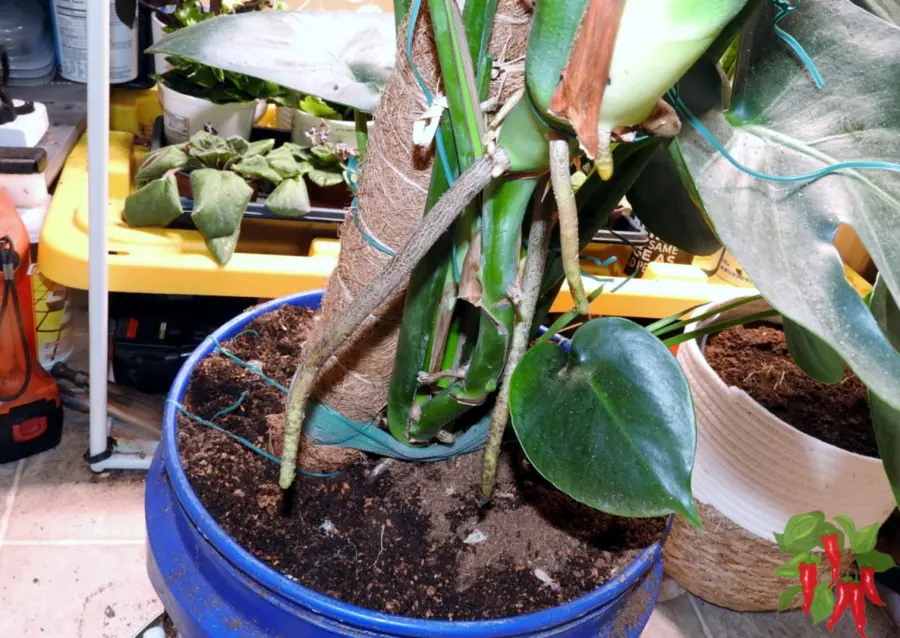
A moss pole can make a big difference in how your Monstera grows indoors. Since Swiss Cheese Plants naturally climb, giving them support helps them grow larger leaves and stronger fenestrations over time.
Without support, Monsteras often sprawl outward and become harder to manage. A moss pole keeps growth upright and more natural.
Is The Swiss Cheese Plant Poisonous To Cats And Dogs?
Yes. Swiss Cheese Plants (Monstera deliciosa) are toxic to cats and dogs according to the :contentReference[oaicite:0]{index=0}. The plant contains insoluble calcium oxalate crystals, which can cause irritation if chewed or eaten.
Common symptoms include:
- Mouth and tongue irritation
- Excessive drooling
- Vomiting
- Difficulty swallowing
If you have curious pets, it is best to keep your Swiss Cheese Plant out of reach or choose a safer location where they cannot access it.
You could try growing Monstera Adonsii. It is more like a vine and can be put in a hanging basket.
Swiss Cheese Plant Troubleshooting
Why are my Monstera leaves turning yellow?
Yellow leaves usually mean overwatering or poor drainage.
Why is my Monstera drooping?
Drooping can mean dry soil, root stress, or sudden temperature changes.
Why are there no holes in the leaves?
Young plants naturally have fewer fenestrations, but low light can also delay them.
Why are the leaf edges turning brown?
Brown edges usually point to dry air, inconsistent watering, or salt buildup.
Why is my Monstera getting leggy?
Leggy growth almost always means it needs more light.
Swiss Cheese Plant Troubleshooting
Why are my Monstera leaves turning yellow?
Yellow leaves usually mean overwatering or poor drainage.
Why is my Monstera drooping?
Drooping can mean dry soil, root stress, or sudden temperature changes.
Why are there no holes in the leaves?
Young plants naturally have fewer fenestrations, but low light can also delay them.
Why are the leaf edges turning brown?
Brown edges usually point to dry air, inconsistent watering, or salt buildup.
Why is my Monstera getting leggy?
Leggy growth almost always means it needs more light.
How To Care For A Swiss Cheese Plant Final Thoughts
Final Thoughts
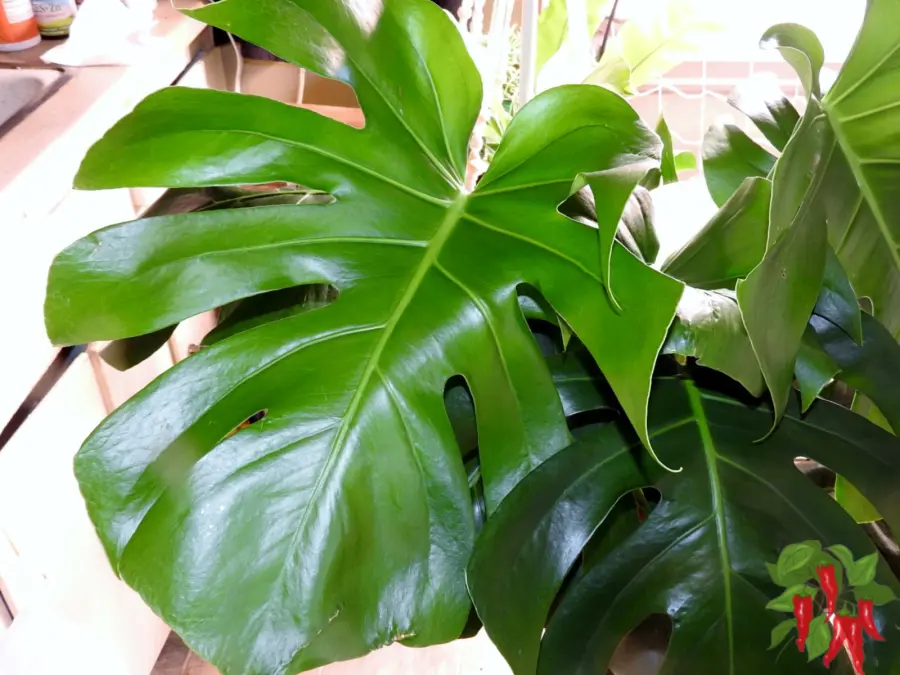
Swiss Cheese Plants are one of the most rewarding tropical houseplants you can grow. Their bold split leaves, climbing habit, and fast growth make them a favorite for creating a lush indoor jungle feel.
Give them bright light, steady moisture, rich airy soil, and room to climb, and they will reward you with larger and more dramatic foliage over time.
Once established, Monstera deliciosa is one of the easiest statement plants to keep indoors.
Want to transform your indoor space into a lush, thriving haven? These guides will help you master houseplant care with ease.
🌿 Indoor Houseplant Care Guides
- ♻️ Composting Indoors
- 🌳 Rubber Plant Care Indoors
- 🌸 Peace Lily Care Indoors
- 🧀 Swiss Cheese Plant Care
- 🎋 Indoor Bamboo Guide
- 🌱 Vertical Gardening Indoors
- 🌺 Bromeliad Care
- 🥢 Bamboo Plant Indoor Care
- ❤️ Anthurium Care Indoors
- 🌵 How to Grow Succulent Plants
- 🌿 Maidenhair Fern Indoor Care
- See all articles in our Houseplants category