

Bird Of Paradise Plant Care Indoors is much easier than many people expect once you understand the basics of light, watering, humidity, and soil.
These tropical plants can become stunning indoor statement pieces with their large banana-like leaves and dramatic growth habit, even in apartments and smaller homes.
This guide covers everything you need to know about Bird of Paradise care indoors, including lighting, watering, soil, fertilizer, pruning, propagation, and common problems.
What You’ll Learn
- How much light Bird of Paradise plants need indoors
- How often to water Bird of Paradise plants
- The best soil and pots for healthy root growth
- How to prevent yellow leaves, root rot, and brown tips
- Tips for pruning, propagation, and encouraging strong growth
- Common indoor Bird of Paradise problems and solutions
Introducing Bird of Paradise Plant Care Indoors
Looking for an exotic indoor plant? Discover how to care for your Bird of Paradise plant indoors with our helpful tips and tricks!
Welcome to our blog post all about Bird of Paradise plant care indoors!
If you’re looking for an eye-catching and exotic addition to your indoor plant collection, you’ve come to the right place.
We’ll walk you through everything you need to know about caring for your Bird of Paradise plant, from light and water requirements to pruning and propagation tips.
So grab a cup of tea, get comfortable, and let’s dive into the wonderful world of Bird of Paradise plants!
But before you rush out to buy one, it’s important to know how to properly care for this stunning plant.
In this blog post, we’ll cover all the basics of Bird of Paradise plant care indoors, so you can keep your plant healthy and happy for years to come. Let’s get started!

Overview of the Bird of Paradise Plant

The Bird of Paradise plant, also known by its scientific name as Strelitzia, is a tropical plant native to South Africa.
Its unique, bird-like flowers are what give it its name, with bright orange and blue petals resembling the feathers of a bird.
The plant itself can grow up to six feet tall, making it a statement piece in any room.
It’s a relatively low-maintenance plant that can thrive indoors if given the right care.
According to Wikipedia: Strelitzia is a genus of five species of perennial plants, native to South Africa. It belongs to the plant family Strelitziaceae. A common name of the genus is Bird of Paradise flower/plant, because of a resemblance of its flowers to birds-of-paradise. In South Africa, it is commonly known as a crane flower. Two of the species, S. nicolai and S. reginae, are frequently grown as houseplants.
Why is it a popular indoor plant?

You can buy a Bird of Paradise plant here
There are a few reasons why Bird of Paradise plants have become increasingly popular as indoor plants in recent years.
For one, their striking appearance makes them a showstopper in any space.
Additionally, they are relatively easy to care for and can tolerate a variety of lighting conditions, from bright indirect light to lower light levels.
They also help to purify the air, making them a great addition to any home.
Purpose of the Blog Post
The purpose of this blog post is to provide you with all the information you need to know about caring for a Bird of Paradise plant indoors.
We’ll cover everything from light and water requirements to potting and pruning techniques.
By the end of this post, you’ll have all the knowledge you need to help your Bird of Paradise plant thrive in your home. So let’s dive in!
Bird of Paradise Plant Care Indoors Basics

This section covers the essential care requirements that your Bird of Paradise plant needs to stay healthy and happy indoors.
From lighting and watering to soil and temperature, we’ve got you covered.
So grab a notebook and pen, and let’s dive into the world of Bird of Paradise plant care!
Light Requirements
Bird of Paradise plants require bright light and indirect sunlight to thrive.
They can tolerate direct sunlight and need it to flower.
Place your plant near a bright, sunny south-facing window, but make sure it’s not in direct sunlight for more than a few hours a day.
If your plant isn’t getting enough light, its leaves may start to turn yellow or brown. Bird of Paradise is known for its orange crane-like flowers.
The best way to make sure you get Bird of Paradise flowers is to make sure it gets plenty of light.
If you can’t give it any full sun consider using LED grow lights to provide supplemental light.
Best Indoor Locations for Bird of Paradise Plants
Choosing the right indoor location is one of the biggest factors in keeping a Bird of Paradise plant healthy and growing well indoors.
These tropical plants prefer bright areas with several hours of strong indirect light or gentle direct sunlight each day.
Good Indoor Spots for Bird of Paradise Plants
- ☀️ Bright south or west-facing windows
- 🌿 Sunrooms or enclosed patios with filtered light
- 🪴 Bright living room corners near large windows
- 🏡 Open indoor spaces with strong natural light
- 💡 Rooms supplemented with LED grow lights
Avoid placing Bird of Paradise plants in dark hallways, low-light corners, or areas with constant cold drafts from doors or windows.
As these plants mature, they can become fairly large indoors, so it helps to choose a location with enough vertical and horizontal space for the leaves to spread naturally.
Watering

When it comes to watering your Bird of Paradise plant, it’s important to strike a balance.
They are thirsty plants but you don’t want to overwater or underwater them.
A good rule of thumb is to wait until the top inch of soil is dry before watering, then give it a thorough watering until water drains out the bottom of the pot.
Don’t let your plant sit in standing water, as this can lead to root rot.
In general, Bird of Paradise plants need less water in the winter months.
Also, avoid using tap water as it contains chloramines and fluorides which can build up in the soil and harm the roots.
Use distilled water, RO water, or rainwater.
Soil
The soil you use for your Bird of Paradise plant is important for its overall health.
It should be well-draining and rich in nutrients. You can use a commercial potting mix, but add perlite or sand to improve drainage.
You can also make your own mix using equal parts of peat moss, coarse sand, and perlite.
I prefer using coco coir and perlite as a growing medium.
Temperature and Humidity

Bird of Paradise plants are native to warm climates and prefer warm temperatures, between 60 and 70 degrees Fahrenheit.
They can tolerate temperatures as low as 50 degrees Fahrenheit but may not thrive.
They also prefer humid conditions, so consider using a humidifier or placing a tray of water near your plant to increase humidity levels.
If the air in your home is particularly dry, mist your plant’s leaves with water once a week to keep them hydrated.
Why Bird of Paradise Leaves Curl Indoors
Curling leaves are usually a sign that your Bird of Paradise plant is stressed by dry conditions or inconsistent watering.
Underwatering is one of the most common causes, especially if the soil becomes extremely dry between waterings.
Low humidity indoors can also cause leaves to curl, particularly during winter when heating systems dry out the air.
Cold drafts from windows, exterior doors, or air conditioning vents may also stress the plant and affect leaf growth.
Brown Leaf Tips on Bird of Paradise
Brown tips are one of the most common indoor Bird of Paradise problems and are often caused by dry air or inconsistent watering.
Indoor heating systems can reduce humidity enough to dry out leaf edges, especially during winter.
Allowing the soil to swing between extremely dry and soggy conditions may also stress the plant and damage leaf tips.
In some cases, fertilizer salt buildup in the soil can contribute to browning. Flushing the soil occasionally with clean water may help remove excess salts.
III. Choosing the Right Pot and Soil Mix
One of the most important factors in the health of your Bird of Paradise plant is choosing the right pot and soil mix.
This plant needs moist soil but not soggy soil. In this section, we’ll go over the benefits of using coco coir and perlite in your soil mix, as well as other tips for choosing the perfect pot for your plant.
Coco coir is a sustainable and eco-friendly alternative to traditional peat moss, and perlite helps to improve soil drainage and aeration.
Selecting the Right Pot
Choosing the right pot for your Bird of Paradise plant is essential for its health and growth.
You’ll want to select a pot that is slightly larger than the current one and has drainage holes to allow excess water to escape.
Look for pots made of porous materials like terra cotta, as they allow for better airflow to the plant’s roots.
Choosing the Right Soil Mix
When it comes to choosing the right soil mix for your Bird of Paradise plant, it’s important to opt for a well-draining mix that is rich in nutrients.
Coco coir is a sustainable alternative to traditional peat moss and helps to improve soil structure and water retention.
Perlite is another great addition to your soil mix, as it helps to improve drainage and aeration.
You can also add some organic matter, like compost, to give your plant an extra nutrient boost.
Repotting
As your Bird of Paradise plant grows, it may outgrow its current pot and your Bird of Paradise may need repotting.
You’ll know it’s time to repot when you see roots coming out of the drainage holes, or the soil dries out too quickly after watering.
Repotting is also an opportunity to refresh your plant’s soil mix and give it some fresh nutrients.
Be gentle when removing your plant from its current pot, and don’t damage the roots.
After repotting, give your plant some time to adjust to its new home before resuming normal care.
Fertilizing
Fertilizing your Bird of Paradise plant is an important aspect of its care.
During the growing season (spring and summer), you should fertilize your plant every two weeks with a balanced, water-soluble fertilizer.
Be sure to follow the instructions on the fertilizer packaging for the correct amount to use.
During the dormant season (fall and winter), you can reduce the frequency of fertilizing to once a month.
It’s also a good idea to use a fertilizer that is high in phosphorus during the blooming period to promote healthy flower growth.
It’s important not to over-fertilize your Bird of Paradise plant, as this can cause damage to the roots and leaves.
Always err on the side of caution and use less fertilizer rather than more.
Why Bird of Paradise Isn’t Flowering
Bird of Paradise plants may not flower indoors if they are not receiving enough bright light.
These tropical plants typically need several hours of strong sunlight or very bright indirect light daily to support blooming.
Young plants may also take several years to mature before they begin producing flowers indoors.
Underfeeding can slow growth and reduce flowering potential, especially during the active growing season.
Pruning and Propagation

Pruning and propagation are essential parts of Bird of Paradise plant care that can help keep your plant healthy and promote new growth.
In this section, we’ll go over some simple techniques for pruning your plant, as well as tips for propagating it.
Pruning your plant can help keep it from becoming too large and unruly, and can also help get rid of dead or damaged foliage.
Propagation, on the other hand, can be a great way to share your love of plants with others and expand your collection.
Pruning Techniques
Pruning your Bird of Paradise plant can help promote healthy growth and keep it looking tidy.
When pruning, it’s important to only remove dead or damaged foliage, as cutting back healthy leaves can harm the plant.
You can also prune away any suckers or offshoots that are growing from the base of the plant to help control its size.
If your plant has become too large for its space, you can also prune back the stems to a manageable size.
Why Bird of Paradise Leaves Split
Splitting leaves are completely normal on mature Bird of Paradise plants.
In nature, the large leaves naturally split to help wind pass through the plant without damaging the stems.
Indoor plants may also develop splits as the leaves age and become larger.
Good airflow around the plant can actually help reduce severe tearing while supporting healthier growth overall.
Propagation Methods

Propagating your Bird of Paradise plant can be a fun and rewarding way to expand your plant collection.
One common method of propagation is division, which involves separating the plant into smaller sections and repotting them separately.
Another method is stem-cutting propagation, where you take a cutting from a healthy stem and encourage it to grow roots in water or soil.
Growing from seed

You can buy Bird of Paradise seeds here
Growing your Bird of Paradise plant from seed is another propagation method that can be a fun and rewarding experience.
However, it can also be a more challenging process than other methods, as the seeds can take several weeks to germinate and require a bit more care and attention in the early stages of growth.
If you’re interested in growing your plant from seed, we recommend doing some research and gathering all the necessary supplies before starting.
We don’t cover seed propagation in detail in this blog post, but there are plenty of online resources and guides available to help you get started.
Common Problems and Troubleshooting

Even with proper care, your Bird of Paradise plant may experience some common problems.
One common issue is root rot, which can occur if the plant is overwatered or if the soil mix doesn’t allow for adequate drainage.
Another problem is pest infestations, such as spider mites or mealybugs.
If you notice any issues with your plant, it’s important to diagnose the problem quickly and take action to treat it.
We’ll cover some common troubleshooting tips in this section to help you keep your plant healthy and happy.
Common Insect Pests and Treatments
While Bird of Paradise plants are generally hardy and resistant to pests, they can still fall prey to a few common insects.
Here are some of the most common pests to look out for:
• Mealybugs – small white, cottony insects that appear on the undersides of leaves and near the base of the plant. They can be treated with a mixture of water and dish soap, or with neem oil.
• Spider Mites – tiny reddish-brown insects that create webs on the undersides of leaves. They can be treated with a mixture of water and dish soap, or with insecticidal soap.
• Scale – small brown, round insects that attach themselves to the leaves and stems of the plant. They can be treated with neem oil or with a solution of alcohol and water.
• Thrips – tiny black or brown insects that can cause leaves to curl and distort. They can be treated with insecticidal soap or with neem oil.
It’s important to treat any pest infestations as soon as you notice them, as they can quickly spread and cause significant damage to your plant.
Always follow the instructions on the insecticide packaging and avoid using too much, as this can damage the plant.
Common Bird of Paradise Varieties
Did you know that there are several different types of Bird of Paradise plants, each with its own unique features and characteristics?
In this section, we’ll explore some of the most common Strelitzia species of Bird of Paradise plants that you might come across in your local plant shop or nursery.
From the classic orange and blue Strelitzia reginae to the stunning white and blue Strelitzia nicolai, there’s a Bird of Paradise plant for every taste and style.
Strelitzia reginae
The Strelitzia reginae, also known as the “orange Bird of Paradise,” is one of the most popular and recognizable varieties of Bird of Paradise plants.
It’s characterized by its bright orange and blue flowers, which resemble the plumage of a tropical bird.
This variety is relatively easy to care for, making it a great choice for beginners.
It prefers bright, indirect light and a well-draining soil mix, and should be watered when the top inch of soil feels dry to the touch.
Strelitzia nicolai

The Strelitzia nicolai, or “giant white Bird of Paradise,” is a stunning variety that can grow up to 30 feet tall in the right conditions.
It’s named for its large, white flowers and huge leaves, which can measure up to 7 feet long.
This variety is a bit more challenging to care for than the Strelitzia reginae, as it requires high humidity and frequent watering to stay healthy.
However, if you have the space and dedication to care for it, the Strelitzia nicolai can make a truly impressive statement plant.
Other Varieties
In addition to the Strelitzia reginae and nicolai, there are several other birds of paradise plants that you might come across.
These include the Strelitzia juncea, which has slender, reed-like leaves and small orange flowers, and the Strelitzia caudata, which has long, narrow leaves and large yellow flowers.
There are also several hybrid varieties available, such as the Strelitzia x parvifolia, which combines the orange and blue flowers of the Strelitzia reginae with the long, slender leaves of the Strelitzia juncea.

Whatever your taste, there’s a Bird of Paradise plant out there for you!
Decorating Tips and Ideas
Bird of Paradise plants work well as bold indoor statement plants thanks to their large tropical leaves and upright growth.
They can add a tropical feel to living rooms, bright corners, bedrooms, sunrooms, and apartment spaces when paired with the right lighting and containers.
How to Style Bird of Paradise Plants Indoors
Many people use Bird of Paradise plants as a focal point in a room by placing them in a large decorative pot near bright natural light.
They also pair well with other tropical plants like palms, pothos, monsteras, and ferns for a fuller indoor jungle look.
For a cleaner minimalist style, a Bird of Paradise plant can also stand alone in a simple pot where the dramatic foliage becomes the main visual feature.
Decorating Tips and Ideas
Bird of Paradise plants work well as bold indoor statement plants thanks to their large tropical leaves and upright growth.
They can add a tropical feel to living rooms, bright corners, bedrooms, sunrooms, and apartment spaces when paired with the right lighting and containers.
How to Style Bird of Paradise Plants Indoors
Many people use Bird of Paradise plants as a focal point in a room by placing them in a large decorative pot near bright natural light.
They also pair well with other tropical plants like palms, pothos, monsteras, and ferns for a fuller indoor jungle look.
For a cleaner minimalist style, a Bird of Paradise plant can also stand alone in a simple pot where the dramatic foliage becomes the main visual feature.
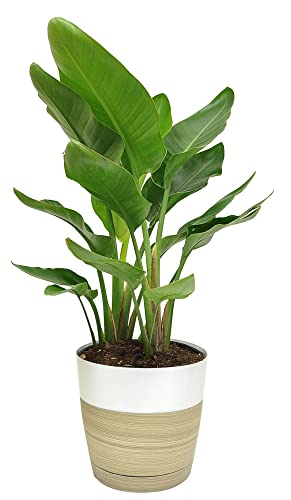
Bird of Paradise in Home Decor
Bird of Paradise plants work especially well as bold focal points in bright living rooms, bedrooms, offices, and sunrooms.
A decorative pot or woven basket can help the plant blend naturally into modern, tropical, minimalist, or bohemian interiors.
Many people pair Bird of Paradise plants with other tropical houseplants, natural wood tones, or neutral-colored containers to create a relaxed indoor jungle feel.
White Bird Of Paradise Plant Care Indoors
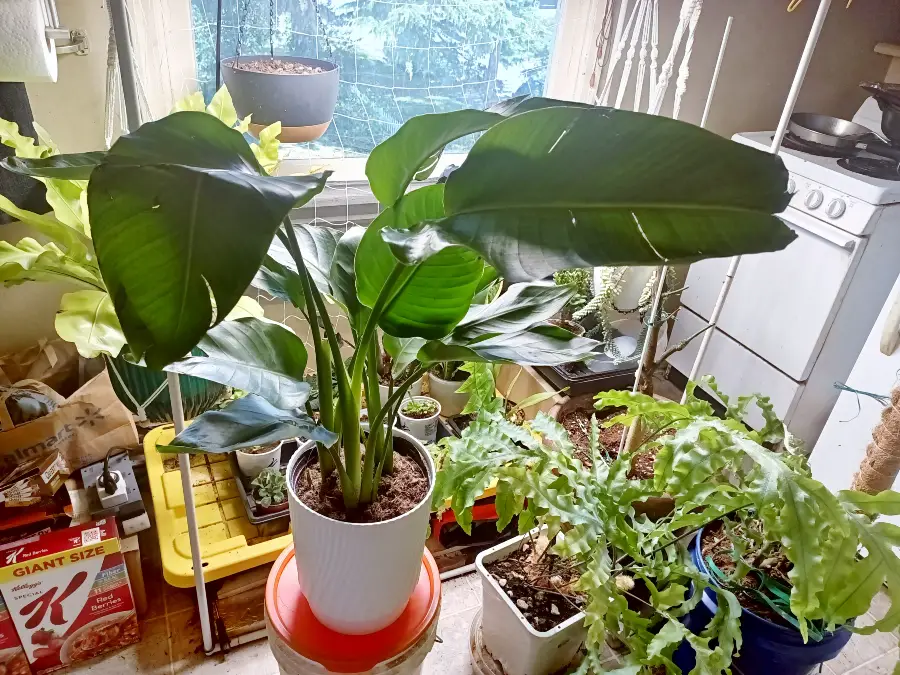
There are two main varieties of this plant. One is orange (Strelitzia reginae). The one I bought is white (Strelitzia nicolai). The yellow one is more of an outdoor and really bright sun plant.
The white bird of paradise does much better indoors, although it rarely flowers indoors. That’s okay, really. The flowers are cool, but really, the reason to buy this plant is for these leaves.
I mean, these leaves are awesome. Its larger too sometimes called Giant Bird of Paradise. So I’m really looking forward to this plant growing into my space.
Looking for a White Bird of Paradise?
This is the same White Bird of Paradise (Strelitzia nicolai) featured in this unboxing. If you’re interested in adding one to your indoor plant collection, you can check current availability below.[Costa Farms White Bird of Paradise, Large Live Indoor Plant, 2-3 Feet Tall]
Bird of Paradise plants can become impressive indoor statement plants when given enough light, proper watering, and room to grow.
While these tropical plants may look dramatic, Bird Of Paradise Plant Care Indoors is fairly straightforward once you establish a consistent care routine.
Bright light, well-draining soil, moderate humidity, and occasional feeding can help support healthy growth and large vibrant leaves indoors.
Bird Of Paradise Plant Care Key Takeaways
- Bird Of Paradise Plant Care Indoors requires bright indirect sunlight and temperatures between 65-80°F.
- Water when the top inch of soil feels dry and maintain humidity above 50%.
- Use well-draining soil mixed with coco coir and perlite.
- Feed monthly with a balanced fertilizer during the growing season for best results.
With patience and the right setup, your Bird of Paradise plant can thrive for years and bring a bold tropical feel to your indoor space.
Bird Of Paradise Plant Care Indoors FAQs
Why are my Bird of Paradise leaves curling indoors?
Curling leaves are often caused by underwatering, dry indoor air, cold drafts, or inconsistent watering conditions.
Why are the tips of my Bird of Paradise leaves turning brown?
Brown leaf tips are commonly linked to low humidity, dry soil, inconsistent watering, or fertilizer salt buildup in the soil.
How much light does a Bird of Paradise need indoors?
Bird of Paradise plants grow best in very bright indirect light and can also handle several hours of direct sunlight indoors.
Why isn’t my Bird of Paradise flowering indoors?
Indoor Bird of Paradise plants may not flower because of insufficient light, immature age, or lack of regular feeding during the growing season.
How often should I water a Bird of Paradise plant?
Water when the top few inches of soil begin to dry out. Bird of Paradise plants prefer evenly moist soil but do not like soggy roots.
Why are my Bird of Paradise leaves splitting?
Leaf splitting is normal on mature Bird of Paradise plants. The large leaves naturally split to help airflow move through the plant.
Can Bird of Paradise plants grow in low light?
Bird of Paradise plants may survive in lower light, but growth usually slows and the plant may become leggy or stop flowering.
What is the best soil for Bird of Paradise plants indoors?
Bird of Paradise plants prefer rich, well-draining soil that holds some moisture while still allowing airflow around the roots.
Bird of Paradise Plant Care Indoors Final Thoughts
Overall, Bird of Paradise plants are a stunning addition to any indoor space, with their beautiful flowers and lush green foliage.
With a little bit of care and attention, you can enjoy the beauty of these tropical plants right in your own home.
You can buy a Bird of Paradise plant here
Read more about the benefits of keeping indoor plants
Want to transform your indoor space into a lush, thriving haven? These guides will help you master houseplant care with ease.
🌿 Indoor Houseplant Care Guides
- ♻️ Composting Indoors
- 🌳 Rubber Plant Care Indoors
- 🌸 Peace Lily Care Indoors
- 🧀 Swiss Cheese Plant Care
- 🎋 Indoor Bamboo Guide
- 🌱 Vertical Gardening Indoors
- 🌺 Bromeliad Care
- 🥢 Bamboo Plant Indoor Care
- ❤️ Anthurium Care Indoors
- 🌵 How to Grow Succulent Plants
- 🌿 Maidenhair Fern Indoor Care
- See all articles in our Houseplants category