

Calathea Care Indoors can seem intimidating at first, but once you understand what these tropical plants need, they become much easier to grow successfully. Known for their striking leaf patterns and unique habit of folding their leaves at night, Calatheas are among the most beautiful foliage plants you can add to your indoor garden.
While Calatheas have a reputation for being fussy, most problems come from inconsistent watering, low humidity, or poor placement. Give them the right environment and they can reward you with colorful foliage and year-round tropical beauty.
What You’ll Learn
- The best light, temperature, and humidity conditions for Calatheas
- How to water without causing brown leaf edges or root problems
- The ideal soil mix and fertilizing schedule
- How to troubleshoot curling, yellowing, and crispy leaves
- Ways to keep Calathea plants healthy long term indoors
Often referred to as the peacock plant for its gorgeous, intricately patterned leaves, Calathea is a must-have for plant enthusiasts and anyone looking to add a touch of nature to their home decor.
What Is A Calthea Plant?
Calathea is a genus of tropical plants native to South and Central America. They are known for their striking, colorful leaves that come in a variety of patterns and hues, making them popular as ornamental plants.
They are often called prayer-plants. Calathea plants have several common names including cathedral plant, peacock plant, zebra plant, and rattlesnake plant.

Calthea Genus And Calthea Varieties
Calathea is a genus of plants in the Marantaceae family, native to tropical areas of Central and South America.
There are over 300 species in the Calathea genus, with many of them being prized for their stunning, patterned foliage.
Just going by a plant’s common name can be confusing so try to choose new plants labeled by their scientific Latin name even if you can’t pronounce it.
The leaves of Calathea plants are often oval or elliptical in shape and come in a range of colors, including green, yellow, and purple, with some species having a metallic sheen.
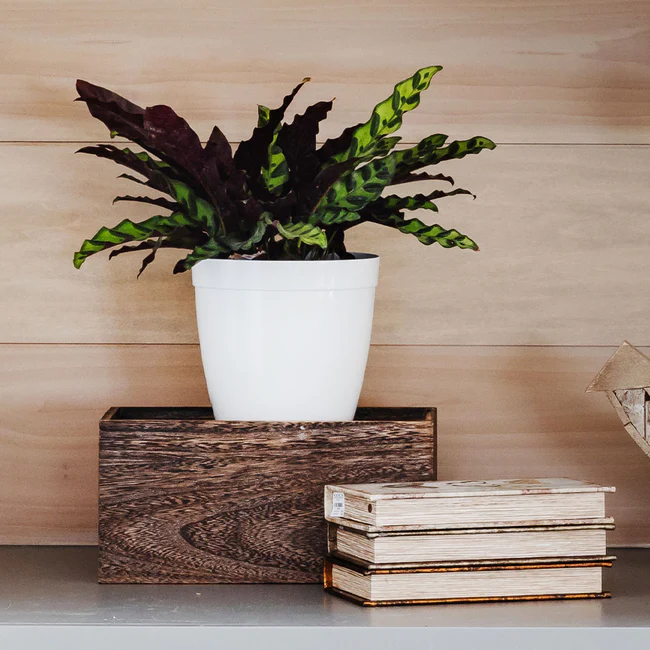
Some of the most popular Calathea species include the Calathea zebrina (Zebra Plant), Calathea ornata (Pinstripe Plant), Calathea rufibarba (Furry Feather Plant), and Calathea makoyana (Peacock Plant). Calathea Orbifolia is one of the largest prayer plants growing 2-3 feet tall. Calathea lancifolia is called Rattlesnake Plant for its rattlesnake-like patterns.
Calathea plants are known for their stunning foliage displays and are often used as indoor houseplants, providing a touch of tropical beauty to any room.
In addition to their attractive leaves, Calathea plants are also known for their air-purifying abilities, making them a great choice for improving indoor air quality.
One of the most distinctive and fascinating features of Calathea plants is their habit of folding their leaves at night, a behavior known as “nyctinasty.”
This is a natural adaptation that helps the plant conserve moisture and protect its delicate leaves from nighttime dew or condensation.
During the day, when light is present, the leaves will unfurl and stretch towards the light, photosynthesizing and producing energy for the plant.
At night, when light levels drop, the leaves will begin to fold up, protecting themselves and conserving moisture.
This fascinating display of movement is one of the reasons Calathea plants are so popular among plant enthusiasts and indoor gardeners alike.

Proper Calathea Care Indoors Is Important
Calathea plants are relatively delicate and require specific conditions to thrive indoors.
Without proper care, they can become diseased, develop pest infestations, or simply wilt and die.
This post will cover the key elements of Calathea Care Indoors, including the ideal growing conditions, watering and humidity requirements, and proper fertilization and pest control.
The purpose of this post is to provide information and tips for Calathea Care Indoors and the best way to help plant owners successfully grow and maintain these stunning plants in their homes.
Whether you are a seasoned plant enthusiast or new to indoor gardening, this post will provide you with valuable information for keeping your Calathea plants healthy and beautiful.
Choosing the Right Pot and Soil
Properly choosing the right pot and soil can greatly impact the health and growth of your Calathea plant. In this section, we’ll discuss the factors to consider when selecting the right pot and soil for your Calathea.
Importance of good drainage:
Good drainage is crucial for Calathea plants, as they are sensitive to standing water and root rot.
Make sure the pot you choose has drainage holes at the bottom to allow excess water to escape.
Appropriate pot size for Calathea plants:
The size of the pot you choose should allow room for growth, but not be too large that the soil remains too wet.
A pot with a diameter of 6-8 inches is usually appropriate for a Calathea plant.
The best type of soil for Calathea plants:
Calathea plants prefer well-draining soil that is moist but not waterlogged. A commercial potting mix specifically formulated for tropical plants or a mixture of peat moss, perlite, and vermiculite works well for Calathea plants.
I prefer using coco coir over peat-based products as a more environmentally sustainable alternative.
A 50/50 mix of coco coir and polite provides a fast-draining medium with good water-holding capacity.
Avoid using heavy soils that retain water, as these can lead to root rot.
Light and Temperature Requirements

Light and temperature play a crucial role in the health of Calathea plants.
In order to keep your Calathea thriving, it’s important to understand their ideal light and temperature conditions, as well as how to avoid environmental stress.
Optimal light conditions for Calathea plants
Calathea plants prefer bright, indirect light and should not be exposed to direct sunlight.
Placing your Calathea near a south-facing window is ideal. In low-light situations, the leaves may begin to yellow, but too much sunlight can cause the leaves to scorch.
Temperature range for Calathea plants
Calathea plants prefer temperatures between 60-85°F. Cold drafts or sudden temperature changes can cause stress to the plant, which may result in leaf damage or loss.
How to avoid temperature stress on Calathea plants
To avoid temperature stress, it’s important to keep your Calathea plant away from cold drafts, direct heat sources, and any sudden temperature changes.
It’s also helpful to maintain a stable temperature range in the room where the plant is located. By taking these steps, you can ensure your Calathea stays healthy and thrives.
Best Indoor Locations for Calathea Plants
Proper placement is one of the easiest ways to improve Calathea health. These tropical plants prefer bright indirect light, stable temperatures, and protection from dry air.
Living Rooms
A bright living room with filtered sunlight is often the ideal location. Place your Calathea a few feet from a window where it receives plenty of indirect light.
Bedrooms
Bedrooms often provide stable temperatures and lower light levels that Calatheas appreciate. Just avoid placing the plant near heating or cooling vents.
Bathrooms
Bathrooms with windows can be excellent locations because the naturally higher humidity helps prevent crispy leaf edges.
Home Offices
Calatheas work well on desks, shelves, and plant stands where their decorative foliage can be appreciated up close.
Watering and Humidity Requirements
Watering and humidity are two important aspects of Calathea care that are often overlooked.
In this section, we’ll focus on the optimal watering frequency and humidity level for Calathea plants and how to ensure they receive the right amount of water and moisture.
Optimal watering frequency for Calathea plants:
Calathea plants prefer evenly moist soil but do not tolerate standing water.
To avoid over or underwatering, check the soil regularly. The best time to water is when the top inch of soil feels dry to the touch.
Calthea plants may be sensitive to tap water. So consider using distilled water, or RO water, or adding a filter to your tap that removes chlorine, chloramines, and fluorides.
How often to water Calathea plants:
Calathea plants prefer evenly moist soil, but not soaking wet. A good rule of thumb is to water your Calathea plant when the top inch of soil feels dry to the touch.
Water thoroughly, allowing excess water to drain from the pot, and then allow the soil to partially dry before watering again.
Remember to empty the saucer after watering because you don’t want the pot sitting in standing water.
How to tell if a Calathea plant is under or over-watered:
Over-watered Calathea plants will have yellowing leaves and a mushy or rotten smell, while under-watered Calathea plants will have brown or crispy leaves and a dry soil surface.
Again to determine if your Calathea plant is receiving the right amount of water, stick your finger into the soil to feel for moisture.
Lift the pot. If it is heavy it does not need more water. Eventually, you can develop a feel for this by comparing dry and watered pots.
Ideal humidity level for Calathea plants:
Calathea plants thrive in high-humidity environments, ideally between 50-70%.
If during the winter months when the air in your home is dry, you can create a more humid environment around your Calathea plant by misting the leaves regularly, using a humidifier, or placing a pebble tray of water near the plant.
How to avoid humidity stress on Calathea plants:
Calathea plants are sensitive to low humidity, which can cause the leaves to dry out and become crispy with brown edges.
To avoid humidity stress, be sure to maintain humid conditions around your Calathea plant and avoid placing it near sources of dry air, such as fans or heating ducts, or air conditioning units.
Increasing humidity for Calathea plants:
Calathea plants prefer high-humidity environments and will benefit from additional moisture in dry indoor environments.
You can increase humidity around your Calathea plant simply by misting the leaves regularly, using a humidifier, or placing a pebble tray partially filled with water near the plant.
Additionally, grouping multiple plants together can also increase the humidity in the surrounding area.

Proper Fertilization
Providing your Calathea plant with the proper nutrients is key to its growth and overall health.
In this section, we’ll discuss the best practices for fertilizing your Calathea plant and ensuring it receives the right amount of nutrients.
How often to fertilize Calathea plants:
Calathea plants should be fertilized every 2-4 weeks during the growing season (spring to fall) and every 4-6 weeks during the dormant season (winter). A balanced, water-soluble fertilizer is recommended for Calathea plants.
The best type of fertilizer for Calathea plants:
Look for a balanced, water-soluble fertilizer with equal amounts of nitrogen, phosphorus, and potassium.
These nutrients are essential for Calathea plant growth and should be applied in the right balance.
How much fertilizer to use for Calathea plants:
The amount of fertilizer to use will depend on the type of fertilizer and the size of the Calathea plant.
Always follow the manufacturer’s instructions and be sure not to over-fertilize, as this can harm the plant.
A good rule of thumb is to apply fertilizer at half the recommended strength. This will provide your Calathea plant with the right amount of nutrients without overloading it.
 You can also use fertilizer spikes, which will automatically feed your plant for several months each time you water.
I recommend using Jobes houseplant food spikes.
They are easy to use and last for 2 months.
They are designed for container-grown houseplants.
Try using 2 spikes for a 12-inch pot or 3 for an 18-inch pot takes the guesswork out of fertilizing.
They provide a 13-4-5 fertilizer blend. Easier to use than liquids and has no spills.
Pest and Disease Control
Pests and diseases can be a major threat to the health and beauty of your Calathea plant.
In this section, we’ll explore the common pests that affect Calathea plants, the signs of a pest infestation, and how to effectively treat the problem.
Common pests that affect Calathea plants:
Calathea plants are susceptible to a variety of pests, including spider mites, mealybugs, and scale insects.
These pests feed on the plant’s sap, causing yellowing leaves and stunted growth.
Signs of pest infestations on Calathea plants:
Signs of a pest infestation on Calathea plants include yellowing leaves, webbing on the leaves or stems, sticky residue on the leaves, and small, white cotton-like masses on the leaves or stems.
How to treat pest infestations on Calathea plants:
The best approach to pest control is prevention, including regular inspection of your Calathea plant for signs of pests.
If you do discover a pest infestation, you can use insecticidal soap or neem oil to spray the affected areas or use a specialized pesticide.
Be sure to follow the instructions carefully and only use the recommended amount to avoid harming your Calathea plant.
Additionally, it is important to keep your Calathea plant clean and free of dead leaves and debris to minimize the risk of fungal disease or pest infestations.
Common Calathea Problems Indoors
Why Are My Calathea Leaves Curling?
Leaf curling is usually a sign of underwatering, low humidity, or temperature stress. Check soil moisture and increase humidity around the plant.
Why Does My Calathea Have Brown Leaf Edges?
Brown edges are often caused by dry air, mineral buildup from tap water, or inconsistent watering. Using filtered water and maintaining humidity can help reduce browning.
Why Are My Calathea Leaves Turning Yellow?
Yellow leaves are commonly linked to overwatering or poor drainage. Allow the top inch of soil to dry slightly before watering again.
Why Is My Calathea Drooping?
Drooping can occur from underwatering, transplant stress, or sudden environmental changes. Check moisture levels and give the plant time to recover after moving it.
Why Has My Calathea Lost Its Color?
Too much direct sun can fade the leaf patterns and colors that make Calatheas so attractive. Move the plant to a location with bright indirect light.
Continue Exploring Tropical Houseplants
Calathea Care Indoors FAQs
How often should I water a Calathea?
Water when the top inch of soil feels slightly dry. Most Calatheas need watering every 5 to 10 days depending on temperature, humidity, and light levels.
Do Calatheas need high humidity?
Yes. Most Calathea varieties perform best when humidity remains above 50 percent, although higher levels are often beneficial.
Can Calatheas grow in low light?
They tolerate moderate light but grow best in bright indirect light. Avoid direct sun, which can scorch or fade the leaves.
Why are my Calathea leaves turning brown?
Brown leaf edges are often caused by dry air, inconsistent watering, or mineral buildup from tap water.
What is the best soil for Calathea plants?
A fast-draining mix containing coco coir and perlite works well while still holding enough moisture for healthy root growth.
How To Save A Dying Calathea Plant
If your Calathea plant is dying, there are a few steps you can take to try and save it:
Assess the situation: Check the plant for signs of disease, pests, or environmental stress. This will help you determine what is causing the problem and what steps you need to take to fix it.
Water properly: Over-watering or under-watering can cause root rot or stress to the plant. Make sure you are watering the plant properly and not leaving it in standing water.
Improve light and temperature conditions: Calathea plants prefer bright, indirect light and a temperature range of 60-85°F. Make sure the plant is not exposed to cold drafts or direct heat sources.
Increase humidity: Calathea plants prefer high humidity levels, so consider using a humidifier or placing a tray of water near the plant.
Prune any dead or yellowing leaves: Dead or yellowing leaves can indicate a pest or disease problem, or a sign of environmental stress. Pruning these leaves can help the plant focus its energy on new growth.
Repot the plant: If the plant is root-bound, consider repotting it into a larger pot with fresh soil.
Use pesticide or fungicide: If the problem is pest or disease-related, consider using an appropriate pesticide or fungicide to treat the plant.
If all else fails, it may be best to start over with a new Calathea plant, making sure to follow proper care guidelines to prevent the same problems from happening again.

Above is an assortment of 4 different prayer plants available on Amazon.
Calathea Care Indoors Made Easy Recap
Calatheas are among the most eye-catching indoor foliage plants you can grow. Their colorful leaves, unique nighttime leaf movements, and tropical appearance make them standout additions to homes, apartments, and offices.
Success with Calathea plants comes down to consistency. Provide bright indirect light, evenly moist soil, moderate temperatures, and adequate humidity, and your plant will reward you with healthy growth and vibrant foliage.
While Calatheas can be slightly more demanding than some houseplants, their stunning appearance makes the extra effort worthwhile for many indoor gardeners.
20 Benefits Of Keeping Indoor Plants For Improved Lifestyle
Small Space Gardening for Apartments Made Easy
Indoor Houseplants Guide: Best Plants for Every Room
Want to transform your indoor space into a lush, thriving haven? These guides will help you master houseplant care with ease.
🌿 Indoor Houseplant Care Guides
- ♻️ Composting Indoors
- 🌳 Rubber Plant Care Indoors
- 🌸 Peace Lily Care Indoors
- 🧀 Swiss Cheese Plant Care
- 🎋 Indoor Bamboo Guide
- 🌱 Vertical Gardening Indoors
- 🌺 Bromeliad Care
- 🥢 Bamboo Plant Indoor Care
- ❤️ Anthurium Care Indoors
- 🌵 How to Grow Succulent Plants
- 🌿 Maidenhair Fern Indoor Care
- See all articles in our Houseplants category