
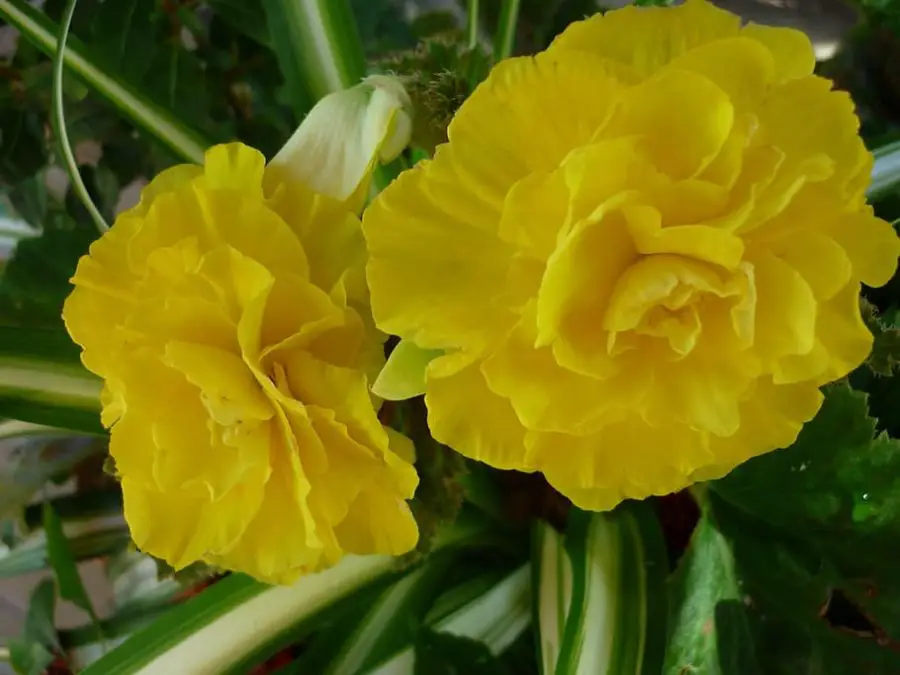
Tuberous Begonia Indoors can bring months of colorful blooms to your home when given the right combination of light, moisture, and cool temperatures. These flowering begonias are prized for their large rose-like blooms, attractive foliage, and ability to brighten windowsills, plant shelves, and sunrooms.
Unlike many common houseplants, tuberous begonias grow from underground tubers and follow a natural cycle of active growth followed by winter dormancy. Understanding this cycle is the key to keeping them healthy year after year.
This guide covers everything you need to know about growing tuberous begonias indoors, including lighting, watering, dormancy, propagation, troubleshooting, and the best varieties for indoor growing.
What You’ll Learn 🌺
- ☀️ How much light tuberous begonias need indoors
- 💧 Proper watering and humidity requirements
- 🪴 The best soil and containers for healthy roots
- 🌸 How to encourage bigger blooms
- ❄️ Understanding winter dormancy and storage
- 🚑 Common begonia problems and solutions
- 🏡 The best indoor locations for tuberous begonias
Quick Answer: Can You Grow Tuberous Begonias Indoors?
Yes. Tuberous begonias grow very well indoors when provided with bright indirect light, evenly moist soil, moderate humidity, and cool temperatures. Most varieties bloom for months and can be overwintered by allowing the tubers to enter dormancy during winter.
Tuberous Begonia Indoors: A Comprehensive Guide

Welcome to our in-depth guide on growing and caring for tuberous begonia indoors!
In this post, we’ll explore everything you need to know about these captivating plants, from their adaptability to indoor conditions to their colorful varieties and essential care tips.
What is the difference between Tuberous begonias, Rhizomatous begonias, and Fibrous-rooted begonias?

Begonias are a diverse group of plants with various growth habits and characteristics.
The primary categories of begonias include tuberous begonias, rhizomatous begonias, and fibrous-rooted begonias.
Here are the main differences between these three types:
Tuberous begonias (Begonia tuberhybrida):
These begonias are grown for their showy flowers and typically have a rounded growth habit.
They grow from underground tubers, which store nutrients and energy for the plant.
Tuberous begonias often have large, double blooms in a wide range of colors, including red, pink, orange, yellow, and white.
They are popular for both outdoor and indoor cultivation and usually go dormant during the winter months.
Rhizomatous begonias:
Rhizomatous begonias grow from thick, creeping underground stems called rhizomes.
These begonias are primarily grown for their interesting and colorful foliage, with leaves that come in a wide range of shapes, sizes, textures, and patterns.
They produce small flowers, but the main attraction of these plants is their stunning leaves. Rex begonias (Begonia rex-cultorum) are a well-known type of rhizomatous begonia.
Fibrous-rooted begonias:
Fibrous begonias have a compact growth habit and a root system consisting of fine, thread-like roots.
They are often grown for both their flowers and foliage. Wax begonias (Begonia semperflorens) are a common type of fibrous-rooted begonia, known for their waxy, fleshy leaves and continuous blooming throughout the growing season.
These begonias are often used as bedding plants in gardens or as container plants due to their attractive foliage and colorful flowers.
In summary, the main differences between tuberous, rhizomatous, and fibrous-rooted begonias lie in their growth habits, root structures, and the primary reasons for their cultivation (flowers or foliage).
Each type of begonia offers unique characteristics, making them popular choices among gardeners and houseplant enthusiasts alike.
A Glimpse at Tuberous Begonias

Tuberous begonias are truly a sight to behold! These enchanting plants are known for their beautiful, showy flowers that come in various colors, shapes, and sizes.
They belong to the Begonia family, which boasts over 1,800 species, making it one of the most diverse plant families out there.
Tuberous begonias are unique in that they grow from tubers, a fleshy underground storage organ that helps the plant survive through dormant periods.
These plants are popular not only for their vibrant blooms but also for their decorative foliage, adding a touch of elegance to any space.
Advantages of Bringing Tuberous Begonias Indoors
Growing tuberous begonias indoors offers several benefits that make them a fantastic choice for your home. Here are a few reasons why they might be the perfect addition:
Year-round beauty: When you cultivate tuberous begonias indoors, you can enjoy their stunning flowers throughout the year, even during the winter months when outdoor gardens may be dormant.
Improved air quality: Like most plants, tuberous begonias help purify the air by absorbing carbon dioxide and releasing oxygen, contributing to a healthier and fresher living environment.
Versatility: Tuberous begonias come in a wide variety of colors and forms, allowing you to pick the perfect plant that suits your personal style and complements your home’s décor.
Therapeutic effects: Caring for indoor plants, including tuberous begonias, can be a soothing and stress-relieving activity that adds a sense of tranquility to your everyday life.
With these benefits in mind, it’s easy to see why so many people choose to grow tuberous begonias indoors, turning their homes into vibrant, flourishing spaces.
Can Tuberous Begonias Be Grown Indoors?

You might be wondering if it’s possible to grow tuberous begonias indoors, and the answer is a resounding yes!
In fact, these lovely plants can adapt quite well to life inside your home, provided they receive the proper care and attention.
Tuberous Begonias’ Indoor Adaptability
Tuberous begonias are known for their versatility and ability to adapt to various environments, including indoor conditions.
As long as you provide them with the appropriate care, they can grow and thrive inside your home.
In fact, indoor growing conditions can often be beneficial for tuberous begonias, as they help protect the plants from harsh outdoor elements, such as extreme temperatures or strong winds.
Moreover, with a controlled indoor environment, you can easily adjust factors like light, temperature, and humidity to create the perfect conditions for your begonias to flourish.
Key Factors for Thriving Indoor Tuberous Begonias
To ensure that your tuberous begonias grow successfully indoors, there are several factors to consider:
Light: Tuberous begonias require bright, indirect light to grow well. Be sure to place them near a window that receives plenty of sunlight, but avoid direct sun exposure, which can scorch their leaves.
Temperature: These plants prefer moderate temperatures, typically between 65-75°F (18-24°C) during the day and slightly cooler at night. Avoid exposing them to extreme temperature fluctuations or drafts.
Humidity: Tuberous begonias appreciate moderate humidity levels. If your home’s air is too dry, consider using a humidifier or placing a tray of water near the plant to increase moisture levels.
Soil: A well-draining soil mix is crucial to prevent root rot. Opt for a potting mix that contains ingredients like perlite, and coco coir to provide good drainage and aeration.
Watering: It’s essential to maintain consistent moisture without overwatering your begonias. Allow the top layer of soil to dry out slightly between waterings to prevent root rot and other issues.
Fertilizing: Regular fertilizing with a balanced, water-soluble fertilizer will provide the necessary nutrients for your tuberous begonias to grow strong and produce vibrant blooms.
Are Tuberous Begonias Perennials?

You might be curious to know if tuberous begonias are perennials or not. After all, understanding a plant’s life cycle can greatly influence how you care for it.
What Are Perennials?
To begin, let’s clarify the term “perennials.” Perennials are plants that live for more than two years, going through repeated cycles of growth, flowering, and dormancy.
These plants often have a robust root system that allows them to survive unfavorable conditions and return with renewed vigor each growing season.
Perennials are different from annuals, which complete their entire life cycle within a single growing season, and biennials, which take two years to do so.
The Life Cycle of Tuberous Begonias
Now that we know what perennials are, we can reveal that tuberous begonias are, indeed, perennials!
They have a fascinating life cycle that starts with the growth of a tuber, a specialized storage organ that stores nutrients and energy for the plant.
In the growing season, the tuber sprouts stems, leaves, and flowers, showcasing the plant’s captivating blooms.
As the season progresses and temperatures begin to drop, tuberous begonias will enter a dormancy period.
During this time, the foliage will die back, and the tuber will remain dormant, conserving energy for the next growing season.
To ensure the plant’s survival during dormancy, it is essential to reduce watering and keep the tuber in a cool, dry place.
Once the temperatures start to rise and daylight hours increase, the tuber will awaken from dormancy, and the growth cycle will begin anew.
Understanding the life cycle of tuberous begonias will help you provide the proper care throughout the different stages of their growth, ensuring a flourishing plant with spectacular blooms year after year.
How to Start Tuberous Begonias Indoors

In this section, we’ll guide you through the process of starting tuberous begonias indoors, ensuring a successful beginning to your plant’s journey.
With our step-by-step instructions, you’ll soon have a thriving begonia plant that adds a touch of color and charm to your indoor space.
Planting Tuberous Begonia Tubers
Starting tuberous begonias indoors begins with planting the tubers, which are the plant’s energy-storing organs.
Here’s a simple guide to help you plant your tuberous begonia tubers:
Choose healthy tubers: Select plump, firm tubers with no signs of damage or rot. The health of the tuber greatly influences the plant’s growth and blooming potential.
Prepare the potting mix: Use a well-draining potting mix that contains ingredients like peat moss, perlite, and coco coir. This mix will provide the necessary drainage and aeration for your tuberous begonias.
Select a suitable container: Pick a container with drainage holes that’s large enough to accommodate the tuber and its future growth. A pot that is 6-8 inches (15-20 cm) in diameter works well for most tubers.
Plant the tuber: Fill the container halfway with the potting mix. Place the tuber on top of the soil, with its concave side facing up. Gently cover the tuber with a thin layer of potting mix, leaving the top slightly exposed.
Ensuring Ideal Germination Conditions

After planting your tuberous begonia tubers, it’s crucial to provide the proper germination conditions to encourage healthy growth:
Light: Place the container in a bright, indirectly lit area. Avoid direct sunlight, which can damage the tender new growth.
Temperature: Maintain a consistent temperature between 65-75°F (18-24°C) to promote germination. Avoid placing the container near drafts or heating vents.
Watering: Keep the potting mix consistently moist but not soggy. Overwatering can lead to rot, while underwatering may cause the tuber to dry out and fail to germinate.
Patience: Germination can take anywhere from 2-4 weeks, depending on the variety and growing conditions. Be patient, and soon enough, you’ll see the first signs of growth!
Indoor Begonia Types
As you embark on your journey to grow tuberous begonias indoors, you might be curious about the different types of begonias available for your indoor garden.
In this section, we’ll explore the diverse world of indoor begonia varieties, showcasing some of the most popular and captivating options for your home.
Popular Tuberous Begonia Varieties
There’s a fantastic array of tuberous begonia varieties to choose from, each with its unique charm and beauty. Here are some popular types that are well-suited for indoor cultivation:
Nonstop Begonias: As the name suggests, these begonias produce a continuous display of blooms throughout the growing season. They are available in a wide range of colors, including red, yellow, pink, and white.
Illumination Begonias: Known for their vibrant colors and cascading growth habit, these begonias are perfect for hanging baskets or as a trailing plant in a pot.
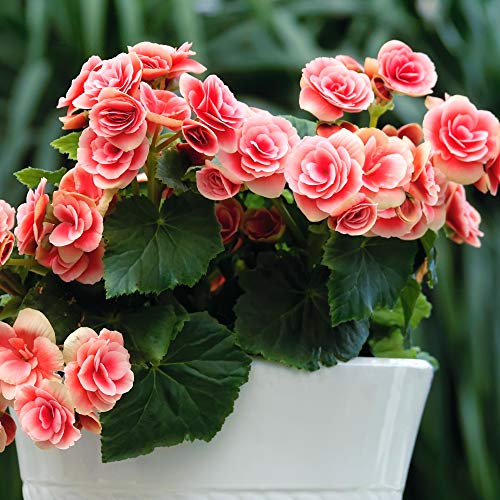
Camellia Begonias: With their rose-like, double flowers, Camellia begonias add a touch of elegance to any indoor space. These begonias come in various shades, from soft pastels to bold, striking colors.
Picotee Begonias: These begonias are prized for their exquisite blooms with contrasting petal edges. The delicate, ruffled flowers create a sophisticated and eye-catching display.
Comparing and Contrasting Begonia Types
While all tuberous begonias share certain similarities, such as their growth from tubers and their beautiful blooms, each variety has distinct characteristics that set them apart. Some of the differences between types include:
Flower shapes and sizes: Tuberous begonias showcase a range of flower shapes, from simple single blooms to elaborate double flowers that resemble roses or camellias. The size of the flowers can also vary, with some varieties producing large, showy blooms and others featuring more delicate, petite flowers.
Growth habits: The growth habits of tuberous begonias can differ, with some varieties showcasing a more upright growth pattern, while others cascade or trail over the edges of their containers.
Foliage: Tuberous begonia foliage can vary in color, texture, and size, adding to its overall appeal. Some varieties have smooth leaves, while others feature textured or variegated foliage.
Despite these differences, all tuberous begonia varieties share a love for bright, indirect light, well-draining soil, and consistent care.
Tuberous Begonia Colors

One of the most captivating aspects of tuberous begonias is their incredible array of colors, from soft pastels to vibrant, eye-catching hues.
In this section, we’ll celebrate the stunning color palette of these begonias, which can truly transform your indoor space into a living work of art.
Exploring the Begonia Color Spectrum
Tuberous begonias boast an impressive range of colors, ensuring that there’s a perfect hue for every indoor gardener. Some of the most common colors include:
Reds: From deep, rich burgundies to bright, fiery reds, these begonias make a bold statement and command attention.
Pinks: Ranging from soft, romantic blushes to vibrant, hot pinks, these begonias add a touch of charm and playfulness to your space.
Yellows and Oranges: These warm, sunny shades evoke feelings of happiness and energy, brightening up any room with their cheerful presence.
Whites and Creams: Elegant and sophisticated, white and cream-colored begonias create a sense of serenity and calm, making them a popular choice for many indoor gardeners.
Bicolors and Picotees: For those who enjoy a more unique look, bicolor begonias and picotees offer stunning combinations of contrasting colors, creating striking and visually appealing displays.
Tips for Choosing Begonia Colors

When selecting tuberous begonia colors, consider the following tips to ensure the perfect addition to your indoor garden:
Complement your interior design: Choose colors that harmonize with your existing décor and color scheme. This way, your begonias will seamlessly blend in and enhance the overall aesthetic of your home.
Create contrast: If you prefer a more dynamic look, opt for begonia colors that stand out against your interior design, adding an eye-catching pop of color and visual interest.
Mix and match: Don’t be afraid to combine multiple begonia colors in a single display. Mixing different shades can create a lively, vibrant, and visually captivating indoor garden.
Consider your personal preferences: Ultimately, choose begonia colors that make you happy and bring you joy. After all, your indoor garden should be a reflection of your personality and style.
Plant Size

In this section, we’ll explore the various sizes of these charming plants, from compact varieties perfect for small spaces to more substantial ones that make a striking statement.
By learning about the different sizes of tuberous begonias, you’ll be better equipped to select the ideal plant for your indoor garden and ensure it thrives in its new environment.
Indoor Tuberous Begonia Size Range
Tuberous begonias come in a variety of sizes, making it easy to find one that suits your indoor space. The typical size range for indoor tuberous begonias includes:
Compact varieties: These smaller begonias reach heights of 6-12 inches (15-30 cm) and widths of 6-9 inches (15-23 cm). They’re perfect for small spaces, windowsills, or as part of a mixed indoor plant display.
Medium-sized varieties: These begonias grow to heights of 12-18 inches (30-45 cm) and widths of 9-15 inches (23-38 cm), making them suitable for larger pots and indoor garden arrangements.
Large varieties: The most substantial tuberous begonias can reach heights of 18-24 inches (45-60 cm) and widths of 15-24 inches (38-60 cm). These striking plants make a bold statement and require ample space to grow and flourish.
Factors Influencing Tuberous Begonia Size
Several factors can influence the size of your tuberous begonia plant, including:
Variety: As mentioned earlier, different begonia varieties have distinct growth habits and sizes.
Be sure to research the specific variety you’re growing to understand its potential size.
Growing conditions: Proper care, including adequate light, water, and nutrients, will impact your begonia’s overall size and health.
Providing the optimal conditions for your plant will help it reach its full growth potential.
Pruning: Regular pruning can help control the size and shape of your tuberous begonia.
By removing dead or unhealthy foliage and shaping the plant as desired, you can maintain its appearance and prevent it from becoming too large or unruly.
Container size: The size of the container you use for your begonia can also affect its growth.
A larger pot allows the roots to spread out, potentially leading to a bigger plant, while a smaller container can restrict growth and keep the plant more compact.
By understanding the typical size range of indoor tuberous begonias and the factors that influence their growth, you’ll be better prepared to choose the right variety for your space and provide the care it needs to thrive.
Light Requirements

In this section, we’ll delve into the light preferences of tuberous begonias, helping you understand their needs and how to provide the ideal environment for them to flourish.
Perfect Light Conditions for Indoor Tuberous Begonias
Understanding the ideal light conditions for indoor tuberous begonias is key to ensuring their health and happiness. Here’s what you need to know:
Bright, indirect light: Tuberous begonias thrive in bright, indirect light. This means they should receive plenty of natural light but not be exposed to harsh, direct sunlight, which can cause their leaves to scorch or their colors to fade.
Filtered or diffused light: If your home has a spot that receives dappled sunlight, this can be an ideal location for your begonias. Alternatively, placing them near a window with sheer curtains can also provide the right amount of filtered light.
Duration: Aim to provide your tuberous begonias with at least 6-8 hours of bright, indirect light per day for optimal growth and blooming.
Tips for Providing Adequate Light
To ensure your tuberous begonias receive the light they need, consider the following tips:
East or west-facing windows: These windows typically provide the best light conditions for tuberous begonias, as they offer bright, indirect light throughout the day without the risk of scorching.
Rotate your plants: To ensure even light exposure, rotate your begonias every few weeks. This will help prevent any lopsided growth and ensure all sides of the plant receive adequate light.
Use artificial lighting: If your home doesn’t have an area with suitable natural light, consider using artificial lighting, such as LED grow lights, to supplement your begonias’ light needs. Make sure to choose a light source that mimics the full spectrum of natural sunlight.
Monitor and adjust: Keep an eye on your begonias and watch for signs that they’re receiving too much or too little light. If you notice leggy growth, faded colors, or a lack of blooms, adjust their light conditions accordingly.
Best Indoor Locations For Tuberous Begonias
Location plays a major role in flowering performance. Tuberous begonias prefer bright conditions without harsh afternoon sun.
East-Facing Windows
Morning sunlight provides excellent lighting without overheating the foliage.
Bright North-Facing Windows
Bright northern exposures often provide enough indirect light for healthy growth while protecting blooms from scorch.
Sunrooms
Cool sunrooms with filtered light are among the best locations for long-lasting flowers.
Under LED Grow Lights
Full-spectrum grow lights can supplement natural light during winter or in darker homes.
Watering

In this section, we’ll explore the best practices for watering tuberous begonias, equipping you with the knowledge needed to provide the perfect amount of moisture for your plant to thrive.
Proper Watering Techniques for Indoor Tuberous Begonias
To keep your indoor tuberous begonias happy and healthy, follow these watering techniques:
Check the soil moisture: Before watering, check the soil’s moisture level by sticking your finger about an inch into the soil. If the soil feels dry at that depth, it’s time to water.
Water thoroughly: When watering, make sure to moisten the entire root zone. Water your begonias until you see water flowing out of the drainage holes at the bottom of the pot.
Allow the soil to dry between waterings: Tuberous begonias prefer to dry out slightly between waterings, so avoid keeping the soil constantly wet.
Allowing the top inch of soil to dry before watering again will help prevent root rot and other issues caused by overwatering.
Avoid wetting the foliage: To minimize the risk of fungal diseases, try to keep water off the leaves when watering your tuberous begonias.
Use a watering can with a long spout or a narrow-necked bottle to direct water to the base of the plant.
Signs of Overwatering and Underwatering
Knowing the signs of overwatering and underwatering can help you adjust your care routine and keep your tuberous begonias healthy:
Overwatering: Signs of overwatering include yellowing leaves, wilting despite wet soil, and a soft, mushy stem.
If you notice these symptoms, allow the soil to dry out and reduce your watering frequency.
Underwatering: Symptoms of underwatering include drooping or curling leaves, dry and crispy leaf edges, and slow growth.
If you see these signs, increase your watering frequency and ensure the entire root zone is being moistened during each watering.
Soil and Pots
In this section, we’ll discuss the benefits of using coco coir as a growing medium, as well as the importance of choosing the right container for your begonia.
Benefits of Using Coco Coir as a Potting Medium
Coco coir is a fantastic option for indoor tuberous begonias, offering numerous benefits:
Excellent drainage: Coco coir allows water to flow through the potting mix easily, preventing waterlogging and root rot. This is particularly important for tuberous begonias, which are sensitive to overwatering.
Aeration: The fibrous nature of coco coir promotes aeration, ensuring that your begonia’s roots receive ample oxygen. This helps encourage healthy root development and overall plant growth.
Retains moisture: While it provides excellent drainage, coco coir also retains enough moisture to keep your begonia’s roots hydrated between waterings.
Eco-friendly: Coco coir is a sustainable, renewable resource derived from coconut husks, making it an environmentally friendly choice for your indoor garden.
Recommended Pot Types and Sizes
Choosing the right pot for your tuberous begonia is essential for providing the best growing conditions.
Consider these recommendations when selecting a container:
Drainage holes: Opt for pots with drainage holes to prevent water from accumulating in the bottom of the pot, which can lead to root rot.
Material: Both plastic and terracotta pots are suitable for tuberous begonias. Plastic pots retain moisture longer, while terracotta pots help wick away excess moisture, providing a slightly drier environment.
Size: Choose a pot that is slightly larger than the root ball of your begonia, allowing for ample room for growth. As a general guideline, it is a good idea to select a pot that is 1-2 inches (2.5-5 cm) larger in diameter than the current pot.
Shape: Shallow pots are ideal for tuberous begonias, as their roots tend to spread horizontally rather than growing deep. A pot with a wide, shallow profile will accommodate their growth habits better.
By using coco coir as a potting medium and selecting the appropriate pot type and size, you’ll create a nurturing environment for your tuberous begonia, helping it grow and thrive indoors.
Fertilizing

In this section, we’ll discuss the importance of fertilizing your tuberous begonia, as well as how to choose the right fertilizer and apply it correctly.
Types of Fertilizers Suitable for Indoor Tuberous Begonias
When choosing a fertilizer for your indoor tuberous begonias, consider the following options:
Balanced fertilizer: A balanced fertilizer with equal parts nitrogen (N), phosphorus (P), and potassium (K) is a great choice for promoting overall plant health. Look for a formula such as 10-10-10 or 14-14-14.
Bloom-boosting fertilizer: To encourage more blooms, opt for a fertilizer with a higher phosphorus content. A formula like 15-30-15 is ideal for promoting flowering in tuberous begonias.
Organic vs. Synthetic: Both organic and synthetic fertilizers can work well for tuberous begonias.
Organic options, like compost or worm castings, can provide a gentle source of nutrients, while synthetic fertilizers offer precise nutrient ratios for targeted feeding.
Fertilizing Schedule and Application Techniques
Follow these tips to create an effective fertilizing schedule and apply fertilizer correctly:
Frequency: Fertilize your tuberous begonias every 4-6 weeks during the active growing season (spring and summer). During the fall and winter months, reduce the fertilizing frequency or stop altogether to allow the plant to rest.
Dilution: When using a liquid fertilizer, dilute it according to the manufacturer’s instructions. Over-fertilizing can cause damage to your plant, so it’s best to err on the side of caution.
Application method: Apply the fertilizer to moist soil to avoid burning the roots. Water your plant thoroughly a day or two before fertilizing to ensure the soil is adequately moist.
Adjustments: Monitor your plant’s health and growth, adjusting your fertilizing schedule as needed.
If you notice signs of nutrient deficiencies or excess, such as yellowing leaves or poor growth, adjust the fertilizer type, quantity, or frequency accordingly.
Temperature and Humidity

In this section, we’ll delve into the best practices for managing temperature and humidity levels for your tuberous begonia, ensuring that your plant has the optimal environment to grow and flourish.
Optimal Temperature Range for Indoor Tuberous Begonias
To keep your indoor tuberous begonias happy and healthy, maintain the following temperature conditions:
Daytime temperatures: Aim for a daytime temperature range of 65-75°F (18-24°C). Tuberous begonias prefer these moderate temperatures, which encourage steady growth and blooming.
Nighttime temperatures: At night, slightly cooler temperatures between 55-65°F (13-18°C) are ideal. This temperature drop helps mimic the natural fluctuations that occur outdoors.
Avoid temperature extremes: Sudden temperature changes or extreme conditions can stress your begonia.
Keep your plant away from drafts, heaters, or air conditioning vents to maintain a stable temperature.
Ideal Humidity Levels and How to Maintain Them
Tuberous begonias thrive in moderate to high humidity levels. Here’s how to maintain the ideal humidity for your plant:
Humidity range: Aim for a humidity level between 50-70% for your indoor tuberous begonias. This range promotes healthy growth and flowering while minimizing the risk of fungal diseases.
Use a humidifier: If your indoor air is too dry, consider using a humidifier to increase the humidity around your begonia.
Group plants together: Placing plants close together can create a microclimate of increased humidity, benefiting all the plants in the area.
Pebble tray: Fill a shallow tray with water and pebbles, then place your potted begonia on top of the pebbles (ensuring the pot doesn’t sit in the water). As the water evaporates, it will raise the humidity around your plant.
Mist carefully: Misting your begonia can help increase humidity, but be cautious, as excess moisture on the leaves can lead to fungal issues. If you choose to mist, do so sparingly and in the morning, allowing the leaves to dry before evening.
Maintenance and Pruning

In this section, we’ll explore the importance of routine maintenance and pruning, along with tips on how to do it effectively.
With a bit of tender loving care, your tuberous begonia will flourish, showcasing its natural beauty while also encouraging healthy growth and abundant blooms.
Pruning Techniques to Encourage Healthy Growth
Pruning your indoor tuberous begonia helps maintain its shape, encourage healthy growth, and promote blooming. Follow these techniques for effective pruning:
Remove dead or damaged foliage: Regularly inspect your begonia for dead or damaged leaves and stems.
Gently remove them using clean, sharp scissors or pruning shears, cutting at the base of the stem.
Pinch back for bushiness: Pinch back the growing tips of your begonia’s stems to encourage a bushier growth habit. This will help create a fuller, more compact appearance.
Deadhead spent blooms: Remove faded flowers by pinching or cutting them off just below the flower head. This will encourage more blooms and prevent the plant from putting energy into seed production.
Timing: The best time to prune your tuberous begonia is during its active growing season, typically in the spring and summer months.
Maintenance Tips for Optimal Plant Health
In addition to pruning, follow these maintenance tips to keep your tuberous begonia thriving:
Regularly inspect for pests and diseases: Routinely check your begonia for signs of pests or diseases, such as discolored leaves or small insects. Catching and addressing issues early can prevent more severe problems later on.
Keep leaves clean: Dust can accumulate on your begonia’s leaves, blocking light and reducing photosynthesis. Gently wipe the leaves with a damp cloth or soft sponge to keep them clean.
Rotate your plant: Rotate your begonia every few weeks to ensure even growth and exposure to light. This will help maintain a balanced, symmetrical shape.
Monitor growing conditions: Keep an eye on the temperature, humidity, light, and other environmental factors, making adjustments as needed to maintain optimal conditions for your begonia’s health.
Repotting

In this section, we’ll discuss when and how to repot your tuberous begonia, along with tips for making the process as smooth and stress-free as possible.
When to Repot Indoor Tuberous Begonias
Knowing when to repot your indoor tuberous begonia is crucial for its continued growth and health. Here are some signs that it’s time for a new pot:
Root-bound: If you notice roots growing out of the drainage holes or circling the top of the soil, your begonia is likely root-bound and needs a larger pot.
Slowed growth: A noticeable decrease in growth rate can indicate that your plant has outgrown its current container and requires more space to grow.
Frequent watering: If you find yourself watering your begonia more often than usual, it may be a sign that the roots have taken up most of the available soil, causing it to dry out more quickly.
Timing: The best time to repot your tuberous begonia is in the early spring, just before the active growing season begins.
Steps for Successful Repotting
Follow these steps to repot your indoor tuberous begonia:
Choose the right pot: Select a new pot that’s 1-2 inches larger in diameter than the current one, with drainage holes to prevent overwatering.
Prepare the new pot: Fill the bottom of the new pot with a layer of fresh, well-draining potting mix, such as a mix containing coco coir.
Remove the begonia: Gently remove your begonia from its current pot by carefully tipping it sideways and supporting the base of the plant. Avoid pulling on the stems, as this can cause damage.
Inspect and trim roots: Examine the root system for any damaged or excessively tangled roots. Gently trim away any problem areas with clean, sharp scissors.
Repot your begonia: Place the begonia in the new pot, ensuring that the top of the root ball is at the same level as it was in the previous pot. Fill in around the root ball with fresh potting mix, gently tamping it down to eliminate air pockets.
Water and care: Water your newly repotted begonia thoroughly, allowing excess water to drain. Keep an eye on your plant for the next few weeks, monitoring its adjustment to the new pot and providing any necessary care.
Propagation
In this section, we’ll delve into the methods of tuberous begonia propagation and provide step-by-step instructions to help you succeed.
Various Methods of Tuberous Begonia Propagation
There are several methods you can use to propagate your tuberous begonia. Here are the most common ones:
Division: This method involves dividing a mature tuberous begonia tuber into smaller sections, each containing at least one growth bud (or “eye”). This is best done during the plant’s dormancy period, typically in the late fall or early winter.
Stem cuttings: Stem cuttings involve taking a healthy piece of stem, preferably with a few leaves attached, and rooting it in a suitable growing medium. This method works best in the spring or early summer when the plant is actively growing.
Leaf cuttings: In this method, a healthy leaf is removed from the parent plant and placed on a moist growing medium. With time and the right conditions, new plantlets will emerge from the leaf veins.
Tips for Successful Propagation
Follow these tips to increase your chances of successful tuberous begonia propagation:
Use healthy plant material: Always select healthy, disease-free plant material for propagation. This will increase the chances of producing strong, healthy offspring.
Sterilize tools: Before starting any propagation method, be sure to sterilize your tools, such as scissors or pruning shears, to prevent the spread of diseases or pests.
Provide the right conditions: Each propagation method requires specific conditions, such as temperature, humidity, and light levels, to be successful. Make sure to research the requirements for your chosen method and provide the necessary environment for your new plants.
Be patient: Propagation can take time, and it’s important to be patient during the process. Keep an eye on your new plants and provide the proper care, but remember that it may take a few weeks or even months before you see significant growth.
Pests and Diseases

In this section, we’ll discuss the most common pests and diseases that may affect your tuberous begonia indoors, along with tips on how to identify and treat them.
Common Pests and Diseases Affecting Indoor Tuberous Begonias
Several pests and diseases can affect your indoor tuberous begonia. Here are some of the most common ones:
Aphids: Small, soft-bodied insects that suck the sap from your plant, causing leaves to curl and become discolored.
Spider mites: Tiny, spider-like creatures that create webbing on the undersides of leaves and cause yellowing or stippling on the foliage.
Mealybugs: White, cottony insects that feed on plant sap and can cause distorted growth and leaf drop.
Powdery mildew: A fungal disease that appears as a white, powdery substance on the leaves and can lead to stunted growth and leaf loss.
Root rot: A fungal disease that affects the roots, causing them to become soft and mushy, leading to wilting and eventual death of the plant.
Prevention and Treatment Options
To prevent and treat pests and diseases affecting your indoor tuberous begonia, follow these tips:
Maintain good hygiene: Regularly clean up dead leaves and debris around your plant to minimize the chance of pests or diseases taking hold.
Ensure proper care: Providing the right balance of light, water, and nutrients can help keep your plant healthy and less susceptible to issues.
Inspect regularly: Regularly check your plant for signs of pests or diseases so you can address problems early on.
Use natural remedies: For pests, consider using natural remedies like neem oil, and insecticidal soap, or introducing beneficial insects like ladybugs. For diseases, try using a fungicide specifically formulated for begonias.
Quarantine affected plants: If you discover a pest or disease on your tuberous begonia, separate it from other plants to prevent the issue from spreading.
Begonias Indoors in Winter

In this section, we’ll share essential tips for winter care, including how to help your tuberous begonia go through its natural dormancy period and how to maintain its health during this time.
Dormancy Period
Tuberous begonias have a natural dormancy period, usually during the winter months when the plant rests and prepares for the next growing season. Here’s what you need to know:
Signs of dormancy: Your tuberous begonia may lose leaves or stop blooming, signaling that it’s entering its dormancy period.
Caring for dormant tubers: Once your begonia has entered dormancy, reduce watering, and allow the tubers to dry out in their pot.
When the foliage dies back, carefully remove the tubers from the soil and store them in a cool, dark, and dry place until it’s time to replant in the spring.
Winter Care Tips
Even though your tuberous begonia is dormant, there are still some things you can do to ensure it stays healthy during the winter months:
Monitor temperature: Keep your begonia away from cold drafts or heating vents, as sudden temperature changes can harm the plant.
Humidity: Maintain adequate humidity levels by placing your begonia on a tray filled with water and pebbles, or by using a humidifier.
Lighting: While your begonia is dormant, it won’t need as much light. However, once you notice new growth in the spring, move it back to a bright spot.
Replanting in Spring
When the days start to get longer and warmer, it’s time to wake your tuberous begonia up from its winter slumber:
Potting mix: Prepare a fresh, well-draining potting mix, ideally containing coco coir, as discussed in section X.
Replanting tubers: Place the tubers in the pot with the concave side facing up, and cover them with about an inch of potting mix.
Watering: Water the tubers lightly and keep the soil consistently moist but not waterlogged.
Gradually acclimate: As your begonia begins to grow, gradually reintroduce it to brighter light and resume your regular care routine.
Tuberous Begonia Problems And Solutions
Why Are My Begonia Leaves Turning Yellow?
Overwatering is the most common cause. Check drainage and allow the top inch of soil to dry slightly before watering again.
Why Isn’t My Begonia Blooming?
Insufficient light, excessive nitrogen fertilizer, or temperatures that are too warm can reduce flowering.
Why Are The Flower Buds Dropping?
Sudden environmental changes, underwatering, or low humidity often cause bud drop.
Why Are The Leaves Turning Brown?
Brown edges are commonly caused by dry air, underwatering, or direct sunlight.
Why Does My Begonia Look Weak And Leggy?
Leggy growth usually indicates insufficient light. Move the plant closer to a bright window or supplement with a grow light.
Continue Exploring Flowering Houseplants
Tuberous Begonia Indoors FAQs
Can tuberous begonias live indoors year-round?
Yes. They can be grown indoors year-round, although most varieties benefit from a winter dormancy period.
Do tuberous begonias need direct sunlight?
No. Bright indirect light is ideal. Strong afternoon sun can damage leaves and flowers.
How often should I water a tuberous begonia?
Water when the top inch of soil begins to dry. Keep the soil lightly moist but never soggy.
Can I save the tubers for next year?
Yes. Allow the plant to go dormant, then store the tubers in a cool, dry location until spring.
What is the best temperature for indoor tuberous begonias?
Most varieties perform best between 60°F and 75°F with moderate humidity and good air circulation.
Tuberous Begonia Indoors Final Thoughts

Tuberous begonias are among the most rewarding flowering houseplants you can grow indoors. Their colorful blooms, compact size, and wide range of varieties make them excellent choices for bright windows, plant shelves, and sunrooms.
Success comes from providing bright indirect light, consistent moisture, well-draining soil, and understanding their natural dormancy cycle. Once established, these plants can reward you with months of spectacular flowers every growing season.
Whether you’re growing your first begonia or expanding an indoor flowering plant collection, tuberous begonias offer beauty, color, and long-lasting indoor appeal.
Learn more about the Benefits Of Keeping Indoor Plants
Want to transform your indoor space into a lush, thriving haven? These guides will help you master houseplant care with ease.
🌿 Indoor Houseplant Care Guides
- ♻️ Composting Indoors
- 🌳 Rubber Plant Care Indoors
- 🌸 Peace Lily Care Indoors
- 🧀 Swiss Cheese Plant Care
- 🎋 Indoor Bamboo Guide
- 🌱 Vertical Gardening Indoors
- 🌺 Bromeliad Care
- 🥢 Bamboo Plant Indoor Care
- ❤️ Anthurium Care Indoors
- 🌵 How to Grow Succulent Plants
- 🌿 Maidenhair Fern Indoor Care
- See all articles in our Houseplants category