
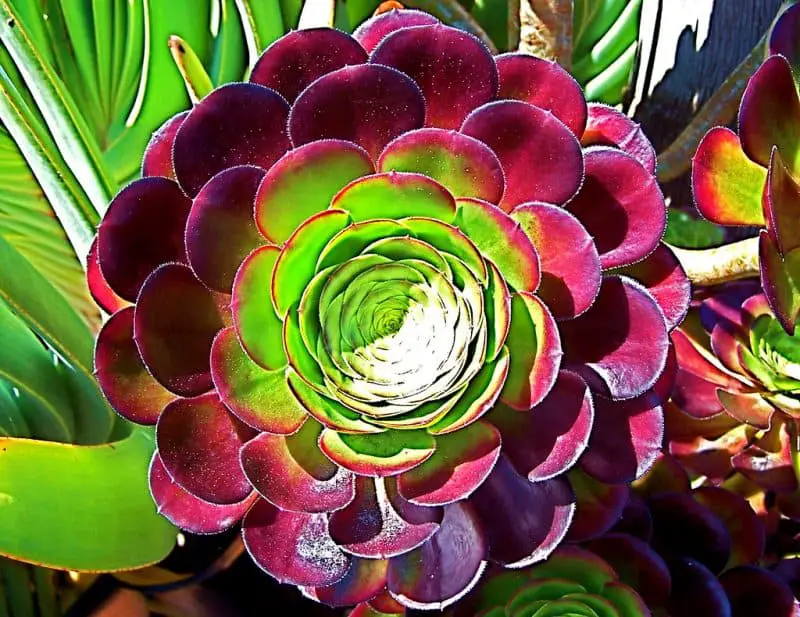
Aeonium Arboreum Indoor Care is surprisingly simple once you understand how this unique succulent grows. Unlike many desert succulents, Aeonium arboreum prefers mild temperatures, bright light, and a regular watering schedule during its active growing season.
Known as the Tree Aeonium, this striking plant produces colorful rosettes of foliage on branching stems, creating a dramatic architectural look indoors. Mature plants may even reward growers with large clusters of bright yellow flowers.
This guide covers everything you need to know about growing Aeonium arboreum indoors, including lighting, watering, soil selection, propagation, troubleshooting, and long-term care.
What You’ll Learn 🌿
- ☀️ The best lighting conditions for healthy growth
- 💧 How often to water Aeonium arboreum indoors
- 🪴 The ideal soil and container setup
- 🌱 Easy propagation methods using stem cuttings
- ✂️ How to prune for a fuller, bushier plant
- 🚑 Common Aeonium problems and solutions
- 🏡 The best indoor locations for Tree Aeonium
Quick Answer: How Do You Care For Aeonium Arboreum Indoors?
Aeonium arboreum grows best in bright light, well-draining soil, and containers that allow excess water to drain freely. Water thoroughly when the soil dries out, reduce watering during dormancy, and avoid prolonged exposure to frost.
With proper light and occasional pruning, Tree Aeonium develops colorful rosettes and an attractive branching form that makes an excellent indoor focal plant.
Aeonium Arboreum Overview
Aeonium arboreum is often called the Tree Aeonium and is a succulent that is native to the Canary Islands.
Aeonium arboreum is a perennial succulent, meaning that it will live for more than two years.
However, Aeoniums are typically grown as annuals in colder climates, as they cannot tolerate frost.
It can be grown indoors as a houseplant and is prized for its showy flowers and striking leaves.
Aeoniums are part of the Crassulaceae family, which includes well-known succulents such as jade plants (Crassula ovata) and sedums (Sedum spp.).
Aeonium arboreum requires very little care and can be easily grown in most homes.
In the wild, it can grow up to 6 feet tall but indoors in pots it will be 2-3 feet.
In this blog post, we will discuss the best ways to care for Aeonium arboreum indoors, so that you can enjoy its beautiful blooms all year long!
Aeonium Arboreum Indoor Care In A Nutshell
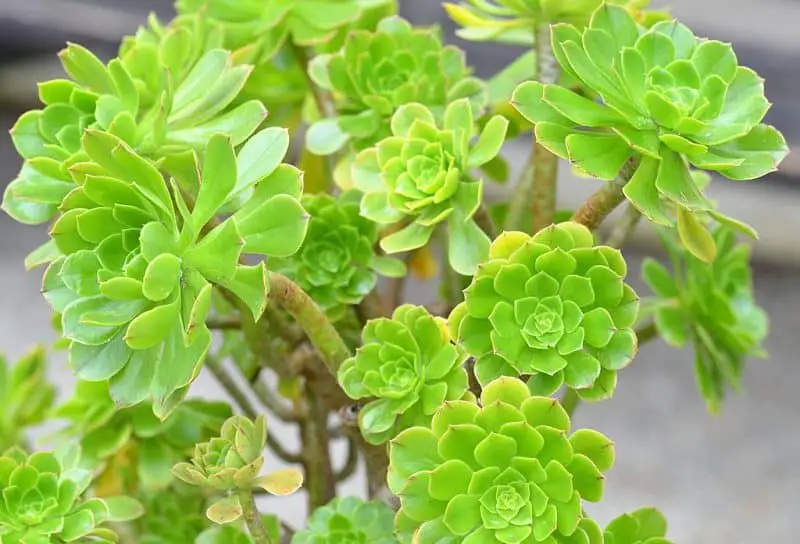
Aeonium arboreum does best in bright light. Aeoniums can tolerate some shade, but too much will cause etiolation (leggy deformed growth).
Aeoniums prefer warm temperatures and will not tolerate frost. They can handle a temperature range of 40°F to 100°F but try to avoid the extremes on either end.
Aeoniums need well-draining soil and should be allowed to dry out completely between watering.
Aeoniums are relatively drought-tolerant and can go for long periods without water so you should water less during the winter.
Aeoniums are not heavy feeders, and only need to be fertilized once or twice a year during the growing season.
Aeoniums can be easily propagated from stem cuttings.
Aeonium Arboreum Lighting
One of the most important aspects of Aeonium arboreum indoor care to remember when growing the Tree Aeonium is that it requires bright light in order to thrive.
If you are growing it indoors, place it near a south-facing window where it will receive plenty of sunlight.
However, if you live in a climate with hot summers, it is best to provide some afternoon shade in order to prevent the leaves from scorching.
With proper care, the Aeonium arboreum will produce beautiful clusters of yellow flowers that add color and interest to your home.
Best Indoor Locations For Aeonium Arboreum
Choosing the right location is one of the most important parts of Aeonium Arboreum indoor care. These plants thrive in bright conditions and often perform best near sunny windows.
South-Facing Windows
A south-facing window typically provides the strongest light indoors and is often the best location for healthy growth and vibrant foliage color.
West-Facing Windows
West-facing windows can also work well, especially in cooler climates where afternoon sun is less intense.
Sunrooms And Bright Plant Rooms
Bright sunrooms provide excellent growing conditions and allow Aeoniums to reach their full ornamental potential.
Supplement With Grow Lights
If natural light is limited, LED grow lights can help prevent stretched growth and maintain compact r
Best Indoor Locations For Aeonium Arboreum
Choosing the right location is one of the most important parts of Aeonium Arboreum indoor care. These plants thrive in bright conditions and often perform best near sunny windows.
South-Facing Windows
A south-facing window typically provides the strongest light indoors and is often the best location for healthy growth and vibrant foliage color.
West-Facing Windows
West-facing windows can also work well, especially in cooler climates where afternoon sun is less intense.
Sunrooms And Bright Plant Rooms
Bright sunrooms provide excellent growing conditions and allow Aeoniums to reach their full ornamental potential.
Supplement With Grow Lights
If natural light is limited, LED grow lights can help prevent stretched growth and maintain compact rosettes.
Watering Aeonium Arboreum
While A. arboreum is tolerant of dry conditions, it will flower and grow more vigorously with regular watering during the growing season.
This succulent should be watered deeply but infrequently, allowing the soil to dry out completely between waterings.
During the winter months, watering can be reduced even further, giving the plant a chance to go dormant.
Fertilizing Aeonium Arboreum
For plants grown indoors, fertilize tree aeonium once a month during the growing season with a succulent fertilizer.
When applying fertilizer, be sure to avoid getting any on the leaves, as this can cause burning.
With proper care, your tree aeonium will thrive and produce an abundance of beautiful blooms in summer and fall.
You don’t need to fertilize at all during the winter or dormant season.
Aeonium Arboreum Soil
When it comes to growing aeonium arboreum, the type of soil you use is important. This succulent prefers well-draining soil that is rich in organic matter.
Aeonium arboreum plants are native to the Canary Islands, where they grow in rocky, volcanic soil. You can recreate this type of soil at home by mixing together equal parts perlite, sand, and potting mix.
You can also use a 50/50 mix of coco coir and perlite. Sand is heavy and although often recommended is not really needed.
Once you have the right soil, be sure to provide your aeonium arboreum plant with plenty of sun and regular watering. With a little care, you can enjoy watching your plant thrive.
Aeonium Arboreum Repotting
Aeonium arboreum generally only needs to be repotted every 2 years. It is best to repot in the springtime.
The best solution is to repot the plant into a slightly larger container.
Here are some tips for repotting aeonium arboreum:
1. Choose a pot that is one size larger than the current pot.
2. Use a well-draining cactus mix or add perlite to regular potting soil.
3. Water thoroughly after repotting and then wait a week before watering again.
4. Place the plant in an area with bright indirect light.
By following these steps, you can give your aeonium arboreum the best chance for success.
Aeonium Arboreum Propagation
Aeonium arboreum is relatively easy to propagate from stem cuttings.
To take a cutting, use a sharp knife or pruning shears to remove a 4-6 inch piece of stem from the plant. Be sure to make the cut just below a leaf node, as this is where roots will form.
Place the cutting in a well-draining potting mix and water lightly. Keep the soil moist but not wet, and place the pot in a bright spot out of direct sunlight.
In a few weeks, your cutting’s roots will have formed and when the plant is well-established, you can transplant it into a larger pot or into your garden.
Aeonium Arboreum Pruning
Aeonium arboreum is a popular plant for growing in containers and rock gardens.
However, the plant can become leggy and overgrown if it is not pruned properly.
To keep your tree aeonium looking its best, it is important to prune it regularly. When pruning, be sure to remove any dead or dying leaves and flower stems.
You can take cuttings with about 6 inches of stem to propagate new plants.
Tall branches can be cut back and they will regrow from nodes below the cut.
This will reduce the height of your plant and also you can choose which new side branches you want to continue growing so it is bushier.
Aeonium Arboreum Pests and Diseases
Aeonium arboreum is not susceptible to many pests or diseases but can be occasionally attacked by common houseplant pests like mealybugs, aphids, spider mites, and scale insects.
Common Aeonium Arboreum Problems And Solutions
Why Is My Aeonium Getting Leggy?
Leggy growth is usually caused by insufficient light. Move the plant to a brighter location or supplement with a grow light.
Why Are The Leaves Falling Off?
Some leaf drop is normal as the plant grows. Excessive leaf loss may indicate overwatering, underwatering, or environmental stress.
Why Are The Rosettes Closing Up?
Aeoniums often become semi-dormant during hot weather and may close their rosettes to conserve moisture.
Why Are The Leaves Turning Brown?
Brown leaves can result from sun scorch, drought stress, or natural aging of older foliage.
Why Isn’t My Aeonium Growing?
Slow growth is common during dormancy. Growth typically resumes when temperatures become milder.
Common Aeonium Arboreum Problems And Solutions
Why Is My Aeonium Getting Leggy?
Leggy growth is usually caused by insufficient light. Move the plant to a brighter location or supplement with a grow light.
Why Are The Leaves Falling Off?
Some leaf drop is normal as the plant grows. Excessive leaf loss may indicate overwatering, underwatering, or environmental stress.
Why Are The Rosettes Closing Up?
Aeoniums often become semi-dormant during hot weather and may close their rosettes to conserve moisture.
Why Are The Leaves Turning Brown?
Brown leaves can result from sun scorch, drought stress, or natural aging of older foliage.
Why Isn’t My Aeonium Growing?
Slow growth is common during dormancy. Growth typically resumes when temperatures become milder.
Aeonium Arboreum Indoor Care FAQs
Can Aeonium arboreum grow indoors year-round?
Yes. Aeonium arboreum grows very well indoors when provided with bright light and proper drainage.
How much sunlight does Tree Aeonium need?
Tree Aeonium performs best with several hours of bright sunlight or very bright indirect light each day.
How often should I water Aeonium arboreum?
Water deeply when the soil becomes dry, then allow it to dry again before watering. Reduce watering during dormant periods.
Can I grow Aeonium arboreum from cuttings?
Yes. Stem cuttings root easily in a well-draining succulent mix and are one of the easiest propagation methods.
Does Aeonium arboreum flower indoors?
Mature plants can produce clusters of yellow flowers indoors, although flowering is more common in plants receiving abundant light.
Aeonium Arboreum Indoor Care Final Thoughts
Aeonium arboreum is one of the most striking succulents you can grow indoors. Its colorful rosettes, branching growth habit, and occasional yellow flowers make it a standout addition to any succulent collection.
Success comes from providing bright light, excellent drainage, moderate watering, and protection from extreme temperatures. Once established, Tree Aeonium requires very little maintenance and can thrive for many years.
Whether you’re a beginner succulent grower or an experienced plant enthusiast, Aeonium arboreum offers an attractive and rewarding indoor growing experience.