
Anthurium care indoors doesn’t have to be difficult! With the right balance of light, water, humidity, and soil, your flamingo flower can thrive year-round.
These tropical beauties with glossy, heart-shaped blooms are easier to grow than you think.
Whether you’re a beginner or an experienced plant gardener, this guide will walk you through everything you need to keep your anthurium healthy, vibrant, and flowering indoors.
🌿 Anthurium Care Indoors – Checklist
- 🌞 Light: Bright, indirect light (avoid harsh sun)
- 🌱 Soil: Well-draining mix (60% coco coir + 40% perlite)
- 💧 Water: When top inch feels dry; maintain high humidity
- 🌡️ Temperature: 65–85°F (18–29°C)
- 🍽️ Fertilizer: Monthly during growing season
- 🌸 Blooms: Can flower year-round with proper care
- 🌿 Propagation: Easy by division or stem cuttings
In order to keep your anthurium looking its best, however, you will need to learn about some basic anthurium care indoors.
In this blog post, we will discuss the proper way to water and fertilize an anthurium plant, soil type, propagation as well as how to deal with common problems growing anthurium.
What Is An Anthurium?

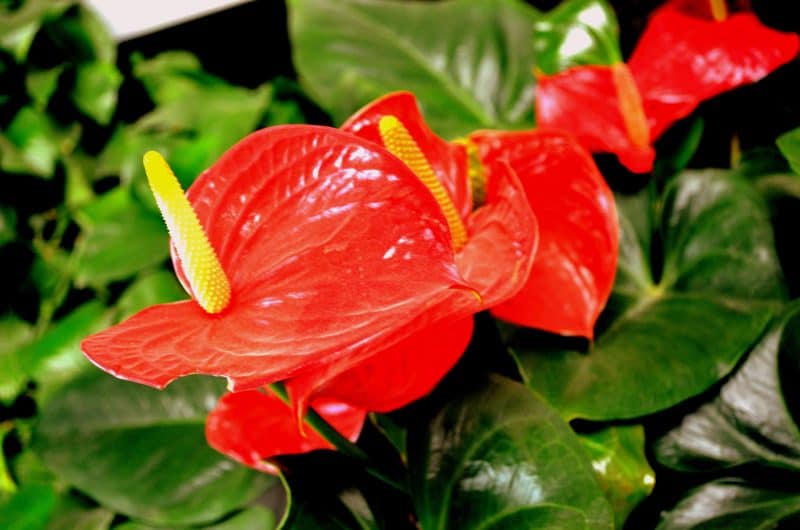
Anthurium Red – Live House Plants Indoors
 Anthuriums are a type of flowering plant that is native to Central and South America. Also known as flamingo flowers.
Anthuriums are known for their vibrant red, pink, or white flowers. The flowers are actually not petals, but thick, waxy leaves that grow on a stalk.
Anthuriums can typically be found in rainforests where some grow as epiphytes although some are terrestrial. They are often grown as houseplants.
There are many different species of this plant and although red flowers are most common they can be found in green, white, pink, purple, and mixes of these colors.
However, all anthuriums share one key trait: they produce a substance called oxalic acid, which is toxic to humans and animals if ingested. As a result, it is important to keep anthurium plants out of reach of children and pets.
Anthurium Care Indoors

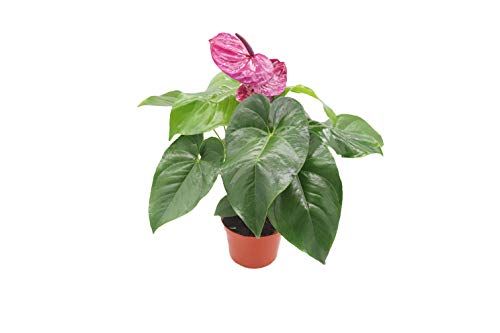
Anthurium plants are not hard to grow indoors provided you meet a few growing requirements.
They also can produce their flowers year round so if you want an easy-to-care-for houseplant that flowers indoors anthurium might be just what you are looking for.
Anthurium Care In A Nutshell

Anthuriums are beautiful plants that thrive in warm, humid environments.
They require bright, indirect light and prefer to be kept out of direct sunlight.
If you are growing your anthurium indoors, placing it near an east-facing window is ideal.
Anthuriums also need to be watered regularly, as they are native to tropical rainforests and require moist soil.
However, be sure to allow the soil to dry out slightly between waterings, as too much moisture can lead to root rot.
With a little bit of proper care, your anthurium will thrive and provide you with beautiful blooms for years to come. So let’s get into it.
Anthurium Lighting
While the anthurium is a relatively easy plant to care for, it does have specific lighting requirements.
The ideal location for an anthurium is in a spot that receives bright indirect sunlight.
An east window works great for this. A south or west-facing window might be too bright.
But you can use them if there are curtains to filter some of the light or you place the plant several feet away from them.
If the leaves start to turn yellow, this could indicate that the plant is getting too much light.
On the other hand, if the flowers begin to fade, this means that the plant is not getting enough light.
In general, it is best to err on the side of too little light rather than too much. With proper care, an anthurium can be a stunning addition to any home.
Watering anthurium plants
Watering red anthurium plants can seem daunting, but with a little know-how, it can be easy to keep your plants healthy and hydrated.
The first thing to remember is that different plants have different watering needs.
Anthuriums are native to tropical rainforests and also prefer high humidity.
As a result, they should be watered more frequently than some other plants.
To water your red anthurium, soak the soil thoroughly and then allow it to drain completely. Be careful not to over water, as this can lead to root rot.
If you’re unsure how often to water, err on the side of caution and check the soil before watering. The soil should be moist but not soggy.
Your plant can also benefit from high humidity so it will enjoy misting. Keeping it in a pebble tray can also help increase humidity.
Anthurium Temperature
Anthuriums are tropical plants and they enjoy being kept warm. They will suffer at temperatures below 60°.
They will be happiest at 65-85 degrees and will do best at the higher end of this range.
Fertilizing anthurium plants
Fertilizing anthurium plants is important to encourage healthy growth and avoid nutrient deficiencies.
However, it’s important to not over-fertilize, as this can lead to issues such as leaf burn.
The best way to fertilize anthuriums is to use a balanced fertilizer that has been diluted to half-strength.
For best results, apply the fertilizer every month during the growing season.
To keep your anthurium flowering you can use a fertilizer that is higher in phosphorus (the middle number) such as in a bloom formula.
In addition, be sure to flush the potting mix with clear water every six months to prevent the build-up of fertilizer salts.
Anthurium Soil
Because anthurium needs to be watered frequently it needs a well-draining potting mix.
Some recommend potting mix with added perlite and others recommend using a cactus or succulent mix.
I prefer to use coco coir because it holds water well but drains fast. I would use a 60/40 mix of coco coir and perlite for this plant.
Anthurium Propagation
Anthurium can be grown from seeds but it can take 3-4 years before you see any blooms. This is too long to wait for most people.
Fortunately, if you already have an anthurium plant you can use it to propagate more.
The easiest way is to propagate by division. When the pot starts to get crowded you will need to repot your anthurium.
This is the perfect time to use a sharp knife and divide the root ball into several sections with roots and tops that have some leaves.
Simply repot these in fresh potting mix. You should always use a pot slightly larger than your root ball.
Another way you can propagate anthurium is by taking stem cuttings. You need a stem with 2 or 3 nodes and some leaves attached.
You can treat the end with rooting hormone and place it in moist soil to root. Some people put the stem in water to root it.
Your plant will also grow aerial roots as it gets more crowded in its pot.
If you look you may find a stem that you can remove and repot with the aerial roots attached.
Common problems with anthurium plants and how to solve them
Anthurium plants are one of the most popular choices for indoor flowers, thanks to their beautiful blooms.
One of the most common problems is that the leaves turn yellow and drop off.
This can be caused by several factors, including too much or too little water, a lack of nutrients, overwatering, or exposure to drafts.
If your anthurium’s leaves are turning yellow, try adjusting its watering schedule and fertilizing it regularly.
If that doesn’t solve the problem, you may need to move it to a warmer location.
Another common issue is that the flowers fade prematurely. This can be caused by too much direct sunlight.
If your anthurium is getting too much sun, try moving it to a shadier spot.
Common Anthurium Pests and How to Treat Them
While anthuriums are generally hardy plants, they can occasionally fall victim to certain pests.
Knowing how to identify and treat these unwelcome visitors is crucial for maintaining your plant’s health.
Here are some common pests you might encounter and effective ways to deal with them:
Aphids
These tiny, soft-bodied insects can cluster on new growth and flower stems. They suck sap from the plant, causing distorted leaves and stunted growth.
Treatment:
- Spray the plant with a strong stream of water to dislodge aphids
- Apply insecticidal soap or neem oil
- For severe infestations, consider using a systemic insecticide
Spider Mites
These microscopic pests thrive in dry conditions. Look for fine webbing on leaves and stems, along with stippling on leaf surfaces.
Treatment:
- Increase humidity around the plant
- Regularly mist the leaves
- Apply neem oil or insecticidal soap, focusing on leaf undersides
- For severe cases, use a miticide specifically designed for spider mites
Mealybugs
These white, cottony pests often hide in leaf axils and under leaves. They suck sap and excrete honeydew, which can lead to sooty mold growth.
Treatment:
- Remove visible mealybugs with a cotton swab dipped in rubbing alcohol
- Apply neem oil or insecticidal soap
- For severe infestations, use a systemic insecticide
Scale Insects
These small, immobile pests attach themselves to stems and leaves, appearing as tiny bumps. They suck sap and can weaken the plant if left untreated.
Treatment:
- Scrape off visible scale with a soft brush or your fingernail
- Apply horticultural oil or neem oil
- For severe infestations, use a systemic insecticide
Thrips
These tiny, slender insects can cause silvery or bronzed patches on leaves. They’re often hard to spot but can cause significant damage.
Treatment:
- Remove affected leaves
- Use sticky traps to monitor and reduce populations
- Apply insecticidal soap or neem oil
- For severe infestations, consider using a systemic insecticide
Prevention Tips:
- Regularly inspect your anthurium for signs of pests
- Keep the plant clean by wiping leaves with a damp cloth
- Maintain proper watering and humidity levels
- Quarantine new plants before introducing them to your collection
Remember, early detection is key to effectively managing pest problems.
Always start with the least toxic treatment options and escalate only if necessary.
If using any pesticides, be sure to follow the manufacturer’s instructions carefully to avoid harming your plant.
By staying vigilant and addressing pest issues promptly, you can keep your anthurium healthy and thriving, allowing it to brighten your indoor space with its beautiful foliage and flowers.
Anthurium FAQ
Anthurium plants are a charming addition to your indoor plant collection, exhibiting lush foliage alongside vibrant blooms.
Cultivating anthuriums may present a few questions as one navigates their care routine, propagation, and common issues encountered.
The following FAQs aim to provide thorough insights to ensure your anthurium plants flourish, making your gardening endeavor a rewarding experience.
From soil preferences to tackling common problems, these guidelines will help in maintaining a healthy, blooming anthurium plant.
Q. What is the ideal soil mix for anthuriums?
A. A mix of 60% coco coir and 40% perlite is ideal, ensuring good water retention while allowing excess water to drain quickly.
Q. How can I propagate my anthurium plant?
A. Propagation can be done by division during repotting or by taking stem cuttings with 2 or 3 nodes, and rooting them in moist soil or water.
Q. Why are the leaves on my anthurium turning yellow?
A. Yellowing leaves can be a sign of overwatering, under-watering, nutrient deficiency, or exposure to cold drafts.
Adjusting watering schedules and fertilizing regularly can often remedy this issue.
Q. My anthurium’s flowers fade prematurely, what could be the cause?
A. Premature fading of flowers is often due to excessive direct sunlight.
Relocating the plant to a spot with bright, indirect light can help in preserving the vibrancy of the flowers.
Q. How often should I fertilize my anthurium?
A. A general-purpose fertilizer applied once a month is usually sufficient.
Remember to follow the instructions on the fertilizer package to avoid over-fertilization, which could harm the plant.
Mastering Anthurium Care for a Thriving Indoor Garden
Congratulations! You’re now equipped with the knowledge to successfully grow and care for anthuriums indoors.
Let’s recap some key points and explore related topics to further enhance your anthurium-growing experience.
Anthurium Care Tips
- Provide bright, indirect light – an east-facing window is ideal
- Use well-draining soil, such as a mix of 60% coco coir and 40% perlite
- Water when the top inch of soil feels dry, and maintain high humidity
- Fertilize monthly during the growing season with a balanced fertilizer
- Keep temperatures between 65-85°F (18-29°C)
- Propagate through division or stem cuttings for more plants
- Monitor for common issues like yellowing leaves or fading flowers, adjusting care as needed
By following these guidelines, you’ll be well on your way to enjoying the tropical beauty of thriving anthuriums in your home.
Remember, each plant is unique, so don’t be afraid to adjust your care routine as you observe your anthurium’s needs. Happy growing!
Anthurium Care Plant Final Thoughts
No matter what type of gardening you do, having beautiful plants in your home or yard always brings a smile to your face. One plant that is sure to please is the anthurium.
Benefits Of Keeping Indoor Plants
With its striking blooms, lush foliage, and easy-care requirements, the red anthurium is a great choice for even the most novice gardener.
Here are a few tips to help you enjoy your red anthurium plant for many years to come:
• Place your plant in a location with bright, indirect light. Too much direct sunlight can scorch the leaves, so it’s best to err on the side of caution.
• Water regularly, but allow the soil to dry out somewhat between watering. Overwatering is one of the most common causes of death for anthuriums.
• Fertilize once a month using a general-purpose fertilizer. Be sure to follow the directions on the package carefully to avoid overfertilizing, which can burn the roots and damage the plant.
With just a little bit of care, your red anthurium will thrive and bring you enjoyment for many years to come!
Want to transform your indoor space into a lush, thriving haven? These guides will help you master houseplant care with ease.
🌿 Indoor Houseplant Care Guides
- ♻️ Composting Indoors
- 🌳 Rubber Plant Care Indoors
- 🌸 Peace Lily Care Indoors
- 🧀 Swiss Cheese Plant Care
- 🎋 Indoor Bamboo Guide
- 🌱 Vertical Gardening Indoors
- 🌺 Bromeliad Care
- 🥢 Bamboo Plant Indoor Care
- ❤️ Anthurium Care Indoors
- 🌵 How to Grow Succulent Plants
- 🌿 Maidenhair Fern Indoor Care
- See all articles in our Houseplants category