
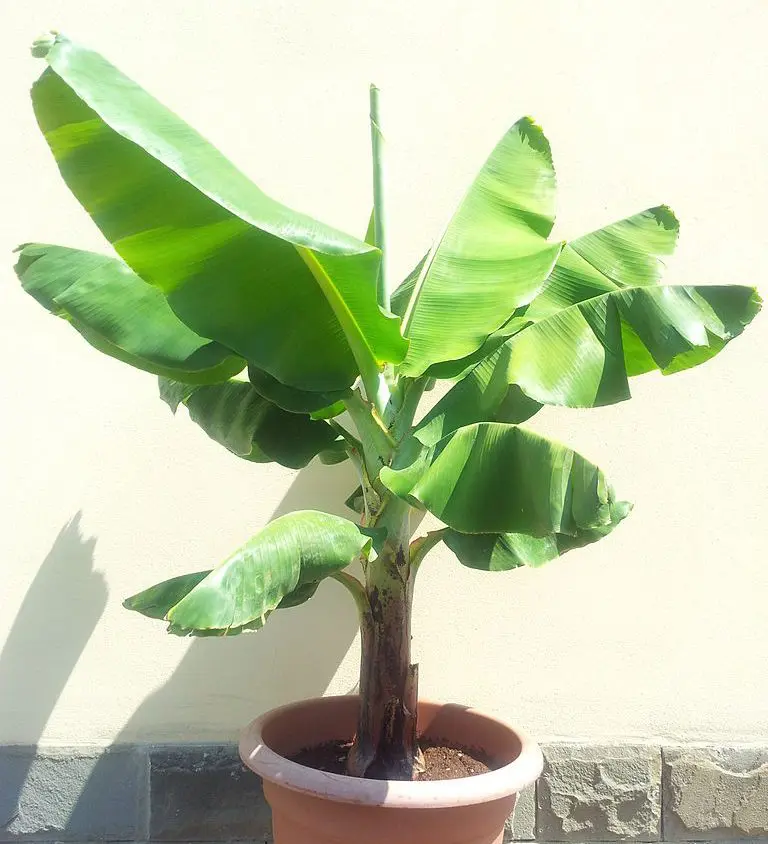
 Iacopo Lorenzini, CC BY-SA 3.0, via Wikimedia Commons
Learn How To Grow A Banana Tree Indoors. Start by choosing the right variety and creating tropical growing conditions inside your home. While many banana plants become far too large for indoor spaces, dwarf varieties can make impressive houseplants with their lush foliage and tropical appearance.
Indoor banana plants grow quickly when provided with bright light, warmth, regular watering, and high humidity. Even if your plant never produces fruit, it can become a stunning focal point that brings a tropical feel to your indoor garden.
This guide walks you through everything you need to know about growing a banana tree indoors, from selecting the right plant to maintaining healthy long-term growth.
What You’ll Learn
- Which banana varieties grow best indoors
- How much light indoor banana plants need
- The best soil and container choices
- Proper watering and humidity techniques
- How to fertilize and propagate banana plants
- Common indoor banana tree problems and solutions
Quick Answer: How To Grow A Banana Tree Indoors
To grow a banana tree indoors, choose a dwarf variety such as Dwarf Cavendish, plant it in a large container with well-draining soil, provide at least 12 hours of bright light daily, maintain warm temperatures, keep humidity levels elevated, and fertilize regularly during active growth.
What Is A Banana Tree
Although we often call them trees they actually are actually a tropical plant in the genus Musa. The fruit is actually a berry botanically.
The banana plant is the largest herbaceous flowering plant. All the above-ground parts of a banana plant grow from a structure usually called a “corm”. Plants are normally tall and fairly sturdy with a treelike appearance, but what appears to be a trunk is actually a “false stem” or pseudostem. Almost all modern edible seedless (parthenocarp) bananas come from two wild species – Musa acuminata and Musa balbisiana. https://en.wikipedia.org/wiki/Banana
Why Grow A Banana Tree Indoors?
Indoor banana plants are grown primarily for their dramatic tropical appearance. Their large leaves create an instant focal point and can quickly transform a room into a lush indoor jungle.
- Large Tropical Foliage: Few houseplants create the same visual impact as a healthy banana plant.
- Fast Growth: Banana plants can grow surprisingly quickly under the right conditions.
- Container Friendly: Dwarf varieties adapt well to indoor growing.
- Conversation Piece: Banana plants bring a unique tropical look that stands out from traditional houseplants.
While some indoor banana plants may eventually produce fruit, most growers enjoy them primarily for their impressive foliage.
How To Grow A Banana Tree Indoors
In this guide, we’ll be taking you through 7 easy steps that will help you to successfully grow an indoor banana plant. These steps include:
• Choosing the right type of banana tree
• Preparing the planting container
• Planting the banana tree
• Providing adequate light
• Proper care and maintenance
• Harvesting and enjoying the fruit
With the right knowledge and a bit of effort, growing a banana tree indoors can be a fun and rewarding experience.
By following these 7 easy steps, you’ll be on your way to growing a thriving indoor banana tree in no time.
Step 1: Choosing the Right Type of Banana Tree
When it comes to choosing the right type of banana tree for indoor growing, it’s important to keep in mind that not all banana trees are created equal.
Some varieties are better suited for indoor growing than others, and choosing the right one can make a big difference in the success of your indoor banana tree.
Factors to consider when choosing a type for indoor growing include size, hardiness, and overall suitability for indoor conditions.
For example, dwarf banana trees, such as the Cavendish or the Dwarf Red Banana, are a good choice for indoor growing as they are small and more tolerant of lower light conditions.
It’s also important to keep in mind that indoors a dwarf banana plant may not produce as much fruit as outdoor banana trees, but they are still a great way to bring a tropical touch to your home.
There are many different types of banana trees available, each with its own unique characteristics.
But most of them will be far too large to be grown indoors unless you have a 20-30 foot ceiling.
The Dwarf Cavendish is the one most commonly grown indoors and can reach a height of 6-8 feet.
The Dwarf Red Banana is harder to find and quite expensive too. Do not mistake the Red Abyssinian Banana (Ensete Maurelii) for it because it gets 30 feet tall.

Each type has its own specific requirements for growth, hardiness, and fruiting.
Some varieties are better suited for indoor growing than others, and choosing the right dwarf variety can make a big difference in the success of your indoor banana tree.
Factors to consider when choosing a type for indoor growing
Size is one of the most important factors to consider when choosing a type of banana tree for indoor growing.
Dwarf banana trees are a good choice for indoor growing as they are small and are more tolerant of indoor conditions than others and are better able to withstand the lower light and humidity levels found indoors.
The Dwarf Cavendish is small, hardy, and well-suited for indoor conditions. They are tolerant of lower light conditions, and they are able to survive in smaller containers. They are the best indoor banana plant.
Additionally, they are not as likely to produce as much fruit as outdoor banana trees, which makes them a good choice for indoor growing.

Step 2: Preparing the Planting Container
The right planting container is essential for growing a banana tree indoors.
A container that is too small can limit the tree’s new growth, while a container that is too large can lead to over-watering and root rot.
Most banana plants sold at gardening centers will be in 1-2 gallon pots. You will want to transplant them into a larger container.
Mature plants grow fast if given enough room so consider at least a 5-gallon pot to start but be prepared to repot them in an even larger container eventually.
Also, make sure to read the tag on any banana leaf plants you are thinking about buying.
Not all are suitable indoor plants. Many people buy young plants and grow them outdoors as large annuals.
A large container that is at least 12 inches deep and wide is a suitable final size for most indoor banana trees.
5-gallon buckets make good planters if you drill some drainage holes in the bottom.
A container made of plastic or clay is also recommended as it allows for proper drainage and air circulation.
Soil choice is also important, banana tree prefers well-draining soil, with a pH between 5.5 and 7.5.
You can use a mix of potting soil, perlite, and vermiculite for optimal drainage.
How to properly prepare the container
• Before planting your banana tree, it is important to properly prepare the container.
• This includes cleaning the container thoroughly to remove any dirt or debris and making sure that there are drainage holes in the bottom of the container to allow for proper drainage.
• If the container does not have drainage holes, you can drill them or make them using a sharp object.
How to choose the right type of soil
• Choosing the right type of soil is important for the success of your indoor banana tree. A well-draining soil mix that is rich in organic matter is the best choice for indoor banana trees.
• Coco coir and some added perlite make an ideal soil mix for banana plants. You can mix in some worm castings, compost, or other organic slow-release fertilizer.
• A good soil mix can also be made by mixing equal parts of peat moss, vermiculite, and perlite.
Additionally, you can add a small amount of organic fertilizer to provide the necessary nutrients to the soil.
• You can use potting soil too bud add some perlite to it to help it drain faster.
• It’s important to make sure that the soil is moist, but not waterlogged, as banana trees require well-draining soil to prevent root rot.
Step 3: Growing Banana Plants In Pots
• To properly plant a banana tree in a container, first add enough soil to the bottom of the container so that the top of the root ball of the banana tree will be slightly above the soil level.
• Next, place the banana tree in the container, making sure that the tree is centered and straight. Fill around the tree with soil, and gently tamp down the soil to remove any air pockets.
• Water the tree well, allowing the water to drain through the drainage holes.
Tips for ensuring proper drainage
• Proper drainage is crucial to the success of an indoor banana tree. To ensure proper drainage, make sure that the container has drainage holes in the bottom.
• You can add a thin layer of gravel or rocks placed in the bottom of the container before adding soil.
• Additionally, it’s important to not over-water the tree, as this can lead to root rot. Allow the top inch of soil to dry out before watering again.
How to properly water the tree
• Indoor banana trees require regular watering to thrive. The amount of water needed will depend on the size of the container, the type of soil, and the humidity levels in the room.
• A good rule of thumb is to water the tree when the top inch of soil is dry. Water the tree until water starts to drain out of the bottom of the container, and then let the excess water drain away.
• Be sure to keep an eye on the moisture levels of the soil and adjust watering accordingly.
• Overwatering can lead to root rot. But bananas drink a lot of water. You will probably need to water a larger plant every day.
So finding a healthy balance between too much water and not enough is important.
Providing Humidity
Bananas like growing in high humidity. You can place your pot on a pebble tray partially filled with water to provide more humid conditions.
During the winter when the heat is on the air can become dry and your leaves may start to curl over if it is below 50% so you might want to use a small humidifier near your banana tree.
Step 4: Providing Adequate Light
Banana trees require bright, indirect light in order to grow and thrive indoors.
A south-facing window with a sheer curtain is ideal, but if you don’t have access to a south-facing window, you can also use a grow light to provide the right amount of light.
Explanation of the type of light banana trees need
• Banana trees require bright, indirect light to thrive. They can tolerate some direct sunlight, but too much direct sunlight can cause leaf burn.
• Ideally, banana trees should be placed near a south-facing window where they will receive bright, indirect light throughout the day.
It’s important to remember that banana trees need at least 12 hours of bright light per day, so if you can’t provide this with natural light, you’ll need to supplement with grow lights.
How to provide the right amount of light indoors
• If you don’t have a south-facing window or the light is not sufficient, you can use grow lights to provide the right amount of light for your banana tree.
• The best grow lights for banana trees are those that mimic natural sunlight, such as LED grow lights.
• Be sure to place the lights close enough to the tree to provide the necessary intensity of light, but not so close that the tree will get too much or get hot.
• It’s also important to rotate the banana tree periodically to ensure even light distribution and to prevent the tree from leaning towards the light source.
Best Indoor Locations for Banana Trees
Indoor placement can have a major impact on growth rate and leaf size.
- South-Facing Windows: Usually provide the strongest natural light.
- Sunrooms: Ideal for year-round growth.
- Bright Corners Near Large Windows: Good for mature specimens.
- Grow Light Setups: Excellent for apartments and darker homes.
Avoid placing banana plants near heating vents, cold drafts, or frequently opened exterior doors.
Moving Banana Plants Outdoors – Banana Plant Care Outdoors
After the winter months when the weather warms, you can move your banana plant outdoors for the summer if you wish.
Limit the hours of direct sunlight at first because the leaves are still tender from growing inside. Partial shade and dappled sunlight are perfect.
Avoid windy conditions too. They can cause leaf burn and torn leaves.
Although it’s important to give enough light too much full sun can damage the leaves.
Make sure you keep your plant well-watered as it will need more frequent watering outdoors.
In the wild bananas are typically growing as an understory plant that receives filtered sunlight so aim for those conditions outdoors.
Step 5: Indoor Banana Plant Care – Care and Maintenance
In addition to providing the right amount of light, banana trees also require warm temperatures and high humidity.
Tips for creating the right environment for banana plant care:
• Keep the temperature between 60-90 degrees Fahrenheit and humidity levels at around 50%.
• You can increase humidity levels by misting the leaves regularly or by placing a tray of water near the tree.
How to properly care for the banana tree indoors
Proper care and maintenance of your indoor banana tree is crucial for its growth and survival.
This includes providing the right amount of light, water, and temperature, as well as regular fertilization and pruning.
• Water the tree when the top inch of soil is dry, and make sure that the container has proper drainage to prevent root rot.
• A large banana plant will use a lot of water. Don’t let the pot sit in standing water. Empty the tray after watering.
• Keep the temperature between 60-90 degrees Fahrenheit and humidity levels at around 50%.
How to properly fertilize the tree
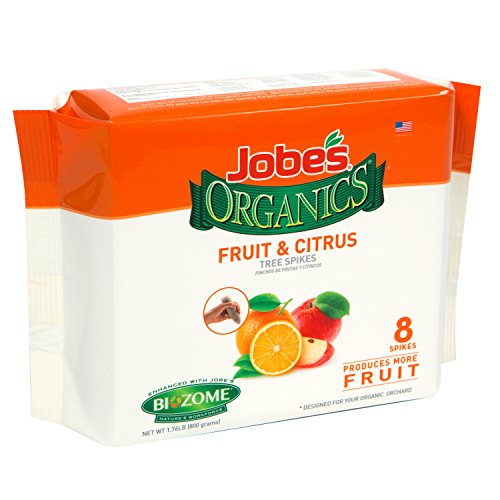 Banana trees are heavy feeders and will require regular fertilizing about every 2 weeks.
You can use Jobes fruit and citrus fertilizer spikes which will make sure your plant is being fed.
They last for several months and you would use 2 for a 12 inch pot or 3 for an 18 inch plant.
• Banana trees need regular fertilization to thrive. A balanced, water-soluble fertilizer should be applied every 2-4 weeks during the growing season if you are not using the spikes.
• Be sure to follow the instructions on the fertilizer package, as over-fertilizing can harm the tree.
How to deal with common issues such as pests or disease
• Pests such as red spider mites, mealybugs, and scale insects can be a problem for indoor banana trees. These pests can be controlled with insecticidal soap or neem oil.
• Disease such as root rot can occur if the tree is overwatered or if the container does not have proper drainage.
•To prevent root rot, make sure the container has drainage holes, and allow the top inch of soil to dry out before watering again.
• If you notice any signs of pests or disease, it’s important to take action as soon as possible to prevent them from spreading and causing further damage to the tree.
Common Indoor Banana Tree Problems
Brown Leaf Edges
Low humidity is one of the most common causes of brown leaf margins on indoor banana plants.
Yellow Leaves
Yellowing leaves can result from overwatering, poor drainage, or natural aging of older foliage.
Slow Growth
Insufficient light is usually the biggest reason indoor banana plants fail to grow vigorously.
Torn Leaves
Indoor air movement from fans, vents, or open windows can damage large banana leaves.
No Fruit Production
Many indoor banana plants never receive enough light, warmth, or maturity to produce fruit, even when healthy.
Step 6: Harvesting and Enjoying the Fruit
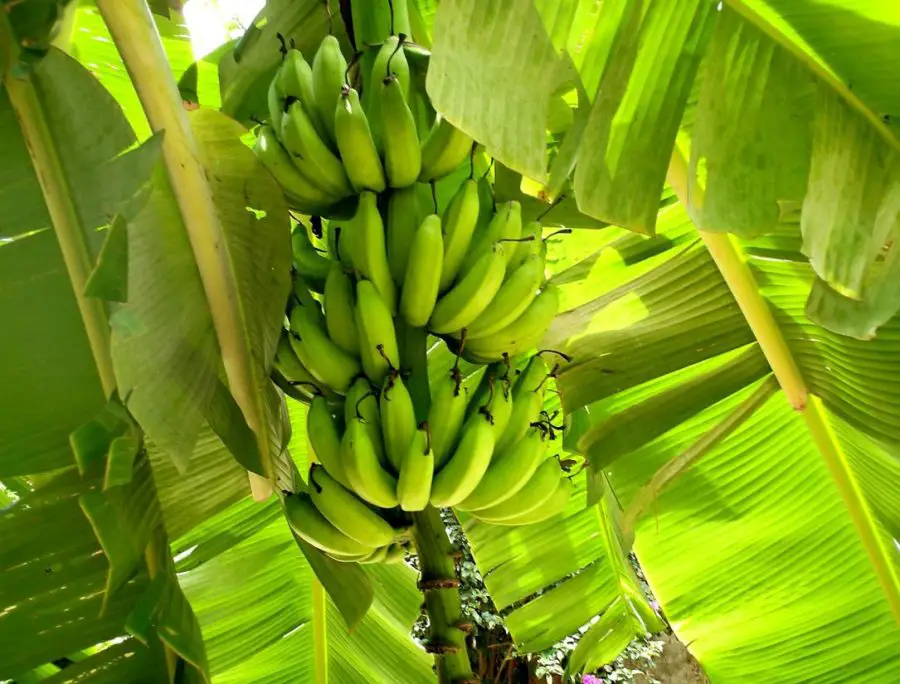
Indoor banana trees may not always fruit, and even if they do, it can take several years for them to reach maturity.
Once the fruit appears, it can take up to 4-6 months for it to ripen.
When the fruit is ripe, it will turn a yellowish color and the skin will be slightly soft to the touch. Carefully twist the fruit from the stem.
It’s also worth noting that after fruiting the plant will die, so be prepared for a replacement.
Tips for ensuring proper ripening
Keep the fruit at room temperature until it’s ripe, as exposing it to temperatures below 60 degrees Fahrenheit can cause it to rot.
You can also speed up the ripening process by placing the fruit in a brown paper bag, which will trap the ethylene gas produced by the fruit, helping it to ripen faster.
How to enjoy and store the fruit
Once the fruit is ripe, it can be enjoyed fresh, cut up, and added to salads or smoothies, or used in cooking.
To store the fruit, place it in a plastic bag and keep it in the refrigerator. It should keep for several days.
If you have a large number of bananas, you can also store them in a cool, dry place, where they will continue to ripen over time.
In summary, an indoor banana tree can be a fun and rewarding plant to grow, but you should keep in mind that it may not always provide edible bananas and that if it does the plant dies after fruiting.
It’s important to provide the right conditions for growth and proper care and maintenance to ensure the best chance of success.
Step 7: Propagating Bananas
Some bananas can be propagated from seed. Don’t try to grow a banana from a regular banana in the grocery store. It won’t work with them.
Some wild and red bananas do have seeds. They are specialized and used in the Caribbean and some Mexican cooking.
Bananas can be propagated through a process called suckering. Suckers are shoots that grow from the base of the banana plant and can be used to create new plants.
It is a good idea to root some of these suckers because when your plant fruits the main trunk will die and you will want to have a replacement plant.
If you can do this successfully you will only need to buy a banana plant once and have banana plants forever.
The process of propagating bananas using suckers is relatively simple. Here are the steps:
Wait for a sucker to appear: Suckers typically appear at the base of the banana plant and can take several months to develop.
They will have their own set of leaves and look like miniature versions of the parent plant.
Cut the sucker from the parent plant: Using a sharp knife or pair of shears, carefully cut the sucker from the mother plant. Try to get some roots with the sucker.
Plant the sucker: Plant the sucker in a container with well-draining soil. Water it well and keep it in a warm, sunny spot. Even pups without roots should eventually take root if the soil is kept moist.
Care for the new plant: Once the new plant is established, care for it as you would the parent plant, providing it with adequate light, water, and fertilization.
It’s also worth noting that some varieties of bananas are propagated through tissue culture in laboratories, which is a more complicated and expensive process but that can give you a more specific and disease-free plant.
Continue Exploring Tropical Houseplants
How To Grow A Banana Tree Indoors FAQs
What type of banana tree grows best indoors?
Dwarf Cavendish is the most popular indoor banana variety because it stays relatively compact and adapts well to containers.
How often should I water an indoor banana tree?
Water when the top inch of soil becomes dry. Large banana plants often require frequent watering during active growth.
Do banana plants need direct sunlight indoors?
Bright indirect light is ideal, although some direct morning or filtered sunlight can be beneficial.
Will an indoor banana tree produce fruit?
It is possible, but many indoor-grown banana plants are grown primarily for foliage and never produce fruit.
How tall do indoor banana trees get?
Dwarf Cavendish plants typically reach 6 to 8 feet tall indoors when grown in large containers.
How To Grow A Banana Tree Indoors: Final Thoughts
Growing a banana tree indoors is a great way to add bold tropical foliage to your home. While these plants require more light and humidity than many common houseplants, they reward growers with rapid growth and impressive leaves.
Choosing a dwarf variety, providing bright light, maintaining consistent moisture, and fertilizing regularly will give your plant the best chance of success.
With proper care, an indoor banana plant can become one of the most dramatic and eye-catching plants in your collection.
Want to transform your indoor space into a lush, thriving haven? These guides will help you master houseplant care with ease.
🌿 Indoor Houseplant Care Guides
- ♻️ Composting Indoors
- 🌳 Rubber Plant Care Indoors
- 🌸 Peace Lily Care Indoors
- 🧀 Swiss Cheese Plant Care
- 🎋 Indoor Bamboo Guide
- 🌱 Vertical Gardening Indoors
- 🌺 Bromeliad Care
- 🥢 Bamboo Plant Indoor Care
- ❤️ Anthurium Care Indoors
- 🌵 How to Grow Succulent Plants
- 🌿 Maidenhair Fern Indoor Care
- See all articles in our Houseplants category