
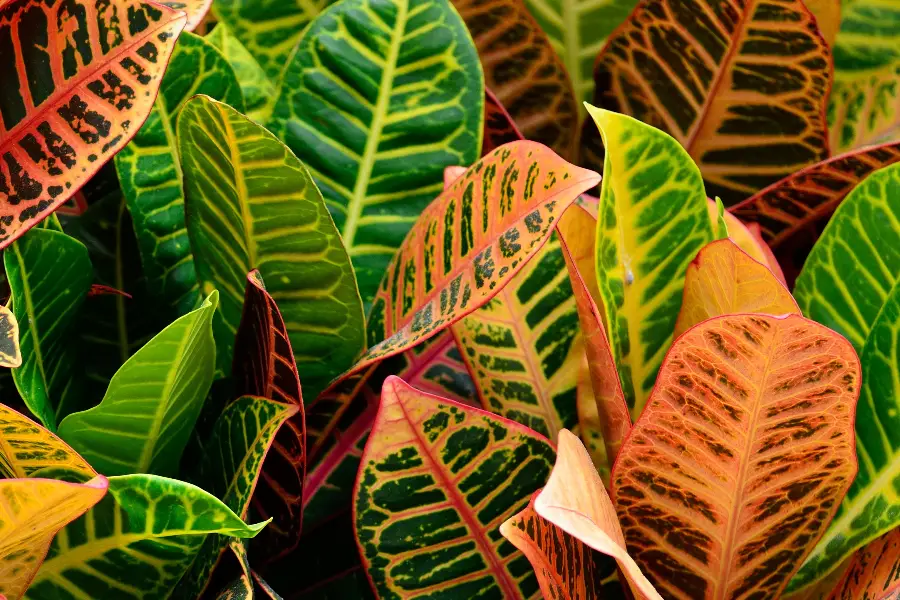
How to care for a croton plant starts with bright light, consistent moisture, and stable indoor conditions that support its colorful foliage.
Crotons are known for their bold red, yellow, and green leaves, but they can be sensitive to changes in light, watering, and temperature.
This guide covers exactly how to grow a healthy croton indoors, including light, watering, soil, humidity, and how to fix common problems like leaf drop.
What You’ll Learn
- How to care for a croton plant indoors for vibrant foliage
- The best light conditions to maintain strong color
- How often to water without causing root rot or leaf drop
- The right soil mix, pot size, and humidity levels
- How to fix common croton problems like leaf loss and pests
How To Care For A Croton Plant
Croton plants need bright, indirect light, consistent watering, and warm, humid conditions to stay healthy and maintain their vibrant color.
Croton (Codiaeum variegatum) is a tropical houseplant known for bold, multicolored leaves. It grows best indoors when given enough light and protected from sudden swings in temperature or moisture.

If you want a croton to hold its color and keep producing new leaves, focus on the basics first: bright light, evenly moist soil, good drainage, and warm indoor air. Those four things matter more than anything else.
If you want a deeper look at this plant specifically as a houseplant, see our Croton plant indoor care guide.
Croton Plant Size and Growing Conditions
Croton plants can grow 3–6 feet tall indoors and much larger outdoors in warm climates. Most indoor growers keep them smaller with pruning, container size, and regular maintenance.
Outdoors, crotons can reach 10–15 feet in tropical regions such as USDA zones 9–11. In cooler climates, they are best grown indoors year-round or moved outside only during warm summer weather.
With proper care, indoor crotons can live for several years. Older plants may slow down a bit and lose some color intensity, but steady light, watering, and feeding can keep them attractive for a long time.
Croton Light Requirements
Croton plants need bright, indirect light to maintain their bold colors and prevent leaf drop. Low light causes dull foliage and slower growth, while harsh direct sun can scorch the leaves.
A bright east-facing window or a south- or west-facing window with filtered light usually works well. If your home is darker, a grow light can help maintain color and prevent legginess.
How much light does a croton need?
Aim for several hours of bright light each day. If the plant starts fading to mostly green, that usually means it needs more light. If leaves develop dry brown patches, it may be getting too much direct sun.
Signs of light problems
Too little light often leads to slower growth, weaker stems, and less dramatic color. Too much sun can cause scorched spots or curling foliage. Rotate the pot regularly so all sides get even exposure.
Croton Water Requirements
Crotons like evenly moist soil, but they do not want to sit in soggy conditions. The goal is steady moisture without waterlogging the roots.
Water when the top inch of soil feels dry. Then water thoroughly until extra moisture drains out of the bottom of the pot.
How often to water a croton plant
The exact schedule depends on light, temperature, humidity, and pot size. In brighter and warmer conditions, your croton will dry faster. In winter or lower light, it will usually need less frequent watering.
Common watering mistakes
Overwatering can lead to yellow leaves, root rot, and leaf drop. Underwatering can cause crispy edges, drooping, and stress-related leaf loss. If your croton keeps dropping leaves, watering inconsistency is one of the first things to check.
Most croton problems come from either poor lighting or inconsistent watering, so getting those two right makes care much easier.

Croton Soil Mix
Croton plants grow best in well-draining soil that still holds some moisture. They do not like heavy, compacted mixes that stay wet for too long.
A simple and effective mix is equal parts coco coir and perlite. Coco coir helps hold moisture, while perlite improves air flow and drainage.
Why coco coir and perlite work well
This mix drains more cleanly than heavy peat-based blends and is easier to re-wet if it dries out. It also helps reduce the risk of root rot while still keeping enough moisture around the roots.
Always use a pot with drainage holes. Good soil means very little if excess water cannot escape.
Croton Pot Size
Choose a pot that is only slightly larger than the root ball. Crotons do not need oversized containers, and a pot that is too large can hold excess moisture and create root problems.
If your croton has grown tall and top-heavy, use a stable container that will not tip easily. Lightweight plastic can work fine for smaller plants, but heavier pots can help anchor larger ones.
When pot size becomes a problem
If the pot is too small, roots can crowd out the soil and the plant may dry too quickly. If the pot is too large, the mix may stay wet too long. In both cases, leaf drop often follows.
Croton Fertilizer
Crotons benefit from regular feeding during active growth. Fertilizer helps support stronger stems, fuller foliage, and better color.
Use a balanced liquid fertilizer or a slow-release formula during spring and summer. A balanced fertilizer with a ratio close to 3-1-2 or 3-1-3 works well for foliage growth.
How often to fertilize
Feed every 2–4 weeks during the growing season if using a diluted liquid fertilizer. Ease off in fall and winter when growth slows.
Signs of fertilizer issues
Too much fertilizer can burn leaf edges or stress the roots. Too little can lead to slower growth and weaker color. If in doubt, feed lightly instead of heavily.
Temperature and Humidity
Crotons prefer warm, stable conditions. They do best in temperatures roughly between 60°F and 85°F and do not like cold drafts or sudden environmental changes.
Humidity matters too. Dry indoor air can trigger leaf drop, brown edges, and slower growth.
Best indoor conditions
Keep crotons away from cold windows in winter, exterior doors, and heating or cooling vents. If your indoor air is very dry, a humidifier or pebble tray can help.
Croton Winter Care
Winter is when many crotons struggle indoors. Lower light, cooler temperatures, and dry air can all stress the plant.
During winter, reduce watering slightly, keep the plant in the brightest spot available, and protect it from cold drafts. Do not let the soil stay soaked, but do not let it dry out completely either.
If your home is dark in winter, you may get better results by supplementing with a grow light. You may also want to check out these indoor plants for low light if your space stays dim most of the year.
Maintaining and Pruning Croton Plants
Crotons benefit from occasional pruning and routine cleanup. Removing weak, damaged, or leggy growth helps the plant stay fuller and more balanced.
How to prune a croton
Use clean, sharp pruners and cut just above a leaf node. This encourages branching and helps create bushier growth. Remove yellowing leaves, damaged stems, and any crowded growth that blocks air flow.
General maintenance
Wipe dust off the leaves now and then so the plant can photosynthesize more efficiently. Check the foliage regularly for pests, especially if the plant has recently been moved or is stressed.
Croton Repotting
Crotons usually need repotting every 2–3 years, or sooner if roots are growing from the drainage holes or the plant dries out too quickly after watering.
Move up only one pot size at a time. Repotting into a container that is far too large often causes moisture problems.
How to repot successfully
Gently remove the plant, loosen circling roots, and place it into fresh, well-draining soil. Water it in well, then give it time to settle without making other major changes.
Do Croton Plants Like to Be Root Bound?
Croton plants can tolerate being a little snug in their pots, but they do not perform best when severely root bound.
If water runs straight through the pot, roots are circling heavily, or growth has slowed without another clear cause, it may be time to repot.

Croton Propagation
Croton propagation is usually done by stem cuttings. It is a practical way to make new plants from a healthy parent plant.
Stem cuttings
Take a healthy cutting with at least 2–3 leaves, remove the lower leaves, and place the cutting in moist potting mix or water. Keep it warm, bright, and out of direct sun while roots develop.
Water propagation
Water propagation can work, but once roots appear, move the cutting into a loose, well-draining mix before the water roots become too long and fragile.
Air layering and division
Air layering can be useful on larger stems, while division is less common because many crotons grow with a single main stem.
Croton Problems, Pests, and Diseases
Most croton problems come from changes in light, watering, temperature, or humidity. These plants react quickly when conditions shift.
Leaf drop
Leaf drop is one of the most common complaints. It often happens after sudden changes in environment, overwatering, underwatering, cold drafts, or reduced light.
Common pests
Spider mites, mealybugs, and scale are the pests you are most likely to see. Check stems and leaf undersides regularly, especially if the plant starts looking dull or sticky.
Treatment options
Many infestations can be managed with insecticidal soap, neem oil, horticultural oil, or by physically removing pests with a cotton swab and rubbing alcohol. Catching the issue early makes a big difference.
Prevention
Stable growing conditions, good light, and routine inspection are your best defense. Stressed plants attract more problems.
If you enjoy colorful houseplants, you may also want to read our benefits of keeping indoor plants guide.
Croton FAQ
How do you take care of an indoor croton plant?
Provide bright, indirect light, water when the top inch of soil dries out, use well-draining soil, and keep the plant warm with moderate to high humidity.
How often do you water a croton plant?
Watering depends on your indoor conditions, but most crotons need water when the top inch of soil becomes dry. Avoid letting the mix stay soggy.
Do crotons like full sun?
Crotons like bright light, but strong direct midday sun can scorch the leaves indoors. Bright, indirect light is usually the safest choice.
Is croton a good indoor plant?
Yes, crotons can make excellent indoor plants if you have enough light and can keep conditions stable.
Do crotons do well in bathrooms?
They can do well in bathrooms if the room has enough natural light. The extra humidity often helps.
What causes croton leaves to fall off?
Leaf drop is usually caused by stress from overwatering, underwatering, cold drafts, low light, or sudden changes in environment.
How long do indoor crotons live?
With proper care, crotons can live for several years indoors and continue producing colorful foliage.
Where is the best place to put a croton plant?
Place it near a bright window with strong indirect light and away from cold drafts, vents, and sudden temperature swings.
You Can Find A Wide Selection Of Croton Plants On Amazon. Get Yours Today!
How To Care For A Croton Plant Final Thoughts
Croton plant care comes down to bright light, consistent watering, and stable indoor conditions.
If your croton starts dropping leaves, it is usually reacting to a change in light, water, humidity, or temperature. Once those basics are corrected, the plant usually rebounds well.
When you get the conditions right, crotons reward you with some of the boldest foliage you can grow indoors.
Want to transform your indoor space into a lush, thriving haven? These guides will help you master houseplant care with ease.
🌿 Indoor Houseplant Care Guides
- ♻️ Composting Indoors
- 🌳 Rubber Plant Care Indoors
- 🌸 Peace Lily Care Indoors
- 🧀 Swiss Cheese Plant Care
- 🎋 Indoor Bamboo Guide
- 🌱 Vertical Gardening Indoors
- 🌺 Bromeliad Care
- 🥢 Bamboo Plant Indoor Care
- ❤️ Anthurium Care Indoors
- 🌵 How to Grow Succulent Plants
- 🌿 Maidenhair Fern Indoor Care
- See all articles in our Houseplants category