
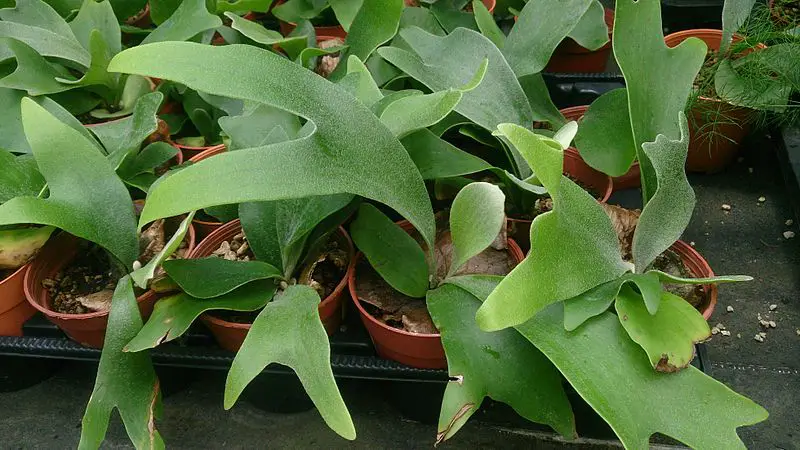
Staghorn Ferns are one of the most unusual houseplants you can grow indoors. Their antler-shaped fronds and wall-mounted growing style make them stand out in ways most houseplants simply can’t.
Learning Staghorn Fern Care Indoors is a little different from growing regular potted plants because these ferns are epiphytes. In nature, they grow attached to trees, pulling moisture and nutrients from the air and rain around them.
Once you understand their light, watering, and humidity needs, they are surprisingly easy to grow and can become one of the most eye-catching plants in your indoor space.
What You’ll Learn 🌿
- How to water and feed a Staghorn Fern indoors
- The best light and humidity levels for healthy growth
- The difference between mounted and potted growing
- How to propagate and repot your fern
- How to fix common Staghorn Fern problems
Quick Answer 🌱
Staghorn Fern Care Indoors is all about bright indirect light, steady moisture, high humidity, and good airflow. These epiphytic ferns grow best in sphagnum moss, orchid bark, or coco coir blends and can be grown mounted or in pots.

What Is Staghorn Fern?
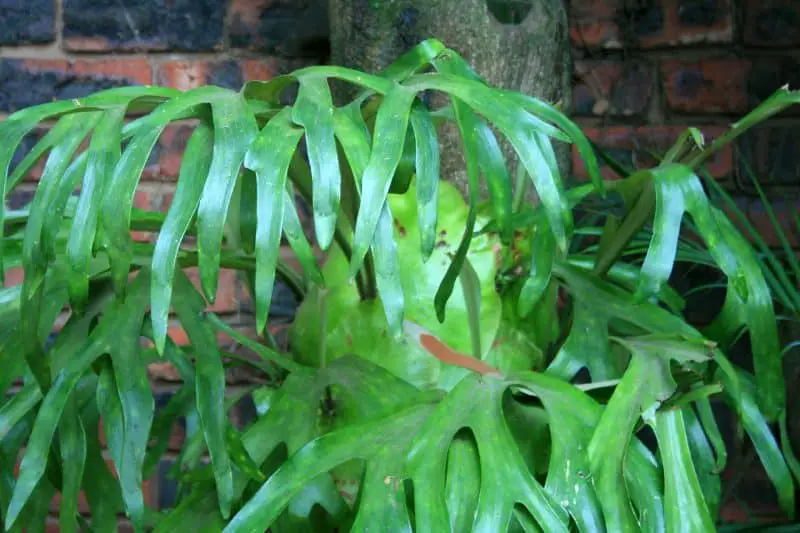
Staghorn Ferns are a type of epiphytic fern that grows on the trunks or branches of trees.
The plant gets its name from its distinctively shaped leaves, which resemble the antlers of a stag.
Staghorn Ferns are native to tropical regions around the world and are popular houseplants.


Staghorn Fern 6.5″ Hanging Plant – Exotic House Plant
These fascinating plants are relatively low maintenance, but there are a few things to keep in mind when caring for them. Here are some tips for Staghorn Fern Care Indoors.
Staghorn Fern Care Indoors In A Nutshell
These are great houseplants. You can grow them in a regular pot but many people mount them on a board and hang them on a wall.
It’s really not that weird when you consider these plants normally grow on trees.
Staghorn Fern Care Indoors
Staghorn Fern Light
Staghorn Ferns prefer bright, indirect light. If you can provide them with a spot near an east window, they will be very happy.
However, avoid direct sunlight, as this can scorch the leaves.
Best Indoor Locations for Staghorn Fern 🌿
Staghorn Ferns need bright filtered light, humidity, and good airflow. The right location makes a huge difference in how well they grow indoors.
Near an east-facing window
This is one of the best spots because morning light is gentle and gives the fern plenty of brightness without burning the fronds.
Bathrooms with natural light
Bathrooms can provide the humidity these ferns love, especially if they have a bright window.
Mounted on walls near bright windows
This mimics how they naturally grow on trees and makes a great visual feature indoors.
Bright kitchens
Kitchens often have good humidity and airflow, which helps Staghorn Ferns stay healthy.
Avoid dark corners
Low light will slow growth and can cause weak, stretched fronds.
Staghorn Fern Watering
Water your Staghorn Fern regularly, keeping the soil moist but not soggy.
These plants like to have their roots in moist conditions, so be sure to water them thoroughly.
In general, you should water your fern about once a week.
Staghorn Fern Humidity
The Staghorn Fern is a unique plant that is most often found in tropical regions. Its name comes from its distinctive antler-like leaves.
The Staghorn Fern is an epiphyte, meaning that it grows on other plants or objects instead of in the ground.
In its natural habitat, the Staghorn Fern typically grows on trees, where it is able to receive the high levels of humidity and moisture that it needs to thrive.
If you are interested in growing a Staghorn Fern of your own, it is important to create a humid environment for your plant.
One way to do this is to place the pot on a tray of pebbles and water. The evaporation from the water will help to increase the humidity around the fern.
Additionally, you could mist the leaves of the plant regularly with distilled water.
Staghorn Fern Temperature
Most Staghorn Ferns do well in a range of 60-90°. Although there are a few species that can take some cold like P. bifurcatum and P. veitchii.
I would not let the temperature drop below 50° because it can be hard to identify the different species as many are just sold by their common name.
Staghorn Fern Soil
Staghorn Ferns are typically sold in pots when young. They are typically in sphagnum moss or an orchid mix.
Because these plants get large they are often mounted on a board or a log. They are hung on a wall and allowed to cascade down.
This method replicates the way they grow naturally. They are taken down periodically to be watered.
But you can also grow them in a pot if you wish or as a hanging basket. I would use sphagnum moss or an orchid mix.
They can also be grown with coco coir and perlite as a mix and possibly some orchid bark.
Mounting Staghorn Fern
If you have a young Staghorn Fern it is most likely in a pot. These plants can get quite large (2-3 feet across) as they mature.
While you can keep potting it up many people grow this plant mounted on a board or log which is hung up on a wall. Here is a video showing you how to mount a Staghorn Fern.
Repotting Staghorn Fern
Young Staghorn Ferns are often grown in pots before they get large enough to mount. Repotting is usually only needed every couple of years or when the growing medium breaks down.
Use fresh sphagnum moss, orchid bark, or a coco coir mix when repotting. Choose a container with good drainage and avoid oversized pots that stay wet too long.
As the fern matures, many growers transition it from a pot to a mounted board or basket for a more natural growing setup.
Fertilizing Staghorn Fern
Feed your Staghorn Fern with a balanced water-soluble fertilizer like 10-10-10 every month during the growing season.
Use it at half-strength. Be careful not to overfertilize because it is easy to burn the roots of an epiphyte with too much.
This will promote vigorous growth but you can get by with a couple of feedings a year.
You can reduce the frequency of fertilization to every other month during the winter.
Staghorn Fern Propagation
Staghorn Fern is a true fern even though it may look a bit different. All ferns propagate from spores and don’t make seeds.
Generally because propagating from spores is a slow process these plants are propagated by division.
These plants will produce pups that can be carefully removed and potted up in a suitable growing medium.
Growing ferns from spores is very complicated, takes a long time, and is generally too advanced for most home gardeners.
If you’re interested in propagating staghorns from spores, simply wait until the plant produces new fronds (this generally happens once or twice a year).
When the fronds turn brown and begin to fall off, carefully remove them from the plant and place them on a sheet of paper.
Once they’re thoroughly dry, they can be stored in an envelope or container until you’re ready to plant them.
When planting staghorn spores, be sure to use a well-draining potting mix and water regularly until new growth appears.
Staghorn Fern Pruning
There really isn’t much pruning to do with a Staghorn Fern.
To prune your Staghorn Fern simply remove any dead or dying leaves.
This will help keep the plant healthy and encourage new growth.
Common Staghorn Fern Problems 🛠️
Brown crispy fronds
This usually means low humidity or underwatering. Increase humidity and water more consistently.
Black spots or rot
Overwatering and poor airflow can lead to fungal issues or root rot. Let the growing medium breathe and avoid staying too wet.
Drooping fronds
Drooping can happen from dry roots or sudden temperature stress. Check moisture and room conditions.
Slow growth
Low light or lack of fertilizer are common causes. Move the plant to brighter indirect light and feed lightly during active growth.
Yellowing fronds
This can point to overwatering, poor drainage, or old growing medium that needs replacing.
Is Staghorn Fern Toxic?
Staghorn Ferns are not toxic to cats, dogs or humans. https://www.aspca.org/pet-care/animal-poison-control/toxic-and-non-toxic-plants/common-staghorn-fern
Staghorn Fern FAQs
How often should I water a Staghorn Fern indoors?
Most Staghorn Ferns need watering about once a week, but mounted plants may dry faster than potted ones. Always check moisture before watering.
Can I grow a Staghorn Fern in a regular pot?
Yes. Young plants are often grown in pots, but many growers eventually mount them to better mimic their natural growth habit.
Do Staghorn Ferns need high humidity?
Yes. They prefer moderate to high humidity and usually do best above 50 percent humidity indoors.
What is the best soil for Staghorn Ferns?
Sphagnum moss, orchid bark, or a mix of coco coir and perlite works well because it stays airy while holding moisture.
Why are my Staghorn Fern leaves turning brown?
Brown fronds can be normal shield fronds aging, but crispy tips often mean low humidity or underwatering.
Are Staghorn Ferns safe for pets?
Yes. Staghorn Ferns are considered non-toxic to cats and dogs, making them a good pet-friendly houseplant choice.
Staghorn Fern Care Indoors Final Thoughts
Staghorn Ferns may look exotic, but once you understand their epiphytic nature, they are much easier to grow than many people expect. Their unique mounted growth habit and dramatic fronds make them one of the most rewarding indoor plants you can own.
Focus on bright filtered light, steady moisture, and humidity, and your Staghorn Fern can become a long-lasting centerpiece that keeps getting better with age.
Want to transform your indoor space into a lush, thriving haven? These guides will help you master houseplant care with ease.
🌿 Indoor Houseplant Care Guides
- ♻️ Composting Indoors
- 🌳 Rubber Plant Care Indoors
- 🌸 Peace Lily Care Indoors
- 🧀 Swiss Cheese Plant Care
- 🎋 Indoor Bamboo Guide
- 🌱 Vertical Gardening Indoors
- 🌺 Bromeliad Care
- 🥢 Bamboo Plant Indoor Care
- ❤️ Anthurium Care Indoors
- 🌵 How to Grow Succulent Plants
- 🌿 Maidenhair Fern Indoor Care
- See all articles in our Houseplants category