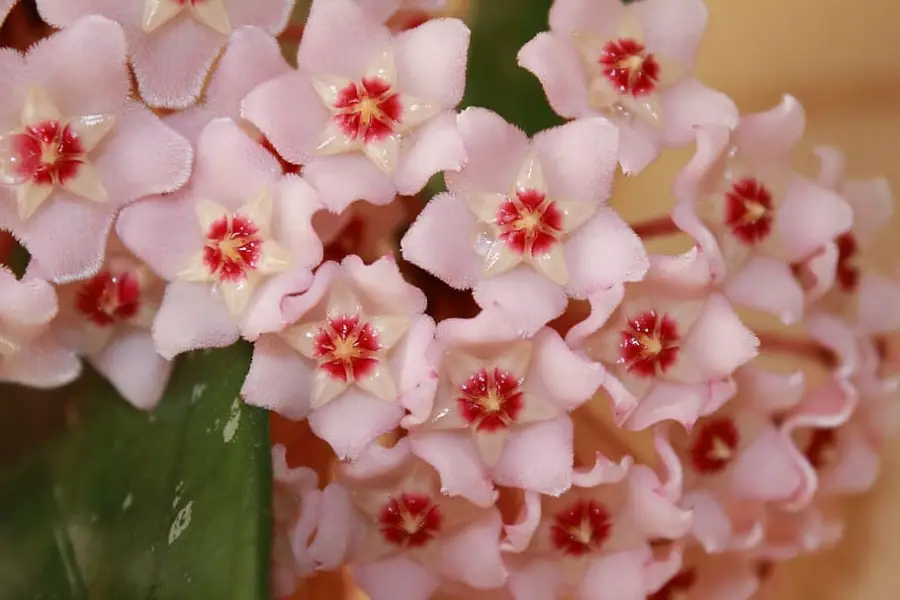
Hoya Plant Care Indoors is surprisingly simple once you understand what these tropical plants need to thrive. Often called wax plants because of their thick leaves and clusters of star-shaped flowers, Hoyas are popular houseplants that combine attractive foliage with beautiful blooms.
With hundreds of species available, Hoya plants offer incredible variety for indoor gardeners. Some grow as trailing vines, others stay more compact, and many reward growers with fragrant flowers when grown under the right conditions.
This guide covers everything you need to know about Hoya Plant Care Indoors, including lighting, watering, potting mixes, fertilizing, propagation, blooming, and troubleshooting common problems.
What You’ll Learn
- How much light Hoya plants need indoors
- The best watering routine for healthy growth
- Why coco coir and perlite work well for Hoyas
- How to encourage flowering
- When to repot and prune
- Common Hoya problems and solutions
Quick Answer: Hoya Plant Care Indoors
Hoya Plant Care Indoors requires bright indirect light, a fast-draining coco coir and perlite growing mix, watering when the growing medium partially dries, moderate humidity, and regular feeding during active growth. Most Hoyas prefer to remain slightly root-bound and bloom best when provided with consistent conditions.
Hoya Plant Care Indoors: The Ultimate Guide

In this comprehensive blog post, we’ll explore the fascinating world of hoya plants, covering everything from the diverse types of hoya species to essential care tips that will help your wax plant thrive in your indoor garden.
We delve into topics like watering, fertilizing, and troubleshooting common hoya plant problems.
Getting to Know Hoya Plants
Hoya plants, affectionately known as wax plants, are adored by indoor gardeners for their striking foliage and mesmerizing, fragrant blooms.
These versatile plants originate from tropical and subtropical regions, showcasing a wide array of different species (200-300) and cultivars that cater to different aesthetic preferences.
With their relatively low-maintenance care requirements, hoya plants are perfect for both experienced and novice plant enthusiasts alike.
Why Proper Hoya Plant Care Matters
Taking the time to understand and provide proper care for your hoya plants is crucial to ensuring their long-term health and happiness.
By meeting their specific needs in terms of watering, fertilizing, and providing the right environmental conditions, you’re setting the stage for your hoya plants to flourish and produce their signature star-shaped flowers.
Additionally, proper care helps prevent common hoya plant problems, saving you time and effort in addressing any potential issues down the line.
Types of Hoya Plants
With over 200 species and countless cultivars to choose from, there’s a hoya plant that’s just perfect for your indoor garden.
In this section, we’ll introduce you to some of the most popular and beloved types of hoya plants, each with its own unique charm and characteristics.
We often think Hoya plants are succulents with thick waxy leaves and some are but most of them are not actually succulents.
Also, you may think they are long vines but many species do not grow as a vining plant at all.
Hoya carnosa: The Classic Beauty
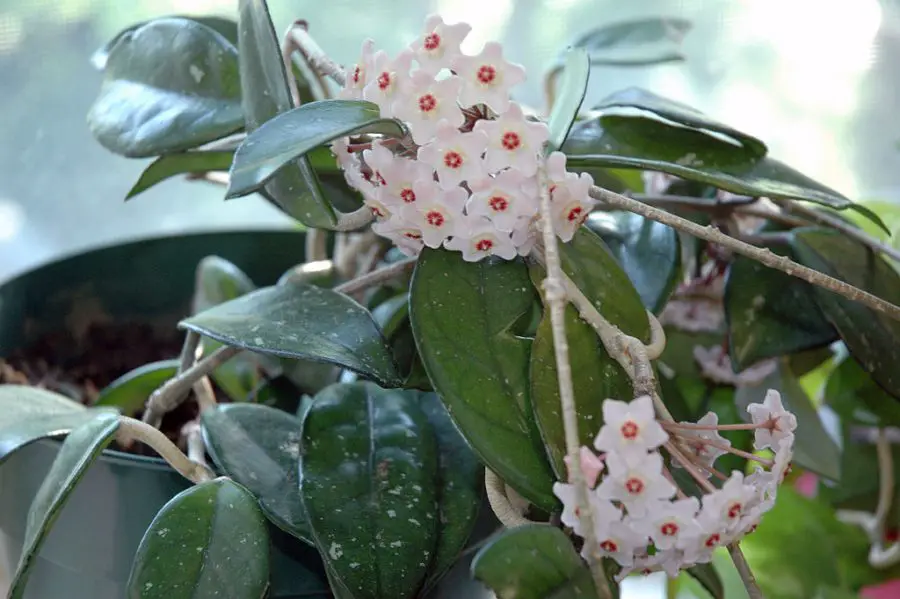
Let’s start with the ever-popular Hoya carnosa, a classic favorite among hoya enthusiasts. Sometimes it’s called porcelain flower or honey plant.
With its thick, waxy leaves and clusters of fragrant, star-shaped flowers, this species has a timeless charm that’s hard to resist.
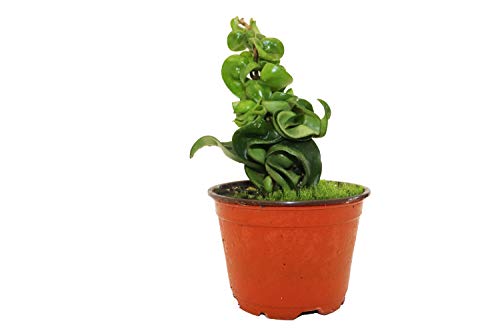
The Hoya carnosa comes in a variety of cultivars, including variegated forms, and curly forms called the Hindu rope plant. So you’ll have no trouble finding the perfect indoor plants for your indoor garden.
Hoya linearis: The Elegant Cascade
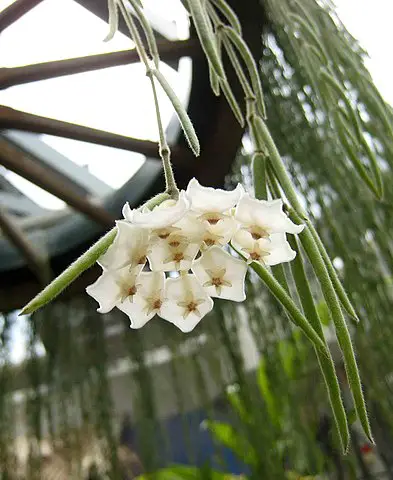
If you’re looking for a hoya with a dramatic, cascading effect, look no further than Hoya linearis.
This stunning species features long, hanging stems adorned with thin, linear leaves, creating a delicate and elegant appearance.
Hoya linearis is ideal for hanging baskets or high shelves, allowing its foliage to trail gracefully for a truly eye-catching display.
Hoya kerrii: The Heartfelt Hoya
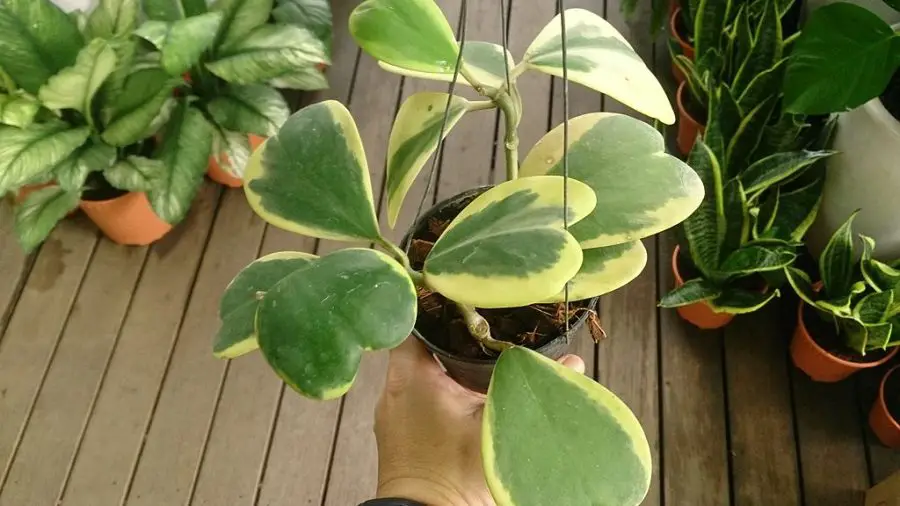
Hoya kerrii, also known as the sweetheart hoya or hoya heart plant is impossible not to adore.
Its distinctive heart-shaped leaves have made it a popular gift, symbolizing love and affection.
This slow-growing hoya is perfect for those who appreciate a sentimental touch in their indoor garden, and it’s sure to warm the hearts of everyone who lays eyes on it.
Hoya pubicalyx: The Dazzling Showstopper
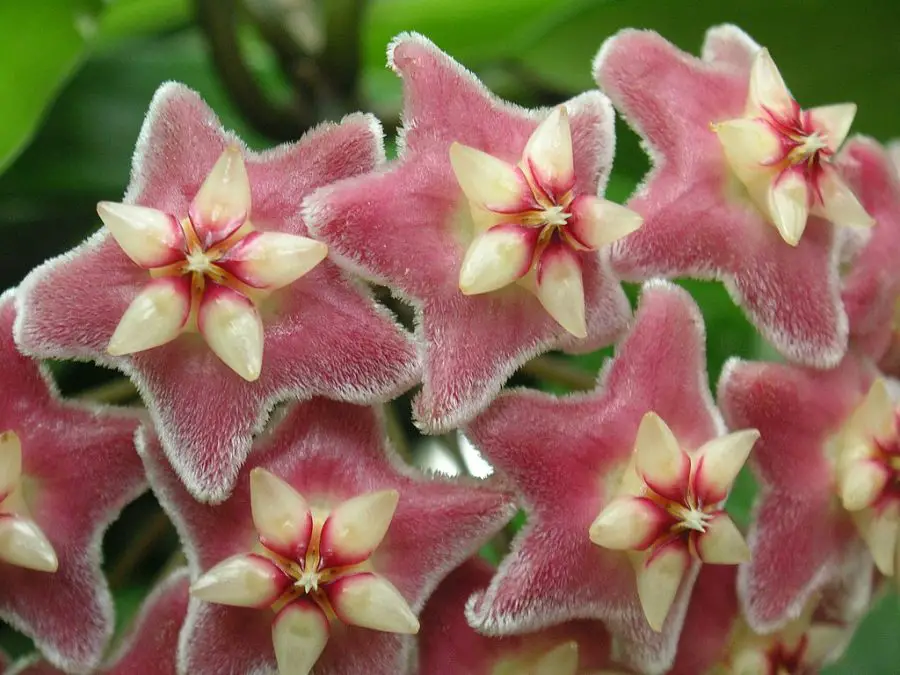
For those seeking a fast-growing hoya with a touch of dramatic flair, Hoya pubicalyx is the one for you.
This spectacular species boasts attractive, dark green leaves and stunning, pink hoya flowers that are sure to make a statement in any indoor space.
The Hoya pubicalyx’s captivating blooms and vigorous growth make it a dazzling showstopper that’s hard to ignore.
Hoya Lighting Requirements

When it comes to keeping your hoya plants happy and healthy, providing the right amount of light is crucial.
In this section, we’ll explore the ins and outs of hoya lighting requirements, discussing the optimal light conditions for these stunning plants and offering practical tips to ensure your hoyas receive the illumination they need to flourish.
Understanding Hoya Light Preferences
Hoya plants generally prefer bright indirect light for optimal growth.
Direct sunlight, especially during the hottest part of the day, can scorch their leaves and cause discoloration.
However, some hoya species can tolerate more direct sunlight, especially in the early morning or late afternoon, when the sun’s rays are less intense.
Finding the Perfect Spot for Your Hoya

To ensure your hoya receives the right amount of light, place it near a bright window with filtered light, such as an east- or west-facing window.
South-facing windows may provide too much direct sunlight, while north-facing windows might not offer enough brightness.
If you notice your hoya’s leaves becoming pale or bleached, it may be receiving too much light; on the other hand, if the plant becomes leggy or fails to bloom, it might need more light.
Supplementing with Artificial Light
If you don’t have access to enough natural light in your home, you can supplement with artificial light sources, such as a fluorescent grow light or LED grow light.
These options are energy-efficient and can provide the right spectrum of light for your hoya plants.
Position the lights close to your plants, ensuring they receive around 12 to 14 hours of light per day.
Adjusting Light Exposure Seasonally
Keep in mind that hoya plants’ lighting needs may change with the seasons.
During the darker winter months with low light, your hoya may require more bright light to maintain its growth and vitality.
Be prepared to adjust your plant’s position or light exposure as needed to accommodate these seasonal shifts.
Best Indoor Locations for Hoya Plants
Choosing the right location can make a significant difference in both growth and flowering.
- East-Facing Windows: Excellent for bright morning light.
- Bright West-Facing Windows: Good for mature flowering plants when protected from intense afternoon sun.
- Hanging Baskets Near Windows: Ideal for trailing varieties.
- Bright Rooms With Grow Lights: Useful during winter and in lower-light homes.
Avoid dark corners where growth becomes sparse and flowering becomes unlikely.
Hoya Watering

Here’s the ins and outs of hoya watering, and sharing tips and tricks to ensure your plant gets just the right amount of hydration.
The Crucial Role of Proper Watering
Getting the watering just right is essential for the overall health and well-being of your hoya plant.
Providing the right amount of water helps your hoya thrive, encouraging lush foliage and those stunning, signature blooms.
On the flip side, improper watering can lead to a host of issues, including soggy soil which leads to root rot, yellowing leaves, and even plant death.
Finding the Perfect Watering Schedule
The million-dollar question is: how often should you water your hoya plant?
As a general rule of thumb, it’s best to let the soil dry out partially between waterings.
This typically translates to watering your hoya every 7 to 10 days, depending on factors like the potting medium, pot size, and the environment.
Keep in mind that hoya plants are native to tropical and subtropical regions, so they’re accustomed to periods of drought.
It’s always better to err on the side of underwatering rather than overwatering.
Detecting Overwatering and Underwatering
Being able to recognize the signs of overwatering and underwatering is key to adjusting your hoya care routine as needed.
Overwatered hoya plants often display yellowing leaves, which may become soft and mushy.
Root rot is another common issue resulting from excessive water.
On the other hand, underwatered hoyas may exhibit wilting, even when the soil is moist, and the leaves may appear dry and crispy.
Best Fertilizer for Hoya

Feeding your hoya plant the right nutrients is just as important as giving it the perfect amount of water.
But with so many fertilizer options out there, how do you choose the best one for your hoya?
In this section, we’ll guide you through the world of hoya fertilizers, sharing our top recommendations and tips to ensure your plant gets all the essential nutrients it needs.
Essential Nutrients for Hoyas
Just like us, hoya plants require a balanced diet to thrive. The key nutrients for hoyas include nitrogen (N), phosphorus (P), and potassium (K), which are crucial for promoting healthy foliage, strong roots, and vibrant blooms.
In addition to these primary nutrients, hoyas also benefit from micronutrients like calcium, magnesium, and iron, which contribute to overall plant health and vitality.
Top Fertilizer Picks for Hoyas
When it comes to choosing the ideal fertilizer for your hoya plant, a balanced, water-soluble fertilizer with equal proportions of N, P, and K is a great choice.
Look for a formula like 20-20-20 or 10-10-10, which will provide your hoya with the essential nutrients it needs.
Organic options, such as fish emulsion or seaweed extract, can also be used as an alternative to synthetic fertilizers.
Creating a Fertilizing Routine
A well-planned fertilizing schedule is key to supporting your hoya’s growth and development.
During the active growing season (spring and summer), it’s best to fertilize your hoya every four to six weeks.
Be sure to follow the package instructions and dilute the fertilizer to half-strength to avoid overfeeding, which can cause fertilizer burn or other issues.
In the fall and winter months, you can reduce fertilizing to once every two to three months, as the plant’s growth slows down during this period.
Soil and Pots for Hoya Plants

Finding the perfect home for your hoya plant is essential to its overall health and happiness.
In this section, we’ll explore the ideal Soil and Pots for Hoya Plants, guiding you through the best options to ensure your hoya has a cozy and comfortable environment in which to thrive.
With the right potting mix and container, your hoya will have the strong foundation it needs to grow and flourish.
Crafting the Perfect Soil Mix
Hoya plants thrive in a well-draining soil mix that provides ample aeration for their roots.
Coco coir and perlite are better choices than peat-based soil mixes
Coco coir and perlite make an excellent potting mix for hoya plants, offering several advantages over traditional peat-based soil mixes.
Coco coir, derived from coconut husks, is an environmentally friendly alternative to peat moss, which is harvested from peat bogs, a process that contributes to the depletion of these important ecosystems.
Additionally, coco coir has excellent water retention properties and provides good aeration, promoting healthy root growth and preventing root rot.
Perlite, a lightweight volcanic glass, adds porosity to the potting mix, ensuring proper drainage and preventing compaction.
This helps to maintain an ideal balance of moisture and air for hoya plants, which is crucial for their overall health and well-being.
By combining coco coir and perlite in your potting mix, you can create a well-draining, breathable, and sustainable growing medium that promotes strong and healthy root systems, setting the stage for thriving hoya plants.
Choosing the Right Pot and Drainage

Pot selection is crucial when it comes to providing a healthy environment for your hoya plant.
Opt for a container with drainage holes to prevent excess water from accumulating at the bottom, which can cause root rot.
Additionally, consider using a breathable pot material, such as terracotta, which allows moisture to evaporate more efficiently, helping to maintain a healthy balance of moisture in the soil.
Always make sure there is a drainage hole in any clay or ceramic pots you use.
Temperature and Humidity

As tropical plants and subtropical beauties, hoya plants have specific temperature and humidity preferences that help them flourish.
This section goes into the ideal temperature and humidity conditions for your hoya, ensuring you can provide the perfect environment that mimics its natural habitat.
Finding the Perfect Temperature Balance
Hoya plants thrive in temperatures ranging from 60 to 85°F (15 to 29°C), with a sweet spot around 70°F (21°C) for most varieties.
To keep your hoya comfortable, try to maintain consistent temperatures within this range and avoid exposing your plant to sudden temperature fluctuations or drafts, which can cause stress and lead to problems like leaf drop.
Meeting Humidity Needs
As tropical natives, hoyas appreciate high humidity levels, typically around 40-60%.
However, they can also adapt to average household humidity levels if other conditions are suitable.
To ensure your hoya is happy and hydrated, monitor the humidity in your home and consider increasing it if it falls below the recommended range.
Boosting Humidity Levels
If you need to raise the humidity around your hoya plant, there are several easy methods you can employ.
One popular option is to place a tray filled with water and pebbles beneath the plant’s pot, ensuring the bottom of the pot doesn’t touch the water.
As the water evaporates, it will increase the humidity in the immediate vicinity.
Alternatively, you can use a humidifier to maintain consistent humidity levels or simply mist your hoya plant regularly with a spray bottle, being careful not to overdo it and cause issues like mold or rot.
Repotting Hoya Plants
Repotting your hoya plant may seem like a daunting task, but it’s an essential part of keeping your plant happy, healthy, and growing strong.
In this section, we’ll guide you through the ins and outs of Repotting Hoya Plants, sharing tips and best practices to ensure a smooth transition for your plant into its new, roomier home.
With our help, you’ll be well-equipped to tackle this important hoya care task like a pro, giving your beloved plant the fresh start it needs to continue thriving.
So, let’s get ready to roll up our sleeves and dive into the world of hoya repotting!
Knowing When It’s Time to Repot

Recognizing the right time to repot your hoya plant is crucial for its well-being.
As a general guideline a mature plant should be repotted every 2-3 years or when you notice signs that it’s outgrowing its current pot, such as roots circling the container or protruding from the drainage holes.
Repotting is best done during the active growing season (spring or early summer) to minimize stress on the plant.
Selecting the Perfect New Home
When choosing a new pot for your hoya plant, opt for a container that’s only slightly larger (1-2 inches in diameter) than its current home, as hoya plants prefer to be somewhat root-bound.
Ensure the new pot has drainage holes and consider using a breathable material, such as terracotta, to promote healthy root growth and prevent overwatering.
Mastering the Transplanting Process
To repot your hoya plant, follow these simple steps:
• Gently remove the plant from its current pot, taking care not to damage the roots.
• Examine the root system and trim away any damaged or excessively long roots.
• Prepare the new pot by placing a layer of well-draining soil mix at the bottom.
• Position your hoya in the new pot, ensuring that it’s planted at the same depth as before.
• Fill in the remaining space around the roots with fresh soil mix, gently tamping it down to eliminate air pockets.
• Water your newly repotted hoya thoroughly, allowing any excess water to drain away.
• Place your hoya back in its usual location and continue with your regular care routine.
Propagation of Hoya Plants

In this section, we’ll walk you through the exciting process of propagation of Hoya plants, sharing tips and techniques that will help you successfully multiply your hoyas.
Mastering the Stem Cutting Technique

The stem-cutting method is a popular and effective way to propagate hoya plants.
To begin, select a healthy, mature stem with at least one or two leaf nodes and use a clean, sharp pair of scissors or pruning shears to make a diagonal cut about 1/4 inch below a node.
It’s a good idea to take multiple cuttings to increase your chances of successful propagation.
Rooting Cuttings in Water or Soil
Once you have your stem cuttings, you can choose to root them in water or soil.
For water propagation, simply place the cut end of the stem in a container of clean water, ensuring that the leaves remain above the waterline.
Replace the water every few days to prevent bacterial growth.
If you prefer to root your cuttings in soil, prepare a small pot with a well-draining soil mix and insert the cut end of the stem into the soil, gently firming the soil around it.
You can use a rooting hormone to increase the likelihood of successful rooting, but it’s not mandatory.
Transplanting Rooted Cuttings
Once your cuttings have developed a healthy root system (which can take anywhere from a few weeks to a couple of months), it’s time to transplant them into their own pots.
Gently remove the rooted cutting from the water or soil, taking care not to damage the new roots.
Prepare a small pot with a well-draining soil mix and plant the cutting at the same depth it was rooted.
Water your newly transplanted hoya thoroughly, allowing any excess water to drain away.
Place your new hoya in a location with bright, indirect light, and continue with your regular care routine. Congratulations, you’ve successfully propagated a new hoya plant!
How to Make Hoya Bushier

In this section, we’ll share some insider tips and techniques for encouraging your hoya to branch out and achieve that full, lush appearance you’re aiming for.
The Art of Pruning
Pruning is an essential skill when it comes to shaping your hoya plant and promoting bushier growth.
By selectively removing some of the longer, leggier stems, you encourage the plant to produce new growth at the cut site, resulting in a fuller, denser appearance.
Make sure to use clean, sharp pruning shears and make your cuts just above a leaf node to stimulate new branching.
The Power of Pinching Back
Pinching back is another fantastic technique for promoting a bushier hoya.
This simple process involves using your fingers or a pair of sterilized scissors to remove the growing tip of a stem, encouraging the plant to produce new lateral growth.
By regularly pinching back your hoya, you’ll help it develop a compact, well-branched form that’s perfect for your indoor space.
Tips for Boosting Branching
Aside from pruning and pinching back, there are a few additional tricks you can employ to encourage branching in your hoya plant.
Providing your plant with plenty of bright, indirect light will help stimulate healthy growth while maintaining proper watering and fertilizing routines will ensure it has the energy and nutrients needed to branch out.
Lastly, be patient, sometimes, all it takes is a little time for your hoya to reach its full, bushy potential.
How to Get Hoya Plants to Bloom Indoors
Many growers purchase Hoyas for their unique clusters of star-shaped flowers, but blooming often requires patience. Some Hoyas may take several years to mature before producing flowers.
- Provide Bright Indirect Light: Insufficient light is one of the most common reasons Hoyas fail to bloom.
- Avoid Overpotting: Slightly root-bound plants often flower more readily.
- Feed During Active Growth: Regular fertilizing supports flowering.
- Maintain Consistent Conditions: Frequent changes in location or care can delay blooming.
- Do Not Remove Flower Spurs: Hoyas often rebloom from the same flowering structures.
Hoya Plant Problems
While hoya plants are generally low-maintenance, they can still encounter a few hiccups along the way.
In this section, we’ll address some common Hoya Plant Problems and provide expert solutions to help you overcome these obstacles.
Addressing Yellowing Leaves
This problem can arise from various factors, including overwatering, underwatering, or insufficient nutrients.
To identify the root cause, examine your watering habits and the condition of the leaves. If they’re yellow and mushy, overwatering is likely the culprit, and you’ll need to adjust your watering routine.
If the leaves are dry and crispy, try increasing your watering frequency. Finally, if watering isn’t the issue, consider adjusting your fertilizing schedule to provide your hoya with the nutrients it needs.
If neither is the case you may be dealing with a nutrient deficiency. Make sure you are using nutrients that have added micronutrients to the formula.
Tackling Leaf Drop

Leaf drop is another issue you may encounter with your hoya plant. This can be caused by factors such as extreme temperature fluctuations, drafts, or sudden changes in light levels.
To remedy this issue, ensure your hoya is placed in a location with stable temperatures, away from drafts or direct airflow from heating or cooling vents.
Gradually acclimate your hoya to any changes in lighting conditions to avoid shocking the plant and causing leaf drop.
Pests and Diseases

While hoya plants are generally low-maintenance and resilient, they can still be susceptible to certain pests and diseases.
In this section, we’ll take a closer look at common issues you may encounter in your Hoya Plant Care Indoors journey, arming you with the knowledge and solutions needed to tackle these challenges head-on.
Identifying Common Pests
Some of the most common pests that can infest hoya plants include mealybugs, spider mites, and aphids.
Mealybugs appear as small, cottony masses on the leaves and stems, while spider mites leave behind fine webs and can cause leaves to become discolored and speckled.
Aphids are tiny, pear-shaped insects that suck the sap from the plant, leading to curling, yellowing leaves.
Effective Treatment Options
If you notice any of these pests on your hoya plant, there are several treatment options available. Insecticidal soap is a gentle yet effective solution for combating pests. Simply mix a few drops of mild liquid soap with water, and spray the affected areas of the plant.
Neem oil is another excellent choice, as it’s both a natural insecticide and fungicide.
Apply the neem oil solution to your hoya plant according to the package instructions, ensuring thorough coverage of all affected areas.
Preventing and Managing Diseases
Hoya plants can be susceptible to diseases like root rot and fungal infections.
To prevent root rot, ensure that your plant is potted in well-draining soil and avoid overwatering.
If you suspect root rot, remove the plant from its pot, trim away any damaged roots, and repot it in fresh soil.
To prevent fungal infections, maintain good air circulation around your hoya plant, and avoid wetting the leaves when watering.
If you notice signs of a fungal infection, trim away affected areas and treat the plant with a fungicide or a homemade solution, such as diluted hydrogen peroxide or baking soda spray.
Regularly inspect your hoya plant for any signs of pests or diseases, and address any issues promptly to keep your plant healthy and thriving.
Common Hoya Problems
Yellow Leaves
Yellow foliage is commonly caused by overwatering, poor drainage, or growing media that remain wet too long.
No Flowers
Insufficient light, immature plants, or excessive repotting are common reasons Hoyas fail to bloom.
Leggy Growth
Long stems with large gaps between leaves usually indicate inadequate light.
Wrinkled Leaves
Wrinkled foliage may indicate underwatering or root problems that prevent water uptake.
Leaf Drop
Sudden leaf drop can occur after environmental changes, cold drafts, or watering issues.
Hoya Plant Care Indoors FAQs
How often should I water a Hoya plant?
Most Hoyas prefer the growing medium to partially dry between waterings. Frequency depends on temperature, light, and pot size.
Do Hoyas like to be root-bound?
Yes. Many Hoyas grow and bloom well when slightly root-bound and do not require frequent repotting.
What is the best soil for Hoya plants?
A fast-draining coco coir and perlite mix works exceptionally well because it provides both moisture retention and root-zone aeration.
Why is my Hoya not flowering?
Lack of light, excessive repotting, immature plants, or inconsistent care are the most common reasons Hoyas fail to bloom.
Can Hoyas grow in low light?
They can survive in lower light, but growth and flowering are usually much better in bright indirect light.
Hoya Plant Care Indoors Final Thoughts

Hoyas are among the most rewarding houseplants you can grow indoors. Their attractive foliage, trailing growth habit, and fragrant flowers make them favorites among both beginner and experienced plant growers.
Providing bright indirect light, a fast-draining coco coir and perlite growing mix, proper watering, and patience will help your Hoya thrive for many years.
With the right care, these remarkable wax plants can become long-lived houseplants that continue producing beautiful foliage and flowers for decades.
Want to transform your indoor space into a lush, thriving haven? These guides will help you master houseplant care with ease.
🌿 Indoor Houseplant Care Guides
- ♻️ Composting Indoors
- 🌳 Rubber Plant Care Indoors
- 🌸 Peace Lily Care Indoors
- 🧀 Swiss Cheese Plant Care
- 🎋 Indoor Bamboo Guide
- 🌱 Vertical Gardening Indoors
- 🌺 Bromeliad Care
- 🥢 Bamboo Plant Indoor Care
- ❤️ Anthurium Care Indoors
- 🌵 How to Grow Succulent Plants
- 🌿 Maidenhair Fern Indoor Care
- See all articles in our Houseplants category