
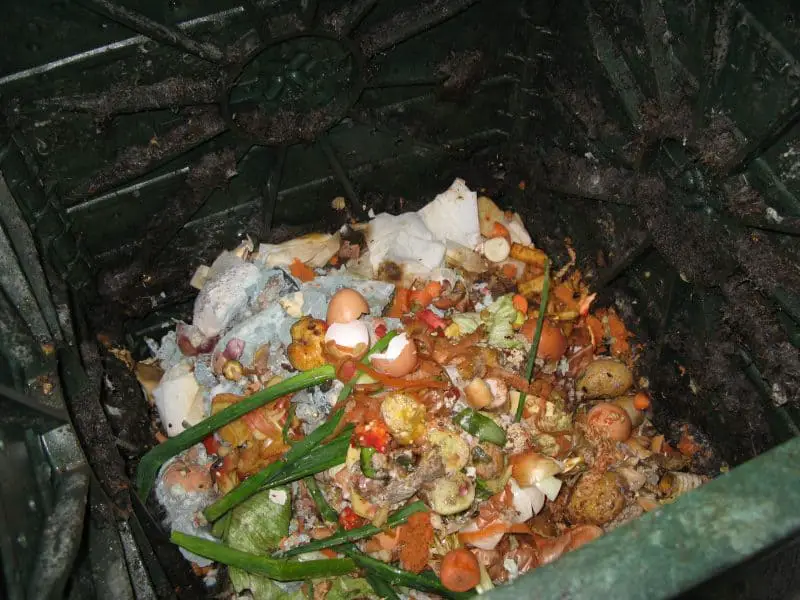
Many apartment dwellers assume composting requires a backyard or a worm bin, but learning how to compost indoors without worms is easier than most people realize. Several indoor composting methods allow you to recycle food scraps, reduce household waste, and create valuable compost without handling worms.
Whether you choose Bokashi composting, an indoor compost tumbler, or an electric food digester, indoor composting can fit comfortably into small apartments and busy lifestyles. The key is choosing the method that best matches your available space and gardening goals.
What You’ll Learn
- How to compost indoors without using worms
- The differences between Bokashi, tumblers, and food digesters
- How to prevent odors and pests
- What materials compost successfully indoors
- Ways to speed up the composting process
- Common indoor composting problems and solutions
How To Compost Indoors Without Worms Quick Answer
You can compost indoors without worms by using a Bokashi bucket, indoor compost tumbler, food digester, or a small aerobic compost bin. These methods break down food scraps while minimizing odors and can work successfully even in apartments and small spaces.
How To Compost Indoors Without Worms
Vermicomposting for apartments has become a buzzword among urban garden enthusiasts.
But what if worms make you squeamish? No worries! There’s a method to compost indoors sans the crawly creatures.
Imagine converting your kitchen scraps into a nutrient-packed soil booster, right in your apartment.
It’s eco-friendly, it’s sustainable, and believe it or not, it’s quite simple.
Ready to unearth the secrets? Let’s dive into the hows and whys of indoor composting without the wormy business!
With a little bit of care, you can create nutrient-rich soil for your plants that will help them thrive.
So whether you live in an apartment or just don’t want to deal with the hassle of worms, this article will help you do it.
Why Indoor Composting Without Worms Is Becoming Popular
- No need to handle composting worms
- Works well in apartments and condos
- Reduces household food waste
- Produces compost for houseplants and container gardens
- Can be done year-round indoors
- Several methods fit different budgets and lifestyles
For many apartment gardeners, indoor composting without worms offers a simple way to recycle kitchen scraps while creating useful compost for plants.
Composting Indoors Without Worms
Indoor composting without worms can be done in a number of ways. One method is to use anaerobic bacteria to break down the organic matter. This can be done by using a Bokashi bucket or bin.
Another method is to simply allow the organic matter to decompose on its own. This can be done by keeping the organic matter in a container with holes for aeration.
One benefit of composting without worms is that it does not require as much space. Worms need room to move around and eat, so a larger bin or bucket is necessary.
If you are interested in composting without worms, there are a few things to keep in mind.
- The first is that the process will take longer without worms. It can take several months for the organic matter to break down completely.
- The second is that you will need to turn the compost more frequently to aerate it.
- The third is that you may need to add more water to the compost. You don’t want your compost to dry out.
Carbon To Nitrogen Ratio In Composting
You need to have the right mix of brown and green materials to compost successfully. That 30:1 C/N will promote fast odorless composting.
The ideal C/N ratio for composting is generally considered to be around 30:1, or 30 parts carbon for each part nitrogen by weight. Why 30:1? At lower ratios, nitrogen will be supplied in excess and will be lost as ammonia gas, causing undesirable odors. http://compost.css.cornell.edu/chemistry.html
2 Easy Composing Methods Without Worms
If you’re looking for an easy way to compost indoors, we’ll talk about two different methods of indoor composting that don’t involve worms.
We’ll also give you some tips on how to get started. So whether you live in an apartment or just don’t want to deal with the hassle of worms, these methods will work for you!
Method one: Bokashi composting
Bokashi composting is a great way to compost indoors without worms. This method uses a special type of bacteria to break down organic matter.
All you need is a bokashi bucket and some bokashi bran. You can find both of these online or at your local garden center.
To start, fill your bucket with food scraps and cover them with a layer of bokashi bran. The bacteria in the bran will start to break down the scraps.
Once the bucket is full, seal it up and let it sit for two weeks. After two weeks, you can empty the contents of the bucket into your compost bin or pile.
Bokashi composting can use dairy products and meat scraps and fats like salad dressing, things you can’t put in your regular compost.
You will need to process it further before you can use it with something called a Bokashi soil factory.
The Bokashi method is great because it doesn’t produce any odor and it’s very easy to do!
Method two: Indoor compost tumblers
If you don’t want to deal with the hassle of a bokashi bucket, you can try an indoor compost tumbler.
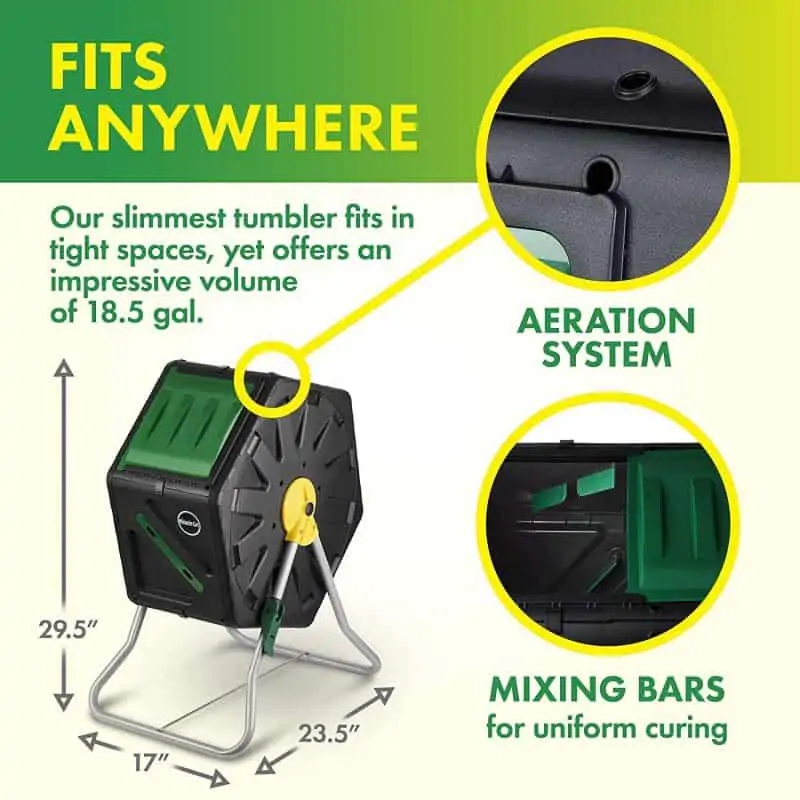
These devices are similar to outdoor composters, but they’re designed for use inside your home. You can find them online or at your local garden center.
An indoor compost tumbler is a more hands-off approach to indoor composting, consider trying one out for easier and faster composting.
These devices are designed to aerate your compost without it needing to be turned manually. Definitely not a fun task.
To use a compost tumbler, simply fill it with food scraps and let it do its work! The tumbler will create a small amount of heat, which will help speed up the decomposition process.
After a few weeks, you’ll have finished compost that you can use in your garden!
So there you have it! Two easy methods for indoor composting that don’t involve worms. Give one of them a try today and see how easy it is to make your own compost at home!
How do you compost when living in an apartment?
If you live in an apartment, you might think that composting is out of reach. But there are actually a number of ways to compost indoors, even in small spaces. Here are a few tips:
How To Compost Indoors In An Apartment
If you don’t have a lot of space, or if you simply don’t want to deal with worms, you can compost indoors without them.
The process is similar to traditional outdoor composting, but there are a few key differences. Here’s how to do it:
1. Choose a container for your indoor compost bin. A small garbage can or an empty ice cream tub will work fine. Just make sure it has holes punched in the bottom for drainage. A 2-gallon bin will work for most people.
2. Add a layer of kitchen scraps to the bin, followed by a layer of carbon-rich material. Repeat these layers until the bin is full.
3. Add water to the bin until the scraps are just moistened. You don’t want the bin to be too wet, as this will lead to odor problems.
4. Stir the bin once a week to aerate the compost.
5. After several weeks, you should start to see signs of decomposition. Once the material has broken down completely, it can be used as fertilizer for your plants.
Is it worth composting in an apartment?
Absolutely! Even if you don’t have a lot of space, you can still compost indoors using a small compost bin and a food digester.
Plus, it’s a great way to reduce your waste and give back to the earth. So why not give it a try? If you have the patience, it can be a very rewarding experience.
So yes, it is worth composting in an apartment! Even if you don’t have a garden composting is a great way to create nutrient-rich soil for your house plants.
Now that you are composting you should think about starting a few house plants or even a vegetable garden in your apartment.
What are the benefits of composting?
There are many benefits to composting, both for the environment and for your plants.
Composting helps to reduce greenhouse gas emissions since it reduces the need for energy-intensive activities like waste incineration and landfill gas collection.
Compost also improves soil health, since it adds essential nutrients and microbial activity back into the soil. This can improve plant growth and yield.
Should I compost if I don’t have a garden?
Yes! Composting is a great way to reduce your waste and help the environment, even if you don’t have a garden.
You can use compost in potted house plants, or donate it to a local community garden. Why not start an indoor vegetable garden?
Can you have a compost bin without worms?
Technically, yes. But worms are great for composting because they help aerate the material and speed up decomposition.
Worm compost takes longer because it is a form of cold composting. It does have more beneficial bacteria in it though.
But it can take 6 months to make worm compost. So if you want compost fast go for hot composting and skip the worms.
If you get the right C/N ratio your compost can heat up and finish faster. Since worms would be killed in a hot compost pile why use them at all?
If you don’t want to use worms in your bin, you can add other materials like shredded newspaper, eggshells, coffee grounds, or fruit and vegetable scraps to help speed up the process.
Or consider getting a food digester or tumbling composter to speed the process up.
What is a food digester?

A food digester or electric composter is a machine that helps speed up the decomposition process by breaking down food scraps into smaller pieces.
This makes it easier for aerobic bacteria to break down the material, which helps speed up the composting process.
Additionally, food digesters help reduce odors by breaking down smelly organic matter into smaller pieces.
If you’re interested in composting indoors without worms, a food digester may be a good option for you.
What can I put in my compost bin?
You can put almost anything in your compost bin! Food scraps, coffee grounds, eggshells, and even paper products can be added to your compost.
Just make sure to avoid putting any meat or dairy products in your bin, instead you can use a Bokashi compost bucket for these.
Do compost bins smell?
If your bin is starting to smell, that’s a sign that something is off and you should investigate.
If you’re concerned about smells, there are a few things you can do to keep your compost bin from getting too stinky.
First, make sure you’re adding a mix of green and brown materials to your bin. The green material will add nitrogen to the compost, while the brown material will add carbon.
This mixture will help keep odors under control. Additionally, make sure you’re regularly turning your compost so that it doesn’t start to rot.
Should my compost bin have holes?
Yes, your compost bin should have holes in order to allow for drainage and aeration. Holes in the bottom allow that excess water can drain out.
This will help to keep your compost from getting too wet, which can lead to bad odors.
Can you put pizza in compost?
Yes! You can compost just about any food scrap except for meat, bones, and dairy products.
So feel free to add your leftover pizza crusts, fruit and vegetable peels, and coffee grounds to your compost bin.
What will make compost break down faster?
There are a few things you can do to help your compost break down faster. First, make sure you’re adding a mix of green and brown materials to your bin. The green material will add nitrogen to the compost.
What else will make compost break down faster? There are a few things that will make your compost break down even faster, including adding more oxygen and turning it regularly.
What is a good compost activator?
There are a few different things you can use as compost activators. Some popular choices include adding coffee grounds, banana peels, or garden compost.
You can also buy commercial compost activators at your local gardening store. Add a small amount of activator to your bin every time you add new materials.
This will help speed up the decomposition process.
There are a few things you can add to your compost bin to help speed up the decomposition process. These include:
- Shredded newspaper
- Eggshells
- Coffee grounds
- Fruit and vegetable scraps
- Grass clippings
How often should I turn my compost?
You should turn your compost at least every few weeks to aerate it and help speed up the decomposition process.
Turning your compost regularly will also help aerate it and speed up decomposition. It’s a good reason a compost tumbler is a good investment.
What About Bugs?
If you’re worried about bugs make sure your compost bin has a tight fitting lid. You can also put your compost bin on a screened porch or another area where insects can’t get to it if you have one.
Adding a layer of dry leaves or straw on top of your compost can also help keep bugs away.
Lastly, make sure your bin has plenty of ventilation holes so that excess moisture can escape. This will help prevent mold.
How long does it take for compost to be ready?
The time it takes for your compost to be ready will depend on a number of factors, including the size of your bin and the amount of organic matter you’re adding.
However, most indoor compost bins will be ready to use within two to three months. Using a tumbling composter can greatly speed up the process.
Common Indoor Composting Problems and Solutions
Why Does My Compost Bin Smell Bad?
Strong odors usually indicate too much moisture, poor airflow, or excess food scraps. Add more dry carbon materials and improve aeration.
Why Is My Compost Not Breaking Down?
Slow decomposition is often caused by insufficient nitrogen, lack of moisture, or poor aeration. Turning the compost regularly can help.
Why Are Fruit Flies Appearing?
Fruit flies are attracted to exposed food scraps. Bury fresh materials under dry carbon-rich materials and keep lids closed.
Why Is My Compost Too Wet?
Add shredded paper, cardboard, or dry leaves to absorb excess moisture and restore balance.
Can Indoor Composting Attract Pests?
Properly managed indoor compost bins rarely attract pests. Avoid adding meat, dairy, and oily foods unless using a Bokashi system.
How To Compost Indoors Without Worms FAQs
Can you compost indoors without worms?
Yes. Bokashi composting, indoor compost tumblers, food digesters, and aerobic compost bins all allow indoor composting without worms.
What is the easiest indoor composting method?
Many beginners find Bokashi composting and electric food digesters to be the simplest methods because they require minimal maintenance.
Does indoor composting smell?
A properly managed compost system should produce little to no odor. Strong smells usually indicate excess moisture or poor airflow.
Can I compost food scraps in an apartment?
Yes. Apartment composting works well when using compact indoor systems such as Bokashi buckets, tumblers, or food digesters.
How long does indoor composting take?
Most indoor composting methods take between several weeks and a few months, depending on the method used and the materials being composted.
How To Compost Indoors Without Worms: Final Thoughts
Composting indoors without worms is easier than many people expect and offers several practical options for apartment gardeners. Whether you choose a Bokashi bucket, indoor compost tumbler, food digester, or traditional compost bin, each method can help reduce food waste while producing valuable compost for your plants.
The best system depends on your available space, budget, and how involved you want to be in the composting process. With a little planning and regular maintenance, indoor composting can become an easy part of a sustainable gardening routine.
Even if you don’t have a backyard garden, indoor composting allows you to recycle kitchen scraps and create a useful resource for houseplants, container gardens, and future growing projects.
Continue Exploring Indoor Composting
More info on composting https://en.wikipedia.org/wiki/Compost