
How to start a bokashi bucket is one of the easiest ways to compost indoors without odors or mess.
This simple system lets you turn kitchen scraps—including meat and dairy—into usable compost using fermentation.
Once you understand the basic setup, it’s a fast and low-maintenance way to recycle food waste at home.
What You’ll Learn
- To start a bokashi bucket, you’ll need a bokashi bin, bokashi bran, and kitchen scraps.
- Begin by layering your scraps in the bin, sprinkling each layer with bokashi bran.
- Press down to remove air, seal the bin, and let it ferment for about two weeks.
- After fermentation, the contents can be buried in soil or added to a compost pile to finish decomposing.
How To Start A Bokashi Bucket
 Bokashi composting is a brand-new and advanced means of fermenting (pickling) your kitchen waste. It began in Japan where most people live in apartments or condos.
Few own land but they like window or terrace gardens and needed creative solutions for dealing with kitchen waste and feeding their plants.
If you are gardening indoors you need a way to get rid of your trimmings and other garden waste.
You will also want to put your kitchen waste to good use too. It is also important that indoor composting be odorless.
If you live in an apartment or condo it is definitely worth considering bokashi composting because it can compost things other composters can’t.
Many food wastes like meat, poultry, or fish, oils like butter, salad dressing, or mayonnaise, dairy products, or acidic or spicy foods like citrus or onions are off limits for worm farms or even conventional composting but a bokashi composter handles them with ease.
While worm composters can work great indoors there are a lot of things you can’t put in them. Not everyone wants to maintain a worm bin either.
When it is done right, a bokashi bucket will break down all kitchen waste material, without odors by using specific micro-organisms like Lactobacillus, yeasts, and other microbes all work together. Unlike other composing methods, they can break down dairy and meat products.
It’s actually very easy to do it right as soon as you have the right gear.
How Bokashi Composting Works
Bokashi composting works by anaerobic (without oxygen) fermentation. That means that no aerobic composting takes place.
The micro-organisms break down your food kitchen scraps till they are pickled, similar to the way farmers make silage for their dairy cows.
Bokashi is an entirely natural method to reduce, reuse, and recycle natural waste. Bokashi is 100 % natural and it is 100 % safe for you, safe for your animals, and safe for the environment.
The bokashi composting system helps minimize greenhouse gases like carbon dioxide, and methane, and bad smells like hydrogen sulfide and ammonia which are produced by aerobic composting. of kitchen waste.
It is also much quicker at breaking down your food scraps. Oxygen is actually your opponent when composting indoors because it triggers a rotting scent.
But in the bokashi system, the lack of oxygen and the reasonably low level of acidity prevent the organisms that produce gas and smells from forming, and any that existed will not have the ability to make it through. They will be eaten by the anaerobic organisms that grow when oxygen is absent.
Bokashi compost can be mixed with other food or garden wastes and enable recycling which reduces the amount of waste in landfills.
Once in the soil, it will take an additional month or two for it to turn into mature compost. In the meantime, there is a supply of bokashi tea available for feeding your plants.
You can also add bokashi to a worm composter to finish it off because the microbes have taken care of the meat or dairy products present.
With Bokashi composting a healthy balance of microorganisms goes back to the soil establishing the healthy high microbial counts found in healthy dirt.
Bokashi-treated soil provides for improved uptake of nutrients and antioxidants leading to vigorous and healthy plant development.
The vitamins and mineral products produced in fermenting serve as a fertilizer for the plants.
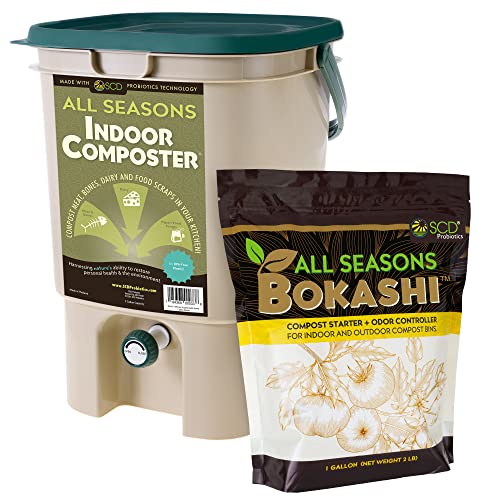
All Seasons Indoor Composter – Bokashi Bucket And Starter
If you want to get started we recommend the All Seasons Indoor Composter by SCD Probiotics, which includes the bokashi bucket and spigot and the bokashi bran starter mix.
It is an affordable basic unit and highly rated by users. With a 4.2 out of 5 stars rating and a best seller on Amazon. You can read reviews and more about the product below and shipping is free which is always nice!
Learn about making a Bokashi soil factory to finish your compost.
Bokashi Composting FAQs
Is bokashi better than composting?
If you’re interested in composting but not thrilled about the idea of building and maintaining a traditional compost pile, you might want to consider bokashi.
Bokashi is a Japanese word that means “fermented organic matter.” It’s a type of composting that uses anaerobic fermentation to break down organic waste.
This process is much faster than traditional composting, and it doesn’t produce any bad smells. Bokashi can be used on pretty much any organic waste, including meat and dairy products.
And since the fermentation process happens in a sealed container, there’s no need to worry about attracting unwanted critters.
However, there are a few potential downsides to bokashi. First, it requires the purchase of special bokashi bins and bran.
Second, fermented food waste can’t be used directly on plants; it needs to be mixed with soil first.
So if you’re looking for a fast and easy way to compost, bokashi might be the right option for you. But if you’re looking for a low-cost option that you can use right in your garden, traditional composting is probably the better choice.
Is bokashi composting worth it?
The answer to this question depends on your individual circumstances. If you have the time and patience for the bokashi fermentation process, and you are able to afford the bokashi mix, then bokashi composting may be a great option for you.
However, if you are short on time or money, there are other composting methods that may be more suited to your needs.
If you have kitchen scraps but don’t want to wait several weeks or months for the bokashi fermentation process to complete, you could try composting your kitchen scraps in a regular compost bin.
This will take longer than bokashi composting, but it is a more straightforward process and does not require any special equipment or ingredients.
What is the bokashi composting method?
Bokashi composting is a Japanese method of fermentation that can be used to quickly break down organic waste.
Unlike traditional composting, which can take months or even years to produce finished compost, bokashi composting can often be completed in as little as two weeks.
The key to the bokashi method is the use of effective microorganisms (EMs), which are beneficial bacteria and fungi that help to speed up the decomposition process.
To start a bokashi compost pile, organic waste such as food scraps and yard waste is placed in a container along with a small amount of EM-rich inoculant.
The mixture is then sealed inside the container, allowing the fermentation process to begin.
In addition to its speed, another advantage of bokashi composting is that it can be done indoors, making it a great option for those who live in apartments or other small spaces.
How long does bokashi take to decompose?
When it comes to composting, there are a variety of methods that can be used to break down organic matter.
One such method is bokashi, a Japanese technique that involves Fermenting food scraps in an airtight container.
Unlike other methods of composting, bokashi does not require regular aeration or turning. As a result, it can be a convenient option for those who don’t have the time or space for traditional composting.
So how long does bokashi take to decompose? The answer varies depending on the type of food scraps being used, but generally speaking, it takes around two weeks for the fermentation process to be complete.
Once the bokashi has finished fermenting, it can be added to a compost pile or soil factory.
Bokashi compost needs to be further treated before it can be used directly on plants. You can read more about finishing the bokashi composting process here.
Thanks to its ease of use and quick decomposition time, bokashi is an increasingly popular option for those looking to compost their food waste.
How To Start A Bokashi Bucket FAQs
Embarking on your bokashi composting journey? You likely have some questions!
Our FAQ section is here to clarify any doubts, offering insights into the bokashi process, what you can compost, indoor composting, the timeline, and the benefits for your garden.
Get ready to transform your kitchen waste into garden gold!
How is bokashi composting different from traditional composting?
Bokashi composting is a fermentation process that can break down a wider range of kitchen waste, including meat, dairy, and oily foods, which are typically not suitable for traditional composting. It’s an anaerobic process, meaning it occurs without oxygen, and is generally faster and odorless.
What materials can I compost using the bokashi method?
You can compost almost all types of kitchen waste, including fruit and vegetable scraps, meat, fish, dairy products, cooked food, and even small bones. Avoid composting liquids and large bones.
Can bokashi composting be done indoors?
Yes, bokashi composting is ideal for indoor use, especially in apartments or homes with limited outdoor space. The process is odorless when done correctly, making it suitable for indoor environments.
How long does it take for bokashi compost to be ready for use?
The initial fermentation process in the bokashi bucket typically takes about two weeks. After this, the compost needs to be buried in soil or added to a compost pile to further break down for another month or two before it’s fully matured.
What are the benefits of using bokashi compost in my garden?
Bokashi compost enriches the soil with beneficial microorganisms, improves nutrient uptake in plants, and can enhance overall plant growth and health. It’s also an effective way to recycle kitchen waste and reduce landfill waste.
How To Start A Bokashi Bucket: Conclusion
In conclusion, starting a bokashi bucket is a straightforward and eco-friendly way to manage your kitchen waste.
By following a few simple steps, you can create nutrient-rich compost that benefits your garden and reduces your environmental footprint.
Let’s recap the key points and explore some additional tips for successful bokashi composting.
Key Takeaways
- Bokashi Method: An anaerobic composting process that ferments kitchen waste, including meat and dairy, without odors.
- Setup: Requires a bokashi bin, bokashi bran, and a collection of kitchen scraps.
- Process: Layer scraps with bran, press down to remove air, seal the bin, and let it ferment for about two weeks.
- Post-Fermentation: Bury the fermented waste in soil or add it to a compost pile to fully decompose.
Tips for Success
- Maintain Balance: Ensure a good balance between green (nitrogen-rich) and brown (carbon-rich) materials in your bin to promote effective fermentation.
- Monitor Moisture: The contents should be moist but not too wet. If it’s too dry, add a bit of water; if too wet, add more bran or paper to absorb excess moisture.
- Use Bokashi Tea: Drain the liquid produced during fermentation (bokashi tea) regularly and use it as a nutrient-rich fertilizer for your plants, diluted with water.
- Be Patient: Allow the compost to fully mature in the soil before planting. This ensures that the nutrients are fully available for your plants.
By incorporating bokashi composting into your routine, you not only contribute to a healthier environment but also enhance the vitality of your garden. Happy composting!
Read More: Start Composting at Home