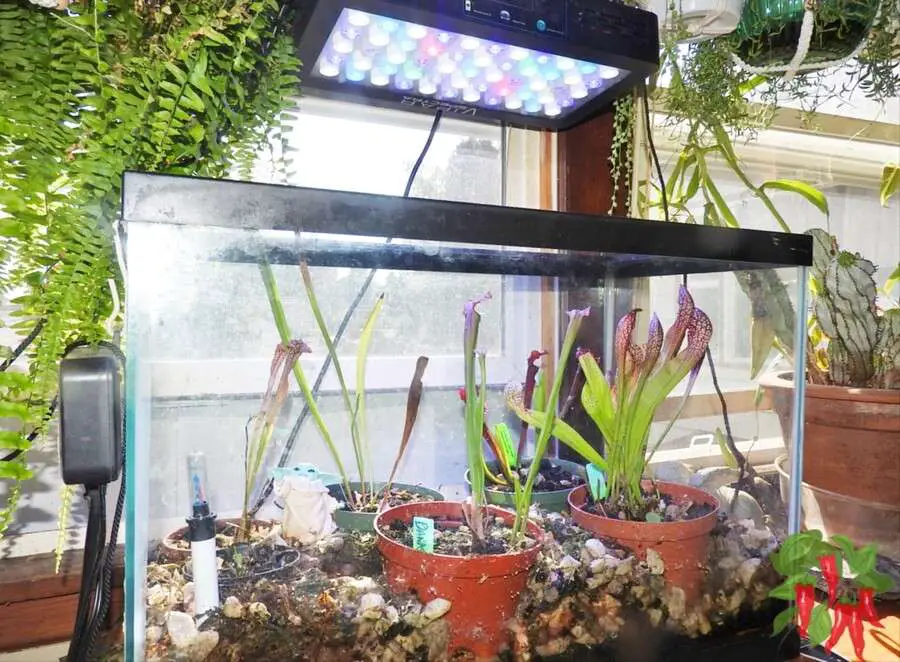
Terrarium tanks for carnivorous plants allow you to recreate the humid, bright conditions that tropical species need — even if you live in an apartment or don’t have outdoor space.
I started growing carnivorous plants outdoors years ago, but once I moved indoors full-time, aquariums became my solution. I’ve used 20-gallon tanks, 30-gallon builds, and even 75- and 90-gallon setups for Heliamphora and Nepenthes. Over time, I learned what actually works — and what just sounds good in theory.
This guide focuses specifically on terrarium tanks for carnivorous plants — not general care — so you can build a stable, long-term indoor setup without guesswork.
What You’ll Learn
- How tank size affects humidity stability
- Open-top vs sealed terrarium strategies
- Drainage and substrate layering that prevents rot
- Lighting placement and intensity for strong traps
- Which species actually thrive in tanks
- How to avoid mold, stagnation, and mineral buildup
Why Terrarium Tanks Work for Carnivorous Plants
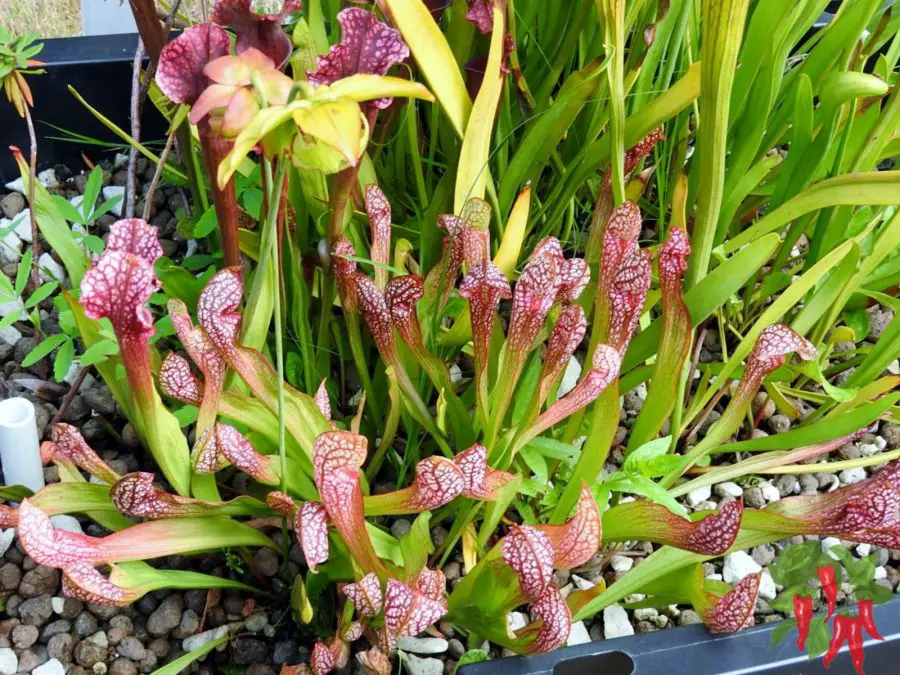
Most tropical carnivorous plants evolved in environments with steady moisture, high humidity, and intense light. Indoor air, especially in heated or air-conditioned homes, is usually too dry and inconsistent.
A glass terrarium tank creates a controlled microclimate. Water evaporates from the substrate, humidity rises, and condensation cycles back down. In a properly built tank, moisture levels stabilize instead of fluctuating daily.
This stability is the biggest advantage.
- Humidity remains elevated
- Watering frequency becomes predictable
- LED lighting can be positioned directly overhead
- Plants are protected from drafts
- Growth becomes more compact and colorful
For species like Nepenthes, sundews, and Heliamphora, this makes a noticeable difference.
Choosing the Right Terrarium Tank Size
Tank size affects humidity stability, airflow, and long-term growth space.
20–30 Gallon Tanks
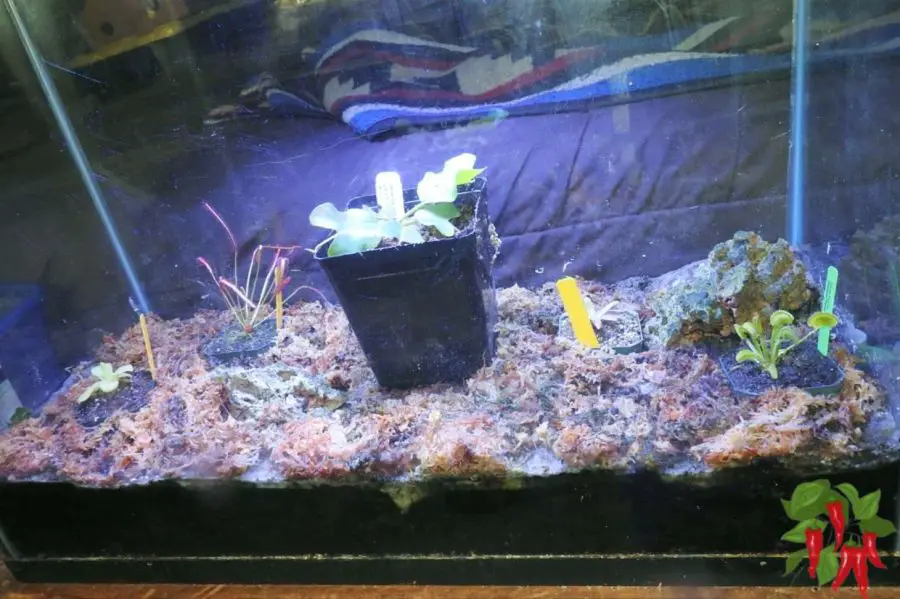
These are ideal for beginners. They’re easy to light, affordable, and manageable. I’ve run several 20-gallon setups with potted plants placed inside rather than planted directly into substrate.
Best for:
- Cape sundew
- Butterworts
- Small Nepenthes
Downside: humidity fluctuates faster than in larger tanks.
40–55 Gallon Tanks
More stable and forgiving. Better for mixed layouts and decorative builds.
These sizes balance stability with reasonable lighting cost.
75+ Gallon Tanks
This is where serious stability begins. My 75-gallon Heliamphora tank held humidity consistently with minimal intervention.
Large tanks:
- Buffer humidity swings
- Support larger species
- Allow layered designs
The tradeoff is stronger lighting requirements.
Open-Top vs Sealed Tanks
Many beginners assume sealed is better. In practice, fully sealed tanks often develop mold or stagnant air.
Open-Top Tanks
My preferred method. Allows airflow while maintaining humidity from evaporation.
Partially Covered Tanks
Glass lids or acrylic sheets reduce moisture loss but still allow some air exchange.
Fully Sealed Tanks
Only recommended for advanced bioactive builds. Risk of mold is higher without airflow.
Building the Right Terrarium Tank Layers
A terrarium tank for carnivorous plants isn’t just soil in glass. The layering determines whether your setup stays stable for years or turns into a swamp in months.
I’ve tested fully planted tanks and potted plants sitting inside tanks. Both can work — but layering matters either way.
1. Drainage Layer (Foundation Stability)
Start with 1–2 inches of gravel, lava rock, or expanded clay. This layer prevents stagnant water from saturating the root zone.
In my larger builds, I keep a shallow water reservoir in this layer. It slowly evaporates upward, maintaining humidity without flooding the substrate.
2. Optional Activated Charcoal
A thin layer of activated charcoal can reduce odors and keep the environment fresher. It’s not mandatory, but helpful in sealed or partially covered setups.
3. Substrate Layer (Nutrient-Poor Only)
Never use standard potting soil. Carnivorous plants evolved in nutrient-deficient environments.
Terrarium-friendly mixes include:
- Long-fiber sphagnum moss
- Peat moss + silica sand (50/50 or 60/40)
- Rinsed coco coir (low salt only)
In my 20-gallon build, I used peat and sand inside net pots instead of planting directly into the tank. That made maintenance easier and allowed plant rotation.
4. Surface Moss Layer
Live sphagnum moss on top improves humidity retention and helps prevent algae growth.
It also gives the tank a finished, natural appearance.
Planted Tank vs Potted-In-Tank Method
This is a decision most growers don’t think through early — and it matters long term.
Fully Planted Terrarium
- Looks more natural
- More stable humidity
- Harder to rearrange plants
- Difficult to isolate problems
Pots Inside the Tank
- Easier to rotate plants
- Simpler maintenance
- Better root monitoring
- Less risk if one plant declines
In my 75-gallon Heliamphora tank, I kept plants in net pots buried halfway into substrate. This allowed moisture access without suffocating the crown.
Lighting Strategy for Terrarium Tanks

Lighting is the single biggest failure point in terrarium tanks for carnivorous plants.
Most species evolved in full sun. Indoors, that means strong LED grow lights positioned directly above the tank.
Positioning
- 6–12 inches above plants
- Direct overhead placement
- 12–14 hours daily
Weak side lighting produces pale leaves and poor trap formation.
Wattage Considerations
In smaller tanks, 30–40 watt full spectrum LEDs are often enough. Larger 75+ gallon builds require stronger fixtures or multiple units.
When I ran two 30-watt LEDs over a larger tank, growth improved immediately once I activated both lights instead of one.
Best Carnivorous Plants for Terrarium Tanks

Not every carnivorous plant belongs in a tank. Some require outdoor dormancy or cooler root zones.
Excellent Tank Candidates
- Tropical Nepenthes
- Cape Sundew (Drosera capensis)
- Butterworts (Pinguicula)
- Heliamphora (with strong light)
Generally Better Outdoors
- Sarracenia
- Venus flytraps
- Darlingtonia
For detailed species care, visit the Carnivorous Plant Care Guide.
Featured Species: Nepenthes truncata
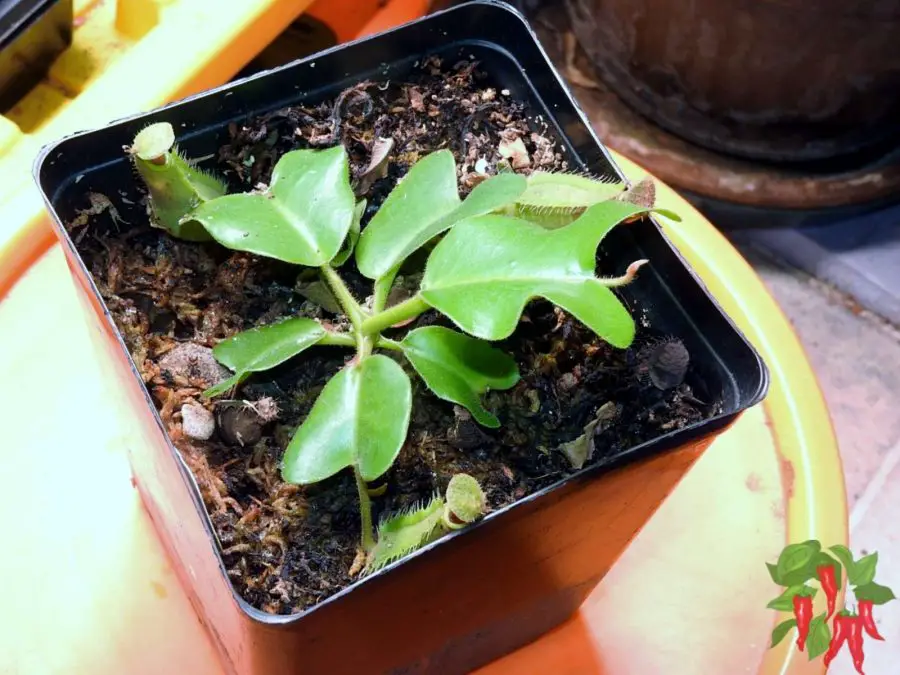
If you’re building your first tropical terrarium tank, Nepenthes truncata is one of the most forgiving species.
It produces thick leaves, large pitchers, and tolerates indoor humidity fluctuations better than many other varieties.
It will eventually vine, but regular pruning keeps it manageable in larger tanks.
In my experience, it’s far easier than more delicate highland species.
Water Quality Inside Terrarium Tanks
Mineral buildup is amplified in enclosed systems.
Use distilled, rain, or reverse osmosis water only. If unsure, review water quality for carnivorous plants.
Evaporation leaves minerals behind. Tap water may appear harmless at first but accumulates over time.
Inside tanks, that buildup has nowhere to escape.
Common Problems in Terrarium Tanks (And How to Fix Them)
Even well-built terrarium tanks for carnivorous plants can develop issues. The difference between a temporary problem and a long-term failure is early correction.
Mold on Sphagnum or Substrate
White fuzzy mold usually appears in tanks with stagnant air. This happens most often in sealed builds.
- Increase airflow slightly
- Remove affected moss
- Avoid overwatering
- Ensure lighting is strong enough
In my experience, simply cracking the lid or removing full coverage solves most mold issues within days.
Algae in the Drainage Layer
Algae forms when light penetrates wet gravel. It’s usually cosmetic but can indicate excessive standing water.
Solutions:
- Reduce reservoir depth
- Add a thin barrier between gravel and substrate
- Limit direct light hitting the bottom layer
Weak or Pale Traps
This is almost always lighting related.
If traps lose color or pitchers stop forming:
- Lower the lights closer to plants
- Increase wattage
- Extend daily lighting duration slightly
Every time I upgraded lighting in my larger tanks, growth improved dramatically.
Root Rot
Carnivorous plants like moisture — not stagnation. If crowns soften or plants collapse, the root zone may be suffocating.
Prevention:
- Use a drainage layer
- Never use fertilized soil
- Avoid fully submerged pots
- Keep airflow active
Airflow Management Without Losing Humidity
Humidity is important, but stale air is dangerous.
In larger builds, I rely on passive airflow. Open tops or partially covered tanks allow evaporation to maintain humidity while preventing stagnation.
In very large tanks (75+ gallons), small USB fans placed above the rim can gently circulate air without drying plants.
The goal is movement — not wind.
Seasonal Adjustments for Indoor Terrarium Tanks
Indoor conditions shift seasonally even if the tank stays in the same spot.
Winter
- Indoor heating lowers ambient humidity
- Evaporation increases
- Monitor water levels more frequently
Lighting duration can remain consistent for tropical species.
Summer
- Room temperatures may spike
- Sealed tanks can overheat
- Increase ventilation if needed
Glass amplifies heat under strong LEDs. Monitor carefully during hot months.
Long-Term Maintenance Strategy
A stable terrarium tank becomes surprisingly low-maintenance once established.
- Check water levels weekly
- Remove dead pitchers or leaves
- Inspect for mold monthly
- Clean glass as needed
In my 75-gallon build, once lighting and airflow were dialed in, maintenance dropped to simple weekly checks.
Designing a Stable Microclimate Inside Your Terrarium Tank
A terrarium tank for carnivorous plants isn’t just a container — it’s a controlled ecosystem. Stability is what separates a thriving long-term display from a short-lived experiment.
Inside glass, small environmental changes become amplified. Light intensity, evaporation rate, and airflow interact constantly. When balanced, the system becomes surprisingly self-regulating.
Humidity Gradients
Not every plant inside a tank needs identical humidity. In larger builds, micro-zones naturally develop. Plants closer to the substrate stay more humid, while elevated areas remain slightly drier.
This allows strategic placement:
- High humidity species near the base
- Butterworts slightly elevated
- Nepenthes positioned where airflow is strongest
You can use driftwood, rock ledges, or raised pots to intentionally create these zones.
Thermal Management
Glass traps heat. LED grow lights generate warmth even if they feel cool to the touch.
In smaller tanks, temperature swings happen quickly. In larger tanks, the mass of substrate and water buffers temperature changes.
If your room reaches 80°F+, monitor tank temperatures carefully. Ventilation adjustments may be necessary during summer.
Choosing the Right Tank Size for Long-Term Growth
Beginners often underestimate how quickly tropical carnivorous plants grow under strong light.
A 10-gallon tank may look spacious at first, but Nepenthes can vine and fill vertical space within a year.
Small Tanks (10–20 Gallons)
- Best for sundews and butterworts
- Limited airflow buffer
- Requires careful water monitoring
Mid-Size Tanks (30–40 Gallons)
- Greater humidity stability
- More species flexibility
- Easier layering options
Large Tanks (75+ Gallons)
- Stable microclimate
- Ideal for Heliamphora and larger Nepenthes
- Room for elevation design
- More forgiving overall
In larger builds, maintenance actually becomes easier because environmental swings are slower and more predictable.
Integrating Hardscape for Structure and Function
Hardscape isn’t just aesthetic. It serves functional purposes inside a terrarium tank for carnivorous plants.
Driftwood
Creates elevation and airflow channels. Ideal for mounting climbing Nepenthes vines.
Lava Rock
Porous and lightweight. Helps anchor substrate while maintaining air pockets.
Silica Sand Accents
Can be used sparingly for visual contrast while keeping the environment nutrient-free.
Always avoid limestone or calcareous rocks, which leach minerals and alter pH.
Feeding Strategies in Terrarium Systems
Inside a terrarium tank, natural insect access is limited.
However, heavy feeding is rarely necessary if lighting is strong.
- Occasional small insect feeding is sufficient
- Avoid overfeeding pitchers
- Never add fertilizer to soil
In my enclosed systems, I rarely fed at all. With strong light and proper substrate, growth remained consistent.
Monitoring and Fine-Tuning Over Time
The first three months after building a terrarium tank are the adjustment phase.
Watch for:
- Condensation patterns
- Trap coloration
- Substrate saturation levels
- Algae development
Once the environment stabilizes, changes become minimal. At that point, the system transitions from active management to passive observation.
When to Rebuild or Refresh a Terrarium Tank
Over time, substrate can compact and break down.
Most terrarium tanks remain stable for several years, but signs of rebuild include:
- Poor drainage
- Persistent mold despite airflow
- Declining plant vigor without visible cause
A partial refresh — replacing top substrate layers — is often enough. Full rebuilds are rarely needed unless the original layering was flawed.
FAQs About Terrarium Tanks for Carnivorous Plants
Should a terrarium tank for carnivorous plants be sealed?
No. Most setups perform better with partial airflow. Fully sealed tanks often develop mold or stagnation.
Can I mix tropical and temperate carnivorous plants in one tank?
It’s not recommended. Temperate species require winter dormancy that tropical species do not.
How do I prevent mineral buildup inside a tank?
Use distilled, rain, or reverse osmosis water only. Minerals accumulate quickly in enclosed systems.
Do terrarium tanks need grow lights?
In most indoor environments, yes. Bright overhead LED lighting is critical for strong trap development.
How long do terrarium tanks last?
With proper layering and water quality, a well-built tank can remain stable for many years.
Real-World Terrarium Tank Builds: What Actually Works
There’s a big difference between a decorative terrarium and a functional carnivorous plant system. Over the years, I’ve experimented with everything from small 20-gallon aquariums to larger 75-gallon tanks, and each size teaches you something different.
The biggest lesson? Stability beats complexity every time.
20-Gallon Beginner Tank
A 20-gallon aquarium is a great starting point for a terrarium tank for carnivorous plants. It’s manageable, affordable, and large enough to buffer humidity swings.
- 1 inch gravel base
- Potted plants instead of direct planting
- Peat and sand mix in individual pots
- Water reservoir in the gravel layer
What worked well was keeping plants in separate pots. If one declined, I could remove it without disturbing the entire system.
75-Gallon Showcase Tank
Larger tanks behave very differently. Once you move into 75 gallons or more, environmental swings slow down dramatically.
Humidity becomes more consistent. Temperature changes happen gradually. Lighting coverage becomes the main challenge instead of moisture.
In larger builds:
- Use multiple light fixtures for even coverage
- Create elevation using rock or wood
- Leave portions partially open for airflow
- Monitor heat buildup near glass edges
The surprising part is that large tanks are often easier long term. Once dialed in, they require fewer corrections.
Open-Top vs Closed Terrarium Tanks
A common mistake is sealing a tank completely to “trap humidity.” While that sounds logical, fully closed systems often create stagnant air.
Open-Top Tanks
- More natural airflow
- Reduced mold risk
- Humidity maintained through evaporation
- Easier temperature control
Partially Covered Tanks
- Higher humidity retention
- Requires airflow monitoring
- Better for tropical Nepenthes
Fully sealed tanks are rarely necessary unless you’re growing extremely humidity-sensitive species. For most indoor growers, partial coverage provides the best balance.
Long-Term Growth Expectations
Carnivorous plants grown in terrarium tanks often develop stronger coloration and more consistent trap production due to controlled humidity and steady lighting.
However, growth patterns change over time:
- Nepenthes begin vining and require pruning
- Sundews multiply rapidly
- Butterworts shift leaf forms seasonally
- Substrate settles and compacts slightly
Planning for growth early prevents overcrowding later. Leave space between plants even if the tank looks sparse at first. Within a year, that open space often disappears.
Why Terrarium Tanks Are Ideal for Indoor Carnivorous Plants
Indoor air is typically dry, especially in winter. Terrarium tanks create a buffered environment that protects delicate tropical species from harsh fluctuations.
They also simplify consistency. Instead of trying to adjust an entire room’s humidity, you control a contained ecosystem.
When properly layered, lit, and ventilated, a terrarium tank for carnivorous plants becomes one of the most reliable ways to grow tropical species indoors year-round.
Continue Exploring Terrarium Gardening
- Carnivorous Plant Terrariums: Indoor Tank Setups That Actually Work
- Carnivorous Plant Terrarium Setup: Easy Indoor Tank Guide
- Terrarium Lighting for Carnivorous Plants: How Much Light?
- Terrarium Tanks for Carnivorous Plants: Complete Setup Guide
- Terrarium Substrate: Best Soil Mixes for Plant Terrariums
- Closed vs Open Terrariums: Which One Works Best?
- Browse All Terrarium Guides
Conclusion
Terrarium tanks for carnivorous plants offer a controlled way to grow tropical species indoors with consistency and stability.
When you combine proper drainage layers, nutrient-poor substrate, strong lighting, clean water, and steady airflow, you create an environment that closely mirrors their natural habitat.
Whether you’re building a 20-gallon beginner tank or a 75-gallon showcase setup, the same principles apply: stability, brightness, and purity.
Wicking Bed Using Coco Coir (Easy Setup for Terrariums & Houseplants)
For broader plant care beyond terrarium systems, explore the Carnivorous Plant Care Guide.