

Moonstone Succulent care is all about bright light, dry soil, and resisting the urge to water too often. These plump, pastel-colored succulents are loved for their rounded, almost pebble-like leaves that look soft enough to be carved from stone.
Known botanically as Pachyphytum oviferum, Moonstone is a slow-growing succulent native to Mexico and well adapted to dry conditions. Its thick leaves store water, making it highly drought tolerant and beginner-friendly once you understand its watering rhythm.
The biggest mistakes with Moonstones usually come from overwatering or poor light. In this guide, you’ll learn how to grow Moonstone succulents indoors, including watering, soil, light, propagation, and how to fix common problems.
What You’ll Learn 🌵
- ☀️ How much light Moonstone succulents need indoors
- 💧 The right watering rhythm to prevent rot
- 🪴 The best soil mix and pot setup for drainage
- 🌱 Easy propagation methods from leaves and offsets
- ⚠️ Common Moonstone problems and how to fix them
Quick Answer 🌿
Moonstone succulents grow best in bright indirect light or gentle morning sun, fast-draining cactus soil, and dry periods between watering. Water only when the soil is fully dry and avoid heavy shade or wet soil to prevent rot.
What Are Moonstone Succulents Or Pachyphytum Oviferum

Moonstone succulents are a type of stonecrop plant that is native to Mexico.
The scientific name for Moonstone succulents is Pachyphytum oviferum.
They are a part of the Crassulaceae family, which includes other popular succulent plants such as Sedum and Echeveria.
Moonstone succulents are characterized by their fleshy, blue-green or pink leaves that grow in rosettes.
The leaves of Moonstone succulents are often covered in a powdery white substance, which is why they are also known as “powdered sunstones.”
Moonstone succulents can grow to be 4 inches tall and up to 12 inches wide.
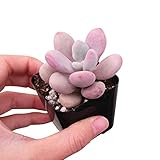 Moonstone succulents are a popular choice for gardens and homes because they are low-maintenance plants. They are also inexpensive.
They are tolerant of neglect and can survive in a variety of conditions.
Moonstone Succulent Care
If you are looking for a plant that is both beautiful and easy to care for, Moonstone succulents are a great option!
We will cover topics such as watering, light requirements, and soil preferences. By following these simple tips, you can ensure that your Moonstone succulents thrive!
Watering Moonstone Succulents
Watering your Moonstone succulents is an important part of Moonstone succulent care.
But because Moonstone succulents are drought-tolerant plants, they do not require a lot of water.
So you are much better off underwatering them rather than overwatering them.
They should not be watered on a schedule instead it is best to only water your Moonstone succulents when the soil is completely dry.
If the soil is too wet, it can cause the roots of your Moonstone succulents to rot.
When watering Moonstone succulents, be sure to use lukewarm water. Cold water can shock the plants and cause them to lose their leaves.
To avoid overwatering your Moonstone succulents, it is best to use a well-draining potting mix.
You can also add some perlite or sand to the potting mix to improve drainage.
Light Requirements For Moonstone Succulents
Moonstone succulents prefer bright, indirect sunlight. If you live in an area with intense sun, it is best to provide some shade for your Moonstone succulents.
Too much direct sunlight can cause the leaves of Moonstone succulents to turn yellow or brown. If your Moonstone succulents are not getting enough sunlight, they may become etiolated, which means they will stretch out and become leggy.
Moonstone succulents can tolerate a wide range of light conditions, but they prefer bright, indirect sunlight.
If you are growing Moonstone succulents indoors, be sure to place them near a sunny window.
You can also use a grow light to provide the plants with the right amount of light.
Best Indoor Locations For Moonstone Succulents
Moonstones need bright light and good airflow, so placement matters for color and compact growth.
South-Facing Windows
One of the best spots for strong light and compact growth, especially in cooler seasons.
East-Facing Windows
Great for gentle morning sun without the harsh heat of late afternoon.
Sunny Desks
A bright desk or shelf near a window works well if the plant gets several hours of strong light.
Succulent Shelves Under Grow Lights
Perfect for maintaining compact rosettes if natural light is limited.
Soil Preferences For Moonstone Succulents
Moonstone succulents prefer well-draining soil. A cactus or succulent potting mix is a good option for Moonstone succulents.
You can also add some perlite or sand to a regular potting mix to improve drainage.
Moonstone succulents do not like to sit in wet soil, so be sure to use a well-draining potting mix.
Fertilizing Moonstone Succulents
Moonstone succulents do not require a lot of fertilizer. If you choose to fertilize your Moonstone succulents, use a cactus or succulent fertilizer.
Be sure to dilute the fertilizer to half strength and only fertilize Moonstone succulents every other month.
Over-fertilizing can cause the leaves of Moonstone succulents to turn yellow or brown.
Pests And Diseases Of Moonstone Succulents
Moonstone succulents are relatively resistant to pests and diseases. However, they can be susceptible to mealybugs, scale insects, and root rot.
Mealybugs are small white insects that feed on the sap of Moonstone succulents. Scale insects are small brown or black insects that attach themselves to the leaves of Moonstone succulents.
Root rot is a disease that can be caused by overwatering or planting Moonstone succulents in poorly draining soil.
If your Moonstone succulents become infested with pests you can treat them with insecticidal soap or neem oil.
Troubleshooting Moonstone Succulent Problems
Leaves turning mushy
This is usually a sign of overwatering or root rot. Let the soil dry and inspect the roots.
Leaves shriveling
A normal sign the plant needs water, especially if the lower leaves are drying out.
Leggy stretched growth
This means the plant is not getting enough light. Move it to a brighter spot.
Leaves losing powdery coating
Handling the leaves can rub off the natural farina, which protects them from sun and moisture.
Brown sunburn spots
Too much direct intense sun can scorch the leaves, especially after sudden exposure.
Propagating Moonstone Succulents
Moonstone succulents are relatively easy to propagate. They can be propagated by seed, offsets, or leaf cuttings.
To propagate Moonstone succulents by seed, sow the seeds in a cactus or succulent potting mix. Be sure to keep the soil moist but not wet.
Moonstone succulent offsets can be removed from the mother plant and planted in their own pots.
To propagate Moonstone succulents by leaf cuttings, cut a leaf from the mother plant and allow it to callous over for a few days. Then, plant the leaf cutting in a cactus or succulent potting mix.
Continue Exploring Indoor Plant Care
Moonstone Succulent FAQs
How often should I water Moonstone succulent?
Only water when the soil is fully dry. This may be every 2–3 weeks indoors depending on light and temperature.
Does Moonstone need full sun?
It likes bright light and some gentle sun, but harsh afternoon sun can burn the leaves.
Why are my Moonstone leaves falling off?
This is often caused by overwatering, sudden cold, or rough handling.
Can Moonstone grow in low light?
It can survive, but it will stretch and lose its compact shape.
Is Moonstone easy to propagate?
Yes. Leaf propagation and offsets are both beginner-friendly ways to grow more plants.
Final Thoughts: Moonstone Succulent Care
Moonstone succulents are one of the most visually unique succulents you can grow indoors. Their soft pastel colors and rounded leaves make them stand out in any succulent collection.
The key is simple: bright light, dry periods between watering, and fast drainage. Once you get that balance right, they become easy, low-maintenance plants that can thrive for years.
If you enjoy collecting unusual succulents, Moonstone is an excellent plant to add to your indoor setup.