
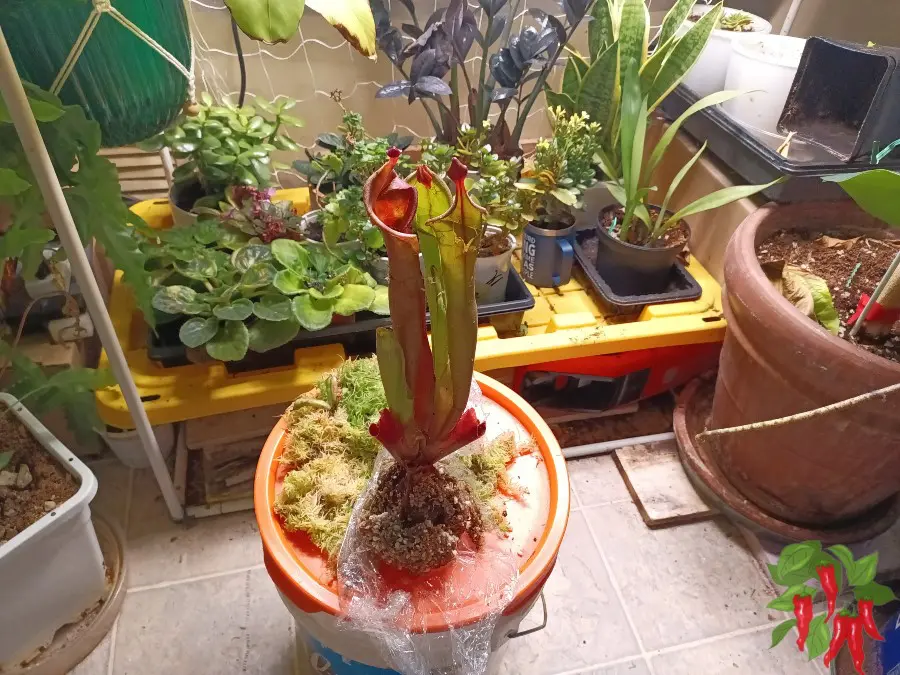
If you’ve been curious about Heliamphora godzilla unboxing, this is what it actually looks like when one of these rare plants shows up at your door.
This isn’t your typical carnivorous plant. Heliamphora “Godzilla” is the largest sun pitcher plant ever produced, and it has a reputation for being hard to find, expensive, and not exactly beginner-friendly.
In this post, I’m going to walk you through the unboxing, what the plant looks like right out of the package, and how I set it up in a real indoor terrarium—no greenhouse, no perfect lab conditions, just a setup that actually works at home.
What You’ll Learn
- What Heliamphora “Godzilla” actually looks like when it arrives
- How big this plant can really get compared to other Heliamphora
- Where it fits in the Heliamphora height spectrum
- Why this plant is so rare (and expensive)
- How to set it up in a working indoor terrarium
Unboxing Heliamphora “Godzilla”
Well, I’ll tell you right now—this thing came packed like it was being shipped across the planet.
I opened the box and it was basically wall-to-wall bubble wrap. I’m not exaggerating… it felt like ten feet of the stuff. At one point I started wondering if I accidentally ordered bubble wrap instead of a plant.
But buried in there was the good stuff.
Once I finally got down to it, there it was—Heliamphora “Godzilla.”
The pitchers on arrival were already around 12 inches tall, which is impressive considering this wasn’t even a fully mature plant yet.
First Impressions
Right away, a couple things stood out:
- Healthy, upright pitchers with good color
- Root ball tightly wrapped and protected
- Planted in a peat/sphagnum style mix from the grower
- Extra bonus plants tucked into the moss (always a nice surprise)
These plants have open-top pitchers and what’s called a nectar spoon—that little structure at the top that helps attract insects. It’s one of the defining features that separates Heliamphora from other carnivorous plants like Nepenthes or Sarracenia.
👀 Heliamphora Godzilla Unboxing Video
What Is Heliamphora “Godzilla”?
Heliamphora are known as sun pitcher plants, and they come from high-altitude regions in Venezuela called tepuis—flat, table-top mountains that sit thousands of feet above sea level.
Even though they grow near the equator, the conditions up there are surprisingly cool, cloudy, and wet. That’s a big reason why they can be tricky to grow indoors.
“Godzilla” isn’t a natural species—it’s a hybrid created by breeder Andreas Wistuba, and it’s widely reported to be a cross between Heliamphora tatei × Heliamphora nutans.
That parentage matters, because both of those species are already on the larger side. Combine them, and you get something that pushes the limits of what Heliamphora can do.
How Big Does Heliamphora “Godzilla” Get?
This is where things get interesting.
Most Heliamphora species fall into fairly predictable size ranges:
- Small: 2–6 inches (parva, minor, pulchella)
- Medium: 6–12 inches (heterodoxa, chimantensis)
- Large: 12–18 inches (ionasi, elongata)
- Giant: 18–24 inches (large nutans forms)
Then there’s “Godzilla.”
The Ultra-Giant Tier
Heliamphora “Godzilla” sits in a category of its own.
- Typical indoor size: 16–24 inches
- Reported maximum: Up to 36 inches (3 feet)
That makes it the tallest Heliamphora in cultivation, surpassing even the largest forms of nutans, ionasi, and elongata.
In a terrarium, this is not a background plant… it eventually becomes the centerpiece whether you planned for it or not.
Why This Plant Is So Rare (and Expensive)
There are a few reasons you don’t see these everywhere.
- Produced by a limited number of growers
- Slow-growing compared to common carnivorous plants
- High demand from collectors
- Not mass-produced at scale
I’ve seen these listed anywhere from a couple of hundred dollars up to $600 or more when supply is tight. I just saw a baby cutting go for about $130
And the wild part? They still sell out.
That tells you everything you need to know about how desirable this plant is among serious growers.
Setting Up Heliamphora Godzilla in a Terrarium

This is where a lot of people go wrong.
Heliamphora aren’t just “stick it on a windowsill” plants. They come from high-altitude environments, which means they want:
- Bright light
- Cooler root temperatures
- Constant moisture (but not waterlogged roots)
- Good airflow
My Setup (Simple and Practical)
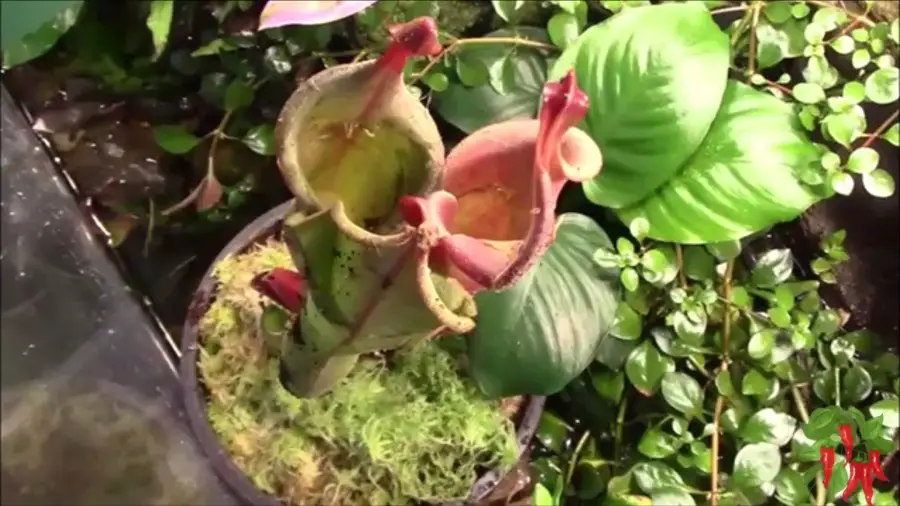
I planted mine in a tall pot inside a terrarium using coco coir as the main substrate.
Here’s how it’s working:
- Water reservoir at the bottom
- Substrate wicking moisture upward
- Root ball sitting above the water line
- Fan providing airflow inside the tank
That keeps the plant hydrated without drowning the roots, which is key for Heliamphora.
I’ll probably move it to a shorter pot later, but for now the goal was simple—get it stable and let it recover from shipping.
Is Heliamphora “Godzilla” Good for Beginners?
Short answer: not really.
This isn’t just about price—it’s about environment.
These plants are adapted to:
- High humidity
- Daily moisture cycles
- Cool nights
- Strong but diffused light
If you don’t already have a terrarium or controlled setup, this plant can struggle.
But if you’ve got some experience and you’re willing to dial things in, it’s one of the most rewarding carnivorous plants you can grow.
Final Thoughts: The Monster Is Loose
There’s something different about growing a plant like this.
It’s not just another houseplant—it feels more like you’re managing a living system that’s built for a completely different environment.
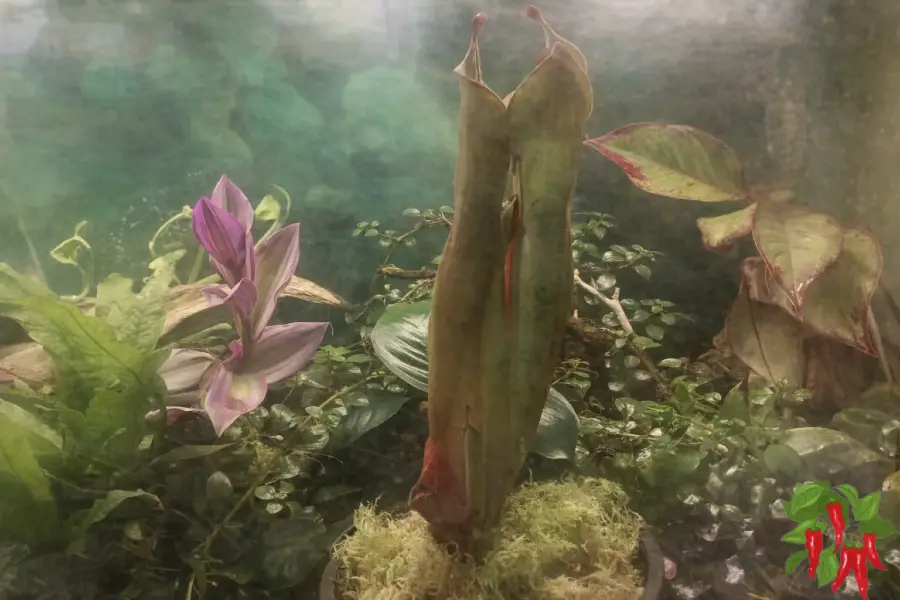
Right now, mine is sitting around that 12 inch range. But if everything goes right, this thing is going to keep climbing.
And when it does, it’s going to earn that name.
If you’re thinking about trying one, just know what you’re getting into. This isn’t a beginner plant—but it is one of the coolest you can grow indoors.
Read More:
Carnivorous Plant Care: Complete Beginner’s Guide
Terrarium Tanks for Carnivorous Plants: Complete Setup Guide
Heliamphora Godzilla Unboxing FAQs
How big does Heliamphora Godzilla get indoors?
Most growers see 16–24 inches in indoor setups, but under ideal conditions it can reach up to 3 feet tall.
Is Heliamphora Godzilla a real species?
No, it’s a hybrid created by breeder Andreas Wistuba, commonly reported as Heliamphora tatei × Heliamphora nutans.
Can Heliamphora Godzilla grow in a terrarium?
Yes, but it will eventually outgrow most enclosed tanks. It works best as a large anchor plant in tall setups.
Why is Heliamphora Godzilla so expensive?
Limited production, slow growth, and high collector demand all contribute to its price.