
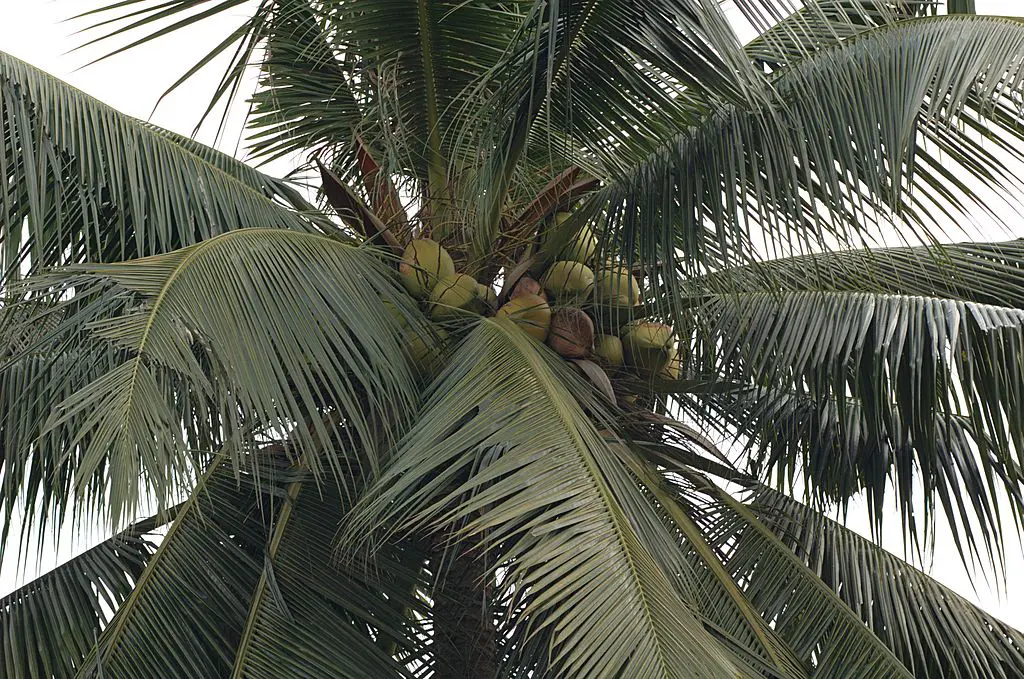
Growing coconut trees in containers is possible indoors if you give them strong light, warmth, and the right setup. You won’t get a beach tree in your living room—but you can grow a healthy, tropical-looking palm that actually thrives.
If you’ve ever seen one growing out of a coconut and wondered if you could do it at home… you can. You just need realistic expectations and the right conditions.
Let’s break it down so you don’t waste time (or kill your plant).
Find Dwarf Coconet Palm Trees On Amazon
What You’ll Learn
- How much light coconut palms really need indoors
- How to water without causing root rot
- The best soil mix for container growing
- How to keep them alive long-term indoors
- What to realistically expect (fruit vs ornamental)
Light Requirements (This Is Where Most People Fail)
Coconut palms are full-sun tropical plants. Indoors, that’s your biggest challenge.
You need:
- At least 6–8 hours of direct sun
- A south-facing window (best option)
- Or a strong grow light if natural light isn’t enough
If the plant isn’t getting enough light, you’ll see slow growth, stretched fronds, and eventually decline.
From experience—this isn’t a “low light tropical plant.” Treat it more like a citrus tree than a houseplant.
Watering Coconut Trees in Containers
Coconut palms like consistent moisture—but they hate sitting in water.
Here’s the balance:
- Water when the top 1–2 inches of soil dry out
- Keep soil slightly moist, not soggy
- Always use a pot with drainage holes
Overwatering is the fastest way to kill these indoors. That dense, wet soil turns into root rot quick.
On the flip side, letting it fully dry out repeatedly will stress the plant and stunt growth.
You’re aiming for steady, even moisture—not extremes.
Soil for Coconut Trees in Containers
If you get the soil wrong, everything else falls apart.
Coconut palms need a mix that drains fast but still holds some moisture. Regular potting soil alone is usually too dense.
Best mix:
- 50% coco coir
- 50% perlite
You can adjust slightly (like 60/40), but the goal is simple: airy, fast-draining, and not compacted.
One thing a lot of people miss—coco coir has zero nutrients. It’s just a growing medium. That means feeding becomes important.
Container Size (Go Bigger Than You Think)
Coconut palms don’t like being cramped.
Start with at least:
- 24 inches wide
- 20 inches deep
Deep containers matter because coconut roots grow downward more than outward.
If you go too small, the plant stalls out early and never really recovers.
Material tip:
- Clay / terracotta = better airflow (recommended)
- Plastic = holds more moisture (riskier indoors)
Whatever you use—make sure drainage holes are there. No exceptions.
Fertilizing Coconut Palms Indoors
These are heavy feeders, especially in containers.
Simple routine:
- Feed once a month in spring and summer
- Use a balanced fertilizer with micronutrients
- Skip feeding in winter (growth slows down)
Look for something that includes magnesium and potassium—palms tend to show deficiencies if those are missing.
If your leaves start yellowing from the tips, feeding is usually the first thing to check.
Humidity and Temperature
This is where indoor growing gets tricky.
Coconut palms come from hot, humid environments—not dry living rooms.
Ideal conditions:
- Temperature: 70–85°F
- Humidity: 50%+ (higher is better)
If your air is dry, you’ll see brown tips pretty fast.
Easy ways to help:
- Use a humidifier
- Group plants together
- Keep away from vents and heaters
Cold drafts will stress or kill these—anything below about 50°F is a problem.
Repotting Coconut Trees
You won’t repot often—but when you do, it matters.
When to repot:
- Roots coming out of drainage holes
- Growth has slowed significantly
- Soil dries out too fast
Usually every 2–3 years is enough.
Go up one pot size at a time—don’t jump too big or you’ll create moisture problems.
Try not to disturb the root ball too much. Palms don’t love being messed with.
Pruning Coconut Palms
Good news—you don’t need to do much here.
Only remove:
- Dead fronds
- Fully brown or damaged leaves
Leave green fronds alone. They’re still feeding the plant.
Cutting too much actually slows growth and weakens the palm.
Propagation (What Actually Works)
Coconut palms don’t propagate like typical houseplants.
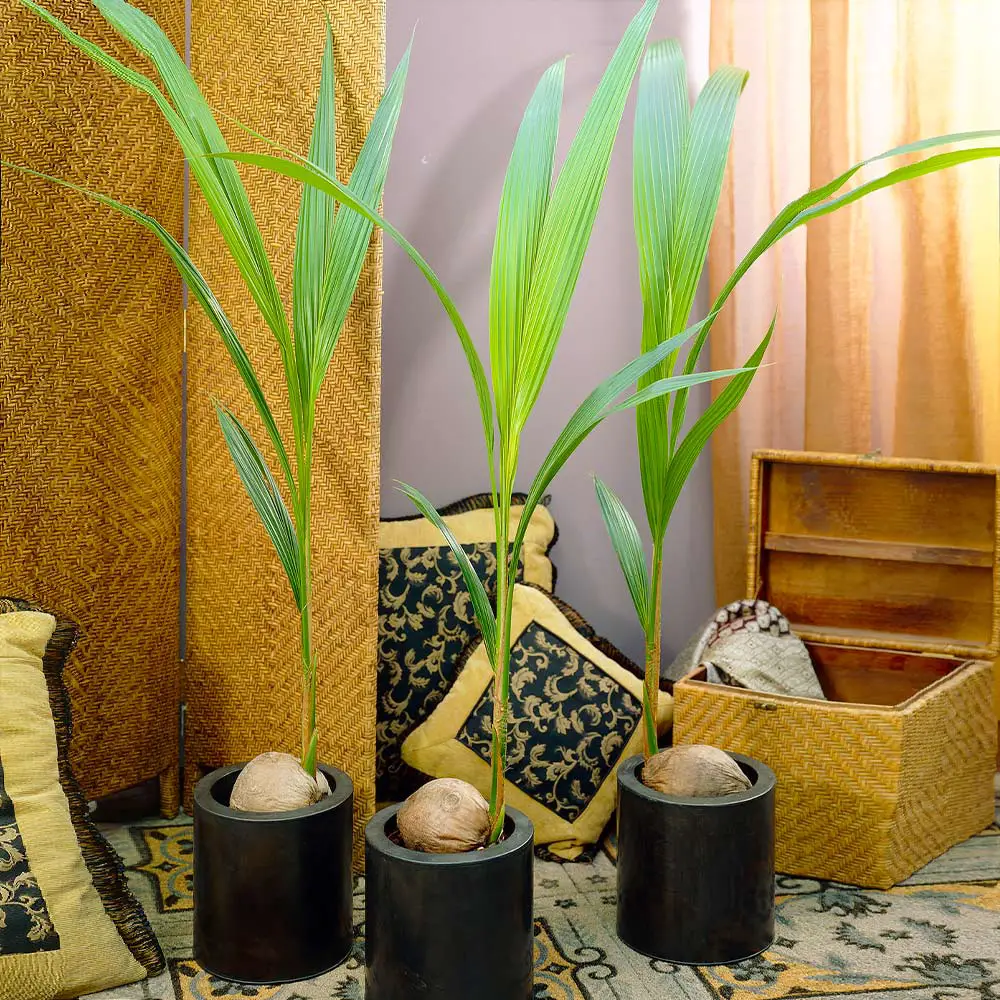
There’s no cutting, no division—you grow them from the coconut itself.
Two options:
- Start from a sprouted coconut (takes patience)
- Buy a young dwarf coconut palm (much easier)
If you go the coconut route, expect a 4–6 month wait before you even see growth.
Honestly, most indoor growers are better off starting with a plant already growing. It saves time and avoids a lot of frustration.
Common Problems and Pests
Most issues come down to environment—not pests.
Yellowing Leaves
Usually caused by low nutrients or inconsistent watering. Start by adjusting feeding and watering before anything else.
Brown Leaf Tips
Low humidity is the most common cause. Indoor air is often too dry, especially in winter.
Slow or No Growth
Almost always a light issue. These need strong, direct light to grow properly.
Root Rot
Overwatering or poor drainage. If the soil stays wet, the roots will eventually fail.
Pests
Watch for spider mites, scale, and mealybugs.
Treat early with:
- Neem oil
- Insecticidal soap
Catch them early and it’s easy. Let it go too long and it turns into a bigger problem.
Growing Coconut Trees in Containers FAQs
Can you really grow a coconut tree indoors?
Yes, growing coconut trees in containers indoors is possible, but they need strong light, warmth, and humidity. Most are grown as ornamental plants rather than for fruit.
Will a coconut tree produce coconuts indoors?
It’s unlikely. Even under good conditions, indoor coconut palms rarely produce fruit. Most growers keep them for their tropical appearance.
How long do coconut trees live in containers?
Typically 3–5 years indoors. With excellent care, they may last longer, but they are not permanent houseplants.
What is the best soil for growing coconut trees in containers?
A mix of coco coir and perlite works best. It provides drainage while holding enough moisture for steady growth.
How often should you water a coconut palm indoors?
Water when the top 1–2 inches of soil dry out. Keep the soil lightly moist, but never soggy.
Final Thoughts
Growing coconut trees in containers is one of those projects that sounds easier than it is—but it’s absolutely doable if you understand what the plant needs.
The biggest things to focus on are light, warmth, and drainage. Get those right, and the rest falls into place.
Just go in with realistic expectations. You’re growing a tropical palm indoors—not a beach tree that’s going to load up with coconuts.
But even without fruit, it’s a pretty unique plant to have sitting in your space.
Find Dwarf Coconet Palm Trees On Amazon