
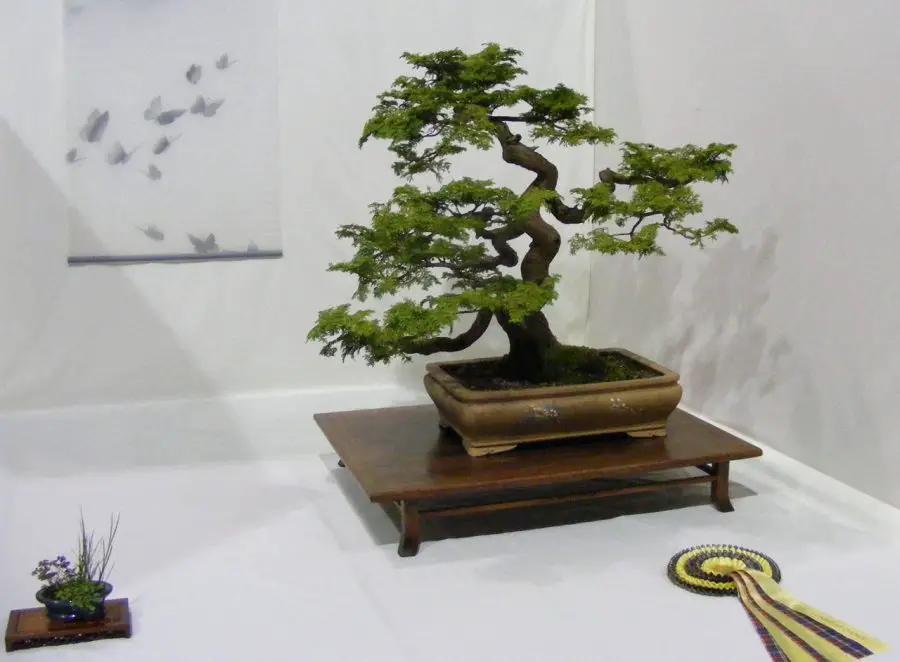
Low Light Bonsai for Indoors can add the beauty of miniature trees to spaces that don’t receive strong natural sunlight. While no bonsai truly thrives in deep shade, several species tolerate lower light levels better than others and adapt well to indoor growing conditions.
Choosing the right species is the key to success. Some bonsai trees struggle indoors, while others remain healthy and attractive with bright indirect light and proper care.
In this guide, you’ll discover the best low-light bonsai trees for indoors, how to care for them, and where to place them for the healthiest growth.
What You’ll Learn 🌳
- 🏠 Which bonsai trees tolerate lower indoor light
- ☀️ How much light indoor bonsai actually need
- 🌱 The strengths of each recommended species
- 💧 Watering and humidity requirements
- 🪴 Best locations inside your home
- ⚠️ Common low-light bonsai problems
- ✅ Tips for long-term success indoors
Quick Answer: What Are the Best Low-Light Bonsai Trees for Indoors?
The best low-light bonsai trees for indoors include Ficus Bonsai, Chinese Elm, Hawaiian Umbrella Tree, and Dwarf Jade. These species adapt better to indoor conditions than many traditional bonsai trees and can tolerate lower light levels while maintaining healthy growth.
While these bonsai are more forgiving of reduced light, they still perform best near a bright window or under supplemental grow lights. Consistent watering, good drainage, and occasional pruning will help keep them healthy and attractive indoors.
Introduction To Low Light Bonsai For Indoors
Hey plant lovers! Looking for a new way to bring a touch of green into your indoor space?
A low-light bonsai indoor tree might just be the answer! These little trees not only look great but are also perfect for those who don’t have a lot of natural light in their homes.
In this guide, we’ll show you the best low-light bonsai for indoors.
The good news is that they are pretty easy to care for and will thrive in your indoor environment making things even better.
These tiny trees also don’t take up much space with their small pots so you can keep several types if you want.
Oh, they can live for a long time with the right care. So, let’s get started and discover the perfect low-light bonsai tree for your home!
What is Bonsai and Why Keep Them Indoors?

Bonsai is the art of growing miniature trees in pots, which originated in China and has since been popularized in Japan.
People like to keep bonsai trees indoors for a variety of reasons.
They add beauty and nature to indoor spaces, can be used for meditation and relaxation, and are a fun and rewarding hobby.
Importance of Low Light Bonsai for Indoor Environments
While many outdoor bonsai trees require lots of light and outdoor environments to thrive, there are certain varieties that are perfect for indoor spaces with low light.
These low-light bonsai trees for indoors are ideal for apartments or homes with minimal natural light and are easy to care for.
Even if you don’t have any natural light, a small grow light can provide enough artificial lighting.
Overview Of 5 Best Low Light Bonsai For Indoors
In this post, we’ll explore the best low-light bonsai for indoors and give you an in-depth look into their care requirements.
We’ll cover the top 5 low light bonsai trees that are suitable for indoor environments, as well as provide tips for growing and maintaining them indoors.
So, whether you’re a bonsai beginner or a seasoned pro, you’ll find something useful in this guide. Let’s get started!
What is Low Light Bonsai and Why it is Important for Indoors?
Hey plant lovers! Let’s dive into Section 1 of our guide to the best low-light bonsai for indoors.
In this section, we’ll explore what low-light bonsai is and why it’s important for indoor environments.
You’ll learn the benefits of bonsai and discover the types of indoor low-light bonsai trees that are perfect for the growing conditions in your home.
So, let’s get started and uncover the magic of bonsai!
Low Light Bonsai and Why it is Important for Indoor Environments
Low-light bonsai trees are able to thrive in low-light environments, making them perfect for indoor spaces that don’t have much natural light.
They are ideal for apartments or homes with minimal sunlight exposure, and can even be used to purify indoor air.
Bonsai trees are important for indoor environments because they allow people to enjoy the beauty of nature without having to go outside.
Benefits of Low Light Bonsai For Indoors
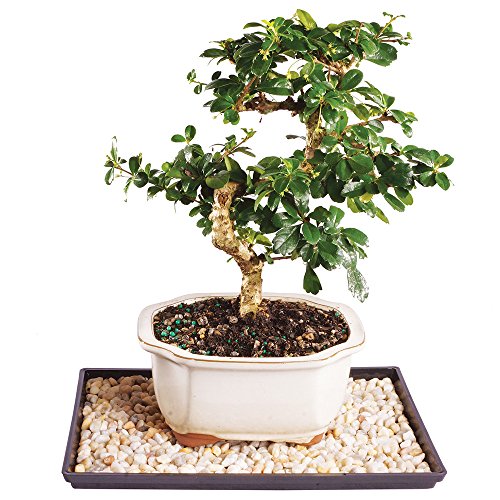
Aside from their aesthetic appeal, bonsai trees offer several benefits for indoor environments.
They help to purify indoor air, reduce stress levels, and even improve concentration and productivity.
They are also relatively easy to care for and can be a great way to introduce beginners to the art of bonsai.
Types of Indoor Low Light Bonsai Trees For Indoors
There are several types of bonsai trees that are perfect for indoor environments.
Some of the most popular varieties include the Chinese Elm, Ficus Bonsai, and Japanese Maple.
These trees are all able to thrive in low light and require minimal care, making them perfect for indoor bonsai enthusiasts.
Best Low-Light Bonsai Trees for Indoors
In Section 2 of our guide, we’ll be exploring the top 5 best low-light bonsai trees for indoors.
Whether you’re a beginner or an experienced gardener or just a bonsai lover at heart, these types of bonsai trees are perfect for anyone looking to add a touch of nature to their indoor space.
We’ll give you a detailed look at each of the best bonsai trees, including their unique characteristics, care requirements, and more.
So, let’s get started and find out which bonsai tree is perfect for you!
Low-Light Bonsai Comparison Table
Japanese Maple❌Moderate Shade OutdoorsModerate
| Species | Indoor Friendly | Light Tolerance | Difficulty |
|---|---|---|---|
| Ficus | ✅ | Excellent | Easy |
| Chinese Elm | ✅ | Good | Easy |
| Hawaiian Umbrella Tree | ✅ | Very Good | Easy |
| Dwarf Jade | ✅ | Moderate | Easy |
| Fukien Tea | ✅ | Good | Moderate |
Top 5 Low-Light Bonsai Trees for Indoors
Here is a list of the best indoor bonsai trees for low-light conditions:
- Chinese Elm (Ulmus parvifolia)
- Ficus Bonsai (Ficus benjamina)
- Fukien Tea (Carmona retusa)
- Hawaiian Umbrella Tree (Schefflera arboricola)
- Dwarf Jade (Portulacaria afra)
Characteristics and Ideal Environment for Each Tree
Chinese Elm (Ulmus parvifolia):
This tree is a popular choice for bonsai enthusiasts due to its adaptability and ease of care.
It has small leaves that turn a beautiful shade of yellow in the fall, making it an attractive addition to any indoor space.
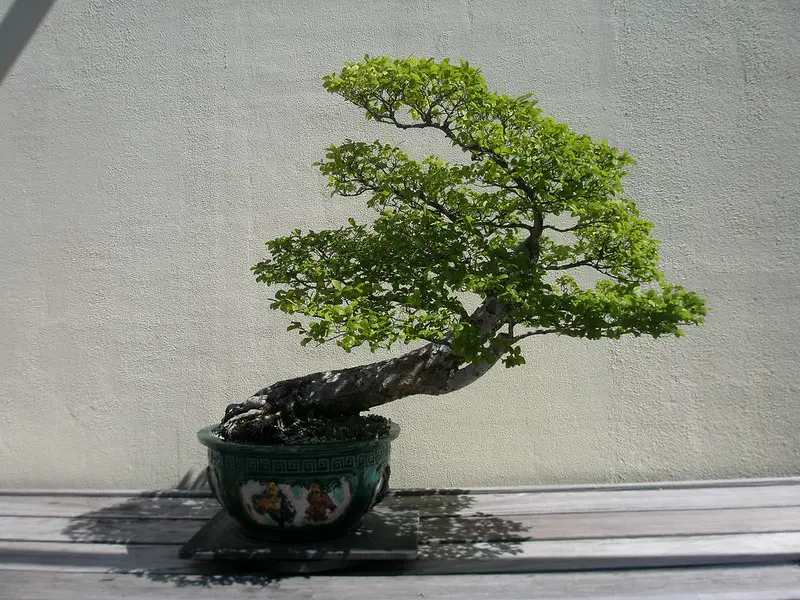
Ficus Bonsai Tree (Ficus benjamina):
Known for its ability to purify indoor air, the Ficus Bonsai is a great choice for those looking for a low-maintenance tree.
It has dark green leaves and can thrive in low-light environments. Ficus trees are probably the most popular low-light indoor bonsai plants.

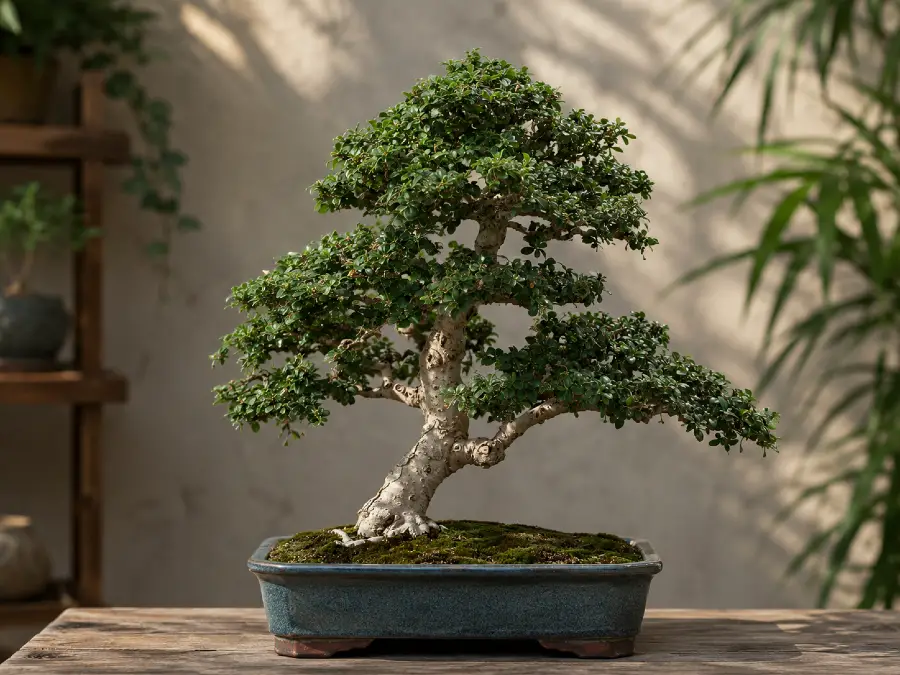
5. Fukien Tea (Carmona retusa)
Fukien Tea is a popular indoor bonsai tree known for its small glossy leaves, delicate white flowers, and attractive bark. It adapts well to indoor environments and can tolerate lower light conditions better than many traditional outdoor bonsai species.
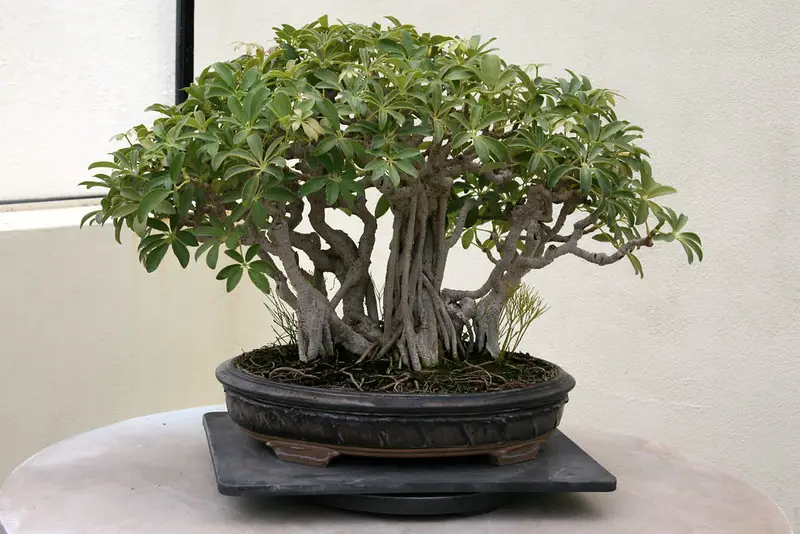
Hawaiian Umbrella Tree (Schefflera arboricola):
This tree has glossy green leaves that resemble an umbrella, hence the name. It is perfect for those who want a tree with a unique appearance that can also thrive in low-light environments.
Dwarf Jade (Portulacaria afra):
Also known as the “elephant bush,” this tree has thick, succulent leaves and a unique trunk that can be trained to grow in interesting shapes.
It is a hardy plant that can handle low light and low humidity environments.

Care Requirements for Each Tree
Each of these trees has its own unique care requirements. However, they all require well-draining soil, regular watering, and occasional fertilization.
Additionally, pruning is necessary to maintain their shape and promote healthy growth.
Make sure to research the specific care requirements for each tree to ensure it thrives in your indoor environment.
Tips for Growing Low-Light Bonsai Trees Indoors
Hey there, plant lovers! In Section 3 of our guide, we’ll be sharing some helpful tips for growing low-light bonsai trees indoors.
Growing bonsai trees indoors can be a bit tricky, but with the right techniques and a little patience, you can create a beautiful indoor garden.
From choosing the right location to ensuring proper watering and fertilization, we’ve got you covered.
So, let’s dive in and learn some tips and tricks for growing healthy and happy low-light bonsai trees indoors!
Tips for Growing and Maintaining Low-Light Bonsai Trees Indoors
Choose the Right Location:
Bonsai trees require indirect sunlight, so it’s important to choose a location in your home that receives enough light but isn’t too bright.
If you use a south-facing window you may want to place your bonsai trees behind a sheer curtain to filter the light.
Even north-facing windows can be a good choice, as they provide consistent but low levels of indirect light.
Maintain Proper Humidity:
Bonsai trees require high humidity to thrive, especially in dry indoor environments.
To maintain proper humidity levels, you can use a humidifier, place a tray of water near your tree, or mist the leaves with water regularly.
Watering and Drainage:
Proper watering and drainage are crucial to the health of your bonsai tree.
Water your tree when the soil feels dry to the touch and make sure to use well-draining soil.
To prevent water from accumulating in the pot, make sure there are drainage holes at the bottom.
Importance of Humidity and How to Maintain it Indoors
Why Humidity is Important:
Bonsai trees are native to humid environments, so they require high levels of humidity to thrive.
Without adequate humidity, your tree may suffer from leaf drop, dryness, and other health issues.
How to Maintain Humidity: To maintain proper humidity levels indoors, you can use a humidifier, place a humidity tray of water near your tree, or mist the leaves with water regularly.
You can also group your plants together to create a microclimate that promotes high humidity levels.
Importance of Proper Watering and Drainage
Why Proper Watering is Important:
Overwatering or underwatering can be detrimental to the health of your bonsai tree.
Too much water can cause root rot, while too little water can cause the tree to dry out and die.
How to Water and Drain Properly:
It’s a good idea to only water your tree when the soil feels dry to the touch, and make sure to use well-draining soil.
To prevent water from accumulating in the pot, make sure there are drainage holes at the bottom.
You can also use a moisture meter to determine when your tree needs water.
Suggestions for Lighting and Temperature Control
Lighting:
Bonsai trees require indirect sunlight, so it’s important to choose a location in your home that receives enough natural light but isn’t too bright.
If natural light isn’t available, you can use artificial grow lights to provide your tree with the necessary light.
Temperature Control:
Bonsai trees prefer moderate temperatures between 60 and 75 degrees Fahrenheit.
They do fine with room temperature but avoid placing your tree near drafty windows or doors and keep it away from heating and cooling vents.
You can also use a thermometer to monitor the temperature in your home and adjust it as necessary.
Common Low-Light Bonsai Problems
Leggy Growth
Long, stretched growth is often a sign that your bonsai needs more light.
Leaf Drop
Sudden leaf loss can result from low light, inconsistent watering, or environmental changes.
Slow Growth
Many bonsai grow more slowly indoors, especially during winter months.
Yellowing Leaves
Yellow leaves can indicate watering issues, poor drainage, or insufficient light.
Low-Light Bonsai FAQs
Can bonsai survive in low light?
Some bonsai species tolerate lower light levels, but all bonsai benefit from bright indirect light whenever possible.
What is the easiest low-light bonsai tree?
Ficus is often considered one of the easiest indoor bonsai trees because it adapts well to normal household conditions.
Do low-light bonsai need grow lights?
Not always, but supplemental lighting can significantly improve growth and overall health.
Can I grow a bonsai in a windowless room?
Only if you provide adequate artificial lighting using quality grow lights.
How often should I water indoor bonsai?
Water when the soil begins to dry rather than following a fixed schedule.
5 Best Low Light Bonsai For Indoors Final Thoughts
Low-light bonsai trees make it possible to enjoy the beauty of bonsai even when your home doesn’t receive strong natural sunlight. Choosing species such as Ficus, Chinese Elm, Hawaiian Umbrella Tree, or Dwarf Jade can dramatically improve your chances of success.
While these species tolerate lower light conditions better than many traditional bonsai trees, they still benefit from bright indirect light, proper watering, and good drainage.
With the right species and a little patience, you can create a beautiful indoor bonsai collection that thrives for years to come.
Low-light bonsai trees are a great option for those who want to bring the beauty of nature indoors but don’t have access to natural light.
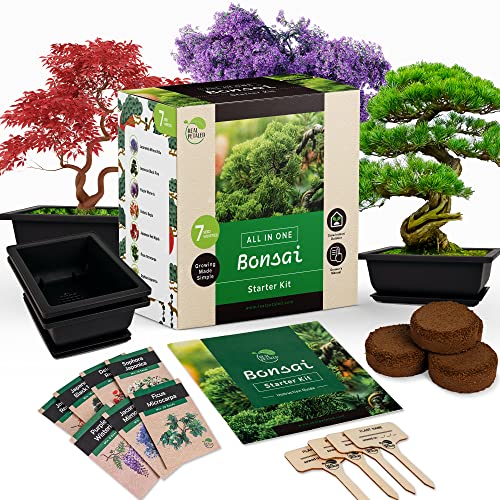
They make a great focal point and an excellent choice for a living room and add a touch of green to your home. Get started with a kit.
Top 5 low light bonsai trees for indoors and care requirements:
We’ve discussed the top 5 low light bonsai trees that are ideal for indoor environments.
These include the Chinese elm, Ficus, Japanese maple, Jade plant, and Hawaiian umbrella tree.
Each tree has unique care requirements, such as the right amount of water, fertilizer, and light.
We’ve provided detailed information on how to care for each tree to ensure they thrive in your home.
A final takeaway for readers interested in growing low light bonsai trees indoors:
Growing low-light bonsai trees indoors can be a rewarding experience, but it’s important to choose the right tree for your environment and to provide proper care.
With the right information and a bit of effort, you can create a beautiful and thriving indoor bonsai garden.
Remember to take into account the specific needs of each tree, such as water, fertilizer, and light, and monitor the humidity levels in your home.
With these tips in mind, you’ll be well on your way to becoming a successful bonsai tree grower.