
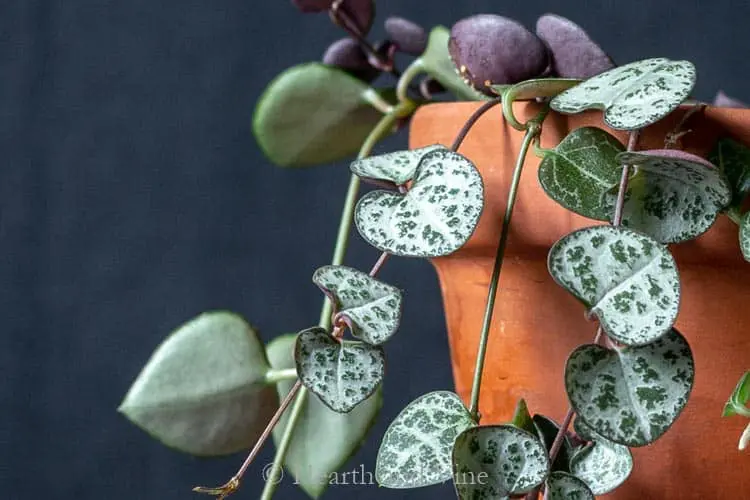
String of Hearts plant care is all about bright light, fast-draining soil, and letting the plant dry between waterings. This trailing succulent, known as Ceropegia woodii, is loved for its delicate heart-shaped leaves and long cascading vines.
Native to South Africa, String of Hearts stores water in its leaves and small underground tubers, making it much more drought tolerant than many trailing houseplants. That makes it a great choice for hanging baskets, shelves, and bright windows.
With the right care, this plant can produce vines several feet long and even bloom with unusual lantern-shaped flowers. In this guide, you’ll learn how to grow String of Hearts indoors, keep it full, and fix common problems.
What You’ll Learn
- How much light String of Hearts needs for compact trailing growth
- How to water without causing root rot
- The best soil and pots for healthy roots
- How to make your plant fuller and more compact
- Easy propagation methods using cuttings and tubers
- How to spot and fix common String of Hearts problems
Quick Answer
String of Hearts grows best indoors in bright indirect light, loose fast-draining soil, and pots with drainage holes. Let the soil dry fully between waterings, keep temperatures warm, and prune long vines to encourage fuller growth.
What Is A String Of Hearts Plant?
The string of hearts or Ceropegia woodii is a plant from South Africa that is often grown in hanging baskets.
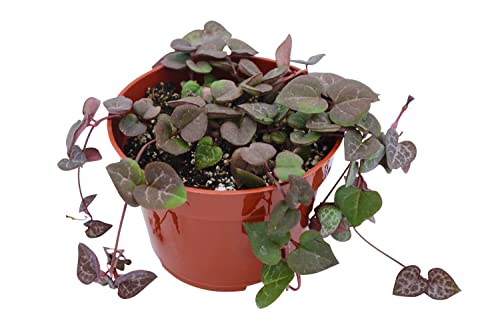

In warmer climates, it can be grown outdoors but in temperate climates, it is grown indoors. It is an easy plant to grow using our string of hearts plant care tips.
Ceropegia Woodii Flowers
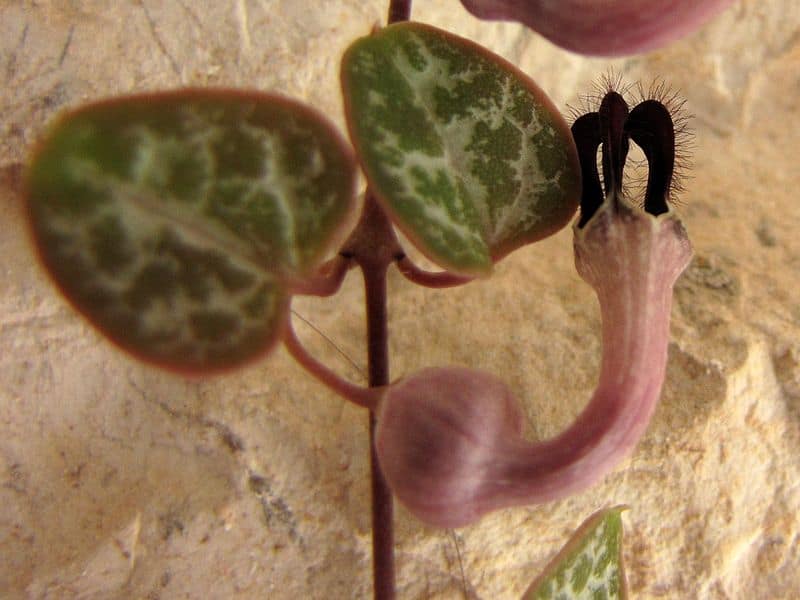
The chain of hearts plant produces some of the most unique flowers of any house plant.
The only thing that is remotely similar is nepenthes or tropical pitcher plants.
String Of Hearts Plant Care Tips
This plant does not grow tall but it can have a spread of 2-4 meters which is 6 to 12 feet.
You will want to place it up high for the full effect and you can prune the trailing branches back. The cuttings can be used to start more.
String Of Hearts Plant Care Reference Guide
| Characteristic | Details |
|---|---|
| Common Name | String of Hearts |
| Botanical Name | Ceropegia woodii |
| Native Habitat | South Africa, Swaziland, Zimbabwe |
| Plant Type | Succulent trailing vine |
| Growth Pattern | Trailing, cascading stems with tubers |
| Mature Size | 6 in tall, trailing up to 6+ ft long |
| Watering | Let soil dry between waterings; water sparingly in winter |
| Light/Sun Exposure | Bright, indirect light; tolerates some morning sun |
| Soil Type | Well-draining cactus or succulent mix |
| Soil pH | 6.0–6.5 (slightly acidic) |
| Temperature | 60–85°F (16–29°C) |
| Humidity | Average household humidity; avoid high humidity |
| Bloom Time & Flower Color | Summer to fall; small tubular pinkish-purple flowers |
| Potential Problems | Overwatering, root rot, mealybugs, leggy growth from low light |
| Repotting | Every 1–2 years or when rootbound |
| Hardiness Zones (USDA) | 10–12 (grow indoors in cooler climates) |
String Of Hearts Light Requirements
The string of hearts plant (Ceropegia woodii) is a beautiful, trailing succulent that is native to South Africa.
The plant gets its name from its heart-shaped leaves, which are connected by string-like stems.
The string of hearts plant is an easy plant to care for and it can thrive in a wide range of conditions.
However, the plant does have some specific light requirements.
In general, the string of hearts plant prefers bright, indirect sunlight.
However, the plant can also tolerate some direct sun, as long as it is not too intense.
If the plant does not receive enough light, it will begin to stretch out and become leggy.
Conversely, if the plant receives too much light, its leaves will start to turn red or yellow.
It is important to find a balance that works for your particular Ceropegia plant.
Best Indoor Locations For String Of Hearts
Placement matters a lot with String of Hearts because light directly affects how compact and colorful the vines stay.
East-Facing Windows
Usually the best spot for bright gentle morning light.
South-Facing Windows
Great if the light is filtered or softened during peak afternoon hours.
Bright Shelves
Perfect for letting the vines trail naturally while staying close to a good light source.
Hanging Baskets Near Windows
One of the best ways to show off its long cascading growth.
String Of Hearts Temperature
This vining plant is easily recognized by its heart-shaped leaves, which are arranged along slender stems.
However, one thing that this plant requires is a warm consistent temperature.
This plant likes it warm. It can be kept in the 60-80 degree range but don’t let temperatures fall below 60, and 70 degrees would be a better low temperature to keep it happy.
A string of hearts that is exposed to sudden temperature changes is likely to experience stress and may even lose leaves.
For best results, keep your string of hearts in a spot that receives indirect sunlight and maintain a consistent room temperature.
With proper care, your string of hearts will thrive and produce an abundance of beautiful heart-shaped leaves.
String Of Hearts Soil
String of Hearts needs loose, fast-draining soil to prevent root rot. Heavy potting soil holds too much moisture and can quickly cause problems.
A simple mix of 70% coco coir and 30% perlite works very well. This keeps the roots aerated while allowing enough moisture for the plant to absorb before drying out.
Always use a pot with drainage holes. Terracotta pots are especially helpful because they allow excess moisture to evaporate faster.
Repot every 1–2 years or when tubers begin crowding the pot.
String Of Hearts Care – Watering
The string of hearts (Ceropegia woodii) is a popular houseplant that is known for its trailing stems and heart-shaped leaves.
Though it is drought tolerant, the string of hearts does require regular watering.
The best way to water a string of hearts is to allow the soil to dry out completely between watering.
This plant does not like to be kept too wet, as this can lead to root rot.
When watering, be sure to water thoroughly, until water runs out of the drainage holes at the bottom of the pot.
Allow the plant to drain for a few minutes before putting it back in its place.
With proper care, your string of hearts should thrive and provide you with beautiful foliage for many years to come!
String Of Hearts – Fertilizer
String of hearts fertilizer typically contains a balanced mix of nitrogen, phosphorus, and potassium, which helps to promote strong growth and vibrant foliage.
It’s important to use the fertilizer sparingly, however, as too much can lead to leaf burn.
Once every month should be sufficient. Too much fertilizer can do more harm than good so don’t overdo it.
String Of Hearts Problems


However, String of hearts can sometimes experience problems, such as yellow leaves or stunted growth.
One possible cause of these problems is a lack of light. String of hearts needs bright, indirect sunlight in order to thrive.
If the plant is not getting enough light, its leaves may turn yellow and it will stop growing.
Another problem that string of hearts can experience is overwatering. The plant prefers to be kept on the dry side, so be sure to allow the soil to dry out completely between waterings.
Overwatering can cause the roots to rot, also leading to yellowing leaves and stunted growth.
String Of Hearts Troubleshooting
Yellow leaves: Usually caused by overwatering or poor drainage.
Leggy vines: A sign the plant needs more light.
Shriveled leaves: Usually means the plant needs water.
Mushy stems: A warning sign of root rot from staying too wet.
Slow growth: Often normal in winter, but can also point to low light or low temperatures.
How To Make String Of Hearts Fuller
String of hearts (Ceropegia woodii) is a cascading plant native to South Africa, where they grow in rocky, sandy soils. Their uniqueness lies in their variegated heart-shaped leaves.
String of hearts is easy to care for, but there are a few things you can do to encourage fuller growth.
First, make sure you’re giving them enough light. They prefer bright, indirect sunlight, so if you’re keeping them indoors, placing them near an east window is ideal.
Second, water them regularly, allowing the soil to dry out between waterings.
Lastly, fertilize every few weeks during the growing season. With a little TLC, your string of hearts will soon be spilling over with charm!
You can also plant cuttings or tubers from your plant directly in the original pot. Trim back really long stems. The new planting will help fill out your plant once it roots.
Propagating String Of Hearts
Ceropegia is an easy plant to propagate. This plant can easily grow branches 8 feet long or more. You will want to prune your plant and these cuttings can be rooted.
You can root cuttings in soil or in water. Use cuttings about 6 inches long with several nodes and leaves on top.
You can even bury growing stems in their pot and remove them once rooted. Then move them to a new pot.
Remove any lower leaves that will be buried in water or soil.
String of Hearts also grows bulbils on its stems. They look like clay balls. This may explain why it is also called a rosary vine.
These bulbils or tubers can be set on moist soil and they will grow roots and produce new plants.
You can make your String of Hearts plant fuller by trimming back all your vines and planting these tubers in the pot.
🌿 Explore More Indoor Plant Guides
Want to keep building your indoor plant collection? These beginner-friendly guides can help you choose the right plants for your space, pets, and growing style.
String Of Hearts FAQs
How often should I water String of Hearts?
Only water when the soil is fully dry. This is usually every 1–2 weeks in active growth and less in winter.
Why is my String of Hearts getting leggy?
Leggy growth usually means it needs more light. Move it closer to a bright window.
Can String of Hearts handle direct sun?
It can handle gentle morning sun, but harsh afternoon sun can burn the leaves.
How do I make String of Hearts Fuller?
Trim long vines and plant cuttings or tubers back into the same pot.
Is String of Hearts easy to propagate?
Yes. Stem cuttings, tubers, and layering all work very well.
Final Thoughts: String Of Hearts Plant Care
String of Hearts is one of the best trailing succulents for indoor growers who want something unique but easy to manage. Its heart-shaped leaves and long vines make it perfect for shelves, hanging baskets, and bright windows.
The biggest keys are bright light, dry periods between watering, and fast-draining soil. Once you dial those in, this plant becomes very easy to grow and propagate.
With a little patience, your String of Hearts can become one of the most impressive trailing plants in your collection.