
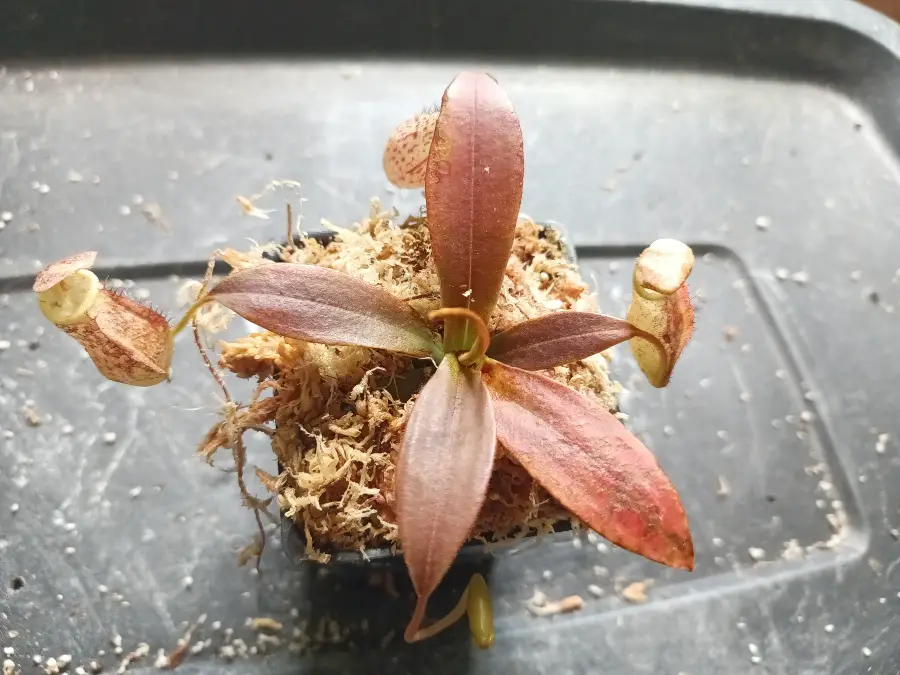
I’ve got a new Nepenthes spectabilis coming in, and this is one I’ve been wanting to try again in my terrarium setup for a long time.
If you’re growing highland Nepenthes indoors, this is one of those plants that can really become a centerpiece once it settles in. The pitchers are incredibly detailed, the patterning is wild, and when this plant is happy it has a look that is hard to match.
This post is about more than just a plant profile. It is also about trying a species again with a better setup, better information, and a much better understanding of what highland Nepenthes actually need indoors.
🌱 What You’ll Learn
- Why Nepenthes spectabilis stands out among highland Nepenthes
- How I am growing this plant in a terrarium setup indoors
- What went wrong the first time I tried this species
- The temperature, lighting, humidity, and airflow it should prefer
- Why simple substrate and steady moisture often work better than overcomplicated mixes
- What I expect from this plant as it settles in and begins climbing
🎥 Nepenthes spectabilis Unboxing (First Look)
I’ll be adding my unboxing video here so you can see the plant right out of the box, get a first look at the condition it arrived in, and follow along as I place it into the terrarium.
🌿 Why I’m Trying Nepenthes spectabilis Again
I’ve actually grown Nepenthes spectabilis before, and it did not turn out the way I wanted.
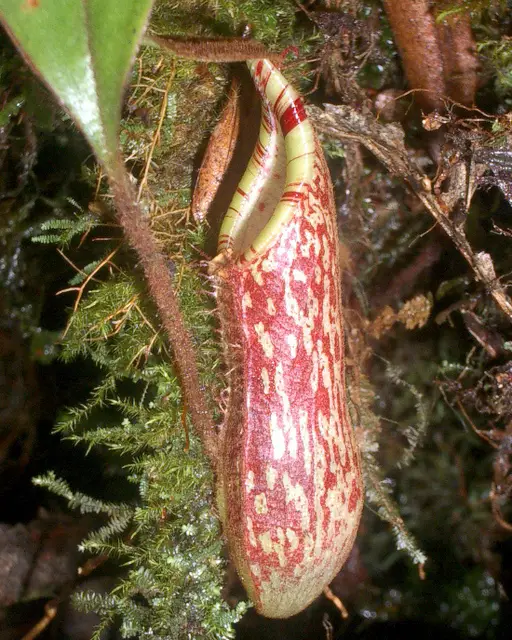
It did pitcher eventually, and some of those pitchers were honestly some of the most beautiful pitchers I had seen at the time. The shape, the markings, and the overall look of the plant were exactly why I wanted to grow it in the first place.
But over time the plant declined, and eventually I lost it.
Looking back, I’m not really surprised. That was years ago, and there simply was not much solid information out there. At the time, most advice was very basic. Use peat moss. Use pure water. Keep it wet. Beyond that, there was not much discussion about things like airflow, lighting intensity, highland versus lowland conditions, or how much temperature drop really matters.
That makes a huge difference with Nepenthes, especially a species like spectabilis that comes from higher elevations and is used to cooler nights and consistently humid, airy conditions.
So this time around, I wanted to try it again with a much better setup and a much better understanding of what I am actually trying to recreate indoors.
I also found a clone that sounds like it should be a stronger grower than the plant I had years ago, which makes me even more interested in seeing how it performs in a controlled terrarium environment.
This plant is going into a dedicated Nepenthes setup where:
- It will have consistent moisture from below
- It will have room to climb as it matures
- Lighting is already established
- Humidity should stay stable without sealing the tank up too tightly
- Airflow should be much better than what I was working with years ago
So in a lot of ways, this is a second chance plant for me. That makes it more interesting than just another care post. I want to see how it responds when the setup actually matches the species better.
🌿 Nepenthes spectabilis Giant (BE-3322)
The plant I ordered is Nepenthes spectabilis Giant, BE-3322 from Borneo Exotics. This form is known for producing especially robust pitchers, and it comes from a cross of two strong parent plants.
Nepenthes spectabilis is native to Sumatra and is one of the more eye-catching highland Nepenthes in cultivation. It is known for pitchers with dramatic patterning and a look that makes it stand out immediately in a collection.
What caught my attention about this specific form is that it is supposed to be a better grower than more typical spectabilis plants, which is exactly what I wanted after my first experience with the species.
🌄 Natural Habitat
Nepenthes spectabilis grows in the highlands of Sumatra at elevations around 1,400 to 2,200 meters. That tells you a lot right away about what kind of plant this is.
It is used to bright but filtered light, steady moisture, cool nights, frequent humidity, and moving air. That is why this species fits so well into a terrarium or indoor grow setup that can provide stable conditions.
This is not the kind of plant I would want to stick on a random windowsill and hope for the best. It really makes more sense in a controlled environment where you can manage the major variables instead of letting the room decide everything.
🌡️ Temperature
- Day: 72–78°F
- Night: 50–58°F
That cool-night range is one of the biggest reasons I think this plant should do better for me this time. My current setup is much closer to what a true highland Nepenthes wants than anything I had available years ago.
It is still worth saying that plants can be somewhat flexible, especially once acclimated, but if you want spectabilis to really look good and grow steadily, I think giving it cooler nights is going to matter.
💡 Lighting
Spectabilis responds well to bright LED lighting, but like other Nepenthes, it does not need to be blasted with extreme intensity the way some Heliamphora can be pushed.
- 12–14 hours of light daily
- About 150–250 PPFD is a reasonable working range
- Bright light helps pitcher development, but heat buildup needs to be avoided
In my setup, I plan to place this plant around mid-level rather than directly under the hottest and brightest zone. That should give it enough light to color up and pitcher well without turning lighting into a stress factor.
One thing I have learned over time is that distance from the light only means something if you know the strength of the fixture. A weak shop light and a powerful LED panel are two completely different situations, even if the distance sounds the same on paper.
So instead of thinking in terms of a fixed number of inches, I look at how the plant responds. Good leaf growth, steady tendril development, and pitcher formation tell you a lot.
💧 Humidity & Airflow
- Humidity: 70–90%
- Airflow: gentle but consistent
This is one of the big reasons a terrarium setup makes sense for spectabilis. You can keep humidity high without completely sacrificing airflow.
A lot of carnivorous plant problems indoors come from people chasing humidity by sealing everything up. That may sound right at first, but stagnant air creates its own issues. Nepenthes may like humidity, but they do not like stale air sitting around the leaves and pitchers.
That is one reason I like setups that stay humid but still breathe. The goal is not to turn the tank into a sealed swamp. The goal is to create a stable environment that stays moist, airy, and predictable.
🪴 Substrate
You can find very complicated Nepenthes mixes online, and some of them work well. But I have had good results keeping things simpler than that.
For this kind of setup, coco coir with a bit of perlite can work well, especially when the goal is to keep the media airy and evenly moist without letting it compact.
A fancy mix is not always necessary if the structure is right. What matters more is that the substrate stays open, drains well enough, and does not become a dense, soggy mass around the roots.
That is one reason I keep coming back to simple materials. They are easier to work with, easier to repeat, and easier to adjust if something is not working the way I want.
💦 Watering
This plant will be bottom watered continuously, and that is one of the biggest reasons I think it should do well in this setup.
Instead of heavy top watering and then waiting for the mix to dry back, I prefer steady moisture through capillary action. The goal is not saturation. The goal is consistency.
That means the root zone stays moist, but the pot is not sitting buried in deep water. For me, this is an easier and more predictable way to manage terrarium plants than having to individually water everything by hand all the time.
As with most Nepenthes, pure water still matters. Rainwater, RO water, or distilled water are the safest choices long term.
🌿 Growth Habit and What I Expect
One of the things I like about Nepenthes spectabilis is that it should not just sit there looking pretty. Once it settles in, this is the kind of plant that should start putting on real growth.
I am expecting:
- Steady vine growth once it acclimates
- Detailed lower pitchers first, then more height over time
- Tendrils that start reaching and climbing as the plant matures
- A better overall performance than I got from the species years ago
Because this is a climbing Nepenthes, I also want to give it room to grow upward naturally. That is another reason this terrarium setup makes sense. The plant does not have to stay cramped or constantly redirected from day one.
I also like the idea of turning this into a living post instead of a one-and-done care page. I can add updates, show how the pitchers develop, and compare what this stronger clone does versus what I remember from my earlier plant.
🌟 Final Thoughts
Nepenthes spectabilis is one of those plants that feels worth the extra effort. It is not just another green vine with pitchers. When it is happy, it becomes a real showpiece.
For me, this post is partly about the plant and partly about getting a second shot at a species I was not ready for the first time.
Now I have a better setup, better information, and a much clearer sense of what this plant should want. That makes this attempt a lot more interesting, and honestly, a lot more promising.
I’ll keep updating this post as the plant settles in and starts growing, because I think seeing the real progression is more useful than pretending every plant arrives perfect and stays that way.
🌿 Related Carnivorous Plant & Terrarium Guides
- Nepenthes truncata Terrarium Care: Light, Feeding & Growth
- Growing Nepenthes in Hanging Baskets (Light, Watering & Indoor Care)
- Terrarium Lighting for Carnivorous Plants: How Much Light?
- Terrarium Airflow: What Actually Matters
- Closed vs Open Terrariums: Which One Works Best?
- Water Quality for Carnivorous Plants: The Best Types
- Carnivorous Plant Terrarium Setup: Easy Indoor Tank Guide
❓ FAQs
Is Nepenthes spectabilis a highland Nepenthes?
Yes. Nepenthes spectabilis is considered a highland species and generally prefers warm days, cooler nights, steady humidity, and good airflow.
Can Nepenthes spectabilis grow in a terrarium?
Yes, and a terrarium can work very well if it provides stable humidity, decent airflow, bright light, and enough room for the plant to climb as it matures.
What temperatures are best for Nepenthes spectabilis?
A good target is around 72–78°F during the day and 50–58°F at night. That cool nighttime drop is one reason this species tends to do well in a highland setup.
What kind of light does Nepenthes spectabilis need?
Bright light works best, especially under LEDs, but it does not need extreme intensity. Around 150–250 PPFD is a practical range for indoor growing.
What substrate works for Nepenthes spectabilis?
A loose, airy mix works best. Coco coir with some perlite can work well as long as the media stays open and does not become compacted or waterlogged.
How should Nepenthes spectabilis be watered?
It should stay evenly moist, but not soaked. Pure water such as rainwater, RO water, or distilled water is the safest choice for long-term growth.
➡️ Next Post
Next: Nepenthes hamata Care: The Toothiest Indoor Pitcher Plant