
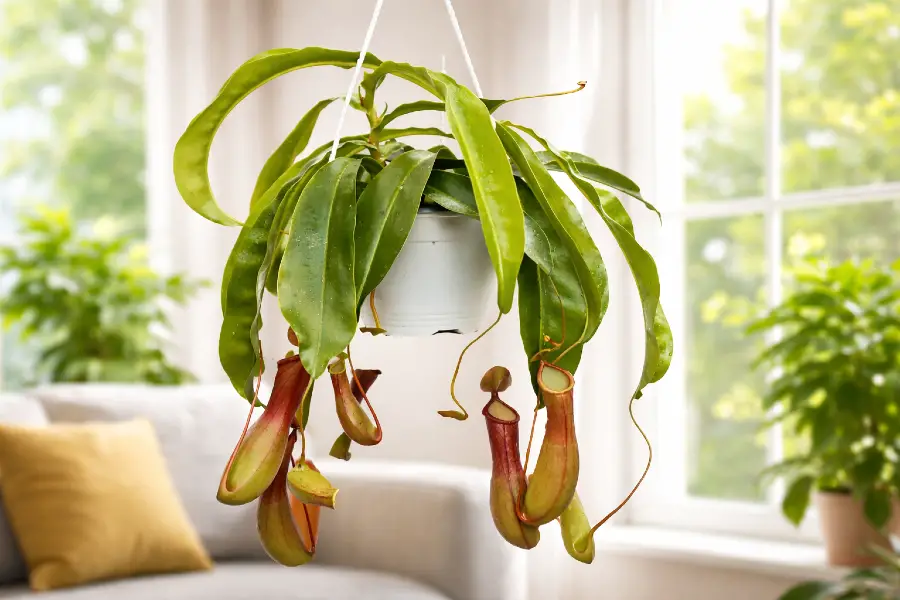
Growing Nepenthes in hanging baskets is one of the best ways to show off these plants, especially once the pitchers start forming and trailing down. But if you’ve tried it before and the plant stopped producing pitchers, there’s usually a reason.
These are tropical plants, and while they’re not as difficult as people make them out to be, they do need consistent moisture, strong light, and the right setup to really take off indoors.
In this guide, I’ll walk through how to grow Nepenthes in hanging baskets, what actually matters for light and watering, and how to avoid the common mistakes that cause them to stall out.
You Can Find Nepenthes Plants On Amazon
📚 What You’ll Learn
- Why hanging baskets work well for Nepenthes
- How much light Nepenthes need indoors
- The best way to keep soil consistently moist
- Why Nepenthes stop producing pitchers
- How to choose the right pot and growing medium
- How to grow Nepenthes successfully as indoor plants
🌿 Why Grow Nepenthes in Hanging Baskets?
Nepenthes naturally grow in a way that makes them perfect for hanging baskets. As they mature, they produce long leaves with tendrils that form pitchers, and those pitchers hang downward. A hanging setup lets the plant grow the way it wants to instead of being cramped on a shelf or windowsill.
It also turns them into a really unique display plant. Once they start producing pitchers regularly, you get that trailing effect that makes them stand out compared to most houseplants.
🌱 Understanding Nepenthes Growth Habits
Nepenthes are tropical carnivorous plants, but they are not bog plants like Venus flytraps or Sarracenia. They grow in humid, rainforest environments where the soil stays moist but not waterlogged.
That’s an important distinction. They want consistent moisture, but they do not want to sit in standing water. This is where many growers run into trouble.
Highland vs Lowland Types
There are different types of Nepenthes, and they have slightly different needs.
- 🌿 Highland varieties: Prefer warm days and cooler nights, and are usually easier to grow indoors
- 🌿 Lowland varieties: Prefer consistently warm temperatures and can be more challenging indoors
For most indoor setups, highland or intermediate types tend to be the easiest place to start.
💡 How Much Light Nepenthes Need Indoors
Light is one of the biggest factors in whether your Nepenthes will produce pitchers. You can keep the plant alive in lower light, but it often won’t pitcher.
If you’re growing indoors, especially in areas with long, gray winters, natural light alone may not be enough. Even a bright window can fall short during certain times of the year.
Using LED Grow Lights
LED grow lights work very well for Nepenthes and have become much more affordable. A decent light can cover a few feet of growing space and provide consistent lighting year-round.
If your plant is not producing pitchers, light is one of the first things to evaluate.
💧 Watering Nepenthes in Hanging Baskets
Nepenthes need consistent moisture, and this is where many setups fail. If the plant dries out too much, it will stop producing pitchers and may struggle to recover.
At the same time, you don’t want to keep the roots sitting in water like a bog plant. The goal is evenly moist—not soaked.
Why Self-Watering Planters Help
Hanging baskets can dry out faster than regular pots, especially indoors under lights. Using a self-watering planter can help maintain steady moisture and reduce the chances of the plant drying out.
- 💧 Helps keep soil consistently moist
- 💧 Reduces missed watering problems
- 💧 Makes hanging setups easier to manage
Another option is using a wicking bed using coco coir, which keeps moisture available without constant top watering.
🌾 Best Growing Medium for Nepenthes
Nepenthes grow best in a loose, airy medium that holds moisture without compacting. You want something that stays moist but still allows air to reach the roots.
Why Coco Coir Works Well
Coco coir is a great option because it holds moisture evenly and provides better aeration than peat. It also wicks water well, which makes it useful in self-watering or bottom-watering setups.
- 🌱 Holds moisture evenly
- 🌱 Improves root aeration
- 🌱 Works well with wicking systems
It’s also more sustainable compared to peat, which is harvested from bog environments.
❌ 👎 A Warning About Nepentes Soil!
Do not use potting soil or add any fertilizer to Nepenthes soils. They need a growing medium that does not provide nutrients. That’s why they evolved to eat bugs.
💧 Nepenthes Water Requirements (Can You Use Tap Water?)
Water quality is one of the most overlooked parts of growing Nepenthes, and it can make the difference between a plant that thrives and one that slowly declines.
These plants come from environments where water is very low in minerals. Because of that, they are not built to handle the dissolved salts and minerals found in most tap water.
Can Nepenthes Handle Tap Water?
Short answer: occasionally, yes—but not long term.
Most tap water contains minerals like calcium and magnesium. Over time, these build up in the growing medium and can lead to root damage, slower growth, and loss of pitchers.
- ⚠️ Mineral buildup in the soil
- ⚠️ Root stress or burn
- ⚠️ Reduced pitcher production
You might not see problems right away, but it tends to show up over time.
Best Water to Use
For consistent results, it’s better to use low-mineral water sources.
- 💧 Distilled water
- 💧 Reverse osmosis (RO) water
- 💧 Rainwater (if clean and collected properly)
These options prevent mineral buildup and keep the root zone healthier over time.
What About Occasional Tap Water?
If you use tap water once in a while, it’s usually not a big deal. The problem comes from repeated use, where minerals slowly accumulate in the growing medium.
What About Letting Tap Water Sit?
You’ll often hear that letting tap water sit overnight makes it safe to use, but that advice is outdated in many areas.
Modern water systems frequently use chloramine instead of chlorine, and chloramine does not evaporate out of the water. That means letting it sit does not solve the problem.
More importantly, even if chlorine were removed, the bigger issue is still the dissolved minerals. Those minerals stay in the water and continue to build up in the growing medium over time.
So while letting water sit might reduce chlorine in some cases, it does not make tap water safe for long-term Nepenthes care.
Why This Matters in Hanging Baskets
Hanging baskets tend to dry out faster, which means you end up watering more often. If you’re using tap water, that can speed up mineral buildup even more.
Using clean water combined with a consistent watering method—like a self-watering planter or a wicking bed using coco coir—helps keep conditions stable and reduces stress on the plant.
⚠️ Why Nepenthes Stop Producing Pitchers
One of the most common issues growers run into is a healthy-looking plant that stops producing pitchers. When that happens, it usually comes down to a few key factors.
- ⚠️ Not enough light
- ⚠️ Inconsistent watering
- ⚠️ Low humidity in some cases
If you correct those issues, many plants will start producing pitchers again over time.
🛠️ How to Set Up a Hanging Basket for Nepenthes
Setting up a hanging basket for Nepenthes is pretty straightforward, but a few small details make a big difference. The goal is to create a setup that keeps moisture consistent while still allowing good airflow around the roots.
What You’ll Need
- 🪴 A hanging basket or planter
- 🌱 Coco coir or a loose, airy growing mix
- 💧 A self-watering insert or plan for consistent watering
- 💡 Strong natural light or an LED grow light
Basic Setup Steps
- Fill the basket with a loose, well-draining medium like coco coir
- Place your Nepenthes so the roots are supported but not buried too deep
- Water thoroughly to evenly moisten the media
- Hang the basket where it will receive strong, consistent light
Once it’s set up, most of the work comes down to keeping moisture and light consistent.
🪴 Choosing the Right Hanging Basket
Not all hanging baskets work the same. Some dry out too quickly, while others hold too much water. You want something that gives you a balance.
What to Look For
- 🪴 Good drainage (but not too fast drying)
- 💧 Space for moisture retention
- 🌿 Enough room for roots to expand
Best Options
- 🌱 Plastic hanging baskets with liners
- 🌱 Self-watering hanging planters
- 🌱 Fabric-style baskets (with proper moisture control)
Self-watering planters are especially helpful if you want to reduce how often you have to check on moisture levels.
💧 Watering Tips That Actually Work
Watering is where most people run into trouble with Nepenthes, especially in hanging baskets. Because they are elevated, they tend to dry out faster than regular pots.
What You Want to Aim For
- 💧 Even moisture throughout the growing medium
- 💧 No long dry periods
- 💧 No standing water around the roots
If the plant dries out too much, it may stop producing pitchers. Once that happens, it can take time for it to recover.
Ways to Make Watering Easier
- 💧 Use a self-watering hanging planter
- 💧 Set up a wicking bed using coco coir nearby
- 💧 Check moisture regularly instead of waiting for the plant to show stress
The goal is consistency. These plants do best when they don’t swing between too dry and too wet.
💡 Getting Enough Light for Pitchers
Light is what drives pitcher production. Without enough light, Nepenthes will often grow leaves but stop forming pitchers.
Signs of Not Enough Light
- ⚠️ Leaves growing but no pitchers forming
- ⚠️ Slow or weak growth
- ⚠️ Long, stretched-looking leaves
Improving Light Indoors
- 💡 Place near a bright window
- 💡 Add an LED grow light for consistent coverage
- 💡 Keep lighting consistent year-round
If you’re in an area with darker winters, supplemental lighting can make a big difference.
🌡️ Temperature and Humidity Basics
Nepenthes are tropical plants, so temperature and humidity play a role, but they are often more adaptable than people expect.
Temperature Guidelines
- 🌡️ Highland types: Warm days, cooler nights
- 🌡️ Lowland types: Consistently warm temperatures
Humidity Tips
- 💧 Average indoor humidity can be enough for some plants
- 💧 Use a humidifier if your air is very dry
- 💧 Avoid placing near heating vents or dry air sources
While higher humidity helps, light and watering consistency are usually more important for keeping plants healthy and producing pitchers.
🌿 Final Thoughts on Growing Nepenthes in Hanging Baskets
Growing Nepenthes in hanging baskets is one of the easiest ways to turn these plants into a real focal point indoors. Once they start producing pitchers and trailing down, they don’t just look good—they look completely different from most houseplants.
The key is keeping things consistent. Good light, steady moisture, and a setup that doesn’t dry out too fast will get you much better results than constantly adjusting and guessing.
They’re not as difficult as people make them out to be. If you can grow most tropical houseplants successfully, you can grow Nepenthes—you just need to pay attention to light and watering.
You Can Find Nepenthes Plants On Amazon
🔗 Related Growing Guides
❓ Frequently Asked Questions
Can you grow Nepenthes in hanging baskets indoors?
Yes, Nepenthes grow very well in hanging baskets indoors as long as they get enough light and consistent moisture. Hanging setups also allow the pitchers to develop and hang naturally.
How often should you water Nepenthes in hanging baskets?
You should keep the growing medium consistently moist. Hanging baskets tend to dry out faster, so check moisture regularly or use a self-watering setup to maintain consistency.
Why is my Nepenthes not producing pitchers?
The most common reasons are not enough light or inconsistent watering. Increasing light and keeping the soil evenly moist will usually help restore pitcher production over time.
What is the best soil for Nepenthes in hanging baskets?
A loose, airy mix works best. Coco coir is a popular choice because it holds moisture evenly while still allowing airflow to the roots.
Do Nepenthes need high humidity indoors?
Higher humidity helps, but many Nepenthes can adapt to normal indoor conditions if light and watering are consistent. A humidifier can help if your air is very dry.
➡️ Next Post
Next: Nepenthes Terrarium Wicking Bed Setup (Complete Tank Build)