
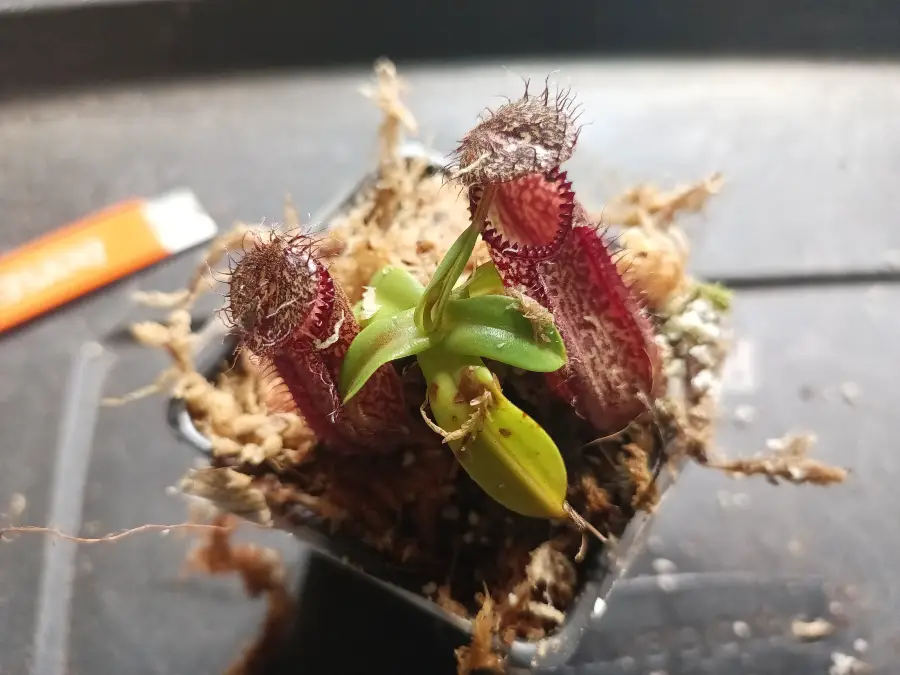
If you’ve ever seen Nepenthes hamata, you already know this isn’t a typical pitcher plant.
The first thing you notice are the teeth. Not just small ridges, but hooked, fang-like structures lining the pitcher that make this plant look like it could actually bite back.
This post follows my Nepenthes hamata setup from the start—unboxing, getting it into the terrarium, and how I’m planning to grow it indoors alongside other highland species.
🌱 What You’ll Learn
- Why Nepenthes hamata is known as the “toothiest” pitcher plant
- How I’m setting it up in a highland terrarium
- What makes hamata different from other Nepenthes
- The conditions it needs to grow well indoors
- What to expect as it adapts and starts producing pitchers
🎥 Nepenthes hamata Unboxing (First Look)
I’m adding my unboxing video here so you can see the plant right out of the box, how it arrived, and how I’m placing it into the terrarium alongside my other Nepenthes.
🌿 Why I Finally Bought Nepenthes hamata
I’ve wanted a Nepenthes hamata for a long time.
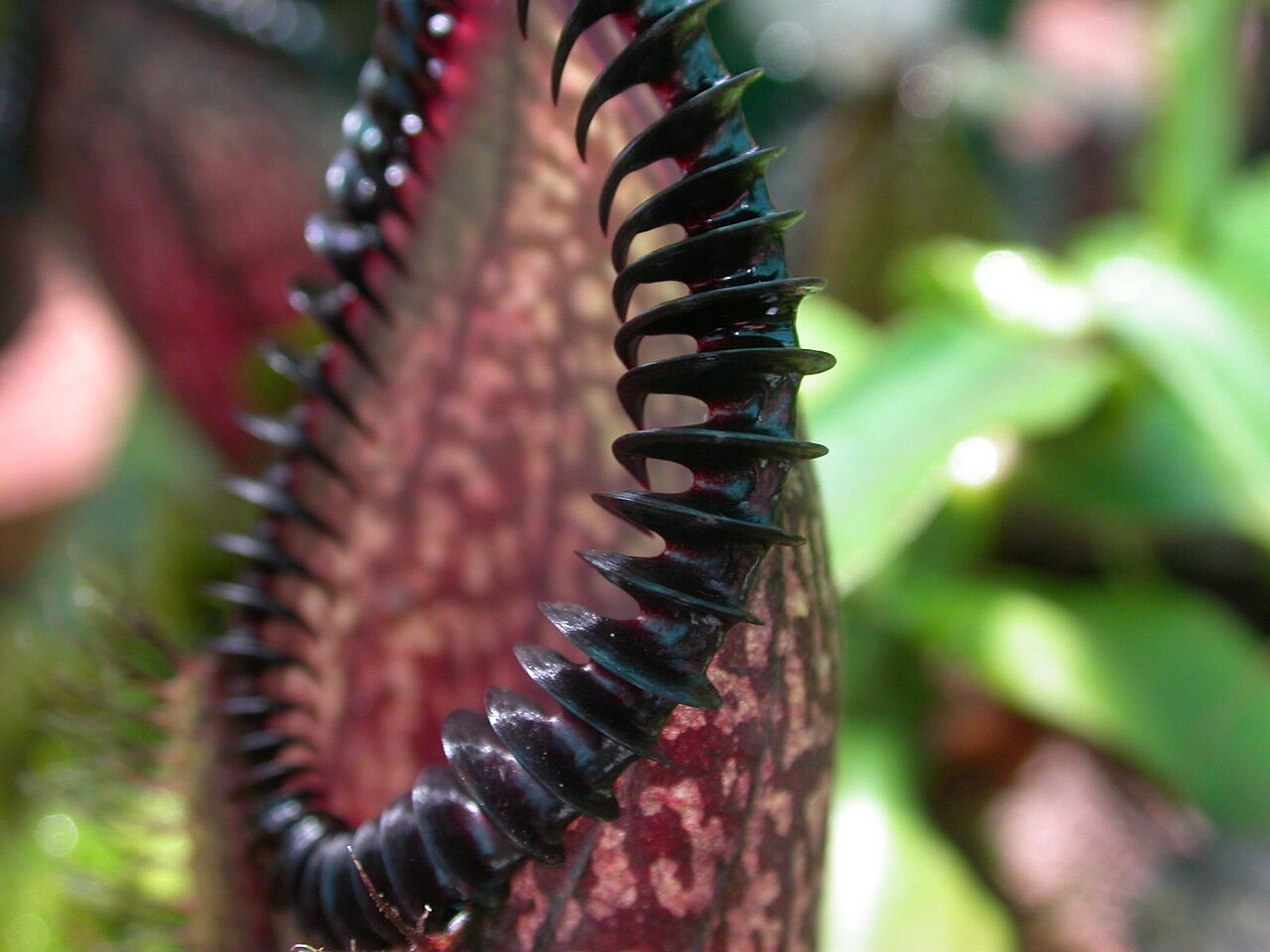
It’s one of those plants that doesn’t look real the first time you see it. The hooked teeth on the pitchers make it look like something out of a movie, and there really isn’t anything else in the genus quite like it.
The only thing that kept me from getting one sooner was the price. These have always been expensive plants, and they still are.
But at some point you start thinking differently about that. There are plants you want to grow, setups you want to try, and no guarantee you’ll get around to it later.
So I finally decided to go for it.
This plant is going into my Nepenthes terrarium alongside spectabilis and another variety, and I’ll be growing it under the same system—steady moisture, good airflow, and controlled lighting.
I’ll be documenting how it does over time, because this is one I really want to see develop properly.
🌿 What Makes Nepenthes hamata Different
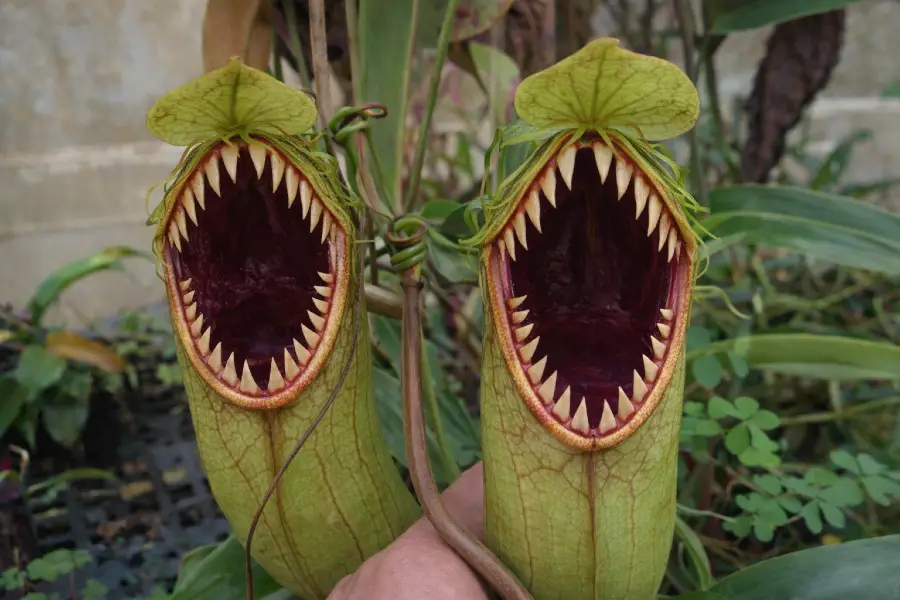
Nepenthes hamata is best known for its peristome—the rim of the pitcher—which is lined with sharp, curved teeth.
These aren’t just for looks. The structure helps guide prey into the pitcher, and it gives the plant one of the most aggressive-looking appearances of any carnivorous species.
Beyond that, it’s a highland Nepenthes, which means it naturally grows in cooler, humid mountain environments with steady airflow and filtered light.
That’s important, because it tells you right away that this is not a plant you can treat like a typical houseplant.
It needs the right conditions—but when you provide them, it rewards you with some of the most dramatic pitchers you can grow indoors.
🌿 Nepenthes hamata (BE-3380 Clone)
The plant I picked up is a Nepenthes hamata (BE-3380), a clone known for being more vigorous than many older hamata plants in cultivation.
This clone comes from the Lumut region and has a reputation for being a stronger grower, which is exactly what I was looking for. Hamata has always been considered a bit of a slower, more sensitive species, so starting with a more robust clone makes a big difference.
Another advantage is that these plants are greenhouse hardened. That means they’ve already been exposed to some environmental variation and are better able to handle changes in temperature and humidity compared to softer, freshly tissue-cultured plants.
That doesn’t mean you can ignore conditions—but it does mean you have a little more margin for error.
🌄 Natural Habitat
Nepenthes hamata grows in the highlands of Sulawesi, typically at elevations between about 1,400 and 2,500 meters.
That environment is very consistent—bright but filtered light, high humidity, cool nights, and constant air movement.
This is important because it tells you exactly what you need to recreate indoors. You don’t need extreme conditions, but you do need stable ones.
A terrarium or controlled indoor setup is one of the best ways to provide that kind of environment without relying on room conditions.
🌡️ Temperature (This Matters More Than You Think)
- Day: 72–80°F
- Night: 50–60°F
That nighttime temperature drop is one of the most important factors for highland Nepenthes like hamata.
Without it, plants may survive—but they often stall, stop producing pitchers, or grow very slowly.
In my setup, I’m aiming for a noticeable drop at night, even if it’s not perfect. Getting close is usually good enough to see strong improvement compared to flat indoor temperatures.
💧 Humidity & Airflow
- Humidity: 70–90%
- Airflow: gentle but constant
Humidity is important, but airflow is just as important—maybe more.
This is where a lot of people run into problems. They try to trap humidity by sealing everything up, but that leads to stagnant air, which Nepenthes do not like.
In my setup, I’m keeping humidity high through the substrate and overall environment, but I’m not sealing the tank completely. There’s always some level of air exchange.
That balance—humid but not stagnant—is what keeps pitchers healthy and prevents mold or rot issues.
💡 Lighting (Strong but Controlled)
Hamata responds well to bright light, but it doesn’t need to be pushed as hard as some other carnivorous plants.
- 12–14 hours of light per day
- Around 150–250 PPFD is a good working range
Stronger light helps bring out color and improves pitcher development, but too much intensity—especially combined with heat—can stress the plant.
I’m placing this plant where it gets solid light without being directly under the most intense part of the fixture.
Over time, I’ll adjust based on how it responds. That’s something I’ve learned to rely on more than fixed numbers—the plant will tell you if it’s happy.
🌬️ Why This Setup Should Work Better
Compared to past attempts, this setup checks more of the boxes that matter for highland Nepenthes.
- More stable humidity
- Better airflow
- More consistent lighting
- Less guesswork with watering
None of these things are extreme on their own, but together they create a much more stable environment.
And with a plant like Nepenthes hamata, stability is really what you’re aiming for.
🪴 Substrate (Keep It Airy and Simple)
You can find all kinds of complicated Nepenthes mixes, but for a plant like hamata I still think the most important thing is keeping the root zone airy and evenly moist rather than chasing some perfect recipe.
I tend to prefer simpler media that I can manage easily in a terrarium. Coco coir with some perlite can work, and so can long-fiber sphagnum mixes, as long as the end result stays loose and doesn’t compact into a soggy mess.
What I want for Nepenthes hamata is:
- Good airflow around the roots
- Steady moisture without saturation
- A mix that stays open over time
- Something that fits the way the whole terrarium is watered
That matters more to me than whether the mix sounds fancy. If the roots have air, the plant stays moist, and the setup is stable, that usually gets you a lot farther than overthinking ingredients.
💦 Watering
This plant is going into a system where it will have steady moisture available instead of depending on irregular top watering. That is a big part of why I think it should do well here.
With highland Nepenthes, I want the media moist all the time, but I do not want it waterlogged. There is a difference. Constant saturation can create stagnant conditions around the roots, and that is not what I am after.
The goal is consistent moisture through capillary action and a shallow water reserve rather than keeping the plant sitting deep in water.
As always, I would stick with pure water sources:
- Rainwater
- RO water
- Distilled water
That part has not changed. Mineral buildup is still one of the easiest ways to slowly damage carnivorous plants.
🌿 What I Expect as This Plant Settles In
Right now the big thing is acclimation. I do not expect a plant like this to arrive, hit the terrarium, and instantly start growing like crazy.
What I’ll be watching for first is pretty simple:
- Leaves holding firm without stress
- No major decline after the move
- New growth starting to appear from the center
- Tendrils forming cleanly
- Pitchers beginning to develop once it adjusts
Longer term, this is the kind of plant I expect to become a real showpiece if the setup stays stable. The big draw, of course, is the teeth. Juvenile pitchers already look wild, but as hamata matures the peristome gets even more dramatic.
That is one of the reasons I wanted this species so badly. It is not just another Nepenthes. It has a look that stands apart immediately.
I also expect it to climb over time, so this is not a plant I am thinking of as temporary decor. I am thinking of it as part of a long-term terrarium planting that will change shape as it grows.
⚠️ Common Problems to Watch For
No pitchers forming
This usually points to one of a few things: not enough light, not enough humidity during acclimation, weak airflow, or nights that stay too warm.
Blackening or damaged new pitchers
That can happen from shock after shipping, low humidity, stagnant air, or sudden changes in conditions.
Slow or stalled growth
If the plant just sits there, I would start looking at night temperatures, media density, and overall stability. Highland Nepenthes usually want things steady more than anything else.
Root trouble from staying too wet
This is why I keep coming back to airy mixes and shallow moisture instead of deep saturation.
🌟 Final Thoughts
Nepenthes hamata is one of those plants that feels special before you even open the box. It has the kind of pitchers that make people stop and look twice, and that alone makes it fun to grow.
But for me, this post is also about finally giving the plant the kind of setup it deserves. Good airflow, stable humidity, strong but controlled light, cool nights, and steady moisture should make this a much better experience than just trying to wing it.
I’ll keep updating this as the plant settles in, because I think that is the most useful part—seeing what actually happens over time in a real indoor setup.
🌿 Related Carnivorous Plant & Terrarium Guides
- Nepenthes truncata Terrarium Care: Light, Feeding & Growth
- Growing Nepenthes in Hanging Baskets (Light, Watering & Indoor Care)
- Terrarium Lighting for Carnivorous Plants: How Much Light?
- Terrarium Airflow: What Actually Matters
- Closed vs Open Terrariums: Which One Works Best?
- Water Quality for Carnivorous Plants: The Best Types
- Carnivorous Plant Terrarium Setup: Easy Indoor Tank Guide
❓ Nepenthes hamata Care FAQs
Is Nepenthes hamata a highland Nepenthes?
Yes. Nepenthes hamata is a highland species and generally does best with warm days, cooler nights, high humidity, and good airflow.
Why is Nepenthes hamata so popular?
It is best known for its dramatic tooth-like peristome. Those hooked teeth give it one of the most striking pitcher shapes in the entire genus.
Can Nepenthes hamata grow in a terrarium?
Yes, a terrarium can work very well if it provides stable humidity, steady airflow, good light, and enough vertical room for the plant to mature and climb.
What temperatures are best for Nepenthes hamata?
A good target is about 72–80°F during the day and 50–60°F at night. That nighttime drop helps support stronger growth and pitcher production.
What kind of light does Nepenthes hamata need?
Bright, controlled light works best. Around 150–250 PPFD is a solid working range for indoor growing without pushing the plant too hard.
How should Nepenthes hamata be watered?
Keep the media evenly moist with pure water, but do not let it sit in deep stagnant water. The goal is steady moisture, not saturation.
➡️ Next Post
Next: Nepenthes spectabilis: Highland Terrarium Grower Guide (BE-3322)