
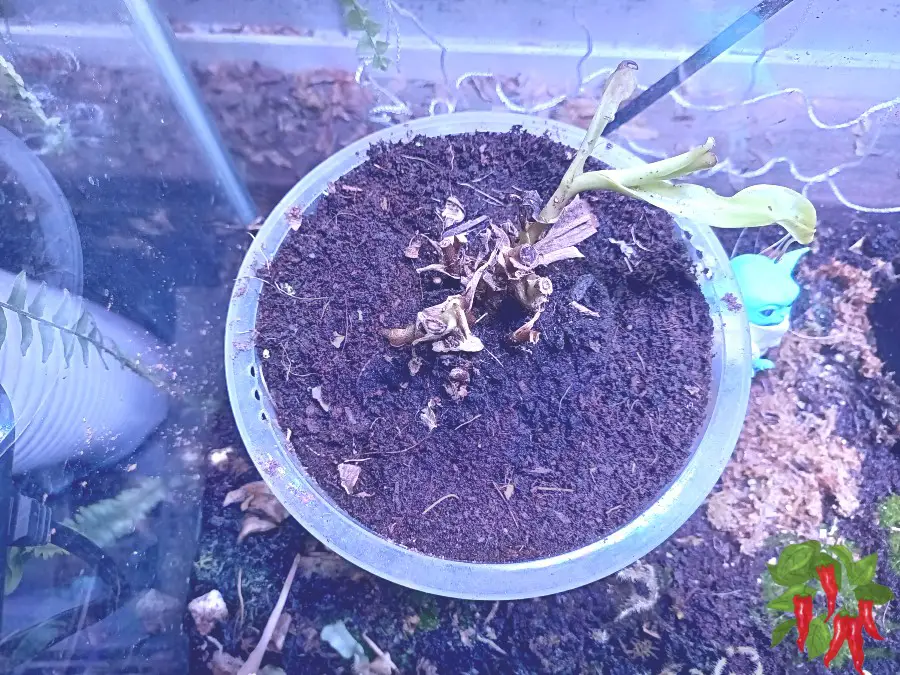
If you’ve been growing Nepenthes indoors and wondering why your Nepenthes aren’t pitchering, you’re not alone.
They’re called pitcher plants for a reason—but sometimes they just stop producing them, especially indoors where conditions are different from what they’re used to.
The good news is that most of the time, there’s a clear reason behind it. And once you understand what’s going on, it’s usually something you can fix.
🌱 What You’ll Learn
- The most common reasons Nepenthes stop producing pitchers
- How light affects pitcher production indoors
- Why temperature matters more than most people think
- How watering consistency impacts growth
- What to look for when diagnosing your plant
🌿 Why Nepenthes Don’t Always Make Pitchers
Nepenthes are tropical plants, and in their natural habitat they’re growing in warm, humid environments with steady light and airflow.
When we bring them indoors, we’re trying to recreate those conditions—but it’s never exactly the same.
That’s why you’ll sometimes see a plant growing leaves just fine, but not producing pitchers at the end of those leaves.
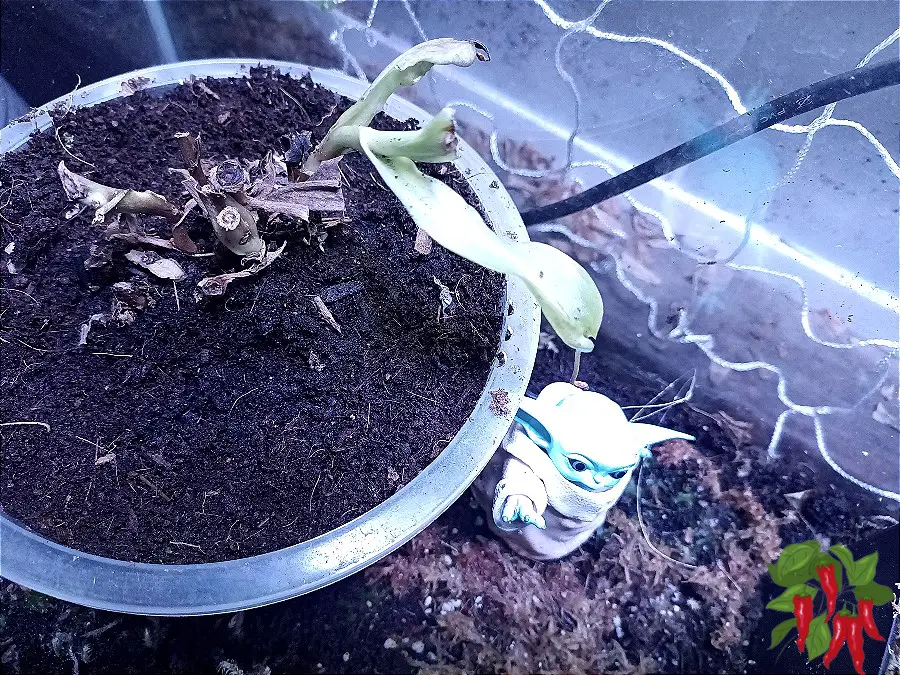
That was the case with this plant. It was given to me and is unnamed. It was probably not treated well at a large commercial nursery. It grew vines and leaves but no pitchers. So I cut it back and it has started to grow a new pitcher.
Sometimes cutting a plant back can help a stalled Nepenthes grow new base shoots and start pitchering again. That happened here.
And it can vary a lot from plant to plant.
I’ve had some Nepenthes that pitcher like crazy, and others that are much more reluctant even under similar conditions.
For example, I’ve grown a spectabilis that made beautiful pitchers—but it was a shy pitcher producer overall. On the other hand, something like a ventracosa will often throw pitchers all over the place with much less effort.
So part of it is genetics—but most of the time, it comes down to growing conditions.
💡 The #1 Reason: Not Enough Light
If there’s one thing that causes Nepenthes to stop pitchering more than anything else, it’s lack of light.
You can have everything else right—watering, humidity, temperature—but if the plant isn’t getting enough light, pitcher production will slow down or stop completely.
This is especially common indoors.
A lot of people hang Nepenthes in a window and assume that’s enough. But depending on where you live, that may not be doing much at all.
If you’re in a northern climate like I am in Washington, winter light is weak. Even outdoors it’s limited—so a window is going to be even less effective.
Cloud cover, shorter days, and lower sun angles all add up.
And when the light drops, pitcher production is usually the first thing to go.
🌡️ Temperature Can Stop Pitcher Production
Light is the biggest factor, but temperature is right behind it.
Nepenthes are not all the same when it comes to temperature. Some are lowland plants that like it warm all the time, and others are highland plants that actually need cooler nights to do well.
If those conditions aren’t met, the plant may still grow leaves—but it won’t always produce pitchers.
This shows up a lot indoors.
If it’s too cold, especially near windows in winter, growth can slow down and pitcher production can stop. On the other hand, if it’s too warm for a highland type, you may see the same thing—healthy-looking leaves, but no pitchers forming.
So even if everything else looks fine, temperature alone can be enough to shut things down.
💧 Inconsistent Watering
Another common issue is inconsistent watering.
Nepenthes don’t like to dry out completely, but they also don’t like to sit in soggy, stagnant conditions.
When watering is all over the place—too dry one week, too wet the next—the plant shifts into survival mode.
And when that happens, pitcher production is one of the first things it drops.
Leaves will still grow, but the plant won’t invest energy into making pitchers until conditions stabilize again.
Consistency matters more than perfection here.
🌬️ Humidity and Airflow (Finding the Balance)
Humidity plays a role too, but not always in the way people expect.
Higher humidity generally helps Nepenthes produce pitchers, especially when they’re young or adjusting to a new environment.
But humidity alone isn’t the full story.
If you have high humidity without airflow, you can run into other problems like mold or weak growth. On the flip side, very dry air can cause tendrils to dry out before pitchers ever form.
What you’re really looking for is a balance—enough humidity to support pitcher development, but with enough airflow to keep the plant healthy overall.
This is where terrariums or controlled setups can help, but they need to be set up correctly.
🔍 How to Tell What’s Causing the Problem
When a Nepenthes stops producing pitchers, the plant will usually give you clues.
You just have to know what to look for.
- If leaves are small and stretched, it’s usually a light issue
- If growth slows down during cold periods, temperature is likely the problem
- If tendrils form but dry up before pitchers develop, humidity may be too low
- If growth is inconsistent, watering is often the issue
Most of the time, it’s not one single factor—it’s a combination.
But if you start by checking light first, then temperature, then watering, you’ll usually find the issue pretty quickly.
🛠️ How to Get Your Nepenthes Pitchering Again
Once you figure out what’s causing the problem, the fix is usually straightforward.
The key is not trying to change everything at once. Adjust one factor, give the plant time to respond, and then fine-tune from there.
Increase Light First
If your plant isn’t getting enough light, that should be your first adjustment.
Move it to a brighter location, extend exposure to natural light, or add a grow light if needed.
Once light improves, pitcher production is often the first thing to come back.
Stabilize Temperature
Make sure your plant is not getting too cold or too hot for its type.
Avoid cold drafts from windows in winter, and keep conditions as stable as possible.
If you’re growing a highland Nepenthes, slightly cooler nights can actually help.
Fix Your Watering Routine
Keep the growing medium evenly moist, but not soaked.
Avoid letting the plant dry out completely, and avoid constantly waterlogged conditions.
Consistency here is more important than anything else.
Adjust Humidity (If Needed)
If tendrils are forming but not turning into pitchers, slightly increasing humidity can help.
This can be as simple as grouping plants together or using a more controlled setup.
Just make sure there is still some airflow.
🌿 Related Guides for Better Indoor Growing
- Nepenthes Terrarium Setup (What Actually Works Indoors)
- Terrarium Airflow: What Actually Matters
- Terrarium Lighting for Carnivorous Plants
- Water Quality for Carnivorous Plants
📚 References
- The Carnivorous Plant Society (UK)
- Colorado Carnivorous Plant Society
- University of Missouri Extension – Terrarium Gardening Guide (PDF)
- Nepenthes – General Overview
❓ Why Your Nepenthes Aren’t Pitchering FAQ
Why is my Nepenthes growing leaves but no pitchers?
This usually means the plant is missing something it needs—most often light. It can also be caused by temperature issues, low humidity, or inconsistent watering.
Will pitchers come back once conditions improve?
Yes. Once the plant is getting what it needs, new leaves will usually start producing pitchers again. Existing leaves without pitchers won’t change, but new growth will.
Do Nepenthes need high humidity to make pitchers?
Higher humidity can help, but many hybrids will still pitcher in moderate indoor humidity if light and watering are consistent.
How long does it take for a Nepenthes to start pitchering again?
It depends on the plant and conditions, but you can often see improvement within a few weeks once the main issue is fixed.
➡️ Next Post
Next: Unboxing 5 New Nepenthes