
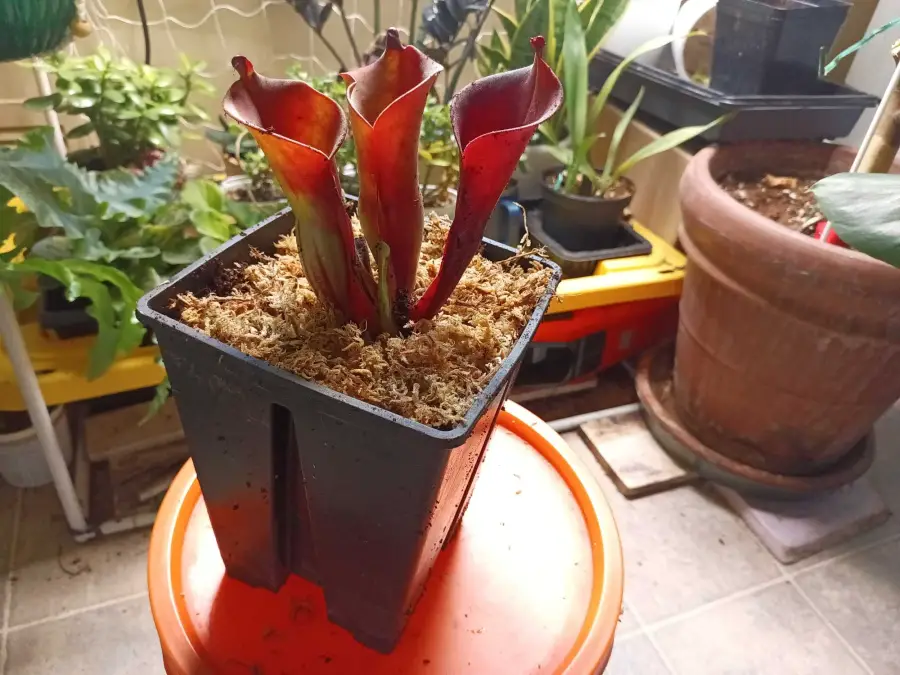
Well, Heliamphora fever has struck again. I couldn’t resist. I found a Heliamphora Tatei x Folliculata Hybrid on a carnivorous plant website.
I don’t know why I had not found this site before, and before long I had another plant on the way.
This time it was a beautiful Heliamphora x tatei Cerro Duida x folliculata Murosipan clone K60 CC, which is a long enough name that I decided right away it needed a nickname.
Because of the long name, I have nicknamed it Jeremiah’s Bullfrog. And honestly, once I unwrapped it and saw those big pitchers and that wide nectar spoon, the nickname fit it pretty well.
What You’ll Learn
- What this Heliamphora hybrid is
- Why I nicknamed it Jeremiah’s Bullfrog
- What arrived in the box and how the plant looked
- Why this hybrid stood out to me right away
- What kind of habitat do Heliamphora come from
- The basic care conditions these plants need indoors
A New Heliamphora From Jeremiah’s Plants
The seller was Jeremiah Harris from Jeremiah’s Plants, and I was honestly surprised I had not run across his website before. He is heavily into carnivorous plants and has a selection of Heliamphora hybrids that are actually for sale, which is not something you see every day.
If you have been into carnivorous plants for a while, you already know Heliamphora are not nearly as common as Venus flytraps, sundews, or even a lot of Nepenthes. For a long time, I had never tried them. Part of that was because I always thought they were hard, and part of it was because they were just plain difficult to find.
But this guy had a real selection of them. That alone got my attention. So I ordered one and figured we were going to unbox it and see what showed up.
Unboxing Jeremiah’s Bullfrog
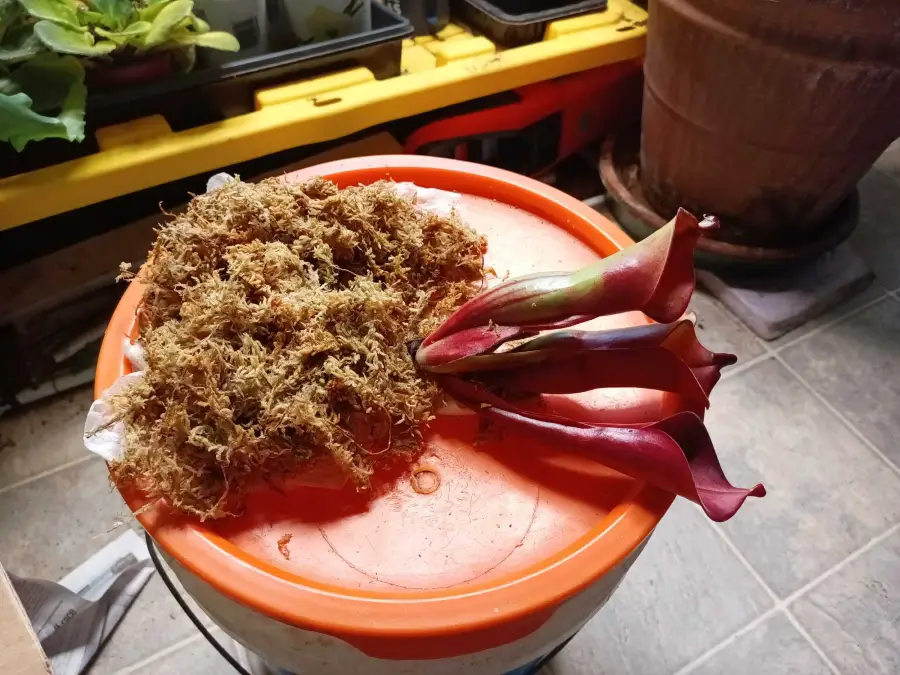
When I opened the package, there was plenty of wrapping, which I actually like to see. There was paper, then a shrink-wrapped layer, then the plant wrapped in a towel to help keep the moisture in. There was even a support stick in there to help keep the top from getting squished during shipping.
That kind of packing matters with a plant like this. Heliamphora may look tough once they are established, but shipping stress can do a number on them if they are packed carelessly. So right away, the packaging gave me a pretty good feeling about what I was dealing with.
Once I finally got everything unwrapped, I could already tell this was going to be a good one. I saw some good things right away. Big pitchers. Good shape. Healthy growth. And when the plant was fully out in the open, I was impressed to say the least.
Look at that. That’s what I call a plant.
It looked better than the one I had bought off eBay, and better than some of the others I had seen and bought online too.
The pitchers were larger, the plant looked healthier, and it had a long, healthy root that told me it was ready to get established.
The Name Is a Mouthful
Now here is the full name: Heliamphora x tatei Cerro Duida x folliculata Murosipan clone K60 CC.
That is a mouthful. I’m not going to keep calling it that all the time, and I doubt most people would either. So for me, it is now Jeremiah’s Bullfrog.
Sometimes giving a plant a nickname just makes it easier to connect with, especially when the proper hybrid name sounds like a full legal document.
This one has enough personality already that it deserved a name people can actually remember.
Why This Hybrid Stood Out
This hybrid is a cross between Heliamphora tatei and Heliamphora folliculata, which is a pretty exciting combination if you like tall, colorful sun pitchers. Hybrids are often nice because they can have more vigor than some pure species, and this plant already looked like it had a lot going for it.
It had those big upright pitchers, a nice open shape, and a nectar spoon that really stood out. It looked like a specimen plant right out of the box, not something that needed months just to recover from shipping.
I also looked up some information on it, and this hybrid can eventually get around 12 to 18 inches tall over time in good conditions, which makes it a pretty dramatic plant once it matures.
Why Heliamphora Are So Appealing
I have been growing carnivorous plants for a long time, but I had never grown Heliamphora before. Part of that was because they always sounded difficult, and part of it was because they were hard to find.
Most of the time you see Venus flytraps, sundews, and Nepenthes, but Heliamphora are a little more specialized and not nearly as common.
Once I started looking into them more, though, I realized they are some of the most interesting carnivorous plants out there. They look ancient. They look like something from another world. Tall pitchers, wide openings, and those strange nectar spoons on top make them look completely different from most other pitcher plants.
This hybrid especially has a really bold look to it. The pitchers are tall and upright, and the spoon on top is wide and colorful. It is the kind of plant that instantly becomes the centerpiece of a terrarium or plant setup.
Why Heliamphora Plants Are Expensive
One thing you will notice right away if you start looking for Heliamphora is that they are not cheap. These plants grow slowly, they are harder to propagate, and there are fewer growers producing them compared to other carnivorous plants.
Small plants can sometimes be found for around 35 to 40 dollars, especially something like Heliamphora minor, but once you start looking at larger plants or hybrids, you are usually looking at 50 dollars, 80 dollars, or well over 100 dollars depending on the size and rarity.
This one cost me about 80 dollars, which is not cheap for a plant, but when I opened the box and saw the size and condition, I felt like it was worth it. Sometimes it is better to pay more for a healthy, established plant than to try to save money on something small or stressed.
Where Heliamphora Grow in Nature

To really understand how to grow Heliamphora, you have to understand where they come from. These plants grow on tepuis, which are tabletop mountains mostly found in Venezuela. These places look unreal. High cliffs, flat tops, constant clouds, fog, rain, and wind.
I think the translation for tepuis is House of the gods. It looks like something from Jurassic Park.
And even though it’s by the equator, it’s not warm. It’s cloudy, it’s misty, it’s foggy, it’s windy, and it doesn’t freeze, but it does get cold.
It rains every day, and these plants grow there. And only there. And so it’s a challenging environment for sure.
Even though these mountains are near the equator, the elevation keeps temperatures cooler. It’s high altitude of 2,000 to 10,000 feet does not freeze, but it also does not get extremely hot most of the time. The environment is wet, cool, cloudy, and windy almost all the time.
That tells you everything about how they want to grow. They like bright light, cool temperatures, high humidity, moving air, and very pure water. If you try to grow them like a normal houseplant, they are probably not going to do very well.
Temperature and Environment Indoors
One of the biggest things with Heliamphora is temperature. They do not like extreme heat, especially for long periods of time. I have read that extended temperatures above around 95 degrees can be fatal for some Heliamphora, so keeping them cool is important.
A range somewhere around 60 to 80 degrees works well for most highland Heliamphora, and cooler nights are even better. Keeping the roots cool is important too, not just the air temperature.
This is one reason terrariums, grow chambers, or controlled indoor environments work well for these plants. You can control the light, temperature, humidity, and airflow much easier than trying to grow them on a random windowsill.
Water and Feeding
Like most carnivorous plants, Heliamphora do not like mineral-heavy water. You want very pure water like RO water, distilled water, or clean rainwater. High mineral tap water can cause problems over time because these plants evolved in very nutrient-poor environments.
Since they grow in nutrient-poor soil, they get nutrients from insects instead. Heliamphora pitchers collect water and insects fall in and break down in the liquid inside the pitcher.
If you want to feed them indoors, you can drop a small bug into a pitcher, or even use a tiny amount of fish food flakes or pellets. You do not need to feed them a lot. Just occasionally is enough.
Between bright light, cool temperatures, pure water, and occasional feeding, you can actually grow Heliamphora indoors if you set things up properly.
Getting It Into the Terrarium
The next step for Jeremiah’s Bullfrog is getting it into the terrarium. That is really the best place for Heliamphora indoors because you can control the light, humidity, airflow, and temperature much easier than you can out in the open room.
These plants like bright light, high humidity, moving air, and cool roots. A terrarium with a strong LED light and a small fan for airflow usually works really well. You do not want stagnant air, and you do not want the plant cooking under hot lights either.
I will be planting this one soon and getting it established, and once it starts growing new pitchers in the tank, that is when you know it is happy.
Why Heliamphora Are Worth Growing
Heliamphora are not the easiest carnivorous plants in the world, but they are also not impossible. Once you understand their environment and what they need, they are actually very rewarding plants to grow.
They grow slowly, but every new pitcher feels like an accomplishment. And once a plant gets some size to it, they are some of the most impressive carnivorous plants you can grow indoors.
This hybrid in particular should eventually get somewhere around 12 to 18 inches tall in good conditions, which will make it a real centerpiece plant in a terrarium setup.
Ethical Carnivorous Plant Growing
One thing I do like about buying plants from breeders and growers is that it helps reduce pressure on wild plants. Some carnivorous plants have been heavily collected in the wild, which is not good for the species long term.
Buying plants that are grown from seed, tissue culture, or greenhouse divisions is the better way to go. You get a healthier plant, and wild populations are not harmed.
Final Thoughts on Jeremiah’s Bullfrog
I am really happy with this plant. It arrived healthy, it looks great, and it should grow into a really impressive Heliamphora over time. Jeremiah’s Bullfrog is definitely one of the more interesting plants in my collection now.
If you are into carnivorous plants and you have never tried Heliamphora, they are definitely worth looking into. They are different from Venus flytraps and Nepenthes, and they have a look that is hard to beat.
Now I just need to get it planted, get it growing, and see what it does over the next year or two.
Check out Jeremiah’s Plants for a wide selection of high-quality carnivorous plants. This is not an affiliate link, I just recommend them.
Read more about this Heliamphora Terrarium Plant
Heliamphora Terrarium Plant – Growing Jeremiah’s Bullfrog Hybrid
More Terrarium and Carnivorous Plant Guides
Heliamphora Tatei x Folliculata Hybrid FAQ
What is Jeremiah’s Bullfrog?
Jeremiah’s Bullfrog is a nickname for a Heliamphora hybrid called Heliamphora x tatei Cerro Duida x folliculata Murosipan clone K60 CC.
How big does this Heliamphora hybrid get?
This hybrid can grow around 12 to 18 inches tall over time in good terrarium or highland growing conditions.
Are Heliamphora hard to grow?
They are more specialized than many carnivorous plants, but they can be grown indoors if you provide bright light, cool temperatures, pure water, high humidity, and good airflow.
What water should Heliamphora be watered with?
Use RO water, distilled water, or rainwater with very low mineral content. Tap water with high minerals can damage carnivorous plants over time.
Can Heliamphora be grown in a terrarium?
Yes, terrariums are one of the best ways to grow Heliamphora indoors because you can control light, humidity, airflow, and temperature more easily.