
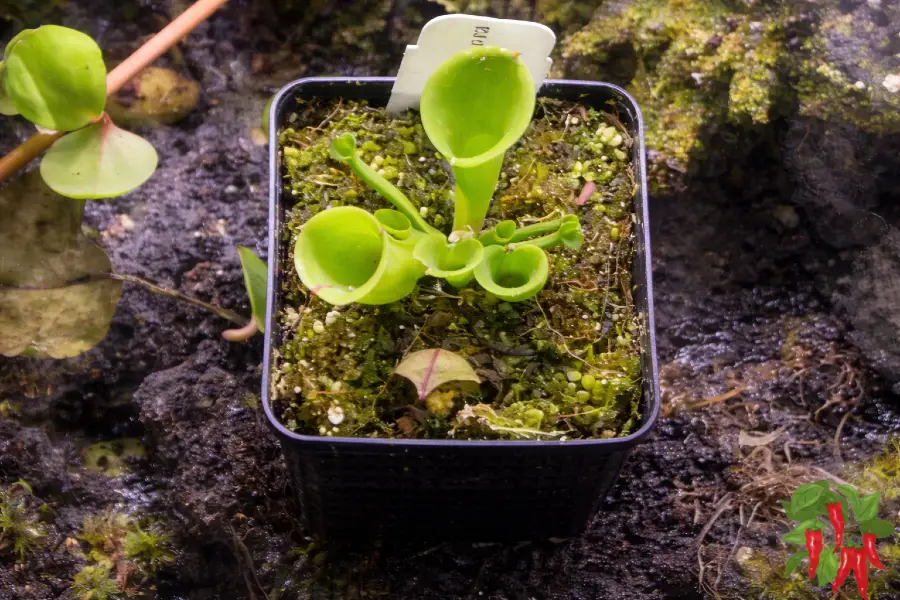
If you’re trying to figure out Heliamphora care indoors, you’re in the right place.
These “Sun Pitcher” plants look like a true pitcher plant should look… but unlike many temperate pitcher plants, Heliamphora can be grown year-round indoors when you give them strong light, very clean water, and stable conditions.
This guide focuses on what actually matters in a real home setup. Not a perfect greenhouse. Not a foggy mountain fantasy. Just practical terrarium and indoor growing tips that work for regular people using tanks, cabinets, or enclosed plant setups.
I’ll cover habitat basics (tepuis), lighting, water quality, soil mixes, humidity and airflow, plus which species and hybrids are easiest to start with. And yes — I’ll also tell you the parts that are most likely to trip you up.
What You’ll Learn
• What Heliamphora are, where they grow, and why they can work indoors
• The indoor conditions that matter most: light, clean water, cool roots, and airflow
• Simple, repeatable terrarium setup tips you can actually use at home
• Beginner-friendly species and hybrids to start with
• Common problems (and what to change first) when a plant stalls or declines
What Is Heliamphora?
Heliamphora is a genus of carnivorous pitcher plants often called Sun Pitchers. There are over 20 recognized species plus many natural hybrids. In cultivation, they range from “surprisingly easy” to “why is this plant mad at me,” depending on what conditions you can provide.
The big appeal is simple: they’re a true pitcher plant with upright traps, but they’re also one of the better options for indoor growers because they don’t require a traditional hard winter dormancy the way many North American pitcher plants do.
Want more general carnivorous plant care tips? Go here: Carnivorous Plant Care: Complete Beginner’s Guide
Where Heliamphora Grow (Tepuis) And What That Means Indoors
Heliamphora are native to the Guiana Highlands (primarily Venezuela, with some in adjacent Guyana and Brazil). Many species grow at high elevations on tepuis — sandstone tabletop mountains. The tops are cool, extremely wet, and bright, with frequent rainfall and thin, nutrient-poor growing media made up of sand, rock, and decomposed plant matter.
Even though the tepuis sit just north of the equator, the climate on their summits stays surprisingly mild. Temperatures typically range from about 45–74°F. They can swing a bit warmer or cooler at times, but they generally do not drop below freezing.
Here’s the translation for indoor growing: Heliamphora like bright light, clean water, cool-to-mild root temps, and oxygen around the roots.
You don’t have to recreate the exact wild habitat. You just have to hit the few conditions that are necessary and skip the stuff that’s unrealistic for a home.
Are Heliamphora Good for Indoor Growing?
They can be, as long as you respect the two “non-negotiables”:
- Water quality: very low minerals (RO, distilled, or rainwater)
- Light: strong LED lighting, not a bright window across the room
After that, it becomes a systems problem: keep the roots healthy, keep the setup stable, and don’t cook the plant in a sealed box. If you can do those things, Heliamphora can be very rewarding indoors.
Best Heliamphora for Beginners
If you’re new to Heliamphora, start with the easier, more forgiving options. In general, hybrids are often more tolerant and vigorous than some ultra-highland species.
- Heliamphora heterodoxa (common forms are often strong growers)
- Heliamphora minor (popular, generally manageable)
- Heliamphora nutans (often recommended as a starter)
- Vigorous hybrids (for example: heterodoxa × ionasi)
If you can grow one of these well for a season, you’ll have a much easier time branching into the pickier species later.
Heliamphora heterodoxa × ionasi
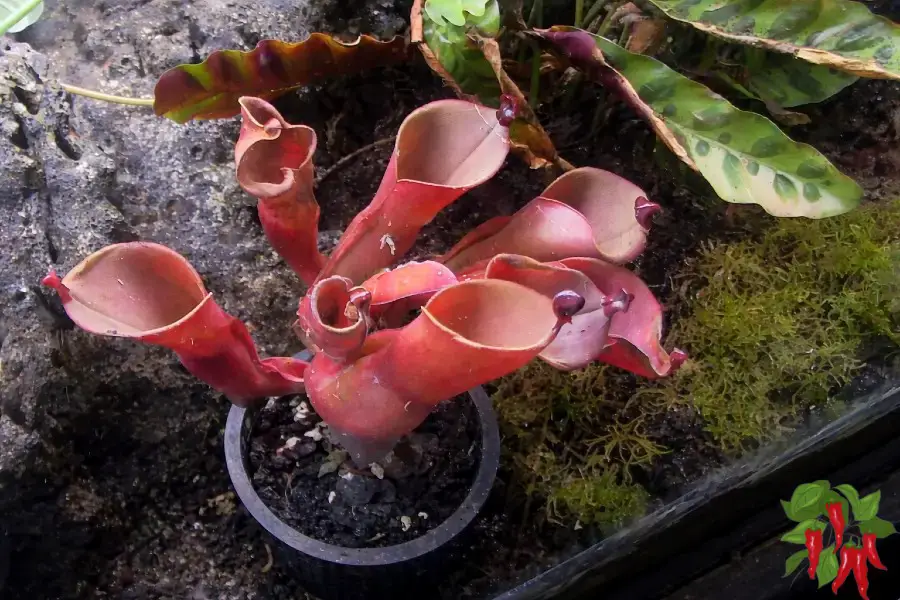
Heliamphora heterodoxa × ionasi is a vigorous, large‑growing hybrid known for its tall, flared pitchers and strong coloration.
It combines the hardiness of H. heterodoxa with the dramatic size and shape of H. ionasi, making it one of the most robust and beginner‑friendly
Heliamphora hybrids. Pitchers often reach 10–14 inches, develop deep red tones under bright light, and grow well in cool, humid terrarium conditions with good airflow.
Light Requirements (The Part You Can’t “Kind Of” Do)
If Heliamphora struggle indoors, lighting is usually the reason. In nature they’re used to extremely bright conditions. Indoors, that means you need real grow lighting — and you need it close enough to be effective without overheating the plants.
Indoor lighting guidelines that work
- Use LED lights (they give strong light without dumping heat like many fluorescents)
- Long photoperiod: 12–15 hours/day is common for indoor setups
- Distance matters: many indoor growers run lights roughly 4–12 inches above the pitchers (adjust based on heat and intensity)
- Side light helps: pitchers benefit from light coming from more than just straight above
A simple way to “read” the plant: if pitchers stay pale and growth looks weak or stretched, increase light. If leaves scorch or the terrarium heats up, back the light off or add airflow.
Color and red pitchers
That deep red coloration people love (especially in some hybrids) is strongly tied to light intensity. You don’t force red by “feeding more.” You get it with bright, stable lighting.
Temperature (Root Health Matters More Than Air)
Heliamphora tolerate normal cool-to-mild home temperatures well, but they don’t like prolonged heat — especially in stagnant, high-humidity conditions. The most important concept is this: protect the roots from overheating.
- Avoid hot terrariums (sealed glass + strong lights + no fan = trouble)
- Large plants can be more heat-sensitive than small ones
- Air temperatures can swing, but roots should stay comfortably cool
If your grow area regularly gets hot (summer rooms, heat vents, sunny windows), prioritize ventilation and don’t place lights so close they warm the crown and soil.
Water Quality (Keep It Pure)
Heliamphora are carnivorous plants. Their roots are adapted to low-mineral environments. The safest approach indoors is simple:
- Use RO, distilled, or rainwater
- Avoid well water (often mineral/salt heavy)
- Filtering or softening does not reliably remove dissolved minerals
In a closed or semi-closed setup, mineral buildup can sneak up faster than you’d expect. Starting with pure water avoids a whole category of problems.
Soil and Potting Mix (Moisture + Air, Not “Plant Food”)
Heliamphora can’t tolerate rich potting soil. You want a medium that stays moist but airy, and doesn’t break down into stink over time.
Reliable long-term mix ideas
- Long-fiber sphagnum + perlite + aquatic planting medium (a common long-term approach)
- Long-fiber sphagnum + perlite (simple and widely available)
- Long-fiber sphagnum + coarse sand (works when watering style matches)
If you use coco coir, keep it practical: choose a quality product, rinse well, and make sure it isn’t salty. The goal is still the same — moist, airy, and stable.
Watering Approach (Moist, Not Rotten)
In the wild, Heliamphora can experience constant flushing from rainfall. Indoors, you don’t need to flood them daily — but you do need consistent moisture and oxygen around the roots.
- The mix should never dry out completely
- Avoid “swampy” conditions that go sour
- Match your soil mix to your watering style (daily watering vs sitting in a few mm of water)
A lot of indoor growers use net pots or elevated planting methods so the root zone stays damp without being smothered. If you’re using a terrarium, it’s often easier to keep moisture consistent — the challenge becomes airflow and temperature control.
Humidity and Airflow (High Humidity, Moving Air)
Heliamphora often appreciate higher humidity indoors, especially under strong lights. But humidity without airflow can invite fungal issues. This is why fans are so common in successful terrarium builds.
- Aim for steady humidity, but avoid stagnant air
- Use a small fan to keep air moving inside enclosures
- Watch for condensation that never clears (a hint airflow is too low)
Do Heliamphora Need Dormancy Indoors?
Most indoor growers choose Heliamphora because they can be grown year-round without the hard winter dormancy that many temperate pitcher plants require. You can absolutely keep Heliamphora under lights through winter.
That said, they still appreciate cooler, stable conditions. The goal isn’t freezing temperatures — it’s avoiding heat stress and keeping the root zone healthy.
Fertilizing and Feeding (Safe Indoor Options)
Heliamphora grow best when they receive some nutrients, but this is where people accidentally nuke their plants. The safest beginner approach is to avoid fertilizing the soil and use gentle, controlled feeding methods instead.
- In-pitcher feeding (small amounts, not overflowing into the soil)
- Very light foliar feeding (if you know what you’re doing)
The fastest way to kill Heliamphora is heavy fertilizer in the soil. If you’re unsure, keep it simple and conservative.
Troubleshooting: What to Fix First
Pale pitchers and slow growth
Usually not enough light. Increase intensity, improve enclosure reflectivity, or adjust distance (without overheating the tank).
Pitcher tips browning
Often mineral buildup, inconsistent moisture, or heat stress. Double-check water quality and temperatures.
Rot or sudden decline
Stagnant, warm conditions can trigger problems quickly. Increase airflow and reduce heat. Avoid reusing old or questionable soil ingredients.
FAQ: Heliamphora Care Indoors
Are Heliamphora hard to grow indoors?
They can be easy or difficult depending on what you can provide. If you can give Heliamphora strong LED light, pure water, and stable conditions with airflow, many hybrids and common species grow well indoors.
Do Heliamphora need high humidity indoors?
They often do better with higher humidity, especially under strong lights. If your home air is dry, an enclosure or terrarium helps, but airflow is still important to prevent stagnant conditions.
What water should I use for Heliamphora?
Reverse osmosis (RO), distilled, or rainwater are the safest choices. Avoid mineral-heavy tap or well water because Heliamphora are sensitive to dissolved minerals.
What is the biggest mistake with Heliamphora care indoors?
Underlighting is the most common issue. The second biggest mistake is using mineral-heavy water or rich soil. Heliamphora need bright light and an inert, airy mix.
Do Heliamphora need a winter dormancy?
Heliamphora do not require a hard winter dormancy like many temperate pitcher plants. Most indoor growers keep them under lights year-round while avoiding heat stress.
What does heliamphora-care-indoors cover that a terrarium build post does not?
The heliamphora-care-indoors guide focuses on Heliamphora as plants: habitat, light, water, soil, temperature, feeding, and troubleshooting. A terrarium build post focuses on a specific enclosure and hardware setup.
References
- International Carnivorous Plant Society (ICPS) – Growing Heliamphora: https://www.carnivorousplants.org/grow/guides/Heliamphora
- Royal Botanic Gardens, Kew – Carnivorous plants overview: https://www.kew.org/read-and-watch/carnivorous-plants