
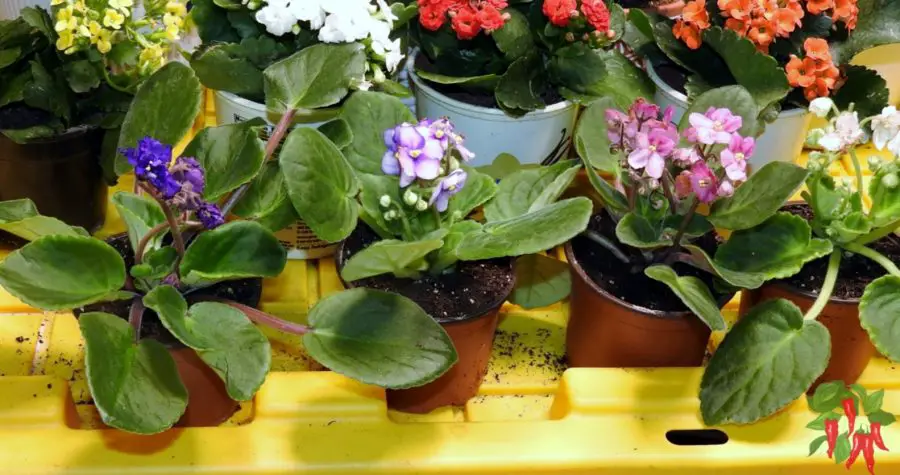
Indoor plants for small spaces let you build a surprisingly varied plant collection without giving up half your living room. The key is choosing plants that naturally stay compact, grow slowly, or use vertical space instead of eventually spreading across the room.
This matters to me because I grow in an apartment. Once you start collecting plants, windowsills, shelves, plant stands, and those little open spaces near a window become valuable real estate pretty quickly.
Fortunately, small does not have to mean boring. African Violets give you flowers, Peperomia Hope trails from a small pot, Panda Plants add fuzzy foliage, Philodendron Birkin brings bold variegation, and succulents such as Haworthia, Dwarf Jade, and Gasteria can stay manageable for years.
The best choices are plants that fit your space now while also giving you a realistic idea of how much room they will need later. That is why I like looking at mature size and growth habit instead of judging a plant by the little nursery pot it comes in.
What You’ll Learn
- Which indoor plants naturally work well in small spaces
- Which compact plants give you flowers, colorful foliage, or unusual textures
- How trailing and upright growth can help you use limited space
- Why mature plant size matters more than nursery-pot size
- How to choose plants for shelves, windowsills, desks, and small plant stands
Quick Answer: Some of the best indoor plants for small spaces include African Violets, Peperomia Hope, Flaming Katy, Panda Plant, Haworthia Zebra Plant, Dwarf Jade, Chinese Money Plant, Philodendron Birkin, Purple Waffle Plant, and Gasteria. These plants stay relatively manageable, grow slowly, trail instead of spreading outward, or can be pruned to fit the space you have.
Indoor Plants for Small Spaces at a Glance
| Plant | Growth Habit | Good Location | Why It Works |
|---|---|---|---|
| African Violet | Compact rosette | Windowsill or shelf | Lots of flowers from a small plant |
| Peperomia Hope | Compact/trailing | Shelf or hanging planter | Uses vertical space as stems trail |
| Flaming Katy | Compact/upright | Bright windowsill | Long-lasting colorful flowers |
| Panda Plant | Slow-growing/upright | Windowsill or shelf | Fuzzy foliage and manageable growth |
| Haworthia Zebra Plant | Small rosette | Windowsill, shelf, or desk | Naturally compact succulent |
| Dwarf Jade Plant | Slow-growing/branching | Bright shelf or windowsill | Slow growth and easy to prune |
| Chinese Money Plant | Compact/upright | Shelf or small plant stand | Distinctive round foliage |
| Philodendron Birkin | Self-heading/upright | Plant stand or tabletop | Tropical foliage without long vines |
| Purple Waffle Plant | Low/bushy | Shelf or small planter | Colorful textured foliage |
| Gasteria | Compact/slow-growing | Windowsill, desk, or shelf | Unusual foliage with a small footprint |
Indoor Plants for Small Spaces That Won’t Take Over
A good small-space plant does more than fit into a four-inch pot when you buy it. Ideally, it stays reasonably compact, grows slowly, trails into unused vertical space, or responds well to occasional pruning.
I also like mixing different types of plants rather than filling a shelf with ten plants that all look alike. You can have flowers, succulents, tropical foliage, unusual textures, and trailing plants without moving into giant-houseplant territory.
African Violet: Lots of Flowers From a Small Plant

African Violets are almost made for small-space indoor gardening. They stay compact, do not need a large container, and can produce an impressive amount of color without taking over a windowsill.
The fuzzy leaves form a tidy rosette with flowers rising above the foliage. You can find varieties with different flower colors, shapes, and even variegated foliage, so several African Violets can look surprisingly different from one another.
They also work well under grow lights, which is useful when your limited window space is already occupied.
For sheer flower power relative to the amount of space they occupy, African Violets are hard to beat.
See my African Violet care guide for help with light, watering, flowering, and indoor growing.
Peperomia Hope: Let It Trail Instead of Taking Up More Shelf Space
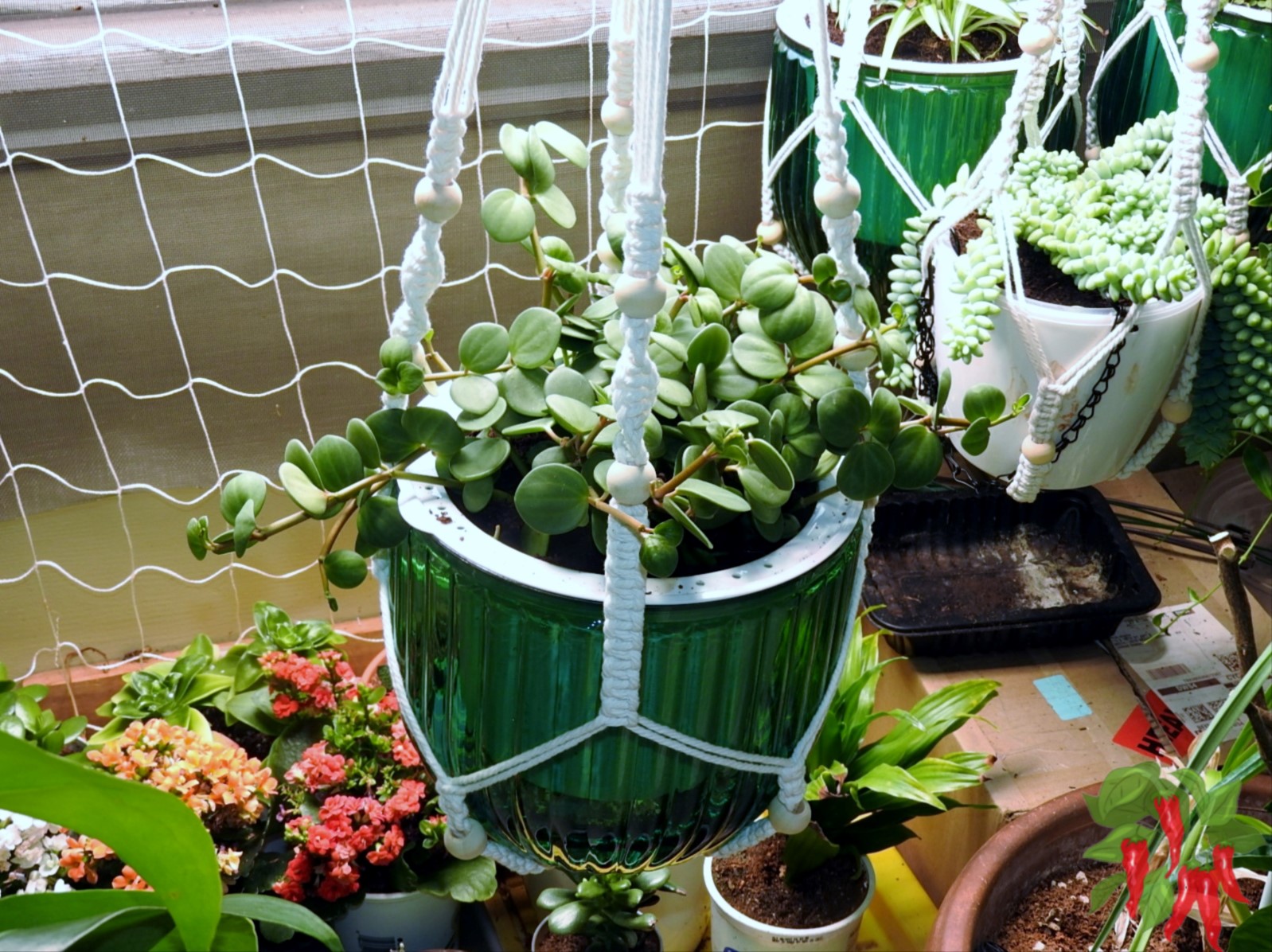
Peperomia Hope is one of my favorite choices for a limited growing area because its small rounded leaves grow along stems that eventually trail over the side of the container.
That growth habit lets you use space differently. Instead of moving into a larger and wider area, Peperomia Hope can spill over the edge of a shelf or hang from an elevated planter.
You can also prune the stems if you prefer a shorter, fuller plant. I like growing Peperomia Hope in coco coir and perlite, and a self-watering hanging planter can make watering easier without drainage dripping onto the floor below.
My Peperomia Hope care guide covers the growing mix, self-watering planter setup, pruning, propagation, and how to keep the plant full instead of leggy.
Flaming Katy: Plenty of Flowers Without a Large Plant
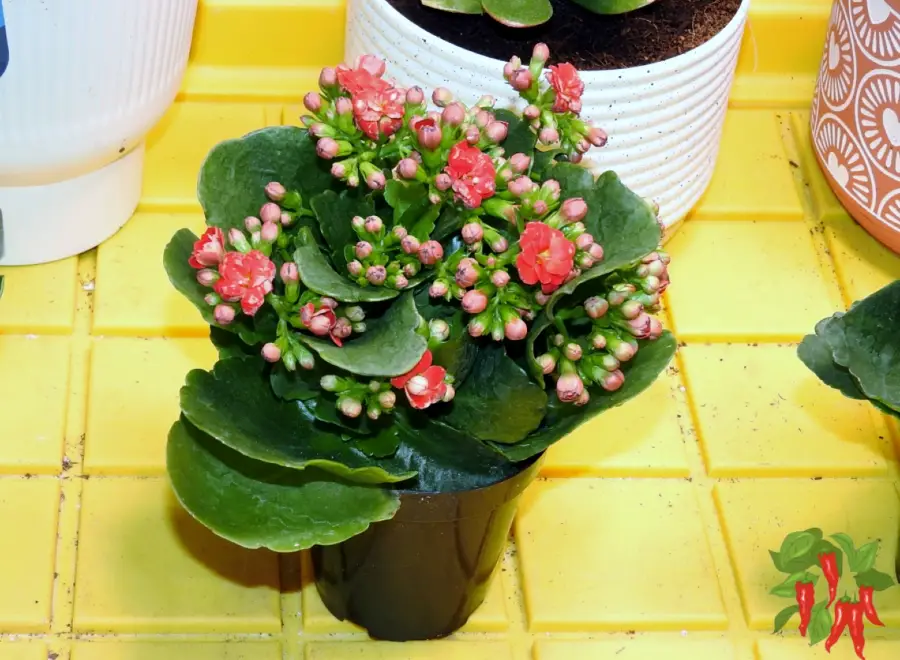
Flaming Katy, Kalanchoe blossfeldiana, is one of my favorite compact flowering plants. It produces clusters of colorful flowers above thick succulent foliage without requiring the space of a large flowering houseplant.
With good light, Flaming Katy can flower repeatedly, which gives it an advantage over plants you mainly grow for foliage. It works especially well on a bright windowsill where a larger plant would become inconvenient.
Because it is a succulent, it also handles drying between waterings much better than constantly wet growing conditions.
See my Flaming Katy indoor care guide for more on keeping it healthy and encouraging repeat flowering.
Panda Plant: Fuzzy Foliage in a Manageable Package
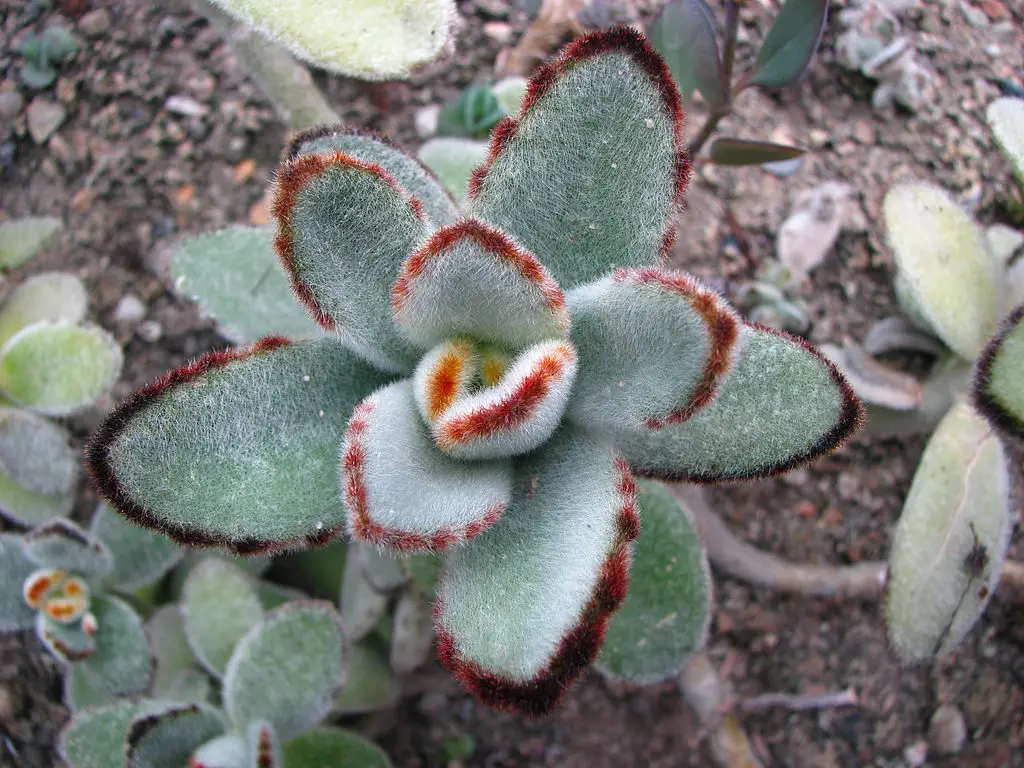
Panda Plant, Kalanchoe tomentosa, proves that a small-space plant does not have to look ordinary. Its thick leaves are covered with fine hairs that give the foliage a soft, velvety appearance.
The darker markings along the leaf edges add even more character. It is a completely different look from Flaming Katy even though both plants belong to the Kalanchoe group.
Panda Plants grow relatively slowly and respond well to pruning if an older plant starts getting taller than you want. Give them bright light, good drainage, and time for the growing medium to dry between waterings.
You can find my complete Panda Plant care guide here.
Haworthia Zebra Plant: A Small Succulent That Stays Manageable

Haworthia Zebra Plant is a great choice when you want a succulent without eventually needing room for a much larger plant. Its pointed leaves form compact rosettes, while the raised white markings give it a distinctive striped appearance.
Its naturally compact growth makes it easy to fit on a windowsill, shelf, desk, or narrow plant stand. It also grows slowly enough that you are not constantly trying to find a bigger location for it.
Haworthia can produce offsets around the mother plant. You can leave them together for a fuller cluster or separate them when the container starts getting crowded.
See my Haworthia Zebra Plant care guide for more on light, watering, soil, and propagation.
Dwarf Jade Plant: Slow Growth You Can Easily Control
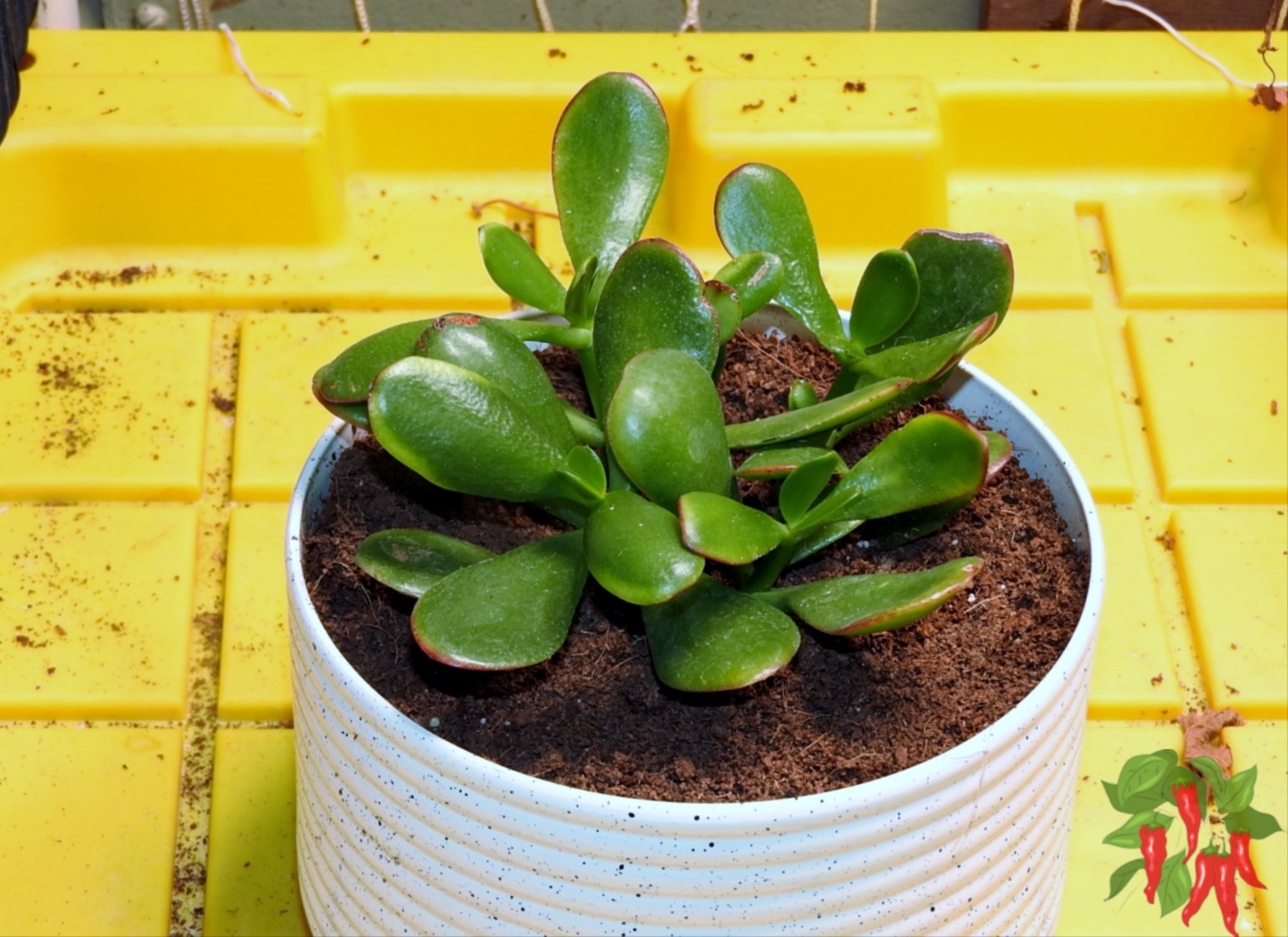
Dwarf Jade is another good choice when you want a plant that can stay manageable for a long time. Its small fleshy leaves grow along branching stems, giving you the appearance of a miniature tree without the rapid growth of many larger houseplants.
It does not remain tiny forever, but its relatively slow growth and tolerance for pruning make its size easy to control indoors. You can let it develop naturally or prune it periodically to maintain a more compact shape.
Give Dwarf Jade plenty of light and avoid keeping the root zone constantly wet. Like many succulents, it is much easier to manage when the growing medium drains freely.
My Dwarf Jade Plant care guide covers how to grow and maintain it indoors.
Chinese Money Plant: Round Leaves and a Small Footprint
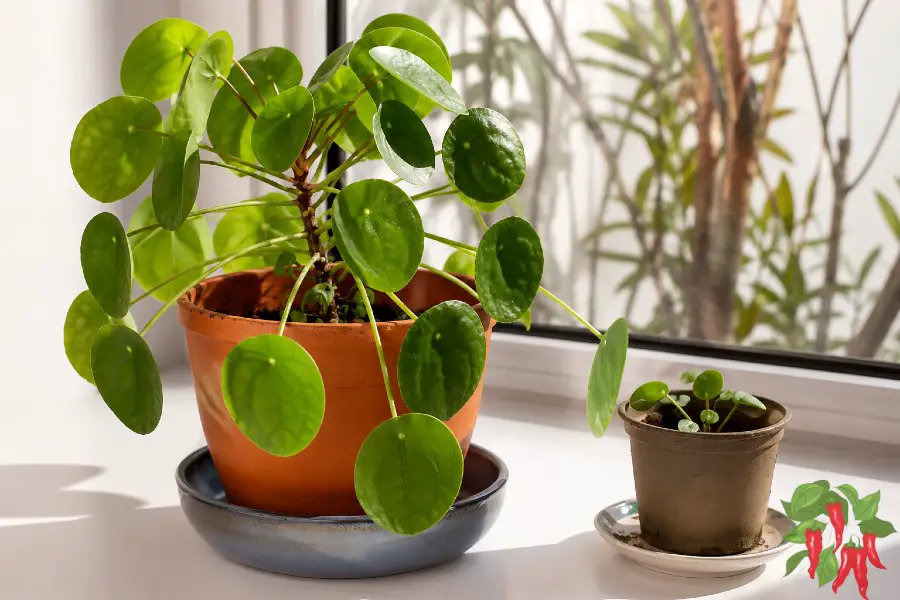
Chinese Money Plant, Pilea peperomioides, gives you a completely different look without requiring a huge amount of room. Its round leaves sit on slender stems extending from a central plant, creating an open, almost sculptural appearance.
It works well on a shelf, small table, or plant stand and is easy to rotate as it grows toward the light. Bright indirect light generally helps maintain compact, balanced growth.
Pilea also produces pups around the base. You can leave some in the container for a fuller plant or separate them. Just be warned: keeping every pup is a pretty efficient way to turn one small-space plant into a collection.
See my Chinese Money Plant care guide for more on growing Pilea indoors.
Philodendron Birkin: Tropical Foliage Without the Long Vines
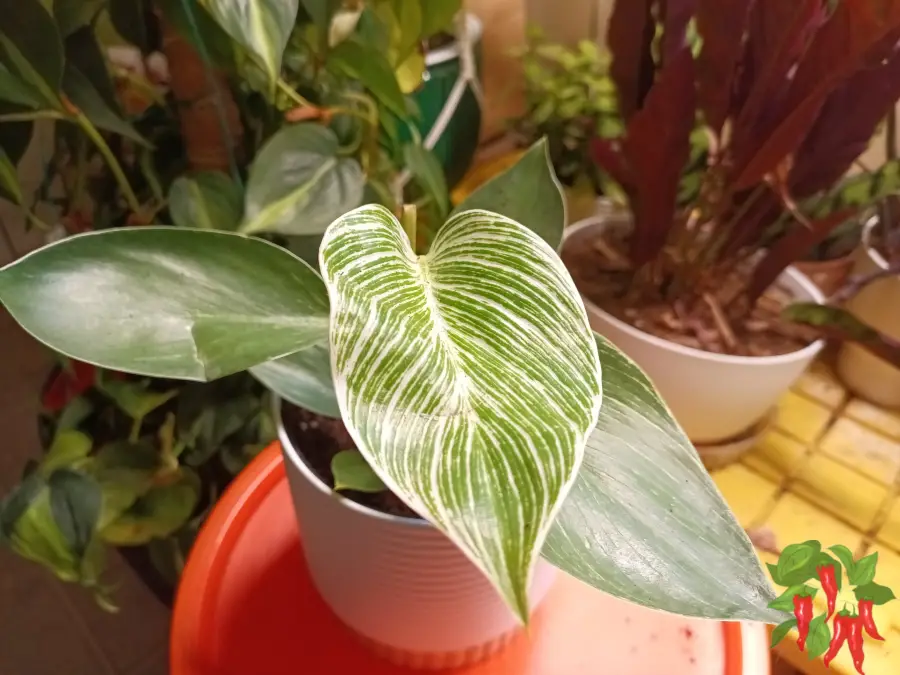
Philodendron Birkin works well when you want bold tropical foliage but do not want vines stretching across a shelf or climbing halfway up the wall.
Birkin has a self-heading growth habit, with new leaves emerging around a central stem. The dark green leaves develop distinctive cream or white pinstripes, giving the plant plenty of visual interest without relying on flowers.
It can eventually become a substantial tabletop plant, but its upright growth is easier to accommodate in a limited space than many sprawling or climbing tropical plants. Give it bright indirect light to support healthy growth and good variegation.
My Philodendron Birkin care guide covers light, watering, growing conditions, and keeping the plant looking its best indoors.
Purple Waffle Plant: Colorful Foliage Without Much Height
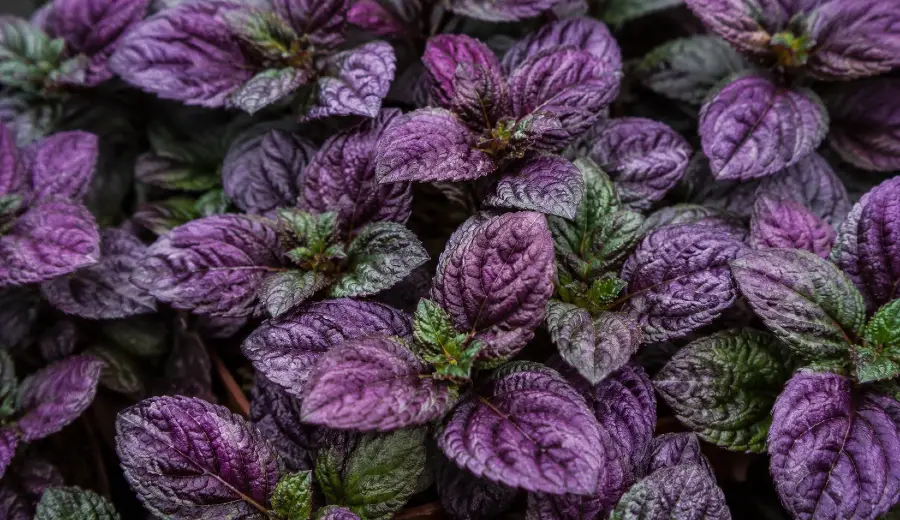
Purple Waffle Plant is a useful choice when you want something colorful that stays relatively low. Its puckered leaves combine green upper surfaces with rich purple coloring underneath, giving the plant much more visual impact than its size might suggest.
Rather than developing into a tall floor plant, Purple Waffle Plant tends to stay lower and bushier. That makes it useful for shelves, small planters, and other locations where you have some horizontal room but limited height.
It prefers more consistent moisture than the succulents in this list, so do not treat it like Haworthia or Dwarf Jade. Bright indirect light can also help maintain stronger foliage color.
See my Purple Waffle Plant care guide for its indoor growing requirements.
Gasteria: An Unusual Succulent for a Small Growing Space
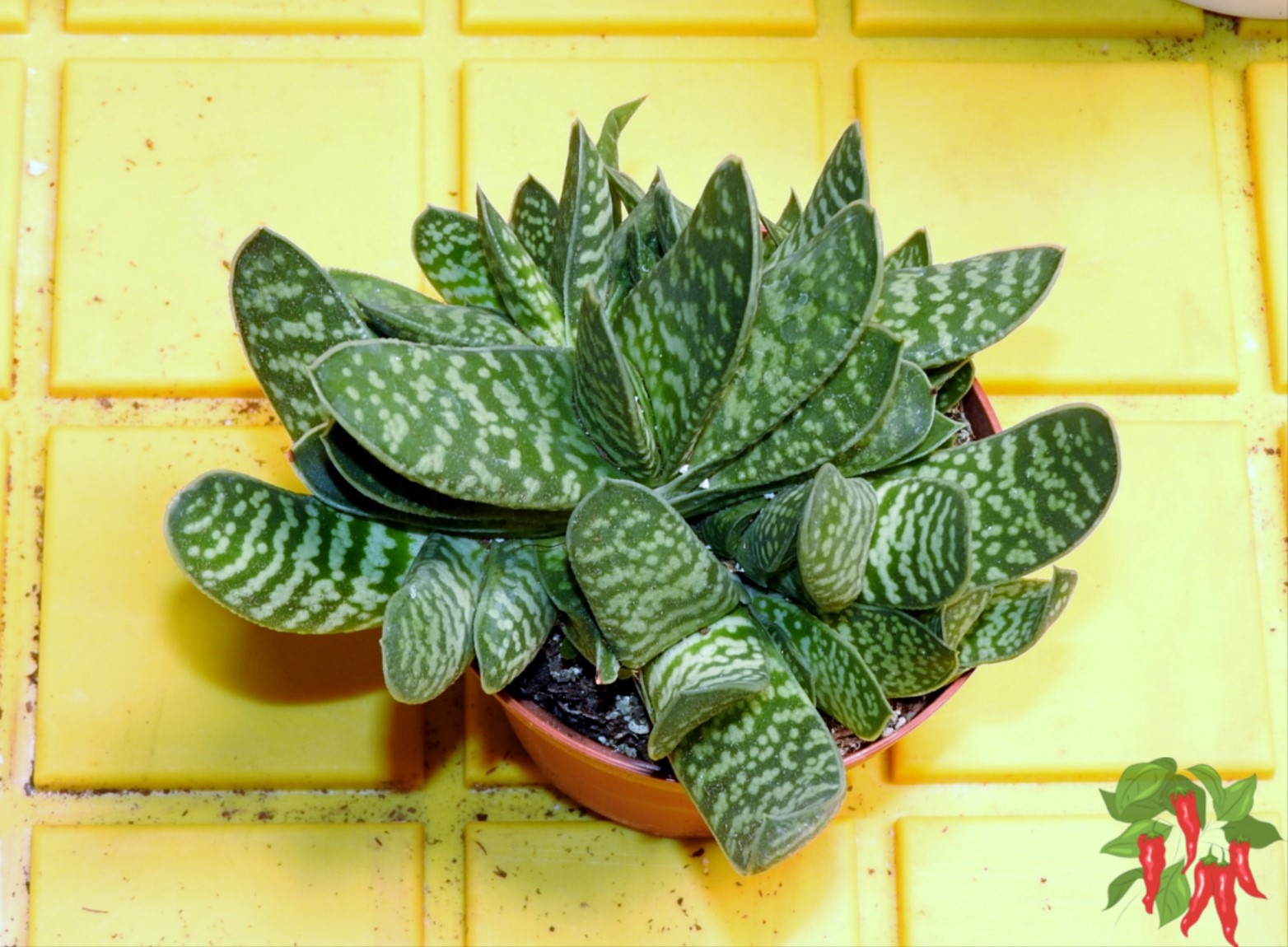
Gasteria deserves more attention as an indoor succulent. Its thick, often textured leaves can have spots, bands, bumps, and unusual patterns, giving you an interesting plant without requiring a large container.
Most Gasterias are relatively slow growers and remain manageable indoors, making them well suited to windowsills, desks, shelves, and succulent collections where space is limited.
They also produce offsets as they mature. You can leave those attached and allow the plant to develop into a larger cluster or separate them when you want to keep the original plant smaller.
If you like unusual succulents but do not have room for another large plant, Gasteria is an easy one to overlook.
See my Gasteria care indoors guide for more on growing this compact succulent.
How Big Will That Little Plant Actually Get?
One of the easiest mistakes in small-space gardening is judging a plant by the size it is when you buy it. A plant in a four-inch pot may be tiny because it is young, not because it is naturally a small plant.
Monstera deliciosa is a perfect example. A young Monstera can sit comfortably on a small table. Give it good conditions and enough time, though, and you may eventually have huge leaves, long aerial roots, a climbing support, and a pot sitting on the floor.
Before buying a plant specifically for a small space, I look at three things: how tall it gets, how wide it gets, and how it grows. Growth habit can be just as important as mature size.
| Growth Habit | What It Means in a Small Space | Good Strategy |
|---|---|---|
| Naturally compact | Usually remains manageable without much pruning | Ideal for shelves, desks, and windowsills |
| Slow-growing | May eventually get larger, but gives you years to manage its size | Prune or divide when necessary |
| Upright | Uses height rather than spreading across surrounding space | Useful where shelf or tabletop width is limited |
| Trailing | Stems can grow beyond the pot without using more shelf space | Use a high shelf or hanging planter |
| Clumping | Gradually gets wider as offsets develop | Remove or divide offsets when the pot gets crowded |
Quick Tip: When you’re short on space, do not look only for miniature plants. A slow-growing plant, an upright plant, or a trailing plant that uses otherwise empty vertical space can be just as practical.
How to Choose the Right Indoor Plant for Your Small Space
I find it easier to start with the empty space and then choose the plant rather than buying a plant first and trying to figure out where to put it later. Look at the available light, measure the area, and think about how the plant will grow over the next few years.
- Want lots of flowers? African Violet or Flaming Katy gives you plenty of color without requiring a large container.
- Want trailing growth? Peperomia Hope can spill over a shelf or hanging planter instead of using more horizontal space.
- Want unusual foliage? Purple Waffle Plant, Panda Plant, or Philodendron Birkin gives you texture, color, or variegation.
- Want a small succulent? Haworthia Zebra Plant and Gasteria are naturally compact choices.
- Want something you can shape? Dwarf Jade grows slowly and responds well to pruning.
- Want something different for a shelf? Chinese Money Plant gives you distinctive round foliage without immediately requiring floor space.
Remember: Small-space gardening is not about finding the smallest plants possible. It is about choosing plants whose mature size and growth habit work with the space you actually have.
Common Mistakes When Choosing Plants for Small Spaces
Small-space gardening gets much easier when you choose plants based on how they will actually grow in your home. A few simple mistakes can turn a tidy shelf or windowsill into a collection that needs more room than you planned.
Buying Based on Nursery Size
A young plant in a four-inch pot may look perfect for a small shelf, but that does not tell you its mature size. Some houseplants remain compact, while others are simply young versions of plants that eventually need considerably more room.
Before buying, check both mature size and growth habit. That is one reason plants such as Haworthia, Gasteria, African Violets, and Peperomia Hope work so well in limited spaces.
Ignoring Vertical Space
When shelf and floor space disappear, look up. Hanging planters, taller shelves, and narrow plant stands can give you additional growing room without adding more furniture.
Peperomia Hope is a good example. Once the stems begin trailing, they can hang below the shelf instead of requiring a wider surface for the plant.
Choosing Size Before Light
The perfect little plant is not useful if the location cannot provide the light it needs. Flaming Katy, Dwarf Jade, and many succulents need a brighter location than plants that tolerate softer indoor light.
Choose plants that match both the physical space and the light available there.
Crowding Plants Just Because Another Pot Fits
I know how tempting this is. You find another six inches of open shelf and immediately start thinking about what plant could go there.
Leaving some room between plants makes watering, pruning, rotating pots, and checking for pests much easier. It also gives foliage room to develop without constantly growing into the plant next to it.
Keeping Every Cutting, Pup, and Offset
Several plants on this list are very good at creating more plants. Chinese Money Plants produce pups, Gasteria and Haworthia develop offsets, and Peperomia Hope is easy to propagate from cuttings.
Propagation is fun, but in a small space you eventually have to decide how many new plants you actually want to keep. Sometimes giving a rooted cutting to a friend is a better small-space strategy than finding room for pot number 47.
Key Point: The best indoor plants for small spaces are not necessarily miniature plants. Look for compact growth, slow growth, easy pruning, or a growth habit that lets you use vertical space efficiently.
Frequently Asked Questions About Indoor Plants for Small Spaces
What are the best indoor plants for very small spaces?
African Violets, Haworthia Zebra Plants, Gasteria, Peperomia Hope, and Chinese Money Plants are especially useful when space is tight. The best choice depends on the light available and whether you want flowers, foliage, succulents, or trailing growth.
What indoor plants stay relatively small?
African Violets, many Haworthias, Gasterias, and other naturally compact plants can remain manageable for years. Slow-growing plants such as Dwarf Jade can also work well because you can control their size with occasional pruning.
What flowering indoor plants are good for a small apartment?
African Violets and Flaming Katy are two of my favorite choices. African Violets can produce plenty of flowers from a small rosette, while Flaming Katy produces clusters of colorful flowers above compact succulent foliage.
What plants work well on a small shelf?
Peperomia Hope, Haworthia Zebra Plant, Gasteria, Purple Waffle Plant, and Chinese Money Plant can all work well on shelves when they receive appropriate light. Peperomia Hope is particularly useful because the stems can eventually trail below the shelf rather than taking up more surface area.
Are hanging plants good for small spaces?
Yes. Hanging plants let you use vertical space that would otherwise be empty. Peperomia Hope is a good example because it starts relatively compact and gradually develops trailing stems. A self-watering hanging planter can also make watering easier while preventing drainage from dripping onto furniture or floors.
Can I keep a larger houseplant small by pruning it?
Pruning can control the size of some plants, but it does not turn a naturally large species into a genuinely compact plant. Dwarf Jade is a good candidate for size control because it grows relatively slowly and responds well to pruning. If your space is very limited, starting with a naturally compact plant is usually easier.
Can I grow a lot of houseplants in a small apartment?
Absolutely. I grow indoors in an apartment myself, and the trick is using the space you have efficiently. Windowsills, shelves, narrow plant stands, hanging planters, and grow lights can give you much more usable growing space than the floor area alone would suggest.
Final Thoughts on Indoor Plants for Small Spaces
Indoor plants for small spaces give you far more choices than a collection of miniature plants. Once you start thinking about growth habit instead of just pot size, you can use shelves, windowsills, plant stands, and vertical space much more effectively.
For flowers, I like African Violets and Flaming Katy. Haworthia and Gasteria are excellent choices when you want compact succulents, while Peperomia Hope can trail into space that would otherwise go unused. Philodendron Birkin gives you larger tropical-looking foliage without long vines, and Dwarf Jade is easy to shape as it slowly grows.
Most importantly, choose for the plant you will have a few years from now rather than the little plant sitting in front of you at the garden center. That one habit can save you a lot of rearranging later.
You may not have unlimited room, but you can still grow a surprisingly varied indoor garden. In a small space, choosing the right plant matters a lot more than simply having more space.
Where to Go Next
Explore Related Topics
More Small-Space Plants to Explore
Grow Peperomia Hope Indoors
Learn how I grow this compact trailing plant, including my coco coir and perlite growing mix, watering approach, pruning, and self-watering planter setup.
Grow African Violets Indoors
African Violets pack a surprising amount of flower color into a small footprint and are an excellent choice for shelves, windowsills, and grow-light setups.
Grow Gasteria Indoors
Discover an unusual slow-growing succulent with textured foliage and a naturally compact growth habit that works particularly well in limited spaces.