
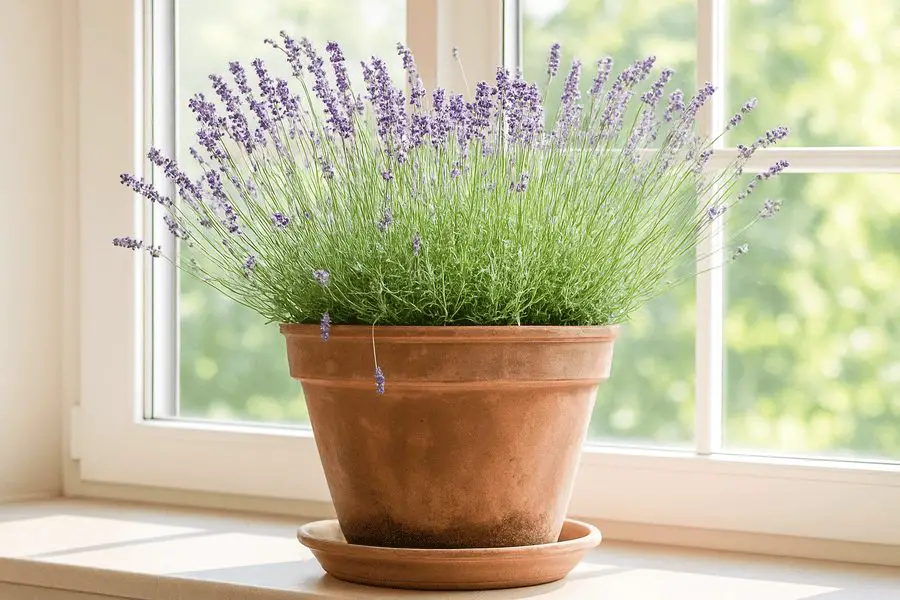
Indoor lavender care gets much easier once you understand what this plant actually wants. Lavender loves strong light, fast-draining soil, and a lighter hand with watering than most indoor herbs.
A lot of indoor lavender problems come from treating it like a regular houseplant. But once you set it up right, it can reward you with fragrant foliage, compact growth, and even blooms.
This guide covers everything from choosing the right variety to watering, pruning, repotting, and troubleshooting so you can grow lavender indoors with a lot less guesswork.
✅ What You’ll Learn
- 🌿 How to choose a lavender type that behaves better indoors
- ☀️ How to set up light so it grows compact instead of leggy
- 🪴 The pot + soil combo that prevents soggy-root disasters
- 💧 A simple watering rhythm that avoids both crispy and mushy plants
- ✂️ How to prune for bushier growth and more blooms
- 🐛 The most common indoor problems (and how to fix them fast)
🌱 Quick Answer
Indoor lavender grows best in strong direct light, fast-draining soil, and smaller pots with drainage holes. Let the soil dry between waterings, avoid humidity, and prune often to keep it compact and healthy.
🏡 Indoor Lavender Care Made Easy: Tips for Beginners
If you’ve ever brought home a cute little lavender plant and thought, “How hard can it be?”, you’re not alone.
Indoor lavender is one of those plants that looks simple… until it starts doing the dramatic flop, turning crispy, or refusing to bloom.
The good news? Once you understand what lavender actually wants indoors (hint: bright light, fast-draining soil, and fewer “sips”), it becomes much easier to keep happy.
In this guide on Indoor Lavender Care Made Easy, you’ll get a beginner-friendly setup that works whether you’re growing on a sunny windowsill or using a grow light.
No fancy greenhouse vibes required—just a few smart choices that make lavender feel like it’s living its best Mediterranean life.
🪻 Meet Your Lavender: Choose the Right Plant First

Lavender is famous for that calming scent and pretty purple flowers, but indoors it can be a little picky.
Most indoor struggles start with the plant choice. Picking a variety that stays compact and handles container life well gives you a head start.
🌱 Best Lavender Types for Indoor Containers
- 🌿 English lavender is a popular container choice and often more cold-hardy outdoors, but indoors it still needs strong light and excellent drainage.
- 🪻 Spanish/French-type lavenders (often sold with cute “rabbit ear” bracts) can do fine indoors too, but they still demand bright light and airy soil.
- 🪴 Look for “compact” or “dwarf” varieties when possible—smaller plants are simply easier to manage under indoor light.
🪻 Recommended Lavender Varieties for Indoor Growing

Not all lavender varieties are a good fit for indoor life. Some types can easily reach 3 feet tall, which makes them difficult to manage under grow lights or on a sunny windowsill.
For indoor growing, compact varieties are far easier to keep healthy, shaped, and blooming.
🪻 Best Compact Lavender Choices
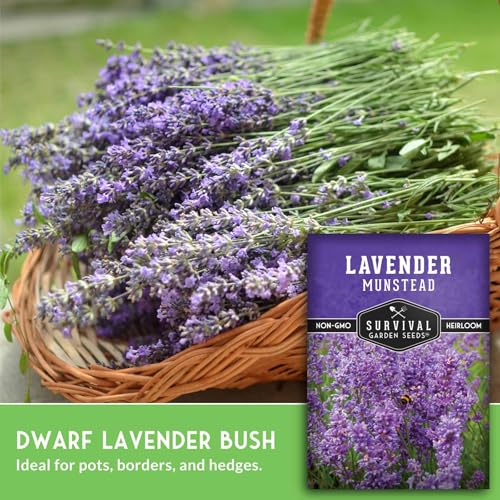
- Munstead Lavender Seeds
Munstead is a classic English lavender that stays relatively compact, usually reaching about 16–18 inches tall. It responds well to pruning, works nicely in containers, and is one of the most reliable choices for indoor growers. - Blue Hidcote Lavender Seeds
Blue Hidcote lavender is another excellent indoor-friendly option, topping out around 16–18 inches. It has deep purple flowers, a tidy growth habit, and is easier to keep compact indoors compared to larger lavender varieties.

⚠️ Why Variety Size Matters Indoors
Many lavender varieties are bred for outdoor gardens and can grow up to 3 feet tall or more.
Indoors, these larger types often become leggy, outgrow their space, or struggle under limited light.
Choosing naturally compact varieties like Munstead and Blue Hidcote makes indoor lavender care much easier and more successful.
✅ Tip: Seeds will germinate better with a cold treatment in the fridge. Cold stratification for lavender seeds for 3-6 weeks helps improve plant germination rates. You can keep the seeds in their packet or in a slightly moist growing medium.
🛒 Seeds, Cuttings, or Nursery Plants?
- 🌱 Seeds: rewarding, but slow. Great if you enjoy the process and don’t mind waiting.
- ✂️ Cuttings: a quicker way to get a plant that matches the parent (and many growers find it less frustrating).
- 🏷️ Nursery plants: fastest results—just choose carefully:
- ✅ Look for firm stems and healthy green growth
- ✅ Avoid pots that smell sour or “swampy”
- ✅ Skip plants with a dark, mushy base or constantly wet soil
☀️ Light: The #1 Key to Indoor Lavender Success
If lavender could talk, it would say: “More sun, please.” Indoor light is almost always weaker than you think. Lavender needs strong, consistent brightness to stay compact, grow dense, and bloom.
🪟 Window Light (and the Brightness Trap)
A room can feel bright to you and still be too dim for lavender. The goal is to give it the sunniest spot you’ve got.
- 🌞 Place lavender in your brightest window (often a south- or west-facing window in many homes).
- 🧭 Rotate the pot every few days so it grows evenly instead of leaning.
- 🪟 Keep leaves close enough to benefit from the light, but don’t press foliage against cold glass in winter.
💡 Grow Lights (Beginner-Friendly Setup)
If your lavender stretches, looks pale, or refuses to bloom, adding a grow light is often the “instant upgrade.” You don’t need anything complicated—just consistent, bright light.
- 💡 Aim for long daily light (many indoor growers run grow lights for a full day-length during active growth).
- 📏 Keep the light close enough that the plant stays compact, but not so close it overheats.
- ⏲️ Use a timer so the schedule stays consistent (plants love consistency more than perfection).
🏡 Best Indoor Locations for Lavender
Lavender needs the brightest spot you can give it indoors. Placement affects whether it stays compact, flowers, or turns weak and leggy.
- South-facing window: Best for the strongest natural light.
- West-facing window: Great for warm afternoon sun.
- Sunny kitchen window: Good if it stays dry and has airflow.
- Grow light shelf: Excellent for winter or low-light homes.
Avoid humid bathrooms, crowded plant shelves, or dark rooms. Lavender wants light, airflow, and dry conditions.
🌬️ Airflow Matters (Yes, Really)
Lavender likes fresh air. Indoors, still air can make soil dry unevenly and can encourage issues when the mix stays damp too long.
- 🌀 A small fan on low nearby can help (gentle airflow is the goal, not a windstorm).
- 🧍 Give lavender a little space from other plants so air can move around it.
- 🚫 Avoid trapping it in a humid corner—lavender generally prefers it drier.
🪴 Pot & Soil: Build a “No Root Rot” Foundation
Lavender is one of those plants where soil matters a lot. The biggest indoor lavender killer is staying too wet for too long.
Your mission: fast drainage, lots of air around the roots, and a pot that doesn’t behave like a swamp bucket.
🪣 Pick the Right Pot Size (Don’t Oversize It)
- 🧩 A pot that’s too large holds extra wet soil—lavender hates that.
- 🪴 A good beginner move is sizing up just one step from the nursery pot.
- 🕳️ Drainage holes are non-negotiable.
🧱 The Best Indoor Lavender Soil Mix
You want a mix that drains quickly and doesn’t stay heavy or soggy. If water sits in the pot for days, lavender starts to sulk… and then it starts to rot.
- 🟢 Easy option: cactus/succulent mix plus extra perlite for even faster drainage
- 🟢 DIY option: regular potting mix + plenty of perlite (and a light touch of coarse sand if you have it)
- 🟢 My preferred option: A mix of 75% coco coir and 25% perlite
- 🚫 Avoid “moisture control” soils for lavender
- 🚫 Avoid heavy mixes that stay dense and wet
🪨 Optional Top Dressing (Nice, But Not Required)
A thin layer of gravel can help keep stems cleaner and reduce splashing when you water. Just remember: top dressing doesn’t “fix” a slow-draining soil underneath it.
💧 Watering Lavender Indoors (Without Loving It to Death)
Indoor lavender watering is simple once you flip the mindset: you’re not keeping the soil constantly moist. You’re letting it dry down, then watering thoroughly, then letting it drain completely.
🧠 The Watering Rule You’ll Use Over and Over
- 🧽 Think: dry first, then water well.
- 🚿 Skip the daily tiny sips—those keep the root zone damp for too long.
- 🪴 Your pot + soil determine how often you’ll water more than any calendar ever will.
👆 How to Tell When It’s Time to Water
- 🖐️ Finger test: if the mix feels dry down below the surface, you’re closer to watering time.
- ⚖️ Pot weight test: lift the pot after watering (heavy), then lift again days later (lighter). This becomes shockingly reliable.
🚿 The Right Way to Water
- 🚿 Water until it runs out the bottom.
- 🧺 Let it drain fully—no standing water in the saucer.
- 🧽 If the soil is hydrophobic (water runs down the sides), bottom-water briefly, then let it drain well.
🚨 Overwatering vs Underwatering (Quick Clues)
- 🟤 Overwatering clues: drooping with wet soil, dull color, soft stems, a sour smell, fungus gnats hanging around
- 🍂 Underwatering clues: crispy tips, brittle leaves, quick wilting that improves after watering
🌡️ Temperature & Humidity: Keep It Comfortable
Lavender is happiest in a bright spot with stable temps and decent airflow. Indoors, the two biggest enemies are heat vents blasting the plant and cold shock from winter windows.
🌤️ Temperature Tips
- 🔥 Keep lavender away from heaters and vents that dry it out fast.
- 🧊 In winter, avoid pressing leaves against cold glass.
- 🌬️ Stable, moderate temps + airflow usually beat extreme warmth.
💦 Humidity Tips
- 💧 Lavender generally prefers it on the drier side.
- 🌬️ If your home is humid, prioritize airflow and fast-draining soil.
- 🚫 Misting is usually not helpful for lavender indoors.
🍽️ Fertilizer: Less Is More
Lavender isn’t a heavy feeder. Over-fertilizing often leads to soft, floppy growth and fewer blooms. The goal is steady, sturdy growth—not a leafy jungle.
🧪 Do You Need to Fertilize?
- 🌿 If your plant looks healthy and is growing, you may need little to nothing.
- 🟡 If growth stalls during active seasons and light is strong, a small feeding may help.
🧴 Beginner-Safe Feeding Plan
- 🗓️ Feed lightly during active growth (spring/summer for many indoor setups).
- 🧯 Avoid strong, frequent doses—especially high-nitrogen fertilizers.
- ✅ When in doubt, use less than the label suggests and feed less often.
✂️ Pruning & Harvesting: Get a Bushier Plant and More Blooms
Pruning is one of the best things you can do for indoor lavender. It helps the plant branch out, keeps it from getting leggy, and encourages more flower-friendly growth.
🌿 Why Pruning Matters Indoors
- 🌱 Encourages branching (more stems = fuller plant)
- 🌼 Supports blooming by keeping growth healthy and balanced
- 🪴 Prevents the “one tall floppy stick” look
✂️ How to Prune Without Panic
- ✂️ Snip just above a set of leaves where you see new growth potential.
- 🌼 Deadhead spent blooms so the plant doesn’t waste energy.
- 🚫 Avoid cutting deep into old woody sections if there’s no green growth below—lavender doesn’t always rebound well from that indoors.
🌸 Harvesting Lavender Indoors
- ✂️ Harvest when buds are formed and just starting to open for strong fragrance.
- 🧵 Tie small bundles and hang to dry in a cool, dry spot with airflow.
- 🧺 Or lay stems on a tray to dry if space is tight.
🪴 Repotting: When to Do It (and How to Avoid Shock)
Lavender doesn’t love constant disruption, but it does benefit from a refresh when roots get crowded or when the soil stays wet too long.
🔍 Signs It’s Time to Repot
- 🪴 Roots circling heavily or poking out drainage holes
- 💧 Soil drying insanely fast (root-bound) or staying wet forever (wrong mix/pot)
- 🌿 Stalled growth even with good light and decent watering habits
🧤 Simple Repot Steps
- 🪣 Move up just one pot size.
- 🧱 Switch to a faster-draining mix if the old soil stayed soggy.
- 🪴 Keep the crown (base of the plant) at the same level—don’t bury it deeper.
- 🧘 Give it a calmer week afterward: steady light, gentle watering, and no heavy feeding.
🐛 Troubleshooting: Common Indoor Lavender Problems
When indoor lavender struggles, it usually points to one of three things: light, soil/drainage, or watering habits. Here’s how to diagnose fast without spiraling.
🕷️ Pests You Might See Indoors
- 🐛 Aphids: tiny green/black insects on new growth
- 🕸️ Spider mites: fine webbing + speckled leaves
- 🪽 Whiteflies: little white “moths” that flutter when disturbed
- 🚿 Rinse the plant gently (especially leaf undersides).
- 🧴 Use insecticidal soap if needed, following label directions.
- 🚪 Isolate the plant for a bit so pests don’t spread to your other greens.
🍄 Root Rot & “Wet Feet” Issues
- 🚩 Drooping with wet soil, dark stems near the base, sour smell, fungus gnats
- 🛠️ Fix it by improving drainage fast:
- 🪴 Move to a smaller pot if it’s oversized
- 🧱 Repot into a grittier, airier mix
- 🌬️ Increase airflow and reduce watering frequency
🌿 Yellowing Leaves, Droop, or No Growth
- ☀️ Light check: is it bright enough for compact growth?
- 💧 Water check: are you watering based on soil dryness, not the calendar?
- 🧱 Soil check: does water drain quickly, or does the pot stay heavy for days?
🌼 “Why Won’t It Bloom?”
- 🌞 Blooming usually needs stronger light than “surviving” does.
- ✂️ Pruning helps create a fuller plant that can support blooms.
- 🧪 Too much fertilizer can push leaves instead of flowers.
🌿 Can Lavender Share a Pot with Other Plants?
In most indoor setups, lavender is happiest in its own container. It likes drier soil and less frequent watering than many popular herbs and houseplants.
Sharing a pot often leads to compromises—and lavender tends to lose those negotiations.
- ✅ If you do mix plants, choose ones that enjoy similar conditions: bright light and a drier rhythm.
- 🚫 Avoid pairing lavender with plants that prefer consistently moist soil.
✅ Your Simple Indoor Lavender Routine
- 🌞 Daily: check light positioning, rotate the pot occasionally
- 💧 Weekly: test soil dryness, inspect for pests
- ✂️ As needed: pinch/prune lightly to encourage branching
- 🪴 Monthly: confirm drainage is working and soil isn’t compacting
💬 Indoor Lavender Care FAQs
Can lavender really grow indoors year-round?
Yes, but it needs strong light, fast-draining soil, and careful watering to stay healthy indoors long-term.
What is the best lavender for indoor growing?
Compact varieties like Munstead and Hidcote are usually easier to manage indoors.
How often should I water indoor lavender?
Only after the soil dries down. Water deeply, then let it dry again before watering.
Why is my lavender turning brown?
Brown leaves can mean underwatering, heat stress, or weak light.
Why is my lavender drooping with wet soil?
That usually points to poor drainage or root rot starting.
Can I grow lavender from cuttings indoors?
Yes. Soft cuttings root well and often establish faster than seed-grown plants.
🌿 Final Thoughts: Indoor Lavender Care Made Easy
Lavender can be one of the most rewarding herbs to grow indoors once you stop overcomplicating it. Bright light, dry roots, and airflow do most of the heavy lifting.
The biggest mistake is usually too much water or not enough light. Fix those two things, and lavender becomes much easier to manage.
Start with a compact variety, keep it sunny, and stay patient. Once it settles in, you’ll have one of the best-smelling indoor herbs around.
Explore More Indoor Lavender Guides
Read more: 👉 Indoor Herb Growing Guide
📚 References & Further Reading
- Utah State University Extension – English lavender in the garden
- Purdue University – Propagate herbs (includes lavender basics)
- University of Missouri Extension – Growing herbs at home
- Iowa State University Extension – How to propagate from cuttings
- NC State Extension – Container soil and mix guidance (PDF)