
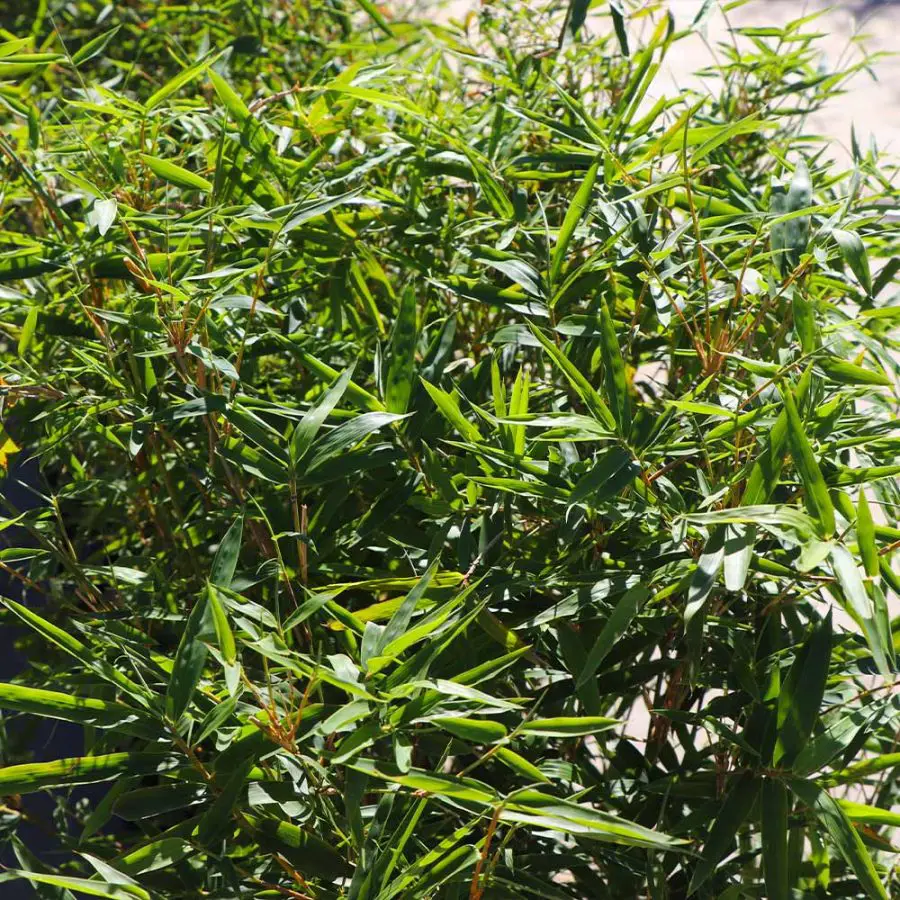
Fernleaf Bamboo indoor care is all about bright light, steady moisture, and giving this clumping bamboo enough room to stay dense and healthy. Known as Bambusa multiplex ‘Fernleaf’, it is a compact ornamental bamboo that brings a tropical look indoors without becoming invasive.
Its soft narrow leaves and upright stems make it a strong choice for bright rooms, sunrooms, and patios. Unlike running bamboo, this variety stays in a tight clump, making it much easier to manage in containers.
This guide covers how to keep Fernleaf Bamboo healthy indoors, from watering and light to repotting and fixing common problems.
What You’ll Learn
- How much light Fernleaf Bamboo needs indoors
- How to water without causing root problems
- The best soil mix for strong bamboo roots
- How to prune and divide it properly
- How to fix yellowing, browning, and pest issues
Quick Answer: How Do You Care for Fernleaf Bamboo Indoors?
Grow Fernleaf Bamboo in bright light with a few hours of direct sun if possible. Keep the soil evenly moist but not soggy, use a fast-draining mix with coco coir and perlite, and maintain warm temperatures with moderate humidity for the best growth.
Introduction To Fernleaf Bamboo Indoor Care
Are you on the hunt for a new houseplant to brighten up your living space?
Look no further than Fernleaf Bamboo! Not only is it a stunning addition to any room, but it’s also relatively easy to care for.
An Introduction To Fernleaf Bamboo As A Houseplant
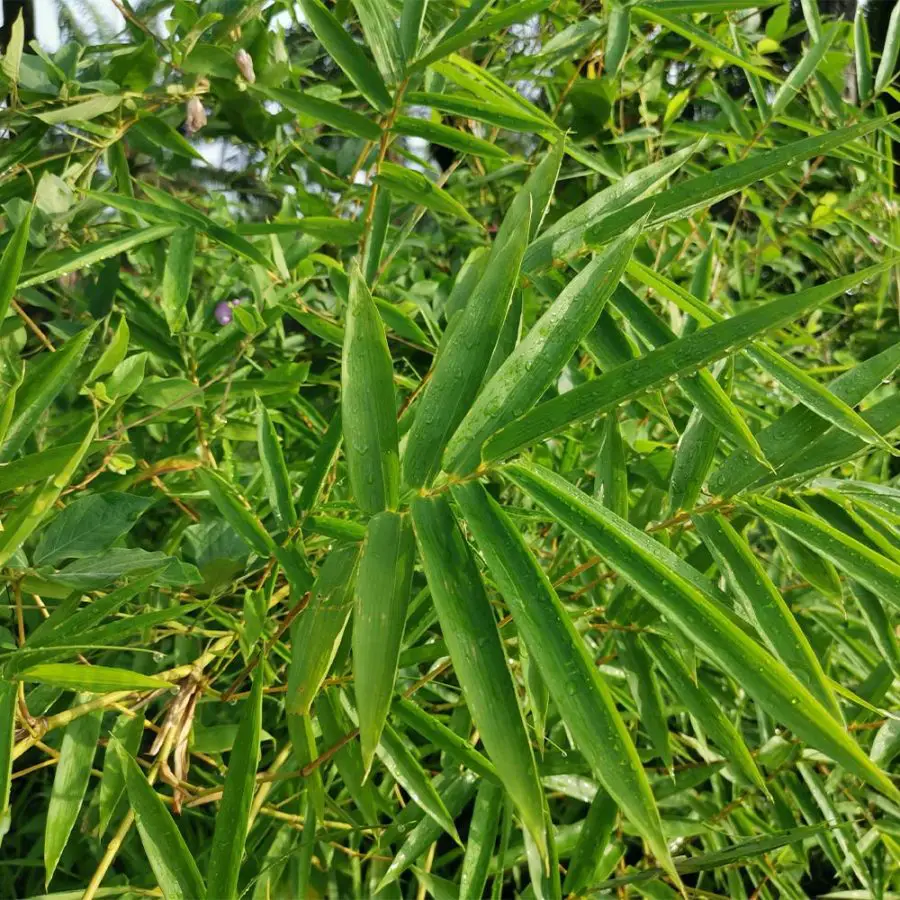
Fernleaf Bamboo, or its botanical name Bambusa multiplex ‘Fernleaf’, is a popular houseplant known for its delicate leaves and graceful stems. It’s a favorite among plant enthusiasts because of its tropical vibe.
Bambusa multiplex is a species of bamboo trees native to Southern China.
Bambusa Multiplex is a beautiful medium-sized bamboo plant that forms a dense clump of slender culms and lush foliage.
Due to its dense growth, it makes a good choice for hedges and live fences, creating an effective barrier that offers privacy and beauty.
Under optimal conditions, the stems can grow up to a maximum height of 10 feet tall, providing an impressive natural screen.
Its compact size also makes it a good choice for growing indoors.
Propagation of Bambusa Multiplex can be done through rhizome offsets or rooted culm cuttings, making it easy for plant enthusiasts to grow and expand their collection.
It grows Well In USDA Zones:7-10 outdoors and is hardy to 10 degrees Fahrenheit.
Fernleaf Bamboo is not invasive like running bamboo. It is a clumping bamboo species that won’t take over your garden if you plant it outside.
It can be used outdoors as a hedge bamboo and a privacy screen.
Black bamboo is a different species and another excellent choice for outdoors and also a great choice for indoor bamboo plants.
If you are growing it in pots the pot itself provides a root barrier to eliminate spreading.
The Importance of Proper Care
Although Fernleaf Bamboo is a relatively low-maintenance plant, it still requires proper care to thrive.
By providing the right conditions, you can keep your indoor plants healthy and beautiful for years to come. Here are some essential tips for Fernleaf Bamboo Indoor Care:
Fernleaf Bambo Quick Facts
| Mature Height: | 6-10 ft. |
| Mature Width: | 4-6 ft. |
| Sunlight: | Full-Partial |
| Growth Rate: | Fast |
| Botanical Name: | Bambusa multiplex ‘Fernleaf’ |
| Grows Well In Zones: | 7-10 outdoors |

You can get your Fernleaf Bamboo plant here
Fernleaf Bamboo Care at a Glance
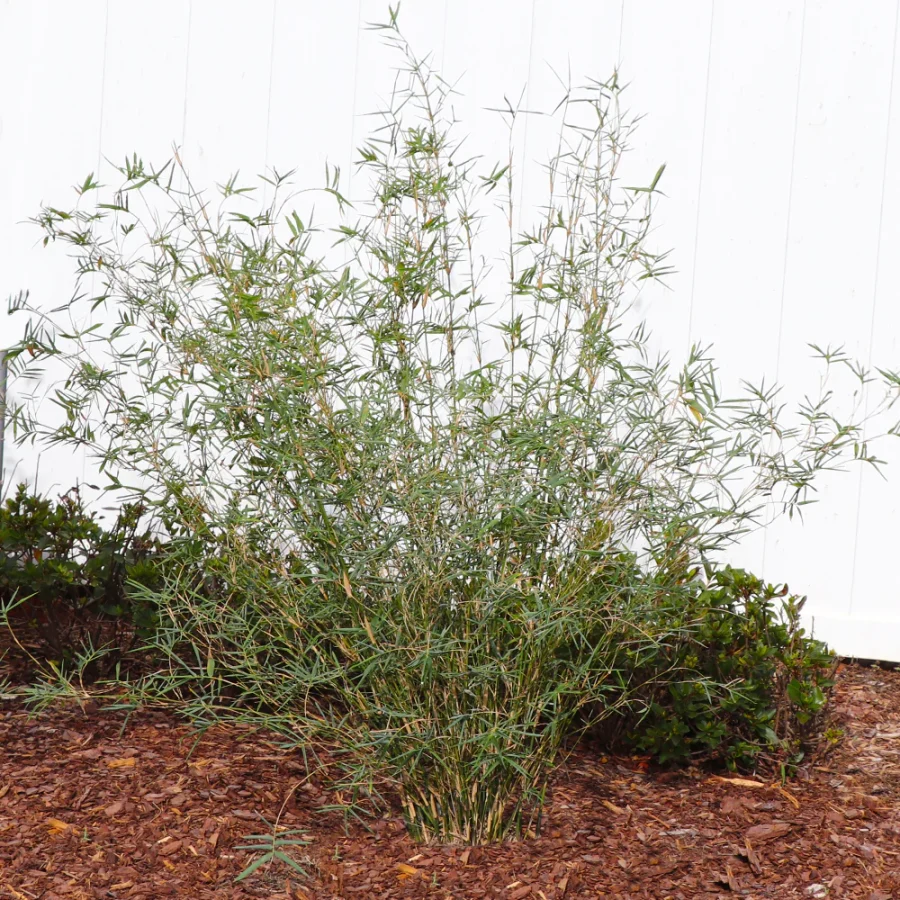
Here’s a quick look at Fernleaf Bamboo Care. There are more details later in the post.
Lighting
Fernleaf Bamboo prefers bright light. Place your plant near a window, with direct sunlight. In the rare case, it can scorch the leaves so move it to partial shade.
Watering
Proper watering is essential to the health of your Fernleaf Bamboo.
It prefers moist soil. The best time to water your plant is when the soil surface feels dry to the touch. Avoid overwatering, as this can lead to root rot.
Temperature and Humidity
Fernleaf Bamboo thrives in moderate temperatures and high humidity levels.
Keep the temperature between 60-80°F and use a humidifier or mist the plant regularly to increase humidity levels.
Soil and Fertilizer

Use a well-draining soil mix for your Fernleaf Bamboo, and fertilize it every 2-4 weeks during the growing season with a balanced fertilizer.
Pruning and Propagation
Prune your Fernleaf Bamboo to remove any damaged or yellowing leaves. It can also be propagated through division.
Lighting
Like all plants, Fernleaf Bamboo needs the right amount of light to grow and thrive.
In this section, we’ll discuss the best lighting conditions for your Fernleaf Bamboo and how to ensure it gets the light it needs to flourish. Let’s dive in!
Lighting Needs for Fernleaf Bamboo
Fernleaf Bamboo requires bright light to thrive.
In its native habitat, it grows under the canopy of larger trees, so it’s adapted to lower light levels but it will do best with 4-6 hours of direct full sunlight.
While it can tolerate some shade, it still needs enough sunlight to grow and produce new leaves.
Bright Light
Bright light means placing your Fernleaf Bamboo near a south-facing window with direct sun exposure.
If you don’t have access to natural light, you can use artificial grow lights to provide your plant with the right amount of light.
Direct Sunlight Is Best
It’s essential to expose your Fernleaf Bamboo to direct sunlight.
If you do notice that your plant is getting too much direct sunlight, use sheer curtains to filter the light.
On the other hand if you notice your plant getting leggy or losing color it needs more light.
Best Indoor Locations for Fernleaf Bamboo
Fernleaf Bamboo grows best where it gets strong light and good airflow. Placement makes a big difference in keeping it full and green.
- South-facing windows: Best for strongest growth
- East-facing windows: Good for gentler morning sun
- Bright sunrooms: Excellent for larger specimens
- Covered patios: Great during warmer months
Avoid dark corners or low-light rooms, as bamboo can thin out and lose density quickly.
Watering

One of the essential aspects of caring for your Fernleaf Bamboo is providing it with the right amount of water.
Overwatering or underwatering can cause significant damage to your plant, so it’s crucial to get this aspect of care just right.
Proper Watering for Fernleaf Bamboo
Watering your Fernleaf Bamboo correctly is vital to its health and longevity. While it requires regular watering don’t overwater it.
The right amount of water keeps the plant hydrated, but overwatering can lead to root rot and other issues.
Avoid Overwatering
The most common mistake people make when caring for their Fernleaf Bamboo is overwatering.
To avoid this, water your plant when the top inch of soil feels dry to the touch.
Allow the water to drain through the soil and out the drainage holes at the bottom of the pot.
Make sure to discard any excess water that remains in the saucer.
Allow Soil to Dry Out
Fernleaf Bamboo prefers well-draining soil that allows excess water to drain away quickly.
Allowing the soil to dry out between waterings helps prevent overwatering and keeps your plant healthy.
However, be careful not to let the soil dry out completely, as this can cause the leaves to yellow and drop.
Use Filtered or Distilled Water
Fernleaf Bamboo is sensitive to minerals found in tap water, such as chlorine and fluoride.
Using filtered or distilled water can prevent mineral buildup in the soil and keep your plant healthy.
If you don’t have access to filtered or distilled water, you can also use rainwater.
Temperature and Humidity

While it’s adaptable to a range of conditions, maintaining the ideal temperature and humidity levels can help your plant thrive and stay healthy.
Ideal Temperature Range for Fernleaf Bamboo
Fernleaf Bamboo is a tropical plant that thrives in warm climates and humid environments.
Outdoors it can survive cold temperatures as low as 10 degrees but while it can tolerate a range of temperatures, it prefers to be kept in a temperature range between 65-85°F (18-29°C).
Avoid exposing your Fernleaf Bamboo to extreme temperatures below 55°F (12°C) or above 90°F (32°C).
Moderate to High Humidity Levels
In addition to the right temperature, Fernleaf Bamboo also requires moderate to high humidity levels to thrive.
The ideal humidity level for your Fernleaf Bamboo is between 50-70%.
Low humidity can cause the leaves to dry out and turn brown, while high humidity levels can lead to fungal growth.
How to Increase Humidity
If you live in a dry climate or during the winter months when indoor heating can dry out the air, you may need to increase the humidity levels around your Fernleaf Bamboo.
A great way to do this is to use a humidifier. If you don’t have a humidifier, you can mist your plant regularly with water.
Another option is to place a pebble tray or a tray of water near your Fernleaf Bamboo, allowing the water to evaporate and increase the humidity levels around the plant.
Soil and Fertilizer

In this section, we’ll cover what soil type Fernleaf Bamboo prefers, how to fertilize it properly, and some tips to keep your plant healthy and happy.
Ideal Soil Mix for Fernleaf Bamboo
Fernleaf Bamboo prefers well-drained soil that doesn’t get compacted. A mix of peat moss, perlite, and sand is a great choice for your plant.
However, peat moss is not sustainable, so consider using coco coir instead.
This is an environmentally friendly alternative that also helps retain moisture in the soil and provides good drainage.
Avoid Compacted Soil
It’s important to avoid compacted soil around your Fernleaf Bamboo. This can cause water to pool around the roots and lead to root rot.
Don’t try to use garden soil indoors. It may contain bugs or diseases and it will compact heavily.
To prevent compaction, make sure the soil is aerated and loosen it up regularly.
How to Properly Fertilize
Fernleaf Bamboo should be fertilized every 2-4 weeks during the growing season with a balanced fertilizer.
This will help your plant grow strong and healthy.
Avoid over-fertilizing, as this can damage your plant’s roots. If you notice your plant’s leaves turning yellow, this may indicate over-fertilization.
You should repot your plant when you bring it home from the nursery and adding a slow-release fertilizer to the root zone at this time is a good idea but make sure to follow the manufacturer’s instructions.
Why coco coir and perlite are better choices than peat-based potting soil
Coco coir and perlite are a better choice than peat-based potting soil for several reasons.
First, peat moss is not a renewable resource, and harvesting it can have a negative impact on the environment.
On the other hand, coco coir is made from the husks of coconuts, which are a renewable resource.
In addition, coco coir has excellent water retention properties, which helps to keep the soil moist without becoming waterlogged.
This is important for Fernleaf Bamboo, which requires well-draining soil to prevent root rot.
Perlite, on the other hand, helps to aerate the soil and prevent compaction, which can also lead to root rot.
Overall, using coco coir and perlite as a sustainable alternative to peat moss can help to ensure that your Fernleaf Bamboo is healthy and thriving while also being kind to the environment.
Repotting Fernleaf Bamboo:

Repotting your Fernleaf Bamboo is an important aspect of its care. It allows the plant to have fresh soil and provides more room for root growth.
Here are some key points to keep in mind when it comes to repotting:
How to Repot Fernleaf Bamboo:
• When repotting your Fernleaf Bamboo, choose a pot that is slightly larger than the current pot.
• Make sure the new pot has drainage holes to prevent overwatering.
• Gently remove the plant from its current pot and loosen any tangled roots.
• Fill the new pot with fresh, well-draining soil and place the plant in the center.
• Fill the rest of the pot with soil and gently press down.
Pot Size for Fernleaf Bamboo
Fernleaf Bamboo prefers to be slightly root-bound, so it’s best to choose a larger pot that is only one size larger than its current pot.
A pot that is too large can lead to overwatering and root rot.
How Often to Repot Fernleaf Bamboo
Repotting is usually necessary every 1-2 years, or when you notice the roots have become tightly bound and the plant is struggling to grow.
It’s best to repot in the early spring or summer when the plant is actively growing.
By following these guidelines, you can ensure your Fernleaf Bamboo has the proper growing conditions for a healthy and thriving plant.
Don’t forget to give your plant time to adjust to its new pot and water it properly after repotting.
Pruning and Propagation

Pruning and propagation are important aspects of Fernleaf Bamboo indoor care that can help keep your plant looking its best.
Regular pruning can help to remove any damaged or diseased foliage and promote new growth, while propagation can allow you to create new plants from your existing ones.
Proper Pruning Technique:
Pruning your Fernleaf Bamboo is essential for its overall health and appearance.
Begin by removing any yellow or brown leaves or stems, which can be a sign of disease or stress.
You can also trim back any leggy or overgrown branches to encourage new growth.
Propagation through Division:
Fernleaf Bamboo can be propagated through division, which involves separating a healthy section of the plant from the main plant and repotting it.
This is a great way to create new plants and help your existing plant thrive. A great time to do this is when your plant needs repotting.
Step-by-Step Propagation:
To propagate your Fernleaf Bamboo through division, start by removing the plant from its pot and gently separating the root ball into two or three sections.
Be sure to keep as many roots intact as possible.
Next, repot each section in a well-draining soil mix, such as one made with coco coir and perlite.
Water thoroughly and place in a bright, indirect light. Keep the soil moist but not waterlogged, and avoid fertilizing for the first few weeks to allow the new plant to adjust.
With proper care, your new plants will begin to grow and thrive, adding to your collection of beautiful Fernleaf Bamboo.
More Propagation Methods
If you’re looking to expand your collection of bamboo plants, there are three main ways to propagate them: by taking cuttings from the rhizomatous roots, by taking cuttings from young culms (stems), or by growing them directly from seeds.
Each method has its own unique benefits and challenges, so it’s worth exploring which one works best for you and your gardening goals.
Taking Cuttings from Rhizomatous Roots:
This method involves taking a cutting from the rhizomatous roots of an existing bamboo plant.
It is essentially division but can also be used for outdoor plants you cant repot.
The rhizomes are underground stems that grow horizontally and produce new shoots.
To propagate using this method, carefully dig up a healthy section of the rhizome system, making sure to include some roots and shoots.
Cut the rhizome into smaller sections, each with a shoot and a portion of the root.
Plant the sections in well-draining soil and keep them moist until new roots appear.
Taking Cuttings from Young Culms:
This method involves taking a cutting from a young culm, or stem, of an existing bamboo plant.
Select a healthy, young culm with several leaf nodes and cut it into sections, each with at least one node.
Plant the sections in a well-draining soil mix and keep them moist until new growth appears.
Growing Directly from Seed:
This method involves growing bamboo from seeds. However, it’s important to note that bamboo seeds can be difficult to obtain and may not be readily available.
Additionally, bamboo plants typically only flower and produce seeds once every several years, so this method requires patience.
To grow from seed, soak the seeds in water for several hours and plant them in a well-draining soil mix.
Keep the soil moist and place the pot in a warm, bright location. Germination may take several weeks to several months.
Overall, division, and taking cuttings from rhizomatous roots and young culms are the most common and practical methods of propagating bamboo.
With proper care and attention, your new bamboo plants will grow and thrive, adding to the beauty of your indoor space.
Common Problems and Solutions
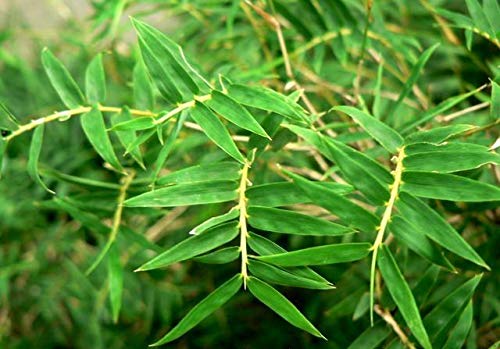
In this section, we’ll go over some of the most common issues that can affect Fernleaf Bamboo and provide solutions to help get your plant back to its healthy and vibrant state.
• Yellowing leaves and dry, crispy foliage can be a sign of underwatering, while brown or mushy leaves may indicate overwatering. Adjust your watering routine accordingly and make sure the soil is well-draining.
• Fernleaf Bamboo can be susceptible to pests such as spider mites, mealybugs, and scale insects. Treat these pests with neem oil or insecticidal soap, making sure to apply it thoroughly to all affected areas.
• If your plant is not getting enough humidity, you may notice brown tips on the leaves or edges that curl upwards.
• Try misting the plant regularly, using a pebble tray filled with water, or investing in a humidifier to increase moisture levels.
• If you notice small, brown spots on the leaves, it could be a sign of fungal or bacterial infection. Trim off any affected leaves and make sure the plant is not in an area with too much moisture or low air circulation.
• If you notice new growth is pale or stunted, your plant may need to be fertilized. Use a balanced fertilizer every 2-4 weeks during the growing season to provide the necessary nutrients.
Specific insect pests and treatment methods
Spider mites: If you notice small webs or speckling on the leaves, it could be a sign of spider mites. To treat spider mites, you can try wiping the leaves with a damp cloth or spraying them with a mixture of water and neem oil.
Mealy bugs: Mealybugs can appear as white, cottony patches on the leaves or stems. To treat mealybugs, you can use a cotton swab dipped in rubbing alcohol to remove them from the plant.
Scale insects: Scale insects often appear as small, brown bumps on the stems or leaves. To treat scale insects, you can use a solution of equal parts rubbing alcohol and water and apply it to the affected areas with a cotton swab.
Fernleaf Bamboo FAQs
Is Fernleaf Bamboo invasive?
No. Fernleaf Bamboo is a clumping bamboo, which means it stays compact and spreads much more slowly than running bamboo.
Can Fernleaf Bamboo grow indoors?
Yes. It does well indoors if given enough light, regular watering, and proper humidity.
How often should I water Fernleaf Bamboo?
Water when the top inch of soil begins to dry. Keep it evenly moist, but do not let it stay soggy.
Does Fernleaf Bamboo need direct sunlight?
A few hours of direct morning or late afternoon sun can help, but bright light is the main requirement.
How tall does Fernleaf Bamboo get indoors?
In containers indoors, it commonly reaches 6 to 10 feet depending on light, pot size, and pruning.
Final Thoughts
Fernleaf Bamboo is one of the easiest ornamental bamboos to grow indoors if you have enough light and can keep the soil consistently moist. Its clumping habit makes it much easier to manage than aggressive running bamboo.
The key is simple: bright light, steady watering, warm temperatures, and good drainage. Get those right, and it can become a long-term tropical focal point indoors.
If you want the look of bamboo without the usual spreading headaches, Fernleaf Bamboo is one of the best choices.
You can get your Fernleaf Bamboo plant here