When people talk about terrariums, they usually picture a sealed glass container that traps humidity. In real growing setups, most terrariums aren’t truly sealed at all—and that’s a good thing.
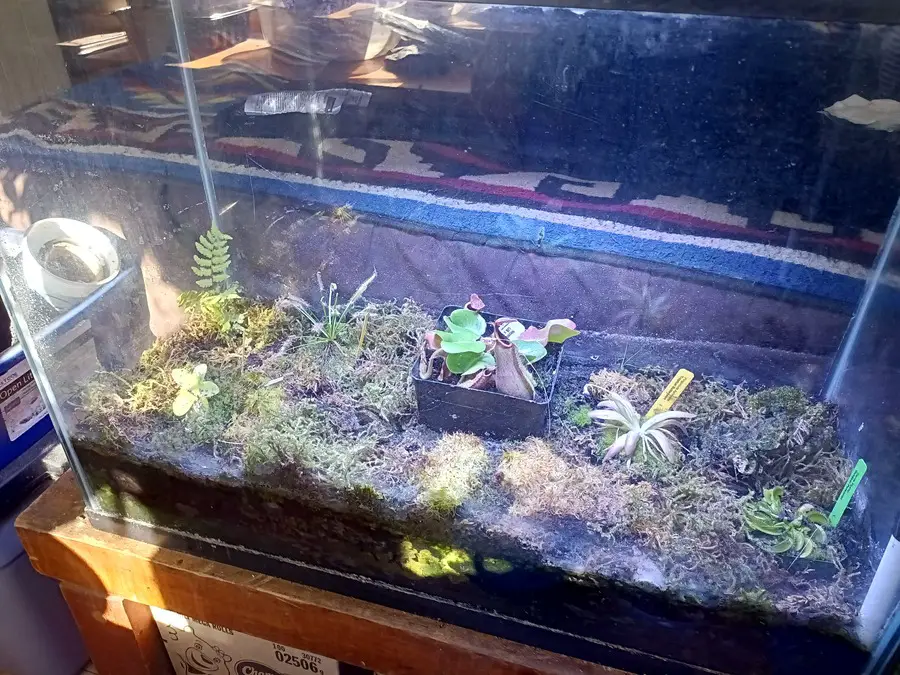
In my own setup I’m running four tanks right now: two open-topped terrariums with carnivorous plants, a paludarium with a glass top that has gaps between panes, and a newer 75-gallon terrarium with a tight glass aquarium lid. None of them are airtight. All of them run stable.
This post is about closed vs open terrariums and what actually matters when you’re deciding between open vs. closed terrariums: airflow, moisture retention, humidity stability, and how to match the system to the plants you’re growing.
What You’ll Learn
• What “closed” and “open” really mean in day-to-day terrarium growing
• Why substrate moisture often matters more than whether you have a lid
• How airflow prevents mold and rot in semi-closed systems
• When open-top terrariums work well (especially for many carnivorous plants)
• When closed or semi-closed terrariums are the better tool (moss, paludariums, humidity-sensitive plants)
What “Closed” and “Open” Actually Mean
A “true” sealed terrarium (airtight with no ventilation) is rare in long-term growing. Most systems people call closed are really semi-closed: glass tops with small gaps, sliding panes, or tight aquarium lids that still allow some air exchange.
That matters because plants don’t just need humidity—they need a stable environment that doesn’t turn stagnant. In practice, you’re usually balancing two goals: retain moisture and avoid still, wet air.
My Paludarium is Closed-Top, but Not Sealed
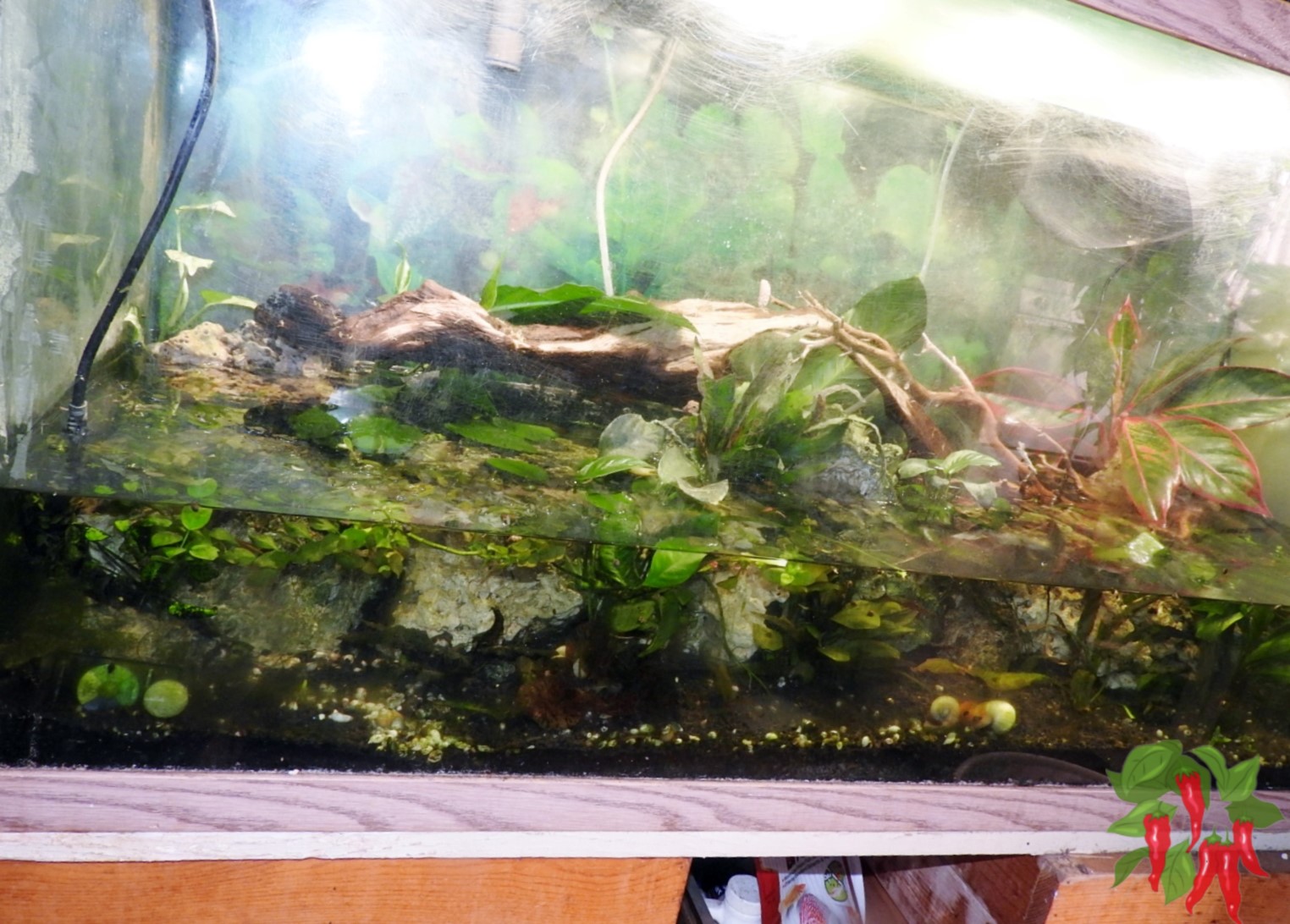
My paludarium has glass panes on top, but there’s space between them where air can move. It also has water and land, which means there’s always moisture in the system. Humidity stays high without me doing anything fancy, and I don’t deal with mold problems.
That’s the takeaway: it runs stable because moisture is consistent and air can still exchange—slowly, but enough.
My open-top tanks are open… and the plants don’t suffer
I also run two open-topped terrariums with carnivorous plants. No lid. Just consistent moisture management. Those plants do not suffer from low humidity the way people assume they will.
That doesn’t mean humidity is “irrelevant.” It means the system creates a humid zone near the plants as long as the substrate stays evenly moist.
The Real Variable: Substrate Moisture
If you want the short version of open vs. closed terrariums, here it is: your substrate moisture level drives your humidity.
If the substrate dries out, humidity drops—even in a closed terrarium. If the substrate stays evenly moist, humidity stays elevated—even in an open tank.
The enclosure mainly controls how fast that moisture evaporates. A lid slows evaporation. An open top speeds it up. But the “engine” is still the moisture in the system.
If you’re building terrariums specifically as humidity systems for difficult plants, this pairs well with: Humidity-Dependent Plants Need Terrarium Systems.
Why Airflow Matters More Than Most People Think
High humidity without airflow is where problems start. Mold, algae on glass, surface slime, rot in crowns—those are usually airflow problems first and humidity problems second.
This is why I actually prefer open tanks when I can. Airflow is “free.” You don’t have to engineer it. And in many cases, the plants do fine as long as you keep moisture consistent.
If your terrarium is focused on carnivorous plants and you want a full enclosure selection guide, see: Terrarium Tanks for Carnivorous Plants: Complete Setup Guide.
Open Terrariums: Advantages, Limits, and When They’re the Best Choice
Open-top terrariums get labeled as “not humid enough,” but that’s not automatically true. In practice, open tanks often work well because they avoid the biggest terrarium failure mode: stagnant, wet air.
Advantages of open terrariums
- Natural airflow: Lower risk of mold and rot because air exchanges constantly.
- Easier temperature control: Heat escapes instead of building up under a lid.
- Simpler long-term stability: Fewer “mystery” problems caused by trapped moisture and still air.
Limits of open terrariums
- Moisture management matters more: You can’t let substrates dry out and expect humidity to stay high.
- Very humidity-sensitive plants may struggle: If your home runs extremely dry, some plants still want a semi-closed system.
When I choose open
My preference is to keep tanks open when the plants allow it. If I can maintain consistent substrate moisture and the species doesn’t require extreme humidity, open systems are stable and low-risk.
This is why open systems often make sense for many indoor carnivorous setups—especially if your lighting and watering are consistent. If you want plant-by-plant care guides, here’s the full section: Carnivorous Plants (Category).
Closed and Semi-Closed Terrariums: Advantages, Risks, and How to Make Them Work
Closed-top terrariums (or semi-closed systems) are the better tool when you need humidity stability and moisture retention—especially for moss, tropical understory plants, paludarium builds, and plants that stall in open air.
Advantages of closed or semi-closed systems
- Higher humidity with less effort: Moisture stays in the system longer.
- Slower evaporation: Substrates stay evenly moist longer, which reduces stress swings.
- Better for moss-heavy or humidity-dependent plants: Especially when your home air is consistently dry.
Risks of closed systems
- Stagnant air: The #1 cause of mold and rot in closed setups.
- Condensation and drip damage: Constant leaf wetness raises rot pressure.
- Heat buildup under lights: A tight lid can trap warmth fast.
My 75-gallon “closed” tank: tight lid + airflow
My newer 75-gallon tank uses a glass aquarium lid that fits pretty tight. Because it’s tighter than my paludarium, I run a small fan inside to keep air moving. Humidity stays high, and I don’t deal with mold problems.
That’s the practical lesson: closed doesn’t mean sealed, and humidity without airflow is asking for trouble.
Quick Comparison: Open vs. Closed Terrariums
| Factor | Open Terrarium | Closed / Semi-Closed Terrarium |
|---|---|---|
| Humidity stability | Moderate (depends on substrate moisture) | High (slower evaporation) |
| Mold risk | Lower (natural airflow) | Higher if airflow is poor |
| Watering frequency | More frequent | Less frequent |
| Heat management | Easier | Needs attention under strong lights |
| Best use cases | Many carnivorous setups, low-mold priority | Moss, paludarium builds, very dry homes |
Next up: how to choose a system based on your plants and your home humidity (without getting stuck in “sealed vs. open” thinking).
How to Choose: Match the System to the Plant (And Your House)
The mistake I see most is choosing a terrarium style first, then trying to force plants to fit it. It works better the other way around: decide what the plant needs, then pick the enclosure that makes that easy.
Choose open if:
- Your plants don’t require extreme humidity
- You can keep substrate moisture consistent
- You want the simplest mold prevention (airflow does most of the work)
- You’re running stronger lights and want easier heat control
Choose closed or semi-closed if:
- Your home runs very dry most of the year
- You’re growing moss, ferns, tropical understory plants, or emersed aquatic plants
- You need humidity to stay stable without constant watering
- You’re building a paludarium-style system (water + land)
The Practical Rule I Use
If I can keep the tank open, I usually do—because airflow is helpful and reduces problems. But I don’t let that turn into a hard rule. When the plant or the build needs humidity stability, I go semi-closed and add airflow if the lid is tight.
And no matter which route you take, I treat substrate moisture as the main driver. Keep the substrate evenly moist and the system holds humidity. Let it dry out and humidity drops—even if there’s a lid.
Related Guides
- Humidity-Dependent Plants Need Terrarium Systems
- Terrarium Tanks for Carnivorous Plants: Complete Setup Guide
- Terrarium Lighting for Carnivorous Plants: How Much Light?
- Terrariums (Category)
- Carnivorous Plants (Category)
Closed vs Open Terrariums FAQ
Are closed terrariums actually sealed?
Most long-term “closed” terrariums aren’t airtight. They’re usually semi-closed systems with glass lids, sliding panes, or small gaps that allow slow air exchange.
Do open terrariums work for carnivorous plants?
Often, yes. Many indoor carnivorous setups do fine in open tanks as long as the substrate stays evenly moist and the plants get the right light.
What matters more: the lid or the substrate moisture?
In most setups, substrate moisture is the main driver. A lid mainly controls how fast moisture evaporates. If the substrate dries out, humidity drops even in a closed terrarium.
How do I prevent mold in a closed or semi-closed terrarium?
Focus on airflow and surface wetness. Mold usually shows up when air is stagnant and surfaces stay wet constantly. Gentle circulation and smarter moisture control solve most issues.
Where should I start if I’m deciding between open vs. closed terrariums?
Start with the plant’s needs and your home environment. If your home is very dry or you’re growing moss and tropical understory plants, a semi-closed system helps. If airflow and simplicity are priorities and your plants allow it, open tanks are often easier to run long-term.
References
- University of Arizona Cooperative Extension – The Terrarium: An Oasis of Humidity for Plants
(PDF explaining how enclosed terrarium environments cycle moisture and support high-humidity plants).
- Iowa State University Extension – How to Create and Care for a Terrarium
(Extension guide on terrarium care and selecting plants tolerant of humid conditions).
- University of Missouri Extension – Terrarium Plants and Conditions
(Extension overview noting that many terrarium plants require high humidity).
- University of Maryland Extension – Temperature and Humidity for Indoor Plants
(Discusses how most indoor environments lack sufficient humidity for healthy plant growth).
- University of New Hampshire Extension – How to Increase Humidity Indoors
(Explains how terrariums and similar enclosures maintain higher humidity around plants).