
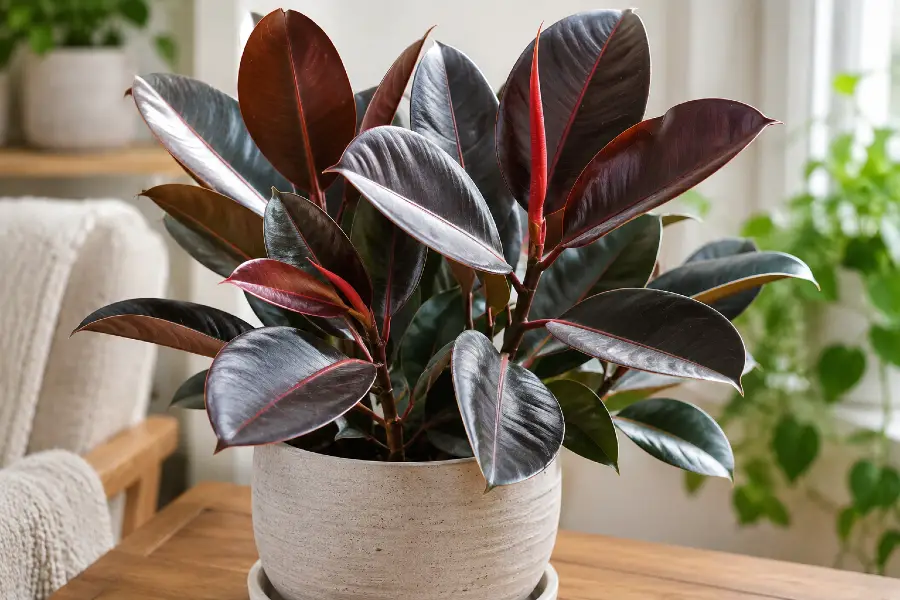
Baby Rubber Plant (Peperomia obtusifolia) is one of the easiest houseplants you can grow. Its thick, glossy leaves, compact size, and forgiving nature make it an excellent choice for beginners, apartments, offices, and anyone looking for a low-maintenance indoor plant.
Despite its common name, the Baby Rubber Plant isn’t related to the much larger Rubber Plant (Ficus elastica). Instead, it’s a member of the Peperomia family, prized for its attractive foliage and ability to thrive in average household conditions without demanding constant attention.
I’ve always liked compact houseplants that fit almost anywhere, and Baby Rubber Plant is one of those plants that looks great on shelves, desks, coffee tables, and windowsills. Its thick succulent-like leaves also make it more forgiving than many tropical houseplants if you occasionally forget to water.
In this guide, you’ll learn how to grow a healthy Baby Rubber Plant indoors, including the best light, watering schedule, soil, humidity, propagation methods, and solutions to common growing problems.
What You’ll Learn
- Why Baby Rubber Plant is one of the easiest indoor plants to grow
- How much light and water it really needs
- The best soil and potting mix for healthy roots
- How to propagate new plants from stem or leaf cuttings
- Common problems like yellow leaves and leggy growth
- How Baby Rubber Plant compares to the larger Rubber Plant
Quick Answer: Baby Rubber Plant (Peperomia obtusifolia) grows best in bright, indirect light with well-draining soil and moderate watering. Allow the top inch or two of soil to dry before watering again, avoid soggy soil, and provide average household temperatures. Its thick leaves store moisture, making it one of the easiest low-maintenance houseplants for beginners.
Baby Rubber Plant at a Glance
| Botanical Name | Peperomia obtusifolia |
|---|---|
| Common Names | Baby Rubber Plant, American Rubber Plant, Pepper Face |
| Light | Bright indirect light to medium light |
| Water | Allow the top 1–2 inches of soil to dry |
| Humidity | Average household humidity |
| Temperature | 65–80°F (18–27°C) |
| Soil | Loose, well-draining potting mix |
| Mature Size | 8–12 inches tall and wide |
| Growth Rate | Moderate |
| Pet Safe | Yes |
| Difficulty | Easy |
What Is a Baby Rubber Plant?
Baby Rubber Plant is a compact tropical perennial native to South America. Unlike the towering Rubber Plant (Ficus elastica), this species stays small, making it ideal for apartments, offices, and shelves where space is limited.
One of its most recognizable features is its thick, glossy leaves. These succulent-like leaves store water, allowing the plant to tolerate occasional missed waterings much better than many thin-leaved tropical houseplants.
Its naturally bushy growth habit and compact size also make it an excellent choice if you’re looking for an attractive plant that won’t quickly outgrow its space.
Did You Know? Despite the similar name, Baby Rubber Plant isn’t a miniature Rubber Plant. They’re completely different species from different plant families. Baby Rubber Plant belongs to the Peperomia genus, while the familiar Rubber Plant is a species of Ficus.
Light Requirements
Bright, indirect light produces the healthiest Baby Rubber Plants. Place yours near an east- or north-facing window, or a few feet back from a bright south- or west-facing window where harsh afternoon sun won’t scorch the leaves.
Although the plant tolerates medium light surprisingly well, slower growth and longer spaces between leaves are common when light levels are too low.
Variegated varieties usually need slightly brighter light than solid green forms to maintain their colorful leaf patterns.
How Often Should You Water a Baby Rubber Plant?
Overwatering is by far the most common mistake people make. Thanks to its thick, water-storing leaves, Baby Rubber Plant prefers to dry slightly between waterings.
A simple rule is to allow the top 1–2 inches of potting mix to dry before watering thoroughly. During winter, when growth naturally slows, you’ll usually need to water less often.
If you’re unsure whether it’s time to water, it’s generally safer to wait another day than to keep the soil constantly wet.
The Best Soil for Baby Rubber Plant
Baby Rubber Plant grows best in loose, well-draining soil that allows excess water to drain away quickly. Heavy potting mixes that remain wet for long periods can lead to root rot, which is the most common cause of plant decline.
A quality indoor potting mix works well for most growers, but I prefer a coco coir and perlite mix with about 25-30% perlite.
The goal is a light, airy soil that holds some moisture without becoming soggy.
Always choose a pot with drainage holes. Even the best potting mix can’t prevent problems if excess water has nowhere to escape.
Humidity and Temperature
Unlike many tropical houseplants, Baby Rubber Plant doesn’t demand high humidity. It grows well in average household conditions, making it an excellent choice for homes and apartments where humidity levels fluctuate throughout the year.
Although it tolerates normal indoor humidity, moderate humidity encourages faster growth and healthier foliage during spring and summer.
Keep temperatures between 65°F and 80°F (18–27°C), and avoid placing the plant near heating vents, air conditioners, or cold drafts that can stress the foliage.
Quick Tip: Baby Rubber Plant is much more forgiving of average indoor humidity than many tropical plants, making it a great choice if you don’t want to run a humidifier year-round.
Fertilizing Baby Rubber Plant
Baby Rubber Plant isn’t a heavy feeder. During active growth in spring and summer, feed monthly using a balanced liquid houseplant fertilizer diluted to half strength.
Avoid overfertilizing, as too much fertilizer can damage the roots and encourage weak, leggy growth. There’s usually no need to fertilize during winter while growth naturally slows.
Repotting
One reason Baby Rubber Plant is so easy to grow is that it doesn’t require frequent repotting. In fact, it often performs better when it’s slightly root bound.
Most plants only need repotting every two to three years or when roots begin growing from the drainage holes. Move up just one pot size at a time to avoid leaving excess soil that stays wet too long.
How to Propagate Baby Rubber Plant
Baby Rubber Plant is one of the easiest houseplants to propagate. New plants can be started from stem cuttings or even healthy leaves, making it simple to expand your collection or share plants with friends.
Stem Cuttings
Stem cuttings produce the fastest and most reliable results. Cut a healthy stem just below a leaf node, remove the lower leaves, and place the cutting in water or moist potting mix until roots develop.
How to Propagate Baby Rubber Plant
Baby Rubber Plant is one of the easiest houseplants to propagate. The most reliable method is using stem cuttings that include at least one node, since new roots and shoots develop from these growing points.
Stem Cuttings (Best Method)
Choose a healthy stem with two or three leaves and cut just below a node. Remove the lowest leaf if needed, then place the cutting in water or a moist, well-draining potting mix. Keep it warm and in bright, indirect light until new roots develop.
Stem cuttings are the quickest, easiest, and most reliable way to produce a healthy new Baby Rubber Plant.
Can You Grow a Baby Rubber Plant From a Leaf?
A single leaf can sometimes produce roots, but it usually won’t develop into a complete new plant unless a small section of stem containing a node is attached. The node contains the growing tissue needed to produce new stems and leaves.
Because of this, stem cuttings with at least one node are recommended over leaf-only cuttings for the best results.
Water vs. Soil Propagation
Both methods work well with stem cuttings. Water propagation lets you watch the roots develop before potting the cutting, while soil propagation allows the new plant to establish directly in its growing medium without needing to be transplanted later.
Water vs. Soil Propagation
Both methods work well. Water propagation allows you to watch roots develop before planting, while soil propagation eliminates the need to transplant rooted cuttings later.
Is Baby Rubber Plant Safe for Pets?
Yes. Baby Rubber Plant is considered non-toxic to both cats and dogs, making it one of the better choices for pet owners looking to add greenery indoors.
Although it’s considered pet friendly, it’s still best to discourage pets from chewing on the leaves since eating any houseplant can cause mild stomach upset.
Baby Rubber Plant vs. Rubber Plant
Despite their similar names, these two plants are completely different species. Baby Rubber Plant stays compact and belongs to the Peperomia genus, while Rubber Plant (Ficus elastica) eventually becomes a large indoor tree.
| Feature | Baby Rubber Plant | Rubber Plant |
|---|---|---|
| Botanical Name | Peperomia obtusifolia | Ficus elastica |
| Mature Size | 8–12 inches | 6–10 feet |
| Pet Safe | Yes | No |
| Leaves | Small, thick, succulent-like | Large, leathery |
| Growth Habit | Compact and bushy | Upright indoor tree |
Common Baby Rubber Plant Problems
Baby Rubber Plant is generally trouble-free, but a few common issues can affect its appearance. Fortunately, most problems are easy to correct once you identify the cause.
Yellow Leaves
Yellow leaves are usually caused by overwatering. Soil that stays constantly wet can deprive the roots of oxygen and eventually lead to root rot. Allow the soil to dry slightly between waterings and always use a pot with drainage holes.
Dropping Leaves
Sudden leaf drop often results from inconsistent watering, cold drafts, or sudden environmental changes. Try to keep watering consistent and avoid moving the plant frequently.
Leggy Growth
Long stems with widely spaced leaves usually indicate insufficient light. Move the plant closer to a bright window with indirect sunlight to encourage compact, bushy growth.
Brown Spots or Soft Stems
Brown spots, mushy stems, or a constantly wet potting mix are signs that the roots may be staying too wet. Reduce watering and make sure excess water drains away quickly.
Wrinkled Leaves
Wrinkled or slightly shriveled leaves usually mean the plant has become too dry. A thorough watering normally restores the leaves once the roots absorb moisture.
Choosing the Right Baby Rubber Plant
Although the solid green form is the most common, several attractive cultivars are available. All grow similarly, but variegated varieties generally need slightly brighter light to maintain their colorful foliage.
| Variety | Features | Best For |
|---|---|---|
| Green | Glossy deep green leaves | Beginners and lower-light rooms |
| Variegata | Cream and green foliage | Bright indoor spaces |
| Golden Gate | Green leaves with golden variegation | Collectors and bright rooms |
| Marble | Cream, green, and light yellow markings | Decorative displays |
Common Myths About Baby Rubber Plant
Myth: Baby Rubber Plant is a miniature Rubber Tree.
Reality: Despite the similar name, they’re completely different plants from different botanical families.
Myth: Thick leaves mean it almost never needs water.
Reality: The leaves store moisture, but regular watering is still necessary once the soil begins to dry.
Myth: It needs full sun to grow well.
Reality: Bright, indirect light produces the healthiest foliage while avoiding leaf scorch.
Myth: Tropical plants always require high humidity.
Reality: Baby Rubber Plant grows very well in average household humidity, making it one of the easiest tropical houseplants to maintain.
Frequently Asked Questions
How often should I water a Baby Rubber Plant?
Water when the top 1–2 inches of soil feel dry. The exact schedule depends on your home’s temperature, light, and humidity, but overwatering is much more common than underwatering.
Can Baby Rubber Plant grow in low light?
It tolerates medium light, but bright indirect light produces fuller growth, healthier leaves, and a more compact shape.
Is Baby Rubber Plant safe for cats and dogs?
Yes. Baby Rubber Plant is considered non-toxic to both cats and dogs, making it a popular choice for pet-friendly homes.
Why is my Baby Rubber Plant getting leggy?
Leggy growth almost always indicates the plant needs more light. Moving it closer to a bright window usually encourages shorter, bushier growth.
Final Thoughts
Baby Rubber Plant is one of those houseplants that’s easy to recommend. It’s compact, attractive, forgiving, and adapts well to apartments, offices, and homes without demanding constant attention.
Its thick, glossy leaves give it a distinctive appearance, while its easy-going nature makes it an excellent choice for both beginners and experienced indoor gardeners. Whether you choose the classic green form or one of the beautiful variegated varieties, this is a plant that can provide years of enjoyment with minimal care.
You Can Find Baby Rubber Plants on Amazon
Where to Go Next
- Peperomia Hope Care Guide
- Chinese Money Plant Care Indoors
- Pet-Friendly Indoor Plants That Are Easy to Grow
- Indoor Plants That Stay Small