
Are bromeliads air plants? Not exactly. Air plants are a type of bromeliad called Tillandsia, but most bromeliads are not true air plants.
The confusion usually comes from the fact that both belong to the Bromeliaceae family and many share similar tropical growth habits.
This guide explains the difference between bromeliads and Tillandsia, including soil needs, watering, indoor care, and how these unique plants actually grow.
What You’ll Learn
- 🌿 The difference between bromeliads and air plants
- 💧 Why Tillandsia can grow without soil
- ☀️ Indoor light and watering differences
- 🪴 Which bromeliads need pots and soil
- 🌬️ How to keep air plants healthy indoors
Are Bromeliads Air Plants?
No, most bromeliads are not air plants.
However, all air plants belong to the bromeliad family.
Air plants are part of the Tillandsia genus inside the larger Bromeliaceae family.
That means every Tillandsia is technically a bromeliad, but many bromeliads grow very differently from true air plants.
Most bromeliads grow in pots, bark mixes, or attached to surfaces with some root support, while Tillandsia absorb most of their moisture and nutrients directly through their leaves.
Bromeliads vs Air Plants
The biggest difference between bromeliads and air plants is how they grow and absorb moisture.
| Feature | Bromeliads | Air Plants (Tillandsia) |
|---|---|---|
| Soil | Usually grown in soil or bark mix | No soil required |
| Roots | More developed root systems | Minimal roots mainly for anchoring |
| Watering | Water soil and center cup | Mist or soak regularly |
| Growing Style | Usually potted | Mounted or displayed without pots |
Even though they are related, their care routines indoors can be very different.
Why Air Plants Do Not Need Soil
Tillandsia evolved to grow attached to trees, rocks, and branches rather than in traditional soil.
Instead of relying heavily on roots, they use specialized structures called trichomes on their leaves to absorb moisture and nutrients from the air.
Their roots are mainly used for anchoring themselves to surfaces rather than collecting water.
How Tillandsia Absorb Water
- 💧 Moisture is absorbed through leaf surfaces
- 🌬️ Humidity helps support healthy growth
- ☀️ Bright indirect light encourages stronger color
- 🚫 Poor airflow can quickly lead to rot
This is why air plants are often displayed mounted on wood, shells, driftwood, or hanging holders instead of traditional pots.
Do Bromeliads Need Soil?
Most bromeliads still benefit from some type of potting mix or root support indoors.
Many species naturally grow as epiphytes attached to trees, but they still develop stronger root systems than Tillandsia.
Indoors, bromeliads are commonly grown in loose fast-draining mixes similar to orchid soil.
Best Indoor Bromeliad Mix
- 🌱 Orchid bark
- ⚪ Perlite
- 🥥 Coco coir
- 🪨 Pumice
- 🌿 Orchid-style potting mix
Heavy dense soil is one of the fastest ways to damage bromeliads indoors because it traps too much moisture around the roots.
Light Requirements for Bromeliads and Air Plants
Both bromeliads and Tillandsia usually grow best in bright indirect light indoors.
Too much direct afternoon sun can scorch the foliage, especially behind hot windows.
Signs Your Plant Needs More Light
- 🍃 Weak floppy growth
- 🌿 Faded leaf color
- 📏 Stretching toward windows
- 🌸 Reduced blooming
LED grow lights can also work very well for both bromeliads and air plants in darker rooms or during winter.
Watering Bromeliads vs Air Plants
One of the biggest care differences between bromeliads and Tillandsia is watering.
Many bromeliads have a central cup or tank that stores water between the leaves.
Air plants do not use this same watering system and instead need regular misting or soaking.
Watering Bromeliads
- 💧 Keep a small amount of water in the center cup
- 🪴 Let the potting mix dry slightly between waterings
- 🌬️ Maintain airflow around the foliage
Watering Tillandsia
- 🚿 Mist several times per week
- 💦 Soak in water weekly if conditions are dry
- 🌬️ Allow plants to dry fully after soaking
Best Indoor Setup for Air Plants
Air plants usually grow best indoors when they have bright light, good airflow, and a place to dry properly after watering.
Because Tillandsia do not grow in traditional soil, display style becomes part of their care routine.
Popular Indoor Air Plant Displays
- 🌿 Mounted driftwood
- 🪵 Cork bark displays
- 🪟 Hanging holders near windows
- 🐚 Decorative shells or stones
- 🧲 Magnetic wall mounts
Avoid sealed terrariums without airflow because trapped moisture can quickly cause rot.
Best Indoor Setup for Bromeliads
Most bromeliads are easier to grow indoors in containers with fast drainage and moderate humidity.
Unlike Tillandsia, many bromeliads develop stronger root systems and benefit from loose potting mixes.
What Bromeliads Need Indoors
- 🪴 Containers with drainage holes
- 🌱 Loose airy potting mix
- ☀️ Bright indirect light
- 🌬️ Gentle airflow
- 💧 Light moisture without soggy soil
Many indoor growers use orchid-style mixes because they drain quickly while still holding enough moisture for healthy growth.
Humidity and Airflow
Both bromeliads and air plants appreciate moderate humidity indoors, but airflow is just as important.
Stagnant humid air can trap moisture around the leaves and increase the risk of rot or fungal problems.
Simple Ways To Improve Humidity
- 💦 Use pebble trays
- 🌿 Group tropical plants together
- 🚿 Grow plants near brighter bathrooms
- 🌬️ Use light air circulation indoors
Air plants especially need good drying time after misting or soaking.
Do Air Plants and Bromeliads Bloom?
Yes. Both bromeliads and Tillandsia can produce colorful long-lasting blooms indoors when conditions are right.
Some bromeliads develop dramatic flower spikes, while many Tillandsia produce smaller but very vibrant blooms.
What Happens After Blooming?
After flowering, the mother plant slowly begins declining while producing offsets called pups.
These pups continue the life cycle and eventually mature into full-sized plants.
- 🌱 Pups grow near the plant base
- ✂️ They can be separated later for propagation
- 🌸 Blooming often triggers offset production
Are Bromeliads Good Apartment Plants?
Bromeliads and air plants are both excellent choices for apartments and small indoor spaces.
Their compact growth habits, colorful foliage, and flexible display options make them easy to fit into shelves, desks, hanging displays, and plant walls.
Why They Work Well Indoors
- 🏡 Compact growing habits
- 💧 Lower watering needs than many tropical plants
- 🌿 Decorative without taking much space
- ☀️ Adapt well to bright indoor rooms
Tillandsia are especially popular for renters because they can be displayed creatively without large containers or heavy pots.
Mounted vs Potted Bromeliads
Some bromeliads can grow either mounted or potted indoors depending on humidity and care style.
Mounted Bromeliads
- 🌬️ Better airflow around roots
- 🪵 More natural epiphytic display
- 💧 Dry out faster indoors
- 🚿 Often need more humidity
Potted Bromeliads
- 🪴 Easier for most indoor growers
- 🌱 Hold moisture longer
- 🏡 Better for average household humidity
- 💦 Usually require less frequent watering
For most homes and apartments, containers are the simpler and more forgiving setup.
Do Bromeliads Help Clean Indoor Air?
Like many houseplants, bromeliads may help improve indoor air quality by supporting humidity and interacting with airborne compounds.
However, they are best viewed as decorative tropical plants first rather than major air filtration systems.
The biggest indoor benefits usually come from their visual appeal, compact size, and ability to add greenery without taking up much space.
Common Problems With Bromeliads and Air Plants
Rot and Overwatering
The most common problem with both bromeliads and Tillandsia indoors is rot caused by trapped moisture and poor airflow.
Air plants should dry fully after soaking, while bromeliads should not sit in constantly soggy potting mix.
Weak Growth or Faded Color
Low light conditions can cause pale color, stretched growth, and reduced blooming.
Moving plants closer to bright indirect light or adding an LED grow light often helps.
Brown Tips
Brown leaf tips may develop from dry indoor air, inconsistent watering, or mineral-heavy tap water.
Using filtered water and improving humidity can help reduce damage.
Propagating Bromeliads and Air Plants
Both bromeliads and Tillandsia produce offsets called pups after flowering.
These pups grow near the base of the parent plant and eventually become mature plants themselves.
How To Separate Pups
- 🌱 Wait until pups reach roughly one-third the size of the parent
- ✂️ Use clean scissors or a knife if needed
- 🪴 Pot bromeliad pups in airy mix
- 🪵 Mount Tillandsia pups or place them in open displays
Many growers also leave pups attached to form larger clumps over time.
Are Bromeliads Air Plants FAQs
Are all bromeliads air plants?
No. Air plants are only one group within the larger bromeliad family.
What is the difference between bromeliads and Tillandsia?
Tillandsia are air plants that absorb moisture through their leaves and usually do not require soil, while many bromeliads grow in potting mix or mounted setups.
Do air plants need soil?
No. Most Tillandsia grow without soil and absorb water and nutrients through their leaves.
Can bromeliads grow indoors?
Yes. Bromeliads adapt very well to indoor growing when given bright indirect light, airflow, and fast drainage.
How often should I water air plants?
Most air plants benefit from regular misting and occasional soaking depending on humidity levels indoors.
Do bromeliads need bright light?
Most bromeliads and Tillandsia grow best in bright indirect light rather than deep shade or harsh direct afternoon sun.
Are bromeliads pet safe?
Most bromeliads and air plants are generally considered non-toxic to cats and dogs, although chewing any plant can still cause mild stomach upset.
Are Bromeliads Air Plants Final Thoughts
Air plants and bromeliads are closely related, but they are not exactly the same thing.
Tillandsia are a unique group of bromeliads adapted to absorb moisture directly through their leaves instead of relying heavily on soil and roots.
Whether you prefer mounted air plants or colorful potted bromeliads, both can make excellent indoor plants when given bright light, airflow, and the right watering routine.
More Bromeliad Guides
=====================================================

Discover the fascinating world of bromeliads! We answer the common question: “Are bromeliads air plants?” and dive into their air purifying powers and care tips.
Have you ever found yourself wondering, “Are bromeliads air plants?” You’re not alone!
Are Bromeliads Air Plants? No, bromeliads and air plants are not the same, although they both belong to the Bromeliaceae family. Bromeliads are generally larger and grow in soil, whereas air plants, also known as Tillandsia, do not require soil and absorb nutrients through their leaves. Each has its own specific care needs, making them distinct within the same plant family.
With their striking appearance and air-purifying abilities, it’s no wonder these captivating plants have piqued the curiosity of plant enthusiasts around the world.
In this blog post, we’ll dive into the fascinating world of bromeliads and air plants, exploring their unique characteristics and answering the burning question once and for all.
So, let’s get started and unravel this botanical mystery together!
Are Bromeliads Air Plants?
Exploring the World of Tillandsia and Bromeliad Plants
In today’s post, we’re excited to explore a popular and intriguing topic: “Are bromeliads air plants?”
With so many unique and beautiful varieties, it’s no surprise that these captivating plants have garnered the attention of green thumbs everywhere.
In this informative introduction, we’ll briefly touch on the characteristics of bromeliads and air plants, and discuss the importance of air-purifying plants in our daily lives.
A Closer Look at Bromeliads and Air Plants
Bromeliads are a diverse family of plants known for their vibrant colors, unique shapes, and resilience.
With over 3,000 species, they’re found in various habitats, ranging from tropical rainforests to arid deserts.
Among these species, you’ll find the air plants or Tillandsias, a fascinating genus that can grow without soil.
These intriguing plants boast an array of shapes, sizes, and colors, making them a favorite among plant enthusiasts.
By understanding the similarities and differences between bromeliads and air plants, we’ll be able to appreciate their beauty and marvel at their adaptability.
The Power of Air Purifying Plants in Our Spaces
With more time spent indoors, the importance of air-purifying plants in our homes and offices cannot be overstated.
These natural air filters remove harmful pollutants, improving overall air quality and promoting a healthier environment.
Plants like bromeliads and air plants not only add a touch of greenery and visual appeal to our spaces, but they also work tirelessly to purify the air we breathe.
By integrating these air-cleansing plants into our living and working areas, we can enjoy a refreshing atmosphere while reaping the benefits of cleaner air and enhanced well-being.
The Connection between Bromeliads and Air Plants
As we venture deeper into the world of plants, let’s take a moment to explore the intriguing connection between bromeliads and air plants.
Are they related, or are they completely different species? And what makes them so special in the plant kingdom?
In this section, we’ll shed some light on these questions and uncover the fascinating relationship between these two botanical beauties.
So, buckle up and get ready to delve into the captivating world of bromeliads and air plants!
The Relationship Between Bromeliads and Air Plants
One of the questions that plant enthusiasts often ask is whether bromeliads are related to air plants. The answer is yes!
Air plants belong to the Tillandsia genus, which is part of the Bromeliaceae family.
This means that while not all bromeliads are air plants, all air plants are indeed bromeliads.
Understanding Tillandsia: A Unique Bromeliad Genus
Tillandsias, commonly known as air plants, are a captivating genus within the Bromeliaceae family.
With over 650 species, Tillandsias exhibit a wide range of shapes, sizes, and colors.
They are called air plants due to their unique ability to absorb water and nutrients through their leaves rather than roots, allowing them to grow without soil.
This fascinating feature sets them apart from other bromeliads and adds to their allure.
The Diversity of Bromeliads: Are They All Air Plants?
While all air plants are bromeliads, not all bromeliads are air plants.
The Bromeliaceae family is incredibly diverse, boasting more than 3,000 species, including both terrestrial and epiphytic plants.
Terrestrial bromeliads, like the pineapple, grow in the ground and have a root system for nutrient absorption.
Epiphytic bromeliads, on the other hand, grow on trees, rocks, or other surfaces, relying on their leaves to absorb nutrients.
Among these epiphytic bromeliads, we find the Tillandsia genus, which comprises air plants.
This incredible diversity within the bromeliad family showcases the versatility and adaptability of these remarkable plants.
Do Bromeliads Need Soil?
You might be wondering, “Do bromeliads need soil to thrive?” It’s a common question, especially when you consider the unique characteristics of air plants.
In this section, we’ll dive into the soil requirements of bromeliads and discuss how these fascinating plants manage to adapt to various growth conditions.
So, let’s delve into the dirt (or lack thereof) and explore the wonderful world of bromeliads and their relationship with soil!
Unique Characteristics of Bromeliads
Bromeliads are truly fascinating plants, showcasing a wide array of unique characteristics that set them apart from other plant families.
One of their most notable features is their ability to adapt to various environments, from the rainforest floor to tree branches.
Many bromeliads have central water tanks or rosettes of leaves that can store water and nutrients, allowing them to survive in both wet and dry conditions.
Additionally, bromeliads exhibit bright, long-lasting inflorescences, which add a splash of color and beauty to any space.
Contrasting Growth Requirements: Bromeliads vs. Air Plants
While all air plants are bromeliads, their growth requirements differ from those of other bromeliads.
Most bromeliads grow in well-draining soil or as epiphytes, anchoring themselves to tree branches or rocks.
They have roots that provide support and, in some cases, absorb nutrients.
Air plants, on the other hand, are unique in that they don’t require soil to grow.
These remarkable plants absorb water and nutrients through trichomes on their leaves.
This allows them to thrive in various environments, such as being suspended in the air, attached to branches, or even nestled within seashells.
Understanding the differences in growth requirements between bromeliads and air plants can help you provide the appropriate care and conditions for each type of plant, ensuring their health and longevity.
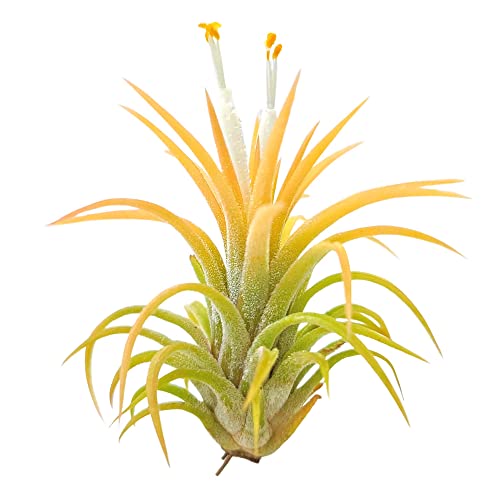
Tillandsia Ionantha: A Stunning Air Plant
If you’re a fan of air plants, then you’re in for a treat! In this section, we’re going to introduce you to Tillandsia Ionantha, a stunning air plant that’s sure to capture your heart.
With its unique features and easy-care requirements, this little beauty will make a fantastic addition to your indoor garden.
So, let’s get acquainted with Tillandsia Ionantha and learn all about its charm and allure in the world of air plants!
A Glimpse of Tillandsia Ionantha: Features and Charm
Tillandsia Ionantha is a delightful air plant that boasts an array of eye-catching features.
Its compact size and whimsical, curling leaves make it a popular choice for plant lovers seeking unique and charming additions to their collections.
When in bloom, Tillandsia Ionantha produces a stunning inflorescence, displaying a vibrant mix of pink, purple, and blue hues.
The combination of its attractive foliage and showy blooms ensures that this air plant will become a conversation starter in any indoor garden.
Keep Tillandsia Ionantha Happy: Care Tips and Tricks
Tillandsia Ionantha, like other air plants, requires specific care to thrive. By following a few simple guidelines, you can ensure that your plant stays healthy and beautiful:
Light: Provide bright, indirect light or dappled sunlight. Too much direct sun can scorch the leaves, while insufficient light may hinder growth and prevent blooming.
Water: Mist your Tillandsia Ionantha 2-3 times per week, ensuring that water reaches the center of the plant.
Alternatively, you can submerge the plant in water for 20-30 minutes once a week, then gently shake off any excess water to prevent rot.
Air Circulation: Good air circulation is crucial for air plants. Place your Tillandsia Ionantha in a well-ventilated area, away from heating or cooling vents.
Fertilizing: To promote growth and blooming, feed your plant with a water-soluble, bromeliad-specific fertilizer once a month. Dilute the fertilizer to 1/4 strength and apply it during a regular watering session.
With a little love and attention, your Tillandsia Ionantha will flourish, showcasing its captivating beauty and charm.
Difference Between Bromeliad and Tillandsia
As we continue our journey through the enchanting world of bromeliads and air plants, it’s essential to understand the differences between these two captivating plant groups.
In this section, we’ll explore the distinctions between bromeliad and tillandsia, examining their classification, appearance, and growth habits.
So, let’s dive in and discover what sets these two botanical wonders apart while appreciating their unique beauty and charm!
Decoding the Classification: Family Differences
While both bromeliads and tillandsias belong to the Bromeliaceae family, they are classified into different genera.
Bromeliad is an umbrella term that encompasses over 3,000 species from various genera, while tillandsia refers specifically to air plants, a single genus with over 650 species.
The Bromeliaceae family is incredibly diverse, with members adapted to a wide range of habitats and growth conditions.
Understanding these classification differences can help you better appreciate the distinct characteristics of each group.
Contrasting Beauty: Physical and Growth Differences
While both bromeliads and tillandsias share some common features, such as vibrant colors and unique foliage, there are notable physical and growth differences between them:
Roots: Most bromeliads have a root system that provides support and, in some cases, absorbs nutrients.
In contrast, tillandsias have minimal or no roots, relying on their leaves to gather water and nutrients from the air.
Growth Habit: Bromeliads can be terrestrial, growing in soil, or epiphytic, growing on trees, rocks, or other surfaces. Tillandsias, however, are predominantly epiphytic, with their unique adaptation allowing them to thrive without soil.
Foliage: Bromeliad leaves can be broad, strap-like, or needle-like, often forming a central rosette or tank to store water. Tillandsia leaves, on the other hand, are typically thinner and covered with trichomes, which help the plant absorb moisture and nutrients from the air.
Inflorescences: Both bromeliads and tillandsias produce vibrant, long-lasting inflorescences. However, the shape, size, and color of the blooms can vary significantly between the two groups.
By understanding these physical and growth differences, you can better appreciate the unique beauty and adaptability of bromeliads and tillandsias, and provide the appropriate care for each type of plant.
Are Bromeliads Good for the Air?
As we’ve explored the captivating world of bromeliads and air plants, one question may still linger in your mind: “Are bromeliads good for the air?”
In this section, we’ll delve into the air-purifying abilities of bromeliads and discuss how they can contribute to a cleaner and healthier environment in our homes and offices.
So, let’s dive in and uncover the air-cleansing superpowers of these botanical wonders!
Breathe Easy: Bromeliad Air Purifying Qualities
Bromeliads are not just visually stunning; they also possess powerful air-purifying qualities.
These plants have the ability to absorb harmful pollutants and chemicals from the air, such as volatile organic compounds (VOCs) found in household products and building materials.
Bromeliads are particularly efficient at removing toxins like benzene, formaldehyde, and trichloroethylene.
Their large surface area and unique adaptation to absorb water and nutrients through their leaves contribute to their air-cleansing prowess.
Boost Your Well-Being: Health Benefits of Bromeliads in Your Space
Incorporating bromeliads into your living space can have a positive impact on your health and well-being.
By purifying the air, bromeliads help create a cleaner, healthier environment, which can lead to the following benefits:
Improved respiratory health: Cleaner air can reduce respiratory issues, such as allergies and asthma, by eliminating airborne allergens and irritants.
Enhanced mental health: Being surrounded by plants has been shown to improve mood, reduce stress, and boost productivity.
Better sleep: Bromeliads, unlike many other plants, release oxygen at night, which can contribute to a better night’s sleep by improving air quality in your bedroom.
Humidity regulation: Bromeliads can help maintain a healthy humidity level in your living space, preventing the growth of mold and bacteria.
By adding bromeliads to your indoor garden, you can not only enjoy their aesthetic beauty but also reap the benefits of a cleaner, healthier living environment.
How to Care for Tillandsia Bromeliad
As you’ve come to appreciate the unique charm and versatility of tillandsia bromeliads, you may be eager to add some of these captivating air plants to your indoor garden.
In this section, we’ll provide you with all the essential tips and tricks on how to care for tillandsia bromeliads, ensuring their health and beauty for years to come.
So, let’s get started and learn the secrets to nurturing these enchanting plants and helping them thrive in your space!
Let There Be Light: Tillandsia Bromeliad Light Requirements
Proper lighting is crucial for the health and well-being of your tillandsia bromeliads.
These air plants prefer bright, indirect sunlight, which helps them grow and thrive without risking sunburn.
A spot near an east, west, or south-facing window is ideal, but be sure to shield your tillandsias from harsh direct sunlight, especially during the hottest parts of the day.
Artificial light sources, like fluorescent or LED grow lights, can also provide sufficient light for your air plants if placed within a couple of feet of them.
Quench Their Thirst: Watering Techniques for Tillandsia Bromeliads
Watering tillandsia bromeliads requires a slightly different approach compared to traditional plants.
Since they absorb water through their leaves, you can mist your air plants 2-3 times per week, making sure to wet the entire plant.
Alternatively, you can give your tillandsias a good soak by submerging them in water for 20-30 minutes once a week.
After soaking, gently shake off any excess water and place them in a well-ventilated area to dry, preventing rot.
Nourish and Multiply: Fertilizing and Propagation Tips
To encourage healthy growth and vibrant blooms, you should fertilize your tillandsia bromeliads once a month.
Use a water-soluble, bromeliad-specific fertilizer, diluting it to 1/4 strength, and apply it during a regular watering session.
When it comes to propagation, tillandsia bromeliads produce new plants called offsets, also known as pups, which grow around the base of the mother plant.
Once the pup is about 1/3 to 1/2 the size of the parent plant, you can carefully separate it and place it in its own location to continue growing.
By following these essential care tips, your tillandsia bromeliads will reward you with their unique beauty, mesmerizing blooms, and captivating presence in your indoor garden.
Bromeliads FAQs
Plant enthusiasts often find themselves drawn to the unique and exotic, and among these captivating flora are bromeliads and air plants. Both belonging to the Bromeliaceae family, these plants share some similarities but also have distinct characteristics that set them apart. From their growth habits to care requirements, people frequently have questions about what makes each of these plants unique. Our FAQ section aims to address some of the most commonly asked questions about bromeliads and air plants.
Q: Are Bromeliads Air Plants?
A: No, bromeliads and air plants are distinct, despite both belonging to the Bromeliaceae family. Bromeliads usually grow in soil and are often larger, while air plants, also known as Tillandsia, live without soil and absorb nutrients through their leaves.
Q: How Do I Water Bromeliads?
A: Bromeliads prefer to have water poured into their central “tank,” which is the rosette of leaves at their center. This mimics their natural habitat where they collect rainwater. Empty and refill the “tank” weekly to prevent stagnant water.
Q: How Do I Care for Air Plants?
A: Air plants should be soaked in water for about 30 minutes every week. After soaking, shake off excess water and let them dry upside down to prevent rot. They also appreciate periodic misting.
Q: Can Bromeliads Grow Outdoors?
A: Yes, bromeliads can grow outdoors in climates that don’t experience freezing temperatures. They enjoy partial shade and well-draining soil.
Q: Do Air Plants Need Sunlight?
A: Air plants need indirect sunlight and can even thrive under artificial light. Too much direct sunlight can scorch their leaves.
Q: Are Bromeliads and Air Plants Pet Safe?
A: Most bromeliads and air plants are considered non-toxic to pets. However, it’s always a good idea to consult with your veterinarian if you have specific concerns.
Q: How Often Do Bromeliads Flower?
A: Bromeliads generally flower once in their lifetime. The bloom can last several months, but after that, the plant will start to produce offsets, or “pups,” before eventually dying.
Q: How Do You Propagate Air Plants?
A: Air plants produce offsets, or “pups,” similar to bromeliads. These can be gently separated from the parent plant once they reach one-third the size of the parent and can be grown as new plants.
Are Bromeliads Air Plants? Final Thoughts
As we wrap up our journey through the fascinating world of bromeliads and air plants, we hope that you’ve gained a deeper understanding and appreciation for these botanical wonders.
With their unique features, adaptability, and air-purifying abilities, bromeliads and tillandsias truly deserve a place in your indoor garden.
So, whether you’re a seasoned plant enthusiast or just beginning your plant journey, we encourage you to embrace the enchanting charm of these captivating plants and create a greener, healthier living space for you and your loved ones. Happy planting!
Revisiting the Connection: Bromeliads and Air Plants
Throughout our exploration, we’ve discovered the fascinating relationship between bromeliads and air plants.
While both belong to the Bromeliaceae family, tillandsias, also known as air plants, are a unique genus within this diverse family.
Their ability to grow without soil and their impressive adaptability set them apart from other bromeliads, making them a captivating addition to any plant collection.
Embrace the Benefits: Add Bromeliads and Tillandsias for Cleaner Air
As we’ve learned, both bromeliads and tillandsias possess powerful air-purifying qualities that can contribute to a cleaner, healthier environment in our homes and offices.
By incorporating these plants into your indoor garden, you can not only enjoy their stunning beauty but also reap the benefits of improved air quality.
So, go ahead and embrace the charm of these botanical wonders, and create a greener, healthier living space that you and your loved ones can cherish.


