
Discover how worm composting in your apartment can transform kitchen scraps into rich plant food. Learn easy tips for starting a worm farm indoors and turning waste into gold!
Worm Composting Key Takeaways:
Ready to dive into worm composting for apartments? It’s a simple, eco-friendly way to recycle your kitchen scraps and paper waste. In this guide, we’ll show you how to set up your own worm farm and reap the benefits of nutrient-rich compost right in your apartment!
Worm Composting In Your Apartment
Is worm composting in your apartment possible? You might be surprised to find worm compost bins work great indoors. In fact, they work better inside than out.
Keeping a worm farm is a great way to turn kitchen scraps and paper into worm castings and worm tea. They make great plant food and yes, composting worms even like to eat cardboard and other paper.
What is worm composting?
The fancy scientific word for worm composting is vermicomposting. It uses a specialized worm called Eisenia Fetida but most folks just call them red wigglers.
They are not the same as the common earthworm because their digestive system has evolved to turn kitchen scraps, plant trimmings, paper, and most other organic materials into worm castings or worm doo.

This worm needs an airy environment to survive. It can eat a lot of waste every day and it can multiply quickly even in a small space which makes it a perfect candidate for a worm bin.
Don’t go out and try to dig up worms from your garden they will not be the right kind. However, if you live on a farm or have access to a manure pile you may be able to find some.
I really recommend you buy them from a reputable worm farm to make sure they are disease and pest free.
You should always be careful about what you bring into your apartment from outside. Inside there are no environmental pressures or predators for bugs like mites or aphids and they can quickly infest your healthy plants.

Worm Composting vs Garden Composting
Making compost in the garden is hot composting. As things compost they give off a lot of heat. Mostly this process is done with bacteria and not worms.
To do it right the carbon to nitrogen ratio of the materials has to be right, moisture and air levels also have to be right for the bacteria to grow and feed.
The heat produced kills weed seeds and would kill any worms too. It can be fast or slow depending a lot on outdoor temperatures.
At best it can be done in about 6 to 8 weeks. But if you live in an apartment or condo conventional composting probably won’t work for you.
Bring In The Composting Worms
Worm composting is a cold composting process. It does not give off heat like regular composting.
The carbon to nitrogen ratio is not that critical. Instead of generating heat vermicomposting relies on worms and other naturally occurring organisms.
It is slower than conventional composting and will probably take 6 months and because there is no heat it won’t kill weed seeds.
Even though it takes longer it will produce worm tea much sooner than that. You can dilute it and water your plants with it.
Why Should I Worm Compost?
Most of our food waste ends up in landfills. When this food breaks down it produces methane gas. Methane is a greenhouse gas linked to global warming and is 25 times more dangerous for trapping heat than CO2.
Worm composting recycles our food waste. Compared to conventional composting methods it is much easier.
It doesn’t need to be turned and you don’t have to worry about C to N ratios or moisture levels.
A worm farm is also perfect for apartment or condo dwellers who dont have a place for conventional garden compost piles. More info in my article Start Composting At Home?
How Do You Start A Worm Farm?
Obviously, you’re going to need worms and a place to put them. Red wigglers are incredibly adaptable little creatures but you will need to give them a home.
They are not fussy but they need air. They can be kept in Rubbermaid tubs or 5 gallon buckets if you drill enough holes in them. They don’t like light so if whatever you keep them in has a tight fitting lid you should not have a problem with them escaping.

You will need to add bedding to your tote or bucket. The worms will live in the bedding and come to the top to feed on the scraps you feed them. Then they go back down in the bedding.
I recommend getting some coco to use for bedding. I like bricks because they are easier to handle.
They are easy to use, just soak them in water and they expand. You can also add shredded paper and cardboard to the bedding.
Worms do well at room temperature. If it gets too hot they can die. They are in a confined space and can only go so far down unlike outdoors where they can go deeper.
Likewise, if it gets cold they will slow down and if it gets below freezing they may die.
But since you are worm composting in your apartment this shouldn’t really be a problem.
Generally, between 55 and 80 degrees will keep them happy. But they will eat and reproduce faster at the higher end.
Worms can eat about half their weight in food per day. So if you start out with 1/2 lb of worms they can eat a 1/4 lb of food per day.
Gradually as they increase in numbers and as the size of your community grows they will be able to eat more. They multiply fast too.
What Not To Put In Your Worm Composting Bin
Not everything should go into your worm composting bin. Things like meat, citrus, onions, dairy foods, mayonnaise, or oils should be avoided.
Grease or oil could coat your worms and cause them to suffocate. In general, really acidic or spicy things should be avoided.
The good news is all these things can go in a bokashi composter and they are also perfect for apartments. Read How To Start a Bokashi Bucket
It is easy to build your own worm farm and there are lots of how to videos on YouTube.
Here is a good one on building a worm bin with totes. You can use 5 gallon buckets too but I think the totes will work better in the long run.
Buy A Worm Composter Ready To Go
If DIY worm composters are not your cup of tea there are ready made worm farms and they can offer features hard to duplicate at home.
Best Worm Composter – Worm Factory 360
It is not often that one product dominates a market but the Worm Factory 360 has done just that and is undoubtedly the best worm composter out there.
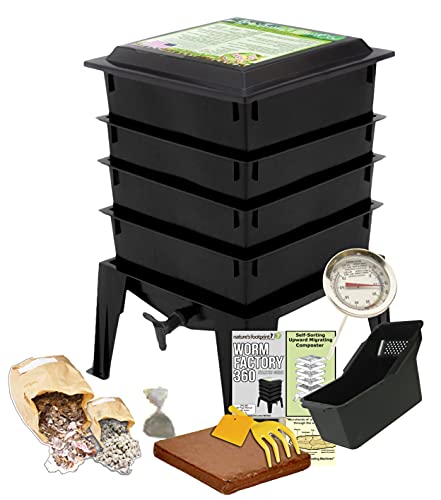
The Worm Factory 360 Worm Composter is available as a 4 tray model. The 4 tray model is expandable up to 6 trays.
The Worm Factory 360 has a 5 year limited warranty and is made in USA.
The Worm Factory has over 1500 reviews and a 4.5 out of 5 star rating making it the best worm composting bin around.
It’s hard to argue with that kind of success and it comes with free shipping. Free is good and hard to argue with too!
Worm composting is easy, and odorless and the worms will even eat your junk mail! Everything you need to get started is included except the worms, which you need to buy separately.
I recommend buying your red wrigglers from Uncle Jim

The most important part of keeping a worm composting bin is keeping it from getting too cold or too hot. Other than that you just add kitchen waste and rotate the trays It takes only a few minutes a week to care for and there’s an instructional video included so you can’t go wrong.
See the Worm Factory 360 On Amazon And Read The Customer Reviews
Worm Composting FAQs: Your Guide to Successful Vermicomposting in Apartments
Worm composting, or vermicomposting, is a fantastic way to recycle kitchen scraps and paper waste into nutrient-rich compost for your plants.
If you’re new to worm composting or have questions about how to get started in your apartment, our FAQ section has got you covered.
Q. Can I really do worm composting in my apartment?
A. Absolutely! Worm composting is perfect for apartments because it’s odorless and can be done in a small space. You just need a worm bin and some red wiggler worms to get started.
Q. What kind of worms should I use for worm composting?
A. The best worms for composting are red wigglers (Eisenia Fetida). They’re different from regular earthworms and are experts at breaking down organic material into compost.
Q. How much waste can worms eat?
A. Worms can eat about half their weight in food per day. So, if you start with half a pound of worms, they can consume a quarter pound of food each day.
Q. What should I avoid putting in my worm composting bin?
A. Avoid adding meat, citrus, onions, dairy foods, mayonnaise, oils, and spicy or acidic foods to your worm bin, as these can harm your worms or create odors.
Q. How do I maintain the right temperature for my worm bin?
A. Worms thrive in temperatures between 55 and 80 degrees Fahrenheit. Keep your bin indoors to protect them from extreme temperatures.
Q. How long does worm composting take?
A. Worm composting is a slower process than traditional composting, taking about 6 months to fully compost materials. However, you can start using the worm tea produced much sooner.
Q. Can I make my own worm composting bin?
A. Yes! You can easily make a worm composting bin using plastic totes or 5-gallon buckets with drilled air holes. There are many tutorials online to guide you.
Q. Where can I get worms for my composting bin?
A. It’s best to buy red wiggler worms from a reputable worm farm to ensure they are disease and pest-free. Avoid using worms from your garden, as they may not be the right type for composting.
Final Thoughts On Worm Composting In An Apartment
Now you can compost year round and turn your kitchen waste into gold. Worm castings and worm tea are the absolute best fertilizers you can give your plants.
Have you seen the prices for worm castings and worm tea at your local garden store?
Well, you won’t have to pay for it and your worm bin will provide you with a free supply of worm tea for your house plants and rich worm castings for your vegetable garden too. All from something you were throwing away!