
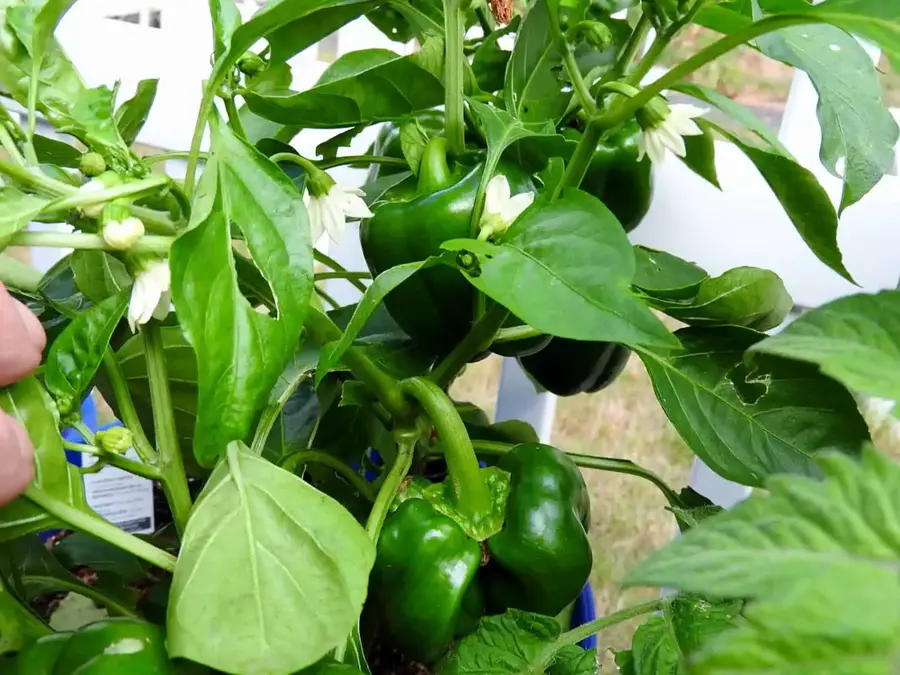
If your potted pepper plant has turned tall, scraggly, or just isn’t producing the way it used to, a good pruning can turn everything around.
With a few simple cuts, you can spark fresh growth, boost fruiting, and bring an older pepper plant back to life—without starting over from seed.
Once you understand what to cut, what to keep, and when to prune, it becomes a simple routine you can use year after year.
What You’ll Learn 🌱
- ✨ How pruning helps potted peppers grow bushier and fruit faster
- ✂️ Exactly which branches to remove—and which ones to keep
- 🌿 How to rejuvenate older pepper plants for a second life
- 🌞 How to overwinter peppers indoors so they’re ready to produce again
- 🪴 How to take cuttings from peppers to grow new plants
- ⚠️ Common pruning mistakes to avoid so you don’t shock your plant
The pepper in this post is my Burpee Bush Belle hybrid. It’s about a year old and has been harvested over and over.
Because it sat in a corner, it stretched toward the light and turned pretty lanky—a perfect candidate for a refresh.
The nice thing about pruning peppers in pots is that you’re working with a plant that already has a strong root system. You’re not trying to get a tiny seedling established—you’re simply telling a mature plant, “Let’s start fresh from here.”
Pruning Your Pepper Plants (Video)
How to Prune Pepper Plants in Pots 🌶️✂️
Peppers are naturally perennial, and that’s a big win if you’re growing them indoors.
As long as the plant is healthy, you can keep it going for years by pruning it back when it gets tired or leggy. Here’s what my plant looked like after a good trim:

A lot of foliage came off—don’t let that scare you. Pruning redirects the plant’s energy back into new shoots, flowers, and eventually fruit.
You’re not “ruining” the plant; you’re simply removing what’s no longer helping it produce.

Before trimming, I harvested a nice batch of peppers too. Always grab the ripe fruit first—it’s easier to see what you’re working with afterward, and you won’t accidentally knock off peppers you meant to keep.

Step-by-Step: Pruning Potted Pepper Plants
1. Remove long, leggy branches 🌿✂️
Any branch reaching far toward the light is stealing energy from potential fruiting sites closer to the main stem.
Follow those branches back and cut just above a healthy node where you want new growth to sprout.
2. Clear out weak or unhealthy growth 🍂
Yellowing leaves, thin shoots, and damaged branches should all go. Removing them improves airflow, reduces disease risk, and lets the plant focus on strong, productive growth instead of struggling to maintain weak foliage.
3. Shape the plant for even light exposure ☀️
Aim for an open, balanced structure—almost like a mini tree. You want light to reach into the center of the plant, not just the tips. If one side is much taller than the other, trim it back so the plant has an even canopy.
4. Don’t be afraid to prune hard on older plants 💪
A mature pepper with a strong root system usually bounces back quickly. Hard pruning can look drastic, but it often leads to dense new growth and more flowers. Just be sure the plant is healthy and well-watered before you go in heavy with the shears.
When to Prune Pepper Plants in Pots 🗓️
The best time to do a major prune is when the plant is actively growing and has enough light to recover.
For indoor growers, that usually means late winter into early spring, when you’re about to ramp up light and feeding again. You can also do a hard prune right before bringing a plant indoors for winter.
Light maintenance pruning can happen anytime the plant looks crowded or leggy. If you see branches that keep flopping over, leaves shading the center of the plant, or lots of thin stems with no flowers, it’s a good sign it’s time for a quick tidy-up.
How Much Should You Prune at Once? ✂️
As a general rule, avoid removing more than one-third of the plant’s foliage at a time unless you’re doing a deliberate rejuvenation prune on a strong, established plant.
Taking off too much at once can shock the plant and slow it down instead of helping it.
If your pepper is in rough shape—very tall, very leggy, or covered in dead growth—do one stronger prune, then give it a couple of weeks to respond.
You can always come back and refine the shape once you see where the new shoots are emerging.
Common Pruning Mistakes to Avoid ⚠️
- 🚫 Pruning a stressed plant: Don’t prune heavily right after transplanting, drought stress, or pest damage. Give the plant time to recover first.
- 🚫 Cutting below healthy nodes: Always leave at least one or two nodes on each branch so the plant has somewhere to push new growth from.
- 🚫 Removing all the leaves at once: Leaves are how the plant makes energy. Keep enough foliage to keep it photosynthesizing well.
- 🚫 Ignoring light after pruning: A pruned pepper needs bright light to bounce back. Low light plus heavy pruning equals slow recovery.
- 🚫 Using dirty tools: Dirty blades can spread disease from plant to plant. Wipe them down with alcohol or a bleach solution between plants.
How Long Do Peppers Take to Recover After Pruning? ⏱️
Most healthy, container-grown peppers start showing new growth within 7–14 days after a good prune. At first, you’ll see tiny shoots emerging from the nodes you left behind.
As long as the plant has enough warmth, light, and moisture, those shoots quickly turn into new branches.
You can usually expect the plant to start flowering again in a few weeks, and fruiting shortly after, depending on the variety and growing conditions.
That’s the advantage of pruning a mature plant—the roots are already doing their job, so the top regrows much faster than a new seedling can.
Pre- and Post-Pruning Care for Potted Peppers 🪴
Before pruning: Make sure the plant is well hydrated and not bone dry. A plant that’s already wilted or stressed won’t respond as well to pruning. Check for pests too—it’s better to deal with those first before making cuts.
After pruning: Give the plant bright light, steady moisture, and a mild feeding once you see new growth starting. Avoid blasting it with high-nitrogen fertilizer right away; you want balanced growth, not just a rush of soft leaves. Keep an eye on the soil so it stays evenly moist but not waterlogged.
Overwintering Peppers Indoors ❄️
If your outdoor peppers haven’t been hit by frost, you can bring them inside and keep them going through winter.
Cut them back hard, give them bright supplemental lighting, and they’ll push fresh growth in no time.
This is a great way to “save” your favorite variety instead of starting from scratch every year.
If they’re in the ground, dig them up carefully, keeping as many roots as you can.
Repot them—I like 5-gallon buckets filled with coco coir, but potting mix works too. Just skip garden soil indoors; it’s heavy, compacts easily, and can bring in pests and pathogens you don’t want inside.
Once they’re inside, aim for a bright window plus grow lights if you have them.
You can either keep the plant actively growing and fruiting, or let it idle along in a semi-dormant state with cooler temps and less light.
In spring, give it a fresh prune, a little fertilizer, and watch it take off again.
Taking Pepper Cuttings 🌱✂️
Propagation is an easy way to multiply your plants. Peppers can take around two weeks to root, but they absolutely will if kept warm and moist.
Pruning time is perfect for this—you’ve already got cuttings in your hand, so you might as well turn a few into new plants.

Choose a 6-inch cutting, remove the lower leaves, and leave just a couple on top. Rooting powder helps, but it’s optional.
I get great results using coco coir, starter plugs, or a small hydroponic system. Keep the cuttings warm, evenly moist, and out of harsh direct sun until you see new roots and growth.
FAQs 🌶️
Q. When should I prune pepper plants in pots?
Prune in early spring as plants wake up, or anytime they get tall and leggy. Light pruning throughout the season keeps them compact and productive. Just avoid pruning heavily right before a big heat wave or when the plant is already stressed.
Q. Will pruning make my pepper plant grow bushier?
Yes! Removing the top growth tip encourages lateral branches to form, creating a fuller, more productive plant. You’ll get more flowering sites, better light penetration, and usually a better overall harvest from the same pot.
Q. Does pruning increase pepper yield?
Absolutely. Pruning helps the plant concentrate its energy on fewer, stronger branches—leading to larger, healthier peppers and better overall production. Combined with good light, regular feeding, and proper watering, pruning is one of the easiest ways to boost yields in containers.
Q. Do I need special tools?
A clean pair of pruning shears or scissors is all you need. Just disinfect them before and after each use to prevent spreading disease. For small, soft shoots, you can even pinch them off with your fingers, but I still like to keep a sharp pair of snips handy.
Final Thoughts 🌱
If you want more peppers—and faster—pruning is one of the easiest ways to renew an older plant.
Whether you’re overwintering peppers or rooting cuttings for new plants, you’ll get a big head start by working with what you already have instead of starting from scratch each season.
Fresh growth, fresh fruit, and a fresh start—all from one plant. A few careful cuts now can pay you back with months of harvests later, and once you see how well your pruned pepper bounces back, it’s hard not to make this part of your regular container gardening routine.
Read more:
Container Gardening: How to Grow Beautiful Vegetables & Flowers in Pots
How To Grow Bell Pepper From Seeds: 11 Easy Growth Tips
📚 References