
This post may contain affiliate links. If you buy something from one of our links we may earn a commission. Thanks
In this guide, you’ll learn which agaves stay small enough for containers, how to pot them up so they don’t rot, and the simple light and watering routine that keeps them looking sharp (without stabbing you every time you walk by!). 🌵
What You’ll Learn 🌵
- 🪴 How to choose the best compact agave varieties that stay small in pots.
- 🌵 The ideal pot size, material, and gritty soil mix for healthy roots.
- ☀️ Exactly how much light indoor agaves need to keep their color and shape.
- 💧 A simple watering routine that prevents rot and keeps plants thriving.
- 🌡️ Where to place potted agaves indoors for the right temperature and airflow.
- 🌱 How to repot and divide pups so you can grow new agaves for free.
- 🚑 Easy fixes for common problems like yellowing leaves, stretch, and pests.
Growing Agave In Pots: Quick Start Guide
Short on time? Here’s the quick version so you can get your agave settled fast:
- 🪴 Best pots: Clay or ceramic with a big drainage hole; only 2–3 inches wider than the plant’s rosette.
- 🌵 Soil mix: Cactus/succulent mix lightened with extra perlite or pumice so water runs through quickly.
- ☀️ Light: Bright sun – a south or west-facing window is perfect. Aim for 6+ hours of direct light.
- 💧 Water: Let the soil dry out completely between waterings. In winter, water very sparingly.
- 🌡️ Temperature: Keep them in the 60–80°F range indoors and away from cold drafts.
If that sounds doable, you’re ready to dive deeper and pick the perfect agave for your pots.
Why Grow Agave In Pots Indoors?
Agaves are slow-growing succulents from hot, dry regions. In the ground some of them become huge, architectural plants. But in pots, especially indoors, they stay compact and manageable for years.
- 🌿 Low maintenance: They prefer to be ignored rather than fussed over.
- 🏠 Small-space friendly: Perfect for windowsills, bright corners, and sunny balconies.
- 🎨 Bold style: Their strong rosettes and patterns give you instant “designer plant” vibes.
- ⏳ Slow growers: No constant repotting or pruning – they take their time.
The key is choosing varieties that naturally stay smaller and don’t need a huge root run. Let’s start there.
Best Agave Varieties For Pots (Stay Small Indoors)
Not every agave is a good housemate. Large species like Agave americana or Blue Agave can outgrow a living room pretty quickly. These compact varieties are much better suited to pot life indoors. 👇
1. Agave victoriae-reginae (Queen Victoria Agave)

This is the classic “collector” agave that still behaves beautifully in a small pot.
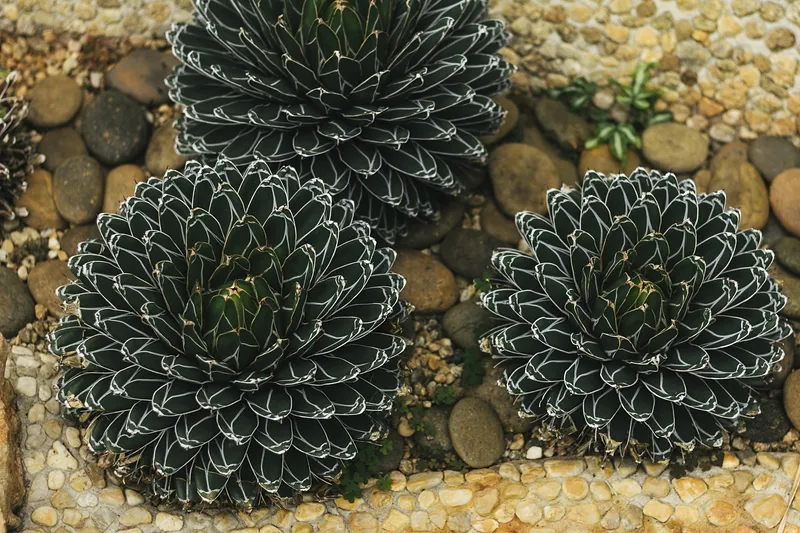
- 👑 Look: Tight, rounded rosette of dark green leaves accented with crisp white markings.
- 📏 Size in pots: Usually 10–18 inches tall and wide indoors.
- 🪴 Best container: Heavy clay pot to balance the weight of the rosette.
- 👍 Why it’s great indoors: Very slow growing and stays compact for years with minimal fuss.
2. Agave parryi (Parry’s Agave)

Parry’s Agave brings a soft, blue-gray color that looks amazing against white walls or terracotta pots.
- 🎨 Look: Symmetrical rosettes of thick, blue-gray leaves with dark tips.
- 📏 Size in pots: Commonly 12–24 inches tall and wide indoors.
- ☀️ Light needs: Handles strong sun well; great for bright windows.
- 👍 Why it’s great indoors: Dense, tidy growth that doesn’t sprawl everywhere.
3. Agave attenuata (Fox Tail Agave)

If you love agaves but aren’t a fan of sharp spines, Fox Tail Agave is your friend.
- 🌱 Look: Smooth, spineless leaves that arch gracefully, forming a soft rosette.
- 📏 Size in pots: Can reach 2–3 feet over time indoors, but grows slowly.
- 🪴 Best spot: A larger pot on the floor near a bright window.
- 👍 Why it’s great indoors: Friendlier around kids and pets because the leaves are not razor sharp (still supervise, of course).
4. Agave desmettiana (Smooth Agave)

This one adds a splash of color to your succulent collection.
- 🎨 Look: Green leaves edged with creamy-yellow margins for a bright, striped effect.
- 📏 Size in pots: Commonly 18–24 inches tall and wide indoors.
- 🌞 Light: Needs good light to keep the variegation bright and crisp.
- 👍 Why it’s great indoors: Provides a “statement plant” look without needing a huge container.
5. Agave isthmensis (Dwarf Butterfly Agave)
If you only have room for a small pot, this is a perfect choice.
- 🦋 Look: Tight rosettes of blue-green leaves that resemble a little art piece.
- 📏 Size in pots: Usually stays under 10–12 inches wide indoors.
- 🪴 Best container: Small clay pot on a windowsill, shelf, or desk.
- 👍 Why it’s great indoors: Truly compact and ideal if you’re short on space but want that bold agave look.
How To Plant Agave In Pots (Step-By-Step)
1. Choose The Right Container
- 🪴 Material: Clay or ceramic is ideal – it dries out faster and keeps roots happier.
- 🕳️ Drainage: Make sure there’s at least one large drainage hole (more is better).
- 📏 Size: Pick a pot only 2–3 inches wider than the agave. Too much extra soil around the roots stays wet and can cause rot.
- 📐 Shape: Wide, shallow pots work well for many agaves because their roots are more lateral than deep.
2. Mix The Right Soil
- 🌵 Base: Start with a quality cactus/succulent mix.
- ➕ Lighten it: Add extra perlite, pumice, or coarse sand (about 25–50%) so water runs through quickly.
- ⚠️ Avoid: Regular garden soil or heavy compost – they hold too much moisture.
3. Potting Your Agave
- Place mesh or a broken pot shard over the drainage hole so soil doesn’t wash out.
- Add a layer of your gritty mix at the bottom.
- Carefully center the agave in the pot (gloves are a good idea with spiny varieties).
- Fill around the roots with soil, gently firming it so the plant sits steady but not buried too deep.
- Leave a small “watering lip” at the top of the pot so water doesn’t overflow.
- Lightly water once to settle the soil, then let the mix dry out before you water again.
Everyday Care For Potted Agave
Light Requirements
- ☀️ Indoors: A south or west-facing window is ideal. East-facing can work if light is bright.
- 📅 Rotate: Turn the pot every few weeks so the rosette grows evenly.
- 🕶️ Hardening off: If you move it outside for summer, introduce full sun gradually to avoid leaf scorch.
Watering Schedule
- 💧 Basic rule: Let the top 2–3 inches of soil dry out completely before watering again.
- 🗓️ How often: This might mean every 10–21 days indoors in bright light; less often in winter.
- 🪣 How to water: Water thoroughly until it drains from the bottom, then empty the saucer.
- ⚠️ Red flag: Yellow, mushy leaves usually mean too much water; wrinkled, limp leaves mean you waited too long.
Feeding Your Agave
- 🌱 Type: Use a balanced, low-nitrogen succulent fertilizer at half strength.
- ⏰ When: Once or twice during the growing season (spring and early summer) is plenty.
- ❄️ No winter feed: Skip fertilizer when the plant is resting in cooler, darker months.
Temperature, Humidity & Indoor Placement
- 🌡️ Ideal range: 60–80°F (15–27°C) indoors.
- 🚪 Avoid: Drafty doors, AC vents, and heat registers that blast hot or cold air.
- 💨 Humidity: Average indoor humidity is fine; agaves actually prefer drier air.
- 🧊 Cold warning: Most potted agaves should be protected from temperatures below about 40°F (4°C).
Repotting Agave In Pots
Agaves in containers don’t need frequent repotting. In fact, they’re often happier a little snug.
- 🔍 Signs it’s time: Roots circling the bottom, pushing through drainage holes, or the plant becoming top-heavy and unstable.
- 📏 New pot: Choose one only a size or two larger; too big encourages wet soil.
- 🧤 Safety: Use gloves or a folded towel around spiny leaves while you work.
- ♻️ Old soil: Shake off as much of the old mix as you can and refresh with a gritty, fast-draining blend.
Propagation: Making More Agaves From Pups
Many agaves make offsets (pups) around the base. These are the easiest way to get more plants.
- Wait for pups: Look for small rosettes forming beside the mother plant.
- Unpot the mother: Gently ease the whole plant and rootball out of the container.
- Separate: Use a clean, sharp knife or pruners to cut pups away, keeping some roots attached.
- Callus: Let the pups sit in a dry, shaded spot for a day or two so cut surfaces can callus.
- Pot up: Plant pups in small pots with the same gritty mix and water lightly after a few days.
Growing agave from seed is possible, but slower and more finicky for beginners. Pups are the easy win. 🌱
Common Problems With Potted Agave (And Easy Fixes)
Yellowing Or Mushy Leaves
This usually means too much water or soil that’s staying wet for too long.
- ✅ Let the soil dry completely before watering again.
- ✅ Check that the pot drains freely and isn’t sitting in a saucer of water.
- ✅ If rot is severe, remove the plant, trim off damaged roots, and repot into drier, grittier soil.
Stretched, Leggy Growth
If your agave is reaching or leaning hard toward the window, it’s craving more light.
- ☀️ Move it closer to your brightest window or supplement with a grow light.
- 🔄 Rotate the pot regularly so it grows evenly.
Pests (Mealybugs, Scale, Spider Mites)
Agaves are usually tough, but they can still get the occasional pest.
- 🔍 Inspect leaves regularly, especially around leaf bases.
- 🧴 Dab pests with a cotton swab dipped in rubbing alcohol or use an insecticidal soap.
- 🚿 A gentle rinse in the shower can help knock mites off the foliage.
Agave In Pots FAQs
Q. What are the best agaves for pots indoors?
Compact varieties like Agave victoriae-reginae, Agave parryi, Agave attenuata, Agave desmettiana ‘Variegata’, and Agave isthmensis are all excellent choices. They stay smaller, grow slowly, and adapt well to container life in bright indoor spots.
Q. How often should I water a potted agave indoors?
Let the top 2–3 inches of soil dry out completely, then water thoroughly. In a bright indoor window, that might be every 10–21 days, and even less in winter. It’s far safer to underwater than to keep the soil constantly damp.
Q. What kind of soil is best for Growing Agave In Pots?
Use a gritty, fast-draining cactus or succulent mix with extra perlite, pumice, or coarse sand. Avoid heavy garden soil or peat-heavy mixes that stay wet – they increase the risk of root rot in containers.
Q. Can I move my potted agave outdoors for summer?
Yes, many agaves appreciate fresh air and extra sun in warm weather. Just move the pot outside gradually over a week so the leaves can adjust to stronger light. Bring it back indoors before temperatures drop toward freezing.
Q. How big will my agave get in a pot?
Most agaves grow more slowly and stay smaller in containers than they would in the ground. Compact varieties may live happily for years in a 6–12 inch pot, only needing a size upgrade when roots are circling the pot or pushing through drainage holes.
Growing Agave In Pots: Final Thoughts
Growing Agave In Pots is an easy way to bring a bit of desert drama into your living room, balcony, or sunny windowsill.
Pick compact varieties, give them a fast-draining mix, and water less than you think – that’s really the secret.
Once you understand how little they really need, agaves turn out to be some of the easiest container plants you can grow.
Choose a compact variety, give it a gritty mix, lots of light, and a cautious watering hand, and it will reward you with bold, sculptural beauty for years. 🌵
If you enjoy low-maintenance plants like this, you might also like learning about the benefits of other indoor succulents and how they fit into a small-space garden.
Read next: 10 Benefits Of Succulent Plants Indoors (Plus They’re Easy To Grow)