
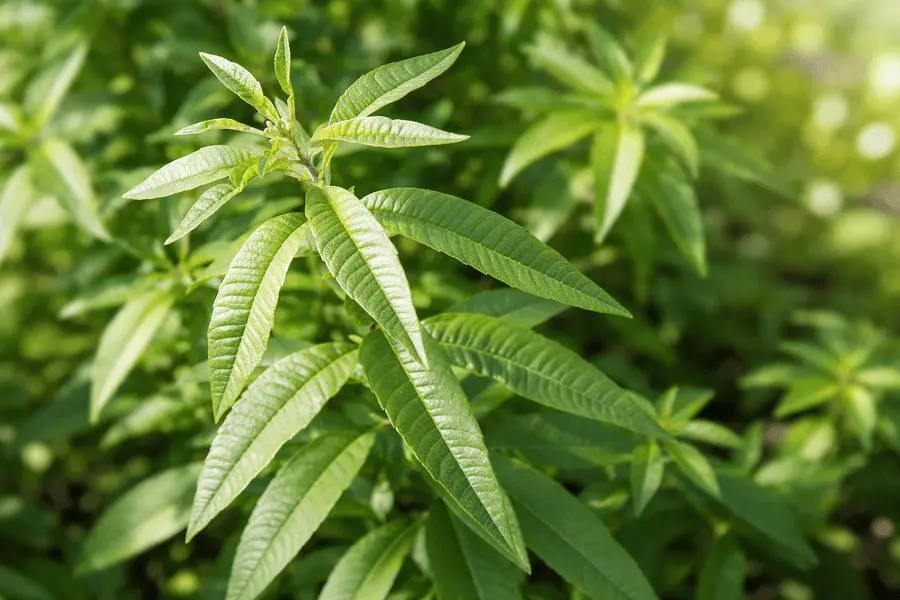
If you want to grow lemon verbena indoors, you’re picking one of the most fragrant herbs you can keep in the house. Just brushing the leaves releases a bright citrus scent that makes it worth growing even before you harvest a single leaf.
Lemon verbena is a favorite for tea, homemade syrups, and fresh herbal blends, but it can also be a little leggy indoors if you don’t give it enough light or prune it often. The good news is that once you understand its simple rhythm, it’s easier to grow than many people think.
This guide will show you how to grow lemon verbena indoors with the right light, watering, soil, pruning, and repotting so you can keep it full, healthy, and productive year-round.
🌿 What You’ll Learn
- 🍋 How to grow lemon verbena indoors without weak, leggy stems
- ☀️ How much light it really needs to stay productive
- 🪴 The best pot size and coco coir soil mix for healthy roots
- 💧 How to water without overdoing it
- ✂️ How to prune for fuller growth and better harvests
- 🛠️ How to fix leaf drop, yellowing, and common pests
🌱 Quick Answer
Grow Lemon Verbena Indoors by giving it strong light, well-draining soil, and regular pruning. Keep the soil lightly moist but never soggy, harvest often, and repot as it grows to keep it productive year-round.
🌿 How To Grow Lemon Verbena Indoors
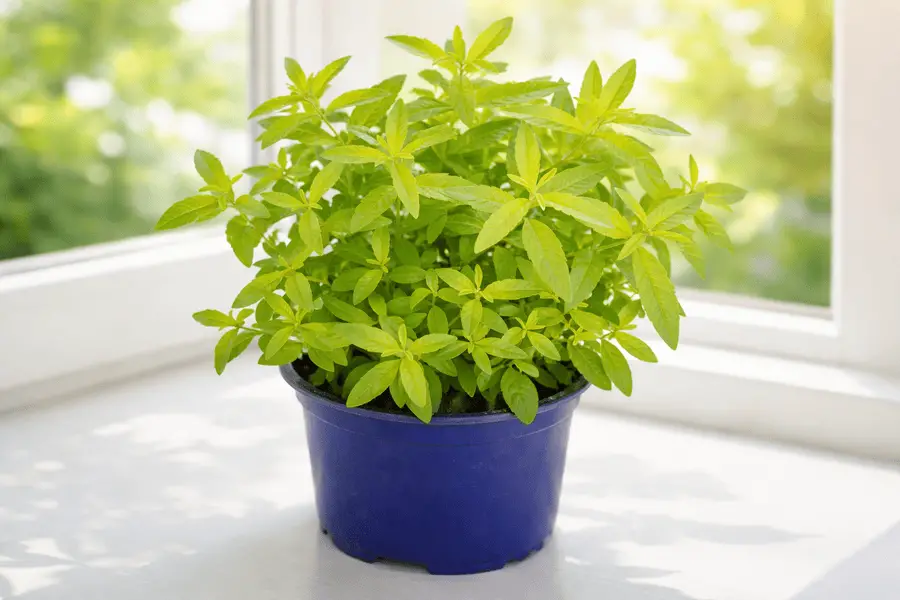
There’s something instantly calming about lemon verbena. One brush of the leaves and your space fills with a clean, citrusy scent that feels both fresh and comforting. And you don’t need a garden or perfect conditions to enjoy it.
This guide keeps things simple and realistic. You’ll learn how to help lemon verbena thrive in real homes, avoid the most common beginner mistakes, and turn a single plant into a steady source of fragrance and feel-good tea leaves.
Find your own live Lemon Verbena Plants on Amazon
🍋 What is lemon verbena?

Lemon verbena (Aloysia citrodora, sometimes listed as Aloysia triphylla) is a tender, woody herb grown for its intensely fragrant leaves.
The scent is sweet, crisp, and “true lemon” compared to many other lemony herbs.
That’s why it’s a favorite for herbal tea, syrups, desserts, potpourri, and just… rubbing a leaf between your fingers when you need a mini mood lift.
- 🍃 Big payoff: a little plant can perfume a whole corner of your home
- 🍵 Easy use: fresh leaves = instant tea upgrade
- 🌱 Growth style: it can get lanky indoors without strong light + pruning
🪴 Is lemon verbena a good indoor herb?
Yes—especially if you like herbs that do double duty as “plant + air freshener.”
The main challenge indoors is light. If lemon verbena doesn’t get enough, it stretches toward the brightest spot and produces fewer leaves.
The good news is that once you understand the light and pruning rhythm, it’s a very doable plant for beginners.
- ✅ Great for windowsills and grow lights
- ✅ Responds well to pruning (meaning you can shape it)
- ⚠️ Needs more light than many “easy” herbs like mint
🌞 Light Requirements for Lemon Verbena Indoors
☀️ How much light lemon verbena really needs
Think of lemon verbena as a “sun lover.” Indoors, that usually means your brightest window—often a south-facing window if you have it.
If your plant is surviving but looking thin, pale, or leaning hard toward the glass, it’s telling you it wants more light.
- 🌞 Aim for the brightest spot you’ve got
- 🪟 A sunny windowsill can work, but winter light often falls short
- 📏 Rotate the pot every few days so it grows evenly
💡 Can you grow lemon verbena under grow lights?
Absolutely—and for many homes, it’s the easiest way to get sturdy growth year-round. A basic full-spectrum LED grow light (even one meant for herbs) can make a night-and-day difference.
- 💡 Set lights for 12–16 hours per day (more in winter, less in summer)
- 📏 Keep the light fairly close (follow the light’s instructions; closer usually = stronger)
- 🕒 Use a timer so you’re not “remembering” every day
🏡 Best Indoor Locations for Lemon Verbena
Lemon verbena needs the brightest spot you can give it indoors. Placement makes a huge difference in how full, fragrant, and productive it becomes.
- South-facing window: Best for strong direct light.
- West-facing windowsill: Great for warm afternoon sun.
- Grow light shelf: Excellent for winter or cloudy homes.
- Bright kitchen herb station: Good if it gets strong daily light.
Avoid dark counters, low-light rooms, or spots near cold winter drafts.
🪴 Choosing the Right Pot & Soil
🪴 Best pot size for indoor lemon verbena
For a small starter plant, a pot that’s too big can stay wet too long—root problems love that. It’s usually better to start modest and size up as the plant grows.
- 🕳️ Use a pot with drainage holes (non-negotiable)
- 📦 Start around 6–8 inches for a small plant; go bigger as it fills out
- 🧱 Choose something stable (terra cotta helps soil dry faster)
🌱 Best soil mix for lemon verbena indoors
Lemon verbena likes soil that holds some moisture but doesn’t stay soggy. A light, well-draining mix keeps roots healthy and makes watering way less stressful.
- 🪴 Use a quality potting mix (not garden soil)
- 🌾 Add perlite or pumice to improve drainage
- 🚫 Avoid heavy mixes that stay wet for days
Simple beginner mix: potting mix + a generous handful of perlite/pumice per pot. Easy, reliable, done.
✅Tip: 75% coco coir and 25% perlite is an excellent mix for Lemon Verbena
💧 Watering Lemon Verbena Indoors (Without Overdoing It)
🚿 How often to water lemon verbena
Instead of watering on a schedule, use a quick soil check. Stick your finger about an inch into the soil. If it feels dry at that depth, it’s usually time to water. If it still feels damp, wait.
- 👆 Check soil first; don’t guess
- 🚰 Water thoroughly until water drains out the bottom
- 🧺 Empty saucers so the pot isn’t sitting in runoff
⚠️ Common watering mistakes beginners make
- 🚫 “A little splash every day” (this keeps soil constantly damp)
- 🚫 Letting the pot sit in a pool of water
- 🚫 Watering because the top looks dry (top can lie!)
Real-world tip: Lemon verbena can look dramatic if it’s too dry (droopy leaves), but it often perks back up quickly after a proper watering. If you’re unsure, check the soil depth before reacting.
🌡️ Temperature & Humidity Needs
🌡️ Ideal indoor temperature
Normal home temperatures are usually fine. The bigger issue is cold drafts and sudden temperature swings—like a plant sitting right next to a frequently opened door or a chilly window at night.
- 🏠 Steady indoor temps are great
- 🧊 Keep it away from cold drafts and blasting heaters
- 🌬️ Gentle airflow is fine; harsh drafts are not
💦 Does lemon verbena need high humidity?
It doesn’t demand tropical humidity, but extremely dry indoor air can make leaves crispier and stress the plant. If your heat is cranking all winter and everything feels like desert air, a little humidity help can go a long way.
- 🪨 Pebble tray can help a bit
- 🌿 Grouping plants can create a small “humid pocket”
- 💧 A humidifier is the easiest option if your home is very dry
🌱 Starting Lemon Verbena Indoors
🌱 Growing lemon verbena from seed (what to expect)
You can grow lemon verbena from seed, but it’s not the most beginner-friendly route. Germination can be slow and inconsistent, and many people get quicker success starting with a plant or cuttings.
- ⏳ Seeds can take patience (and results vary)
- 🌡️ Warmth + steady moisture matter more than fancy setups
- 🌿 If you want faster wins, start with a plant or cutting
🌿 Growing lemon verbena from cuttings or starter plants
This is the easiest path for most indoor gardeners. A healthy starter plant gives you instant progress, and cuttings can root well—meaning you can “refresh” your plant whenever it starts getting woody and tired.
- 🛒 Look for bright green leaves and sturdy stems at the store
- ✂️ Cuttings let you clone your best plant
- 🌱 New plants often look better and grow more vigorously than older ones

2 Lemon Verbena Plants Live Plugs 3-5″ Tall, Fragrant Lemon Herb Plants for Garden Growing
✂️ Pruning & Shaping for Bushy Growth
✂️ Why pruning is essential indoors
Without pruning, lemon verbena tends to reach for light and turn into a tall, sparse plant with leaves mostly at the top. Pruning turns it into a fuller, leafier plant—and harvesting becomes easier too.
- 🌿 Encourages branching (more stems = more leaves)
- 🪴 Keeps the plant compact for indoor spaces
- 🍵 Improves harvest quality (tender growth is great for tea)
🌿 How and when to prune lemon verbena
When your plant is actively growing (often spring through early fall), you can prune regularly. Make cuts just above a leaf node (where leaves attach), and the plant will typically branch from that point.
- ✂️ Snip above a node to trigger new branches
- 🗓️ Light trims are better than one brutal haircut
- 🎯 If it’s getting leggy, prune and increase light at the same time
Beginner-friendly approach: Every time a stem gets a little too long, snip it back by a couple inches and use the leaves for tea. You’re shaping and harvesting in one move—nice and tidy.
🪴 Repotting Lemon Verbena Indoors
🔄 When to repot
If water starts running straight through the pot, roots are circling the inside, or the plant dries out extremely fast, it may be ready for a bigger home.
- 🧵 Roots circling the bottom = likely time
- 💧 Soil drying unusually fast = possible root crowding
- 📈 Growth slowing despite good light = check roots
🪴 How to repot without shock
- 🪣 Move up just one pot size (don’t jump too big)
- 🌱 Use fresh, well-draining mix
- 🚿 Water in thoroughly and keep light steady
- 😌 Expect a short “pause” while it adjusts
🐛 Common Lemon Verbena Problems Indoors
🐜 Pests to watch for
Indoor herbs can still attract pests—especially when the air is dry or plants are stressed. The most common ones are spider mites, aphids, whiteflies, and mealybugs.
- 🕸️ Fine webbing or speckled leaves can point to spider mites
- 👀 Check under leaves (that’s where pests like to hide)
- 🚿 A gentle rinse + insecticidal soap can help early infestations
🍂 Yellow leaves, leaf drop, and weak growth
- 🍂 Leaf drop after moving indoors: can happen from light/temperature change
- 💧 Yellowing + soggy soil: often overwatering or poor drainage
- 🌞 Thin, weak stems: not enough light
Quick rescue combo: increase light, prune back legginess, and double-check drainage. Many lemon verbena problems improve fast once the basics are dialed in.
🌿 Harvesting Lemon Verbena Indoors

✂️ When to harvest leaves
Harvest any time the plant has enough growth to spare. You’ll get the best flavor and aroma from healthy, active growth—usually the newer leaves.
- ✂️ Snip small amounts often instead of stripping the plant
- 🌿 Harvesting acts like pruning (it helps the plant branch)
- 🍃 Avoid taking more than about a third of the plant at once
🍵 How to use lemon verbena leaves
- 🍵 Tea: steep fresh leaves for a bright citrus cup
- 🧊 Cold drinks: toss leaves into water or iced tea
- 🍯 Simple syrup: infuse for desserts and mocktails
- 🕯️ Aroma: dry leaves for sachets or potpourri
🌼 Herbs That Grow Well with Lemon Verbena Indoors
Lemon verbena plays nicely with other “tea herbs,” but pair plants with similar needs. Since lemon verbena likes strong light and careful watering, it’s happiest next to herbs that also enjoy bright conditions.
- 🍵 Chamomile: a cozy “tea herb duo” pairing (different growth habit, but complementary use)
- 🌿 Thyme: bright light lover, easy companion nearby
- 🌱 Mint: great for tea too, but keep it in its own pot (mint spreads)
💬 Grow Lemon Verbena Indoors FAQs
Can lemon verbena grow indoors year-round?
Yes. With enough light and regular pruning, lemon verbena can stay productive indoors through every season.
How much light does lemon verbena need indoors?
At least 6–8 hours of strong light or 12–16 hours under grow lights.
Why is my lemon verbena dropping leaves?
Leaf drop is usually caused by sudden light changes, overwatering, or temperature swings.
Can I make tea from fresh lemon verbena?
Yes. Fresh leaves are one of the most popular ways to enjoy lemon verbena.
How often should I repot lemon verbena?
Usually every 1–2 years, depending on root growth and plant size.
Can lemon verbena be grown from cuttings?
Yes. Cuttings root easily and are one of the easiest ways to start new plants.
🌿 Final Thoughts: Grow Lemon Verbena Indoors

Lemon verbena is one of those herbs that rewards you quickly once the basics are right. Strong light, good drainage, and regular pruning make all the difference.
It gives you fresh tea leaves, incredible citrus fragrance, and a plant that feels useful every single day. That’s a pretty good trade for a little windowsill space.
If you enjoy tea herbs or fragrant plants, lemon verbena is one of the best indoor herbs to add to your collection.
Read more: 👉 Indoor Herb Growing Guide