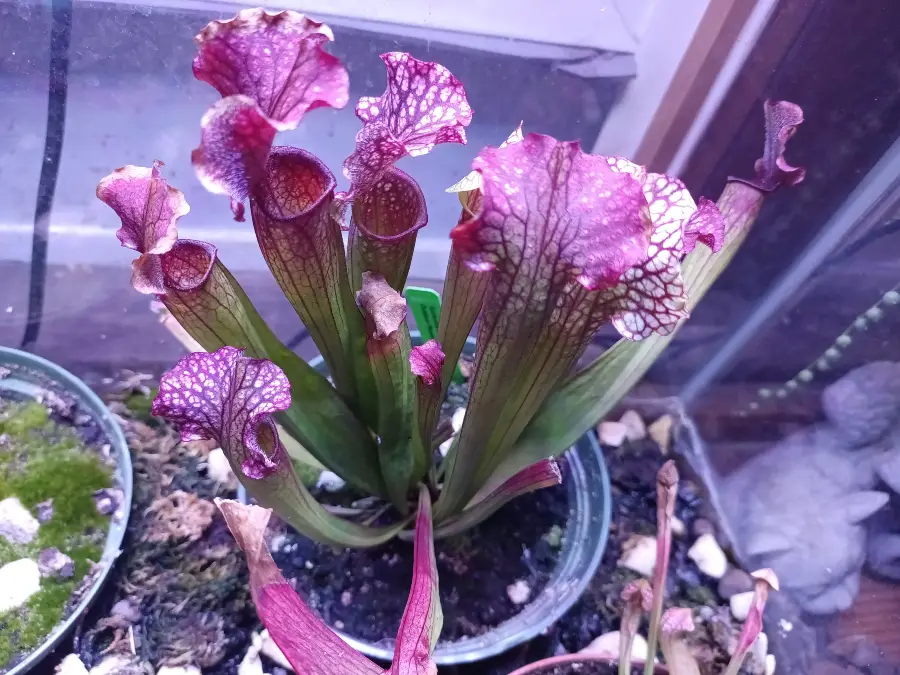
I’ve been growing carnivorous plants for years, and most of what I know comes from hands-on experience rather than theory. I’ve kept Heliamphora, Venus flytraps, sundews, Nepenthes, and even Sarracenia in real indoor conditions — not climate-controlled greenhouses — so I understand what actually works for people growing these plants at home.
Over time, I shifted from outdoor bog tubs to indoor tank setups and carnivorous plant terrariums. My first indoor plant was a Nepenthes truncata, which could not be grown outdoors. It also opened me up to a wider variety of tender carnivorous plants.
Part of that was lifestyle — less yard space, more time indoors — and part of it was curiosity. I wanted to see how far I could push carnivorous plant terrariums inside a normal home.
What I discovered is this: with the right water, the right substrate, and strong lighting, these plants are far more adaptable than most people think.
• How to set up carnivorous plant terrariums in real indoor conditions
• Which tank sizes work best (30, 33, 75, and 90 gallon setups)
• How to manage water, substrate, and humidity without rot
• Why Heliamphora, Nepenthes, and sundews thrive indoors
• What actually matters — and what advice online you can ignore
From Outdoor Bog Tubs to Indoor Terrarium Tanks
For years I grew carnivorous plants outside — probably 15 years total. Sarracenia and Cobra Lily in tubs, sundews in trays, the usual approach. But eventually I started bringing more of them indoors.
Now I run multiple aquarium-style terrariums:
- A 30-gallon tank for overwintering Sarracenia experiments
- A 33-gallon tank with butterworts, sundews, and a Nepenthes
- A 90-gallon paludarium (half water, half land)
- And recently, a 75-gallon Heliamphora-focused terrarium
Large tanks create stability. They hold humidity better, buffer temperature swings, and give you room to experiment with airflow and lighting.
The 75-Gallon Heliamphora Terrarium
Heliamphora — the Sun Pitchers — were a plant I had always wanted to try. They have upright pitchers like Sarracenia, but they don’t require a winter dormancy, which makes them far more practical indoors.
The only other indoor pitcher plants that don’t need dormancy are Nepenthes, but they are climbing and vining plants, and the sun pitchers are far more manageable indoors.
I added two plants to the new setup:
- Heliamphora minor – smaller, greener form
- Heliamphora heterodoxa × ionasi – a vigorous hybrid with red pitchers
The hybrid in particular shows strong coloration under bright light and is known for being more forgiving than some species.
The tank itself uses Eco Complete as a base layer, blended with coco coir to create a moisture-retentive but aerated substrate. The Heliamphora sit in net pots that are partially buried — about half above the surface and half below — so roots stay moist without the crown being buried too deeply.
There’s a shallow reservoir at the bottom — about an inch or two of water — but the tank is not flooded. That balance keeps humidity high while avoiding stagnation.
What Actually Matters in Carnivorous Plant Terrariums
1. Low Mineral Water
These plants do not tolerate mineral buildup. Distilled, rainwater, or reverse osmosis water is safest. High mineral water slowly damages roots and reduces vigor.
2. Inert, Low-Nutrient Substrate
Carnivorous plants do not feed from soil. They evolved in nutrient-poor environments. Fertilized mixes and rich potting soil will kill them. Stick with sphagnum, peat-based mixes, or clean coco coir blends.
3. Strong Lighting
Most carnivorous plants naturally grow in full sun. Indoors, that means LED grow lighting. Without enough light, traps weaken, pitchers shrink, and color fades.
4. Airflow + Humidity Balance
Humidity is important, but stagnant air causes problems. I prefer open-top tanks or controlled ventilation rather than sealed glass boxes.
My 75 gallon aquarium has a Versatop glass top and the fit is fairly tight so I installed a small computer fan to keep the air circulating.
Mixing Carnivorous and Tropical Plants
One thing I experiment with is combining carnivorous species with standard tropical plants like peperomia, pothos, inch plant, and even Calathea. In large tanks, this creates a more natural ecosystem feel.
The key is understanding moisture zones. Carnivorous plants stay in consistently wet media. Companion plants need slightly better drainage. Zoning the substrate prevents root issues.
Do All Carnivorous Plants Work Indoors?
Not equally.
- Heliamphora: Excellent indoor candidate with strong lighting.
- Nepenthes: Very well suited to terrariums.
- Tropical sundews: Reliable and adaptable.
- Butterworts: Great for fungus gnat control.
- Venus Flytraps: Borderline. They naturally need dormancy, though some will persist indoors.
Final Thoughts on Carnivorous Plant Terrariums
Carnivorous plant terrariums don’t require a greenhouse. They require consistency. Clean water. Strong light. Inert soil. Air movement. Once you dial those in, the plants do the rest.
Whether you’re experimenting with Heliamphora in a 75-gallon tank or just starting with a small aquarium and a few sundews, the principles stay the same.
Start simple. Observe closely. Adjust gradually. And let the plants tell you what’s working.
Explore More
- Browse all Terrarium Guides
- Read the full Carnivorous Plant Care Guide
References
- International Carnivorous Plant Society (ICPS) – General cultivation resources: https://www.carnivorousplants.org/grow
- Royal Botanic Gardens, Kew – Carnivorous plant overview: https://www.kew.org/read-and-watch/carnivorous-plants