
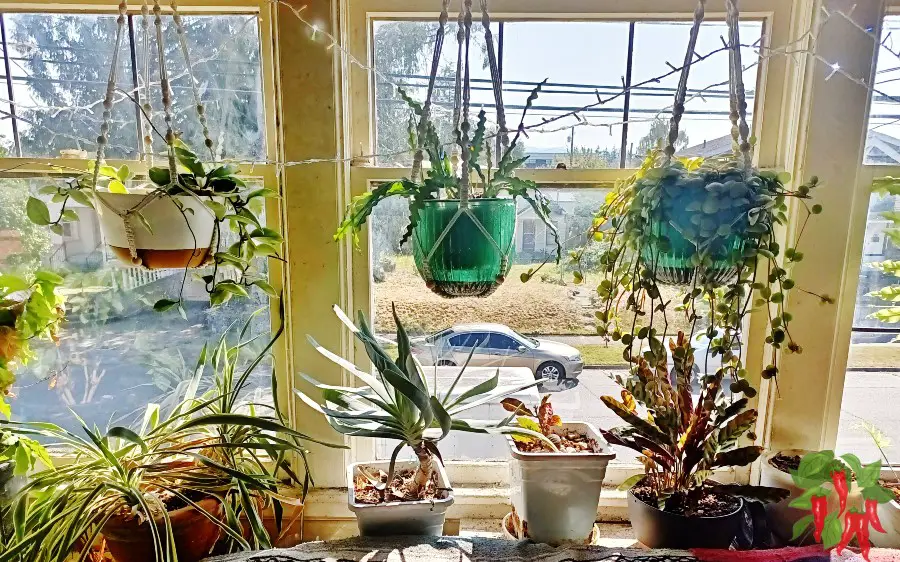
The best trailing indoor plants can turn an empty shelf, hanging basket, or narrow corner into a wall of living greenery. Some produce long vines, others develop arching stems, and a few create dramatic cascades of foliage and flowers.
I use a lot of hanging plants in my own apartment because they let me grow more greenery without sacrificing valuable floor space. That leaves room below for larger plants such as Monstera, palms, and Bird of Paradise.
However, trailing plants do not always have to hang. I have trained some of my Pothos and Heartleaf Philodendrons to climb poles instead. This turns them into tall, narrow tabletop or floor plants that use vertical space without spreading across the room.
The best choice depends on how you want the plant to grow. Pothos and Heartleaf Philodendron can trail or climb. Spider Plants, Fishbone Cactus, and holiday cacti look especially good cascading from hanging baskets. Peperomia Hope stays more compact, making it particularly useful on shelves and in smaller rooms.
In this guide, I will help you compare the best trailing plants for different locations and explain when it makes more sense to let a plant hang, trail across a shelf, or climb a support.
What You’ll Learn
- The best trailing indoor plants for shelves and hanging baskets
- Which vines can also be trained to climb a pole
- Which plants stay compact and which can quickly take over
- How to choose between a shelf, hanging basket, or climbing support
- How light affects fullness, leaf size, and trailing growth
- Common mistakes that leave trailing plants sparse or leggy
Quick Answer: Some of the best trailing indoor plants include Pothos, Heartleaf Philodendron, Spider Plant, Peperomia Hope, Fishbone Cactus, holiday cacti, and Lipstick Plant. Pothos and Heartleaf Philodendron can trail from shelves or hanging baskets, but they can also be trained up poles to create tall, narrow plants. Fishbone Cactus, Spider Plant, and Lipstick Plant are especially well suited to hanging displays.
Best Trailing Indoor Plants at a Glance
| Plant | Best Display | Growth Habit | Care Level |
|---|---|---|---|
| Pothos | Shelf, basket, or climbing pole | Fast trailing or climbing vines | Easy |
| Heartleaf Philodendron | Shelf, basket, or climbing pole | Fast trailing or climbing vines | Easy |
| Spider Plant | Hanging basket | Arching leaves and hanging plantlets | Easy |
| Peperomia Hope | Shelf or compact hanging planter | Compact trailing stems | Easy |
| Fishbone Cactus | Hanging basket | Long, deeply lobed cascading stems | Easy |
| Holiday Cactus | Shelf or hanging basket | Segmented cascading stems | Easy |
| Lipstick Plant | Hanging basket | Trailing stems with tubular flowers | Moderate |
Hanging Basket, Shelf, or Climbing Pole?
The same plant can look completely different depending on how you display it. Before choosing a container, think about the plant’s natural growth habit and the space you want it to fill.
| Plant | Shelf | Hanging Basket | Climbing Pole |
|---|---|---|---|
| Pothos | Excellent | Excellent | Excellent |
| Heartleaf Philodendron | Excellent | Excellent | Excellent |
| Spider Plant | Good | Excellent | Not suitable |
| Peperomia Hope | Excellent | Good | Not suitable |
| Fishbone Cactus | Good | Excellent | Not suitable |
| Holiday Cactus | Excellent | Excellent | Not suitable |
| Lipstick Plant | Good | Excellent | Not usually needed |
Quick Tip: Use hanging baskets for plants that naturally arch or cascade. Use shelves for shorter trailing plants you want to inspect easily. Train natural climbers such as Pothos and Heartleaf Philodendron upward when you want a taller plant with a narrow footprint.
Trailing Plants Don’t Have to Hang
One thing many beginners do not realize is that some popular trailing plants are natural climbers. Instead of letting every vine cascade from a basket or shelf, you can encourage it to grow upward on a moss pole, coir pole, trellis, or another sturdy support.
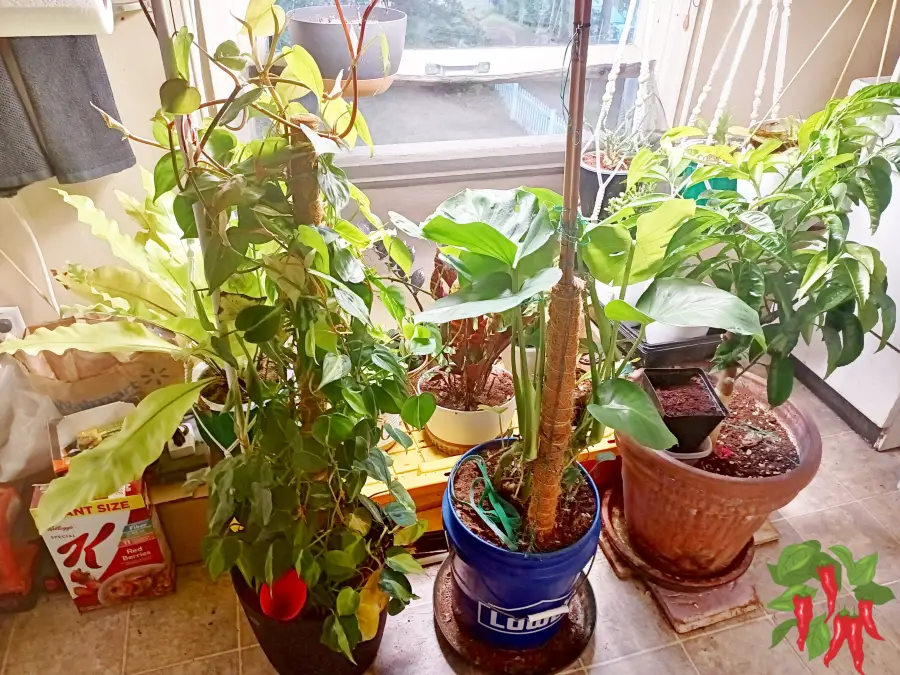
I have trained some of my Heartleaf Philodendrons and Pothos to climb instead of trail. That lets me use them as attractive tabletop plants or tall, narrow floor plants without taking up much horizontal space.
This is particularly useful in an apartment. A climbing plant can add several feet of greenery while using roughly the same amount of floor or tabletop space as its pot.
Climbing can also affect the foliage. Pothos and Philodendron often develop fuller growth and larger leaves when their stems are secured to a support and provided with enough light.
From My Experience: My Heartleaf Philodendrons and Pothos do not all grow as hanging plants. Training some of them upward gives me tall, narrow plants that work well on tables or as floor plants while leaving shelves available for smaller trailing species.
The Best Trailing or Climbing Vines
Pothos
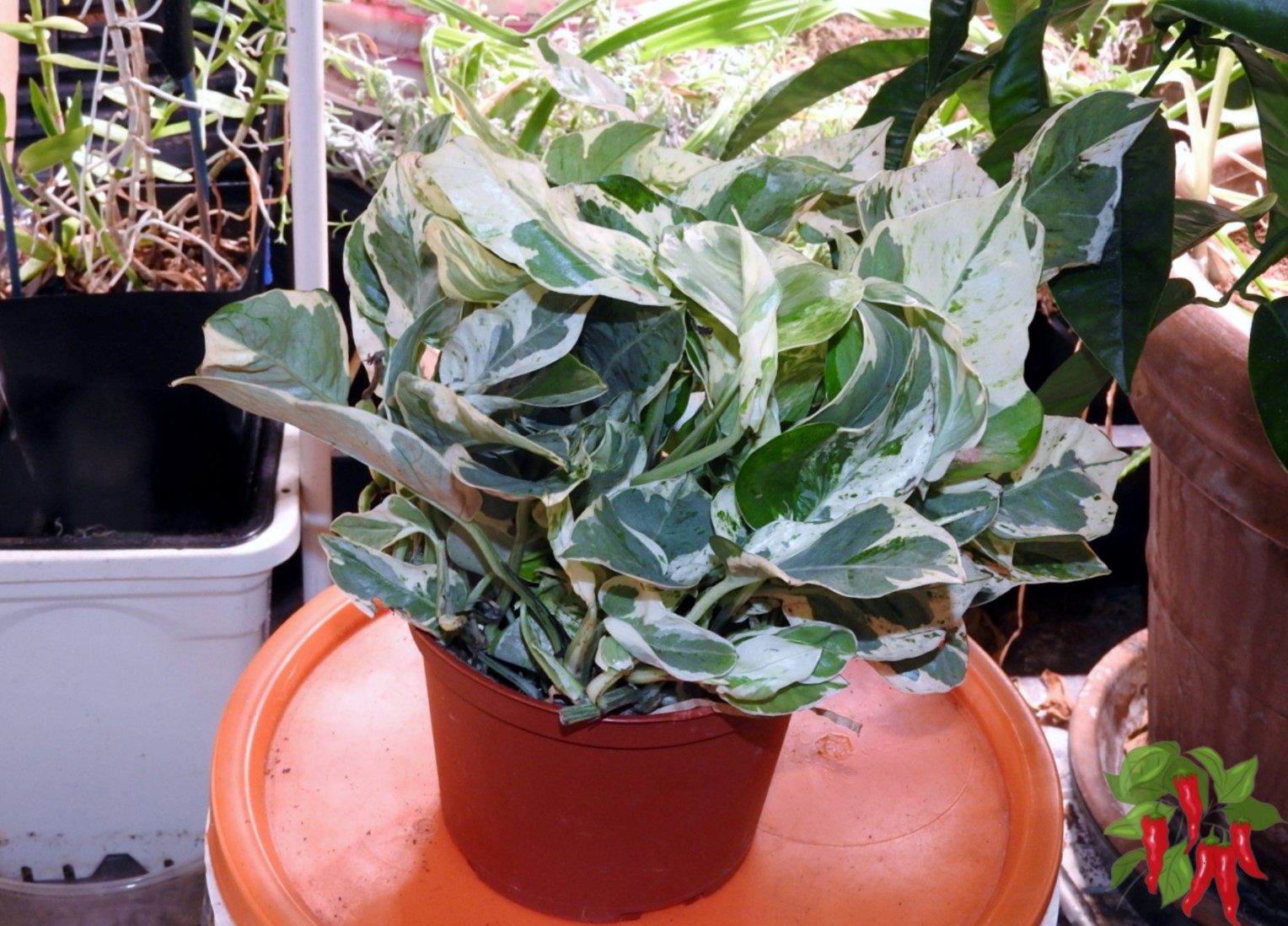
Pothos is probably the most versatile plant in this guide. You can let its vines spill from a hanging basket, trail across a shelf, or train them upward on a pole.
It grows quickly under good conditions and adapts well to ordinary indoor environments. Brighter indirect light generally produces fuller vines and helps variegated varieties maintain stronger markings.
When trained upward, Pothos can become a tall, narrow statement plant rather than a sprawling vine. This makes it particularly useful when floor or shelf space is limited.
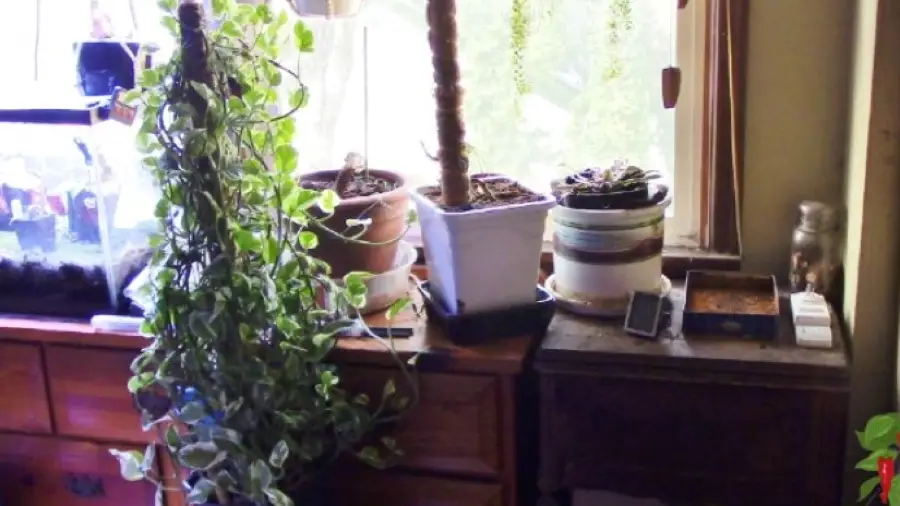
See my Pothos Indoor Plant Care Guide.
Heartleaf Philodendron
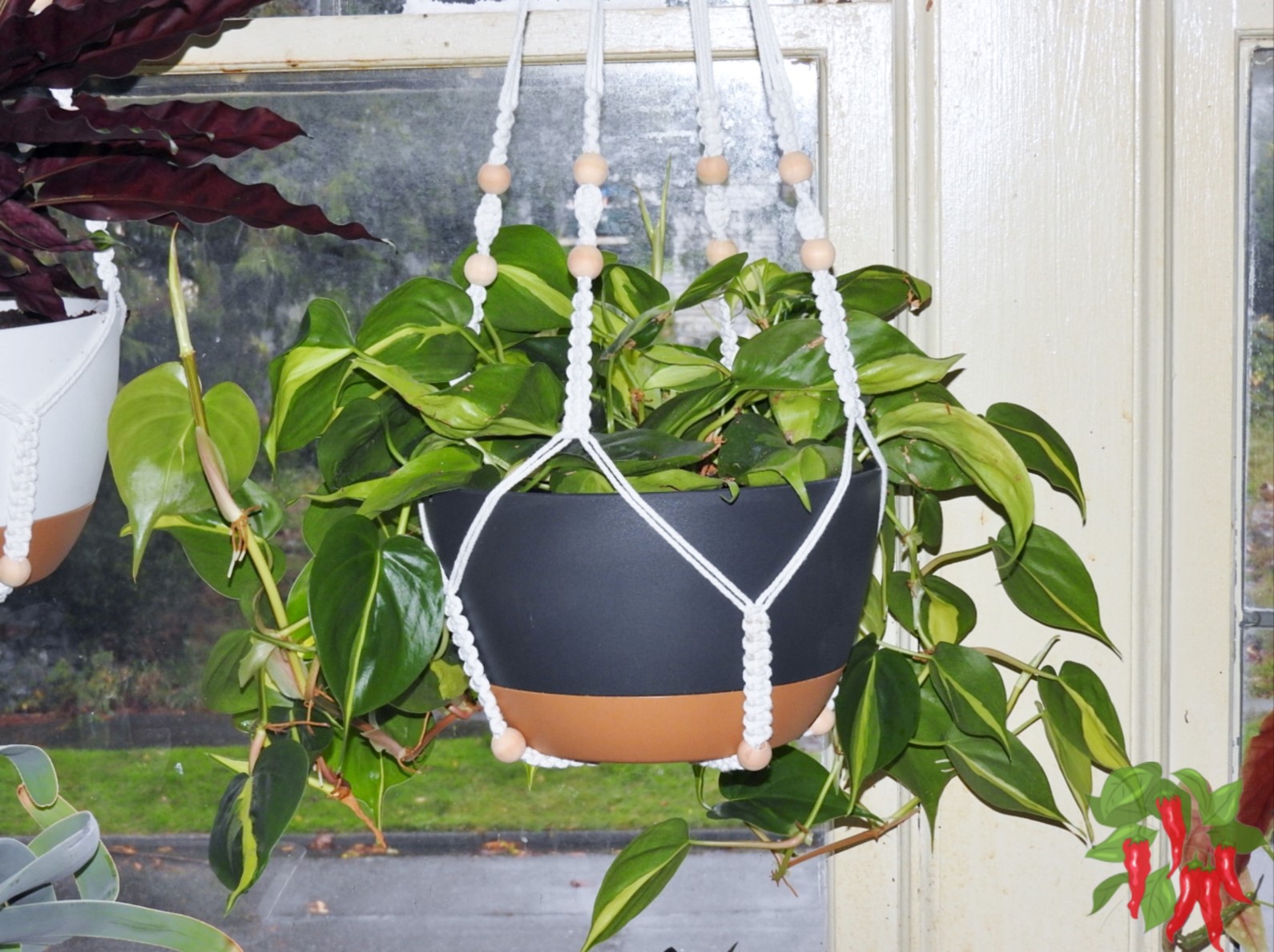
Heartleaf Philodendron is another easy vine that gives you several display options. Its flexible stems can cascade from a shelf, hang from a basket, or wrap around a support.
Under good light, it produces steady growth and can quickly develop long vines. Pruning helps keep the plant full, and the cuttings can be rooted to add back to the original container.
I often prefer training Heartleaf Philodendron upward because the climbing form creates a substantial-looking plant without requiring a wide footprint.
My Philodendron Care Indoors Guide covers the general care these popular plants need.
The Best Plants for Hanging Baskets
Some plants look best when their foliage is allowed to arch, spill, or cascade naturally. Hanging baskets lift the plant above furniture, free up floor space, and give long stems room to develop without constantly needing to be redirected.
I use hanging plants throughout my own apartment because they let me add a lot of greenery while saving the floor for larger plants. They are especially useful near windows, along open walls, and in corners where a shelf or plant stand would take up too much room.
Spider Plant

Spider Plant is not a true trailing vine, but it is one of the best plants you can place in a hanging basket. Its long, arching leaves spill over the sides, and mature plants produce stems carrying clusters of small plantlets.
Those hanging plantlets create a much fuller display than the parent foliage alone. They can be left attached for a dramatic cascading effect or removed and rooted to create new plants.
Spider Plants appreciate brighter indirect light and somewhat more consistent moisture than drought-tolerant plants. When the location and watering are right, they can quickly fill a hanging basket.
See my Spider Plant Care Guide.
Fishbone Cactus
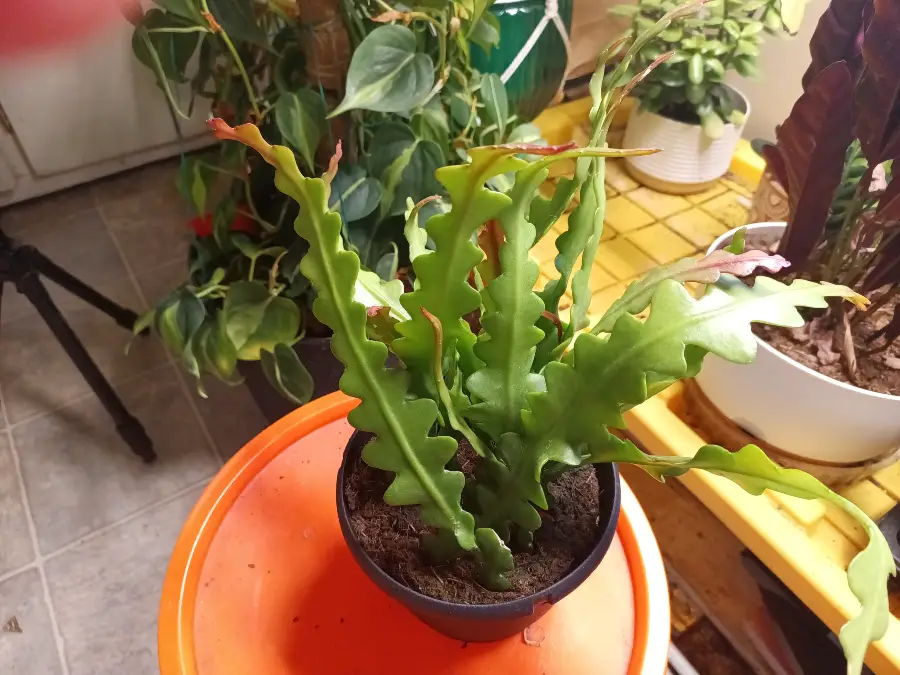
Fishbone Cactus is one of the most unusual hanging plants you can grow indoors. Its long, flat stems develop deep zigzag lobes that resemble a fish skeleton, giving the plant an architectural look even before it flowers.
As the stems lengthen, they naturally arch and cascade over the sides of the container. A mature plant can become quite wide, so a hanging basket gives the stems room to spread without covering a shelf or tabletop.
Unlike desert cacti, Fishbone Cactus is an epiphytic plant that appreciates brighter indirect light and a growing medium that drains well without remaining bone dry for long periods.
See my Fishbone Cactus Care Guide.
Lipstick Plant
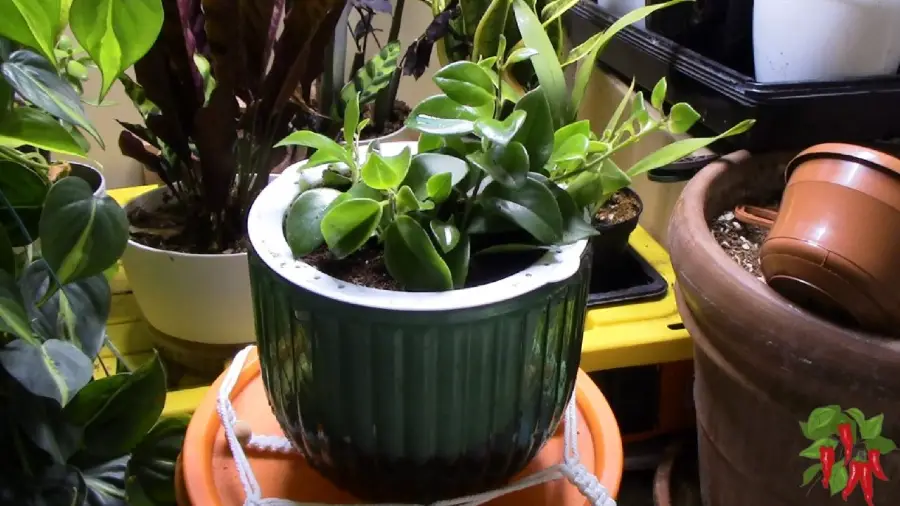
Lipstick Plant is a natural choice for a hanging basket because its long stems are designed to trail. The plant is attractive for its glossy foliage, but the tubular flowers are what make it especially rewarding when it receives enough light.
My previous Purple Star Lipstick Plant did flower, although the blooms were smaller than I expected. I am now growing the Mona Lisa variety, which already has thicker, more substantial foliage. I am interested to see whether it becomes a stronger flowering plant as it matures.
Based on my experience, Lipstick Plants may need more light than an east-facing window alone provides if you want the best flowering. A bright location or supplemental LED lighting may help encourage a fuller display.
See my Mona Lisa Lipstick Plant Care Guide.
Compact Trailing Plants for Shelves
Not every trailing plant needs several feet of space. Compact species work well on shelves, bookcases, desktops, and small wall-mounted planters where a vigorous Pothos or Philodendron might eventually become difficult to manage.
Peperomia Hope
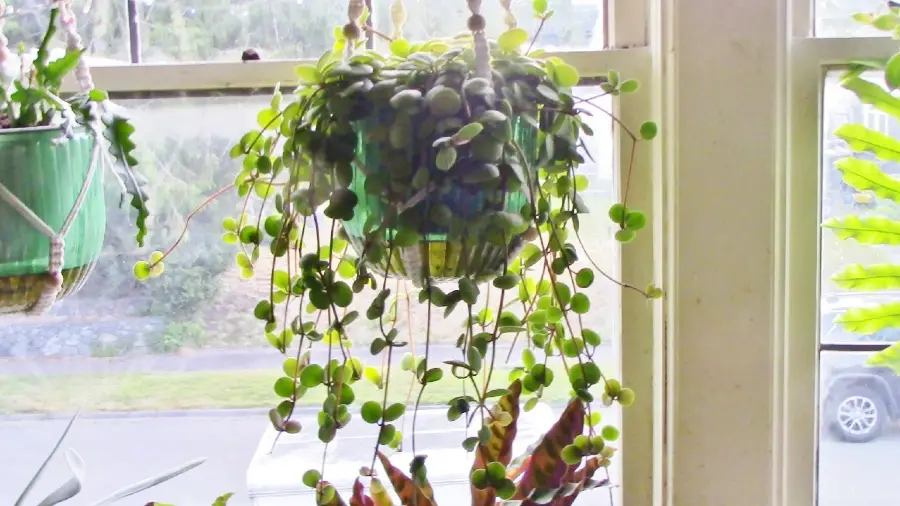
Peperomia Hope is one of my favorite compact trailing plants. Its rounded, succulent-like leaves grow along slender stems that gradually spill over the sides of the container without becoming aggressive or overwhelming the surrounding space.
That slower, more controlled growth makes it especially useful on shelves and in smaller apartments. You get the look of a trailing plant without vines quickly reaching the floor or wrapping around nearby objects.
A hanging self-watering planter can also be a practical option for Peperomia Hope. It makes the plant easier to water when the basket is above eye level and helps prevent water from dripping onto furniture or the floor. The growing medium still needs plenty of air around the roots, so I prefer an open mix based on coco coir and perlite.
See my Peperomia Hope Care Guide.
Holiday Cacti for Shelves and Hanging Displays
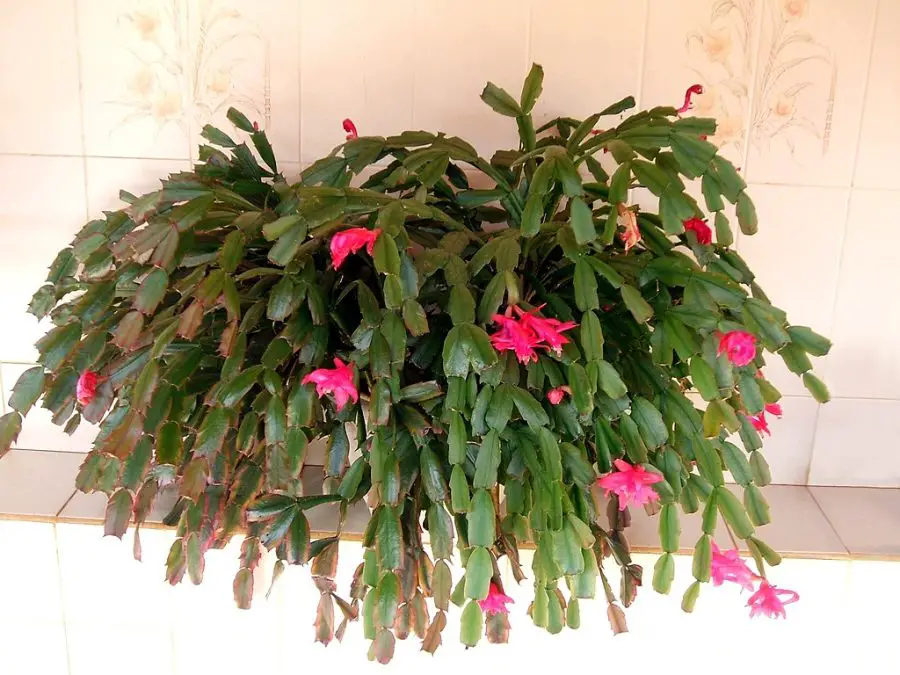
Christmas, Thanksgiving, and Easter cacti develop segmented stems that become increasingly arching as the plants mature. Younger plants fit comfortably on shelves and tables, while larger specimens can look especially attractive in hanging containers.
These are forest cacti rather than desert cacti. They appreciate bright indirect light and a growing medium that drains well while holding a little more moisture than a mix intended for Gasteria or Haworthia.
Their biggest reward is seasonal flowering. When mature plants receive the right light and seasonal conditions, buds form along the ends of the cascading stems and create a colorful display around the entire container.
Learn more in my Zygocactus Care Indoors Guide.
How Light Affects Trailing Growth
Trailing plants often reveal inadequate light through the shape of their growth. Vines may become long and thin, spaces between leaves may increase, and new foliage may emerge smaller than the older leaves.
Pothos and Heartleaf Philodendron are particularly good examples. They may continue growing in modest light, but brighter indirect light generally produces fuller vines, shorter spaces between leaves, and stronger foliage.
Flowering trailing plants such as Lipstick Plant and holiday cacti also need enough light to support bud formation. A plant can remain green and healthy-looking while still receiving too little light to flower well.
Many of my plants grow successfully near east-facing windows. For plants that need more light—or when seasonal light drops—I use supplemental LED grow lights to support stronger growth.
For more examples, see my guide to Indoor Plants That Thrive Under Grow Lights.
Quick Tip: If a trailing plant is producing long bare sections between leaves, move it closer to better light before reaching for fertilizer. Insufficient light is often the real reason the growth looks thin.
Choosing the Right Container
A trailing plant is only as practical as the container holding it. The right planter makes watering easier, protects nearby surfaces, and gives the roots an appropriate balance of moisture and air.
Hanging Baskets
Use a hanging basket for plants that develop long arching stems or hanging plantlets, including Spider Plant, Fishbone Cactus, Lipstick Plant, and mature holiday cacti.
Make sure the hook and ceiling support can safely hold the combined weight of the container, growing medium, plant, and water. A basket becomes considerably heavier immediately after watering.
Shelf Planters
Shelves are ideal for compact trailing plants such as Peperomia Hope or for young Pothos and Philodendrons that you want to keep easy to reach.
Use a saucer or a watertight outer container to protect the shelf from drainage water. Leave enough room beneath the shelf for stems to hang without being crushed against furniture.
Self-Watering Planters
Self-watering planters can be useful for hanging plants because they reduce the need to carry a watering can above your head and can help prevent dripping. They work best when the growing medium remains airy and the reservoir is managed correctly.
Do not assume that every trailing plant wants continuous access to water. Fishbone Cactus, Peperomia Hope, and holiday cacti still need oxygen around their roots, so the reservoir should not turn the growing medium into a constantly saturated mass.
Remember: Choose the container around both the plant and the location. A beautiful hanging basket is not very useful if it is too heavy to water safely or constantly drips onto the furniture below.
Common Mistakes With Trailing Indoor Plants
Trailing plants are usually easy to grow, but their growth habit creates a few problems that upright plants do not have. Long vines can hide early warning signs, hanging baskets are harder to inspect, and plants placed high on shelves may receive less light than you realize.
Letting the Plant Grow Too Far From the Light
A plant may begin near a bright window, but the ends of the vines can eventually hang several feet away from that light. This often leads to smaller leaves, longer spaces between leaves, and thin growth near the ends.
Rotate the container occasionally, prune weak growth, or use supplemental lighting if the trailing stems are no longer receiving enough light.
Ignoring the Top of the Pot
A trailing plant can look full from a distance while the top of the container becomes bare. This is especially common with Pothos and Heartleaf Philodendron when the vines are allowed to grow indefinitely without pruning.
Trim long vines and root some of the cuttings back into the original pot. This helps create fuller growth near the container instead of leaving all the foliage at the ends of long stems.
Overwatering a Hanging Basket
Hanging baskets can be awkward to check, which makes it tempting to water on a schedule. That is risky because different plants dry at very different rates.
Check the growing medium before watering. A Spider Plant may use water faster than Peperomia Hope, while Fishbone Cactus and holiday cacti should not sit in a constantly saturated mix.
Using a Weak Hook or Support
A hanging plant becomes much heavier after watering. Always use hardware rated for the full weight of the container, wet growing medium, mature plant, and any decorative outer pot.
Letting Climbing Vines Attach to the Wall
Pothos and Heartleaf Philodendron may develop aerial roots that cling to textured surfaces, wood, or small gaps. Removing attached roots can pull paint or damage finishes.
Give climbing vines a pole, trellis, or other dedicated support before they begin attaching themselves to nearby walls or furniture.
Key Point: Long vines can make a plant look healthy while hiding bare stems, weak growth, or problems near the soil. Inspect the entire plant occasionally, not just the foliage hanging at eye level.
Which Trailing Plant Is Right for You?
| If You Want… | Choose… |
|---|---|
| Fast trailing vines | Pothos or Heartleaf Philodendron |
| A tall, narrow climbing plant | Pothos or Heartleaf Philodendron trained on a pole |
| The best hanging-basket display | Spider Plant, Fishbone Cactus, or Lipstick Plant |
| A compact shelf plant | Peperomia Hope |
| Seasonal flowers | Holiday Cactus |
| Unusual sculptural stems | Fishbone Cactus |
| Tubular flowers from a hanging basket | Mona Lisa Lipstick Plant |
Frequently Asked Questions About Trailing Indoor Plants
What is the easiest trailing indoor plant?
Pothos is one of the easiest choices for most indoor growers. It adapts well to ordinary household conditions, grows quickly, and can trail from a shelf, hang from a basket, or climb a support.
What trailing plants grow well in hanging baskets?
Spider Plant, Fishbone Cactus, Lipstick Plant, Pothos, Heartleaf Philodendron, Peperomia Hope, and holiday cacti all work well in hanging containers. The best choice depends on your available light, watering habits, and how much room you have for cascading growth.
Can Pothos and Philodendron climb instead of trail?
Yes. Both are natural climbers and can be trained up a moss pole, coir pole, trellis, or another sturdy support. I use this approach with some of mine to create tall, narrow plants for tables and floor displays.
Do trailing plants need more light?
They do not necessarily need more light than upright plants, but the entire length of the vine needs enough light to remain full. Long stems hanging far from a window may become sparse or produce smaller leaves.
How do I make a trailing plant look fuller?
Prune long vines, root some of the cuttings, and place them back into the original container. Good light also helps reduce long bare spaces between leaves and supports fuller growth.
Are self-watering planters good for hanging plants?
They can be very useful because they simplify watering and reduce dripping. Use an airy growing medium and manage the reservoir carefully so the roots are not sitting in a constantly saturated mix.
Which trailing plant is best for a small apartment?
Peperomia Hope is a good compact choice, while Pothos and Heartleaf Philodendron can be trained upward to save horizontal space. Hanging baskets also allow Spider Plant, Fishbone Cactus, and Lipstick Plant to use space above furniture rather than occupying the floor.
Final Thoughts
Trailing indoor plants are some of the most useful plants you can grow because they adapt to so many display styles. They can spill from shelves, cascade from hanging baskets, or climb poles to become tall, narrow accent plants.
I use hanging baskets throughout my apartment because they let me add plenty of greenery while saving floor space for larger plants. At the same time, I train some of my Pothos and Heartleaf Philodendrons upward because climbing gives them a completely different look and makes better use of vertical space.
For a fast, versatile vine, Pothos or Heartleaf Philodendron is hard to beat. Spider Plant, Fishbone Cactus, and Lipstick Plant are excellent hanging-basket choices, while Peperomia Hope gives you a more compact plant for shelves and smaller rooms.
The best choice is not only about the plant. Think about how you want it to grow, how easy it will be to water, and whether the location provides enough light along the entire length of the foliage.
Where to Go Next
Explore Related Topics
More Trailing Plant Guides
Grow Pothos as a Trailing or Climbing Plant
Learn how to grow full Pothos vines from a hanging basket, across a shelf, or upward on a climbing support.
Grow a Fishbone Cactus Indoors
Discover how to grow this unusual cascading cactus with long zigzag stems in a hanging basket.
Grow Peperomia Hope on a Shelf or in a Hanging Planter
See why this compact trailing plant works so well in apartments, on shelves, and in self-watering hanging planters.